Expect the unexpected could be an apt slogan for Mexico City, especially considering that a wolfdog, an anteater and a bull all made unusual appearances in the metropolitan area of the capital in recent days.
A Czechoslovakian wolfdog was captured in a neighborhood in the northern borough of Gustavo A. Madero on Monday, an anteater was “rescued” in the México state municipality of Nezahualcóyotl the same day and a bull invaded the parking lot of a university campus in the southern district of Tlalpan on Tuesday.
The wolfdog was sighted in the San Juan de Aragón neighborhood prior to being caught by firefighters and officials with the Mexico City Animal Surveillance Brigade. A youth on a motorbike reportedly assisted the capture.
Initial reports said that a wolf, rather than a wolfdog, had been caught, but authorities denied that was the case.
In a post to the X social media platform on Monday evening, the Mexico City Ministry of Comprehensive Risk Management and Civil Protection referred to the animal as a wolf, although it said the specimen would be taken to the federal environmental protection agency Profepa for identification.
The animal was subsequently identified as a female Czechoslovakian wolfdog, a species that came into being via the breeding of wolves with German Shepherd dogs.
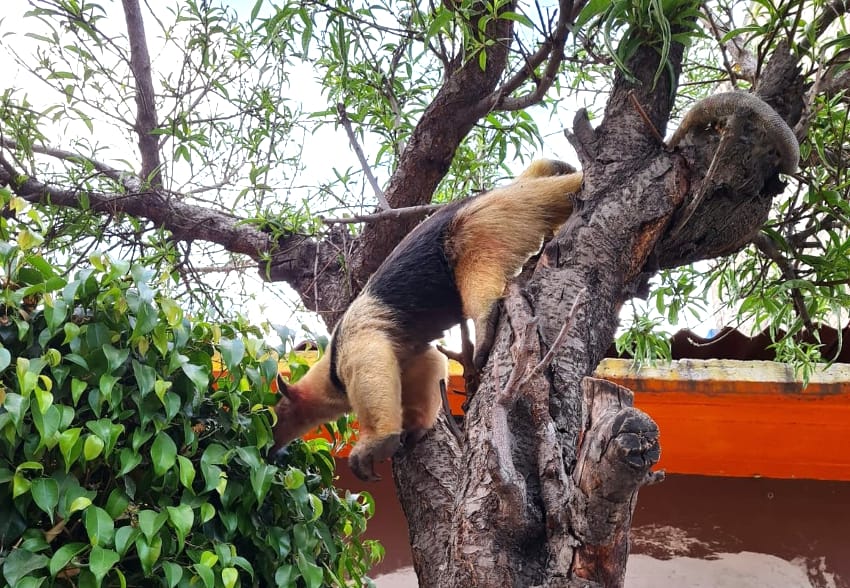
Just east of the capital proper, residents of the Joyas de Aragón neighborhood in Nezahualcóyotl spotted an anteater moving between trees on Monday. Municipal security authorities said in a post to Facebook that the anteater was “rescued” and handed over to local firefighters who were to take the animal to a wildlife reintegration center.

Anteaters are native to Mexico, but they are rarely, if ever, seen in the metropolitan area of Mexico City.
Not to be outshone by the wolfdog and anteater was a bull that showed up in the parking lot of the Santa Teresa campus of the La Salle University on Tuesday.
Videos posted to social media showed the bull attempting to charge a woman, who was fortunately protected by a parking lot ticket machine.
No es broma. Reportan la presencia de un toro en la Universidad La Salle, al sur de CDMX.pic.twitter.com/q9JmtArZiV
— Joaquín López-Dóriga (@lopezdoriga) March 19, 2024
The university said in a brief statement that the bull entered the parking lot from a nearby property and that “at no time was the safety of our community or the animal compromised.”
It added that the owners of the bull had removed the animal from the university and that activities at the campus were continuing “regularly.”
With reports from El Universal