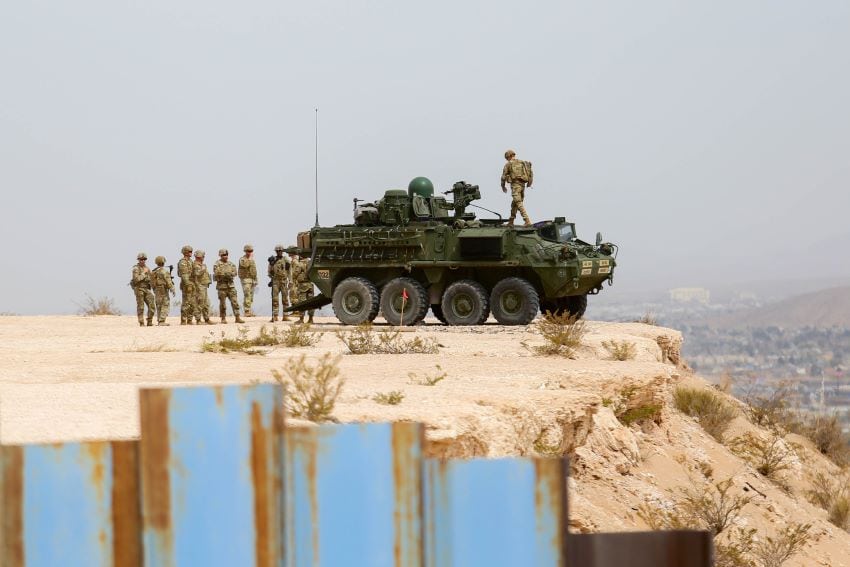
The U.S. government has announced plans to deploy more than 1,000 troops to its shared border with Mexico, ostensibly to “provide enhanced sustainment, engineering, medical, and operational capabilities.”
At the same time, the U.S. Embassy in Mexico issued a stern warning to migrants planning on crossing the border into the U.S., saying they are “destined to fail.”
⚠️ ADVERTENCIA
🇺🇸 ha designado ciertas áreas de la frontera sur de Estados Unidos como áreas de defensa nacional. Estas se consideran extensiones de bases militares de 🇺🇸 y cualquier persona no autorizada que ingrese en estas zonas será objeto de multa, arresto, enjuiciamiento… pic.twitter.com/NI2uQjH7AG— Embajada EU en Mex (@USEmbassyMEX) May 22, 2025
In a May 22 press release, U.S. Northern Command said “1,115 service members were approved to deploy to the Southern Border” as part of the U.S. Department of Defense’s “continued whole-of-government approach to gain full operational control of the southern border.”
Northern Command, headquartered in Colorado Springs, Colorado, is responsible for defending the continental United States and Alaska, while also coordinating defense efforts with Canada, Mexico and the Bahamas.

Since Donald Trump moved back into the White House on Jan. 20, the U.S. has sent thousands of active-duty combat troops and armored combat vehicles to its southern border.
The Los Angeles Times reported that as of April 16 there were 7,100 active duty U.S. troops at the Mexican border under federal control, as well as 4,600 National Guardsmen under state control.
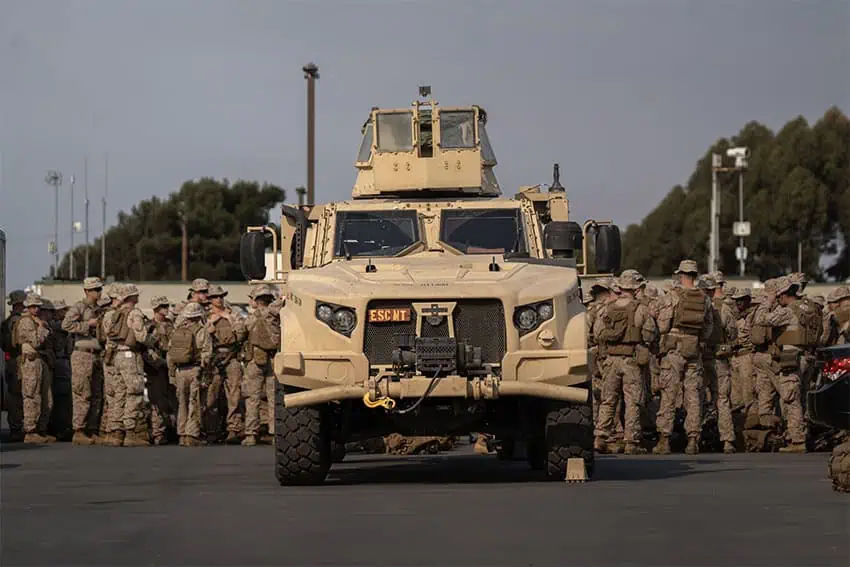
The security measures — labeled Joint Task Force-Southern Border — are being taken to confront what President Trump has characterized as an “invasion” of migrants, drug cartels and smugglers.
Northern Command says the joint task force “conducts integrated, multi-domain operations in coordination with federal, state, and local partners to detect, monitor, and deter unlawful activity throughout the southern border.”
There have been reports that U-2 spy planes, surveillance drones and helicopters are being used by the U.S. to map and monitor suspected criminal activities in Mexican territory. Additionally, in March Trump sent two Navy warships to patrol the waters along the Mexican border in the Pacific Ocean and the Gulf of Mexico.
The Trump administration has also reportedly considered drone strikes against cartel figures and their logistical networks in Mexico. The Mexican government swiftly rejected any and all U.S. intervention in Mexican territory.
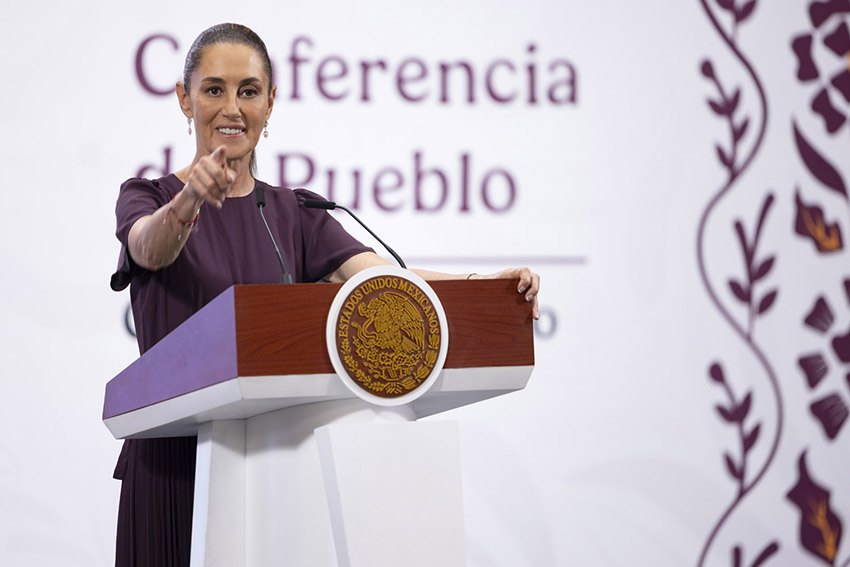
President Claudia Sheinbaum was adamant. “We reject any of these actions, and we also do not believe they will occur, because there is a lot of dialogue on security issues and many other topics,” she said.
Trump spoke with Sheinbaum on Thursday morning though specifics of their conversation were not released to the public. During a press conference afterward, Sheinbaum said only that trade negotiations were ongoing.
Shortly thereafter, the U.S. Embassy in Mexico City issued a warning on social media, advising migrants not to cross the border lest they inadvertently enter newly designated U.S. national defense areas:
“These [designated areas] are considered extensions of military bases … and any unauthorized person entering these areas will be subject to fine, arrest, prosecution, and imprisonment. DO NOT ENTER. You risk your freedom on a journey destined to fail.”
In a social media post on Friday, newly installed U.S. Ambassador to Mexico Ronald Johnson echoed comments made by U.S. Secretary of State Marco Rubio, praising Mexico’s cooperation on security matters.
This statement came a day after Sheinbaum lauded Rubio for recognizing that Mexican drug cartels use firearms manufactured in the U.S., an issue she says she discussed with Trump just two days after he took office.
With reports from La Jornada, Infobae and The New York Times