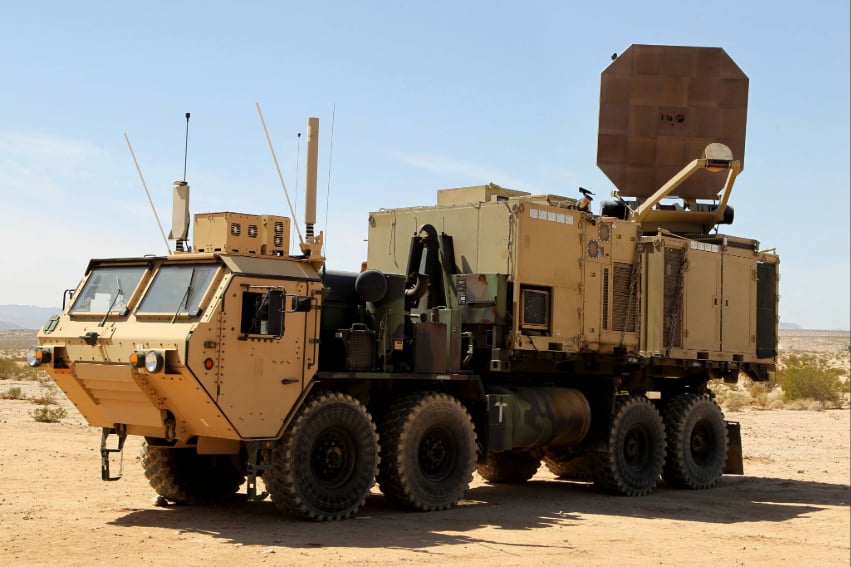
Although U.S. Border Patrol encounters with migrants crossing into the United States from Mexico are at 55-year lows, the Pentagon has granted the Department of Homeland Security (DHS) permission to test a military-grade heat ray and develop tactics to potentially use it in operations.
The non-lethal weapon, officially known as the Active Denial System (ADS), shoots an invisible beam of electromagnetic waves up to half a mile and produces an intense burning sensation on human skin.
The Pentagon authorized DHS to test a military-grade heat ray and develop tactics for potential use at the southern border, per a memo signed by War Secretary Hegseth last month and obtained by CNN. https://t.co/wJxePyySRf
— KolHaolam (@KolHaolam) October 21, 2026
Military officials say the resulting “tingling effect” lasts between 10 and 15 minutes and generates “an instinctive and irresistible urge to run from the effect.”
CNN is reporting that the Defense Department has signed off on letting DHS use the weapon, granting a “temporary loan” of one ADS system for seven months, though the loan period can be extended.
A memo seen by CNN says DHS is responsible for “system employment, use and development of tactics, techniques and procedures.”

While it is designed to be non-lethal, the weapon has caused second-degree burns in at least two documented incidents, according to the digital media company Axios.
The fact that it is designed to inflict pain on people has raised ethical and legal questions. Furthermore, its half-mile range means it could injure people in Mexico who are not trying to cross the border.
After deploying the ADS in Afghanistan nearly two decades ago, the military has since declined to use the heat ray as commanders have voiced concern that it could be seen as torture.
Last year, encounters with migrants at the U.S.-Mexico border fell to their lowest level since 1970, according to an analysis conducted by the Pew Research Center.
Even so, Customs and Border Protection (CBP) officials have been considering using the weapon in areas where there’s a high concentration of illegal crossings.
During U.S. President Donald Trump’s first term, CBP officials allegedly wanted to use it against migrants, but then-DHS Secretary Kirstjen Nielsen denied the request.
The U.S. government also reportedly considered using it against protesters in Washington, D.C., in 2020.
Patrick Weaver, Defense Secretary Pete Hegseth’s deputy chief of staff, defended the decision in a social media post: “The border is now a military installation and a battle lab for testing new systems,” he wrote.
In further defending the decision, the Pentagon says controls, operating procedures, checklists, software upgrades and training reduce the risk of injury.