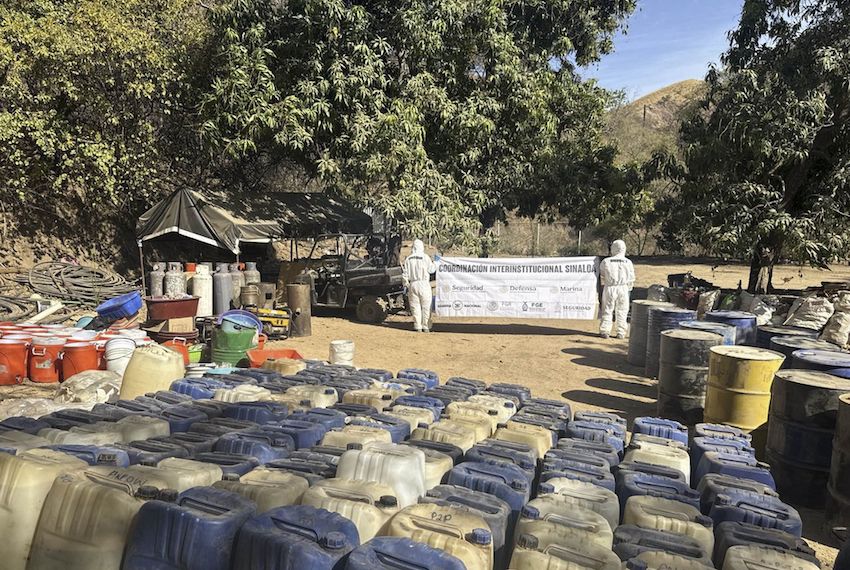
Mexico appears on a formal White House list of drug-producing countries, along with 22 others, all but five in the Americas.
U.S. President Donald Trump submitted the list to Congress on Monday as part of a document called the Presidential Determination on Major Drug Transit or Major Illicit Drug Producing Countries for Fiscal Year 2026. The Determination, presented annually, identifies those countries that are seen to have geographic, commercial or economic factors that allow drugs or precursor chemicals to be transited or produced, “even if a government has engaged in robust and diligent narcotics control and law enforcement measures.”
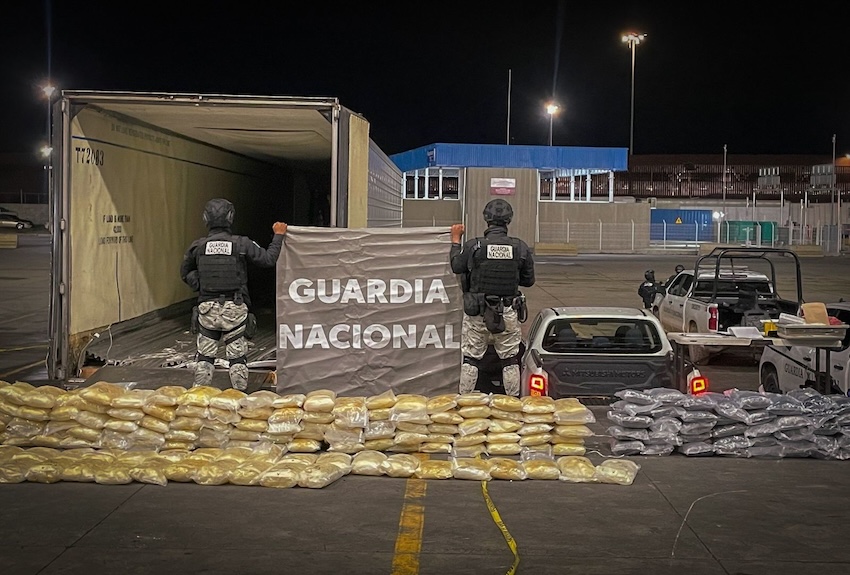
(Cuartoscuro)
Especially relevant to Mexico is the Determination’s emphasis that inclusion on the list “is not necessarily a reflection of its government’s counterdrug efforts or level of cooperation with the United States.” In fact, Trump singled out Mexico for some guarded praise in that respect.
“In Mexico, President Claudia Sheinbaum has increased cooperation to confront the powerful cartels that poison both our countries with drugs and violence,” Trump said in the document, which was written in the first person. The words echoed those of U.S. Secretary of State Marco Rubio, who also noted during his recent visit to Mexico increased cooperation in drug-fighting efforts during the Sheinbaum administration, including sending troops to the border and allowing CIA drones to fly over Mexican territory.
But Trump also said Mexico must do more to tackle the cartels. In the document, he said he expects to see “additional, aggressive efforts by Mexico to hold cartel leaders accountable and disrupt the illicit networks engaged in drug production and trafficking” over the next year.
“The United States will work with Mexico and other countries to target these national security threats cooperatively where we can, and through our own sovereign authorities where necessary,” he wrote, and followed it with a thinly veiled threat: “I will also call on countries where these drugs originate and transit to fulfill their obligations and shut off these supplies – or face serious consequences.”
Countries mentioned in the Determination as having failed to adhere to their obligations under international counternarcotics agreements over the past year are Afghanistan, Bolivia, Burma, Colombia and Venezuela.

The other nations on the list are The Bahamas, Belize, the People’s Republic of China (PRC), Costa Rica, the Dominican Republic, Ecuador, El Salvador, Guatemala, Haiti, Honduras, India, Jamaica, Laos, Nicaragua, Pakistan, Panama and Peru.
With reports from El Economista and Milenio