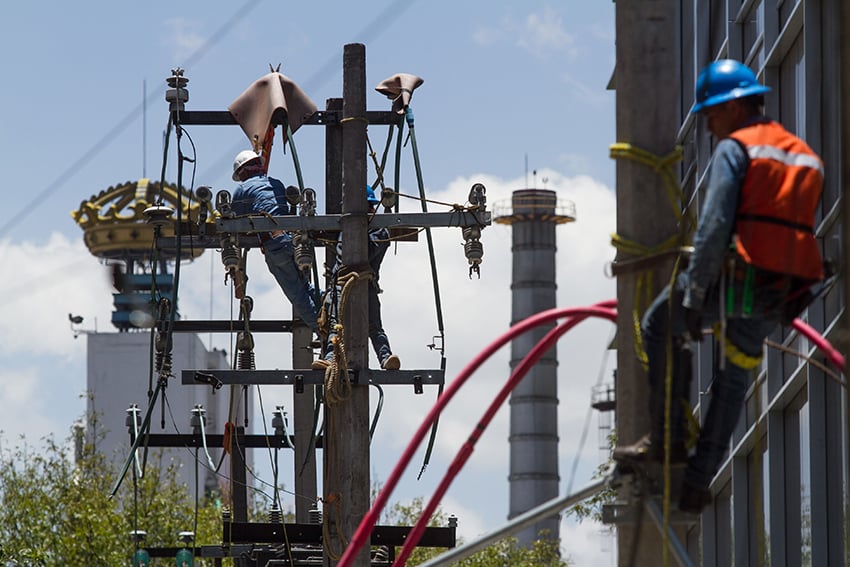
Amid ongoing USMCA talks, the Office of the United States Trade Representative (USTR) has strongly criticized Mexico’s energy sector framework, raising a range of concerns that it says disadvantage U.S. energy companies.
The critique comes in the USTR’s 2026 National Trade Estimate Report on Foreign Trade Barriers, which was submitted to U.S. President Donald Trump and the U.S. Congress on Tuesday. The release of the report came two weeks after Mexican and U.S. officials began formal trade talks as part of this year’s review of the United States-Mexico-Canada Agreement (USMCA), which superseded NAFTA in 2020. Mexico’s energy policy is shaping up as a point of contention in the USMCA review talks.
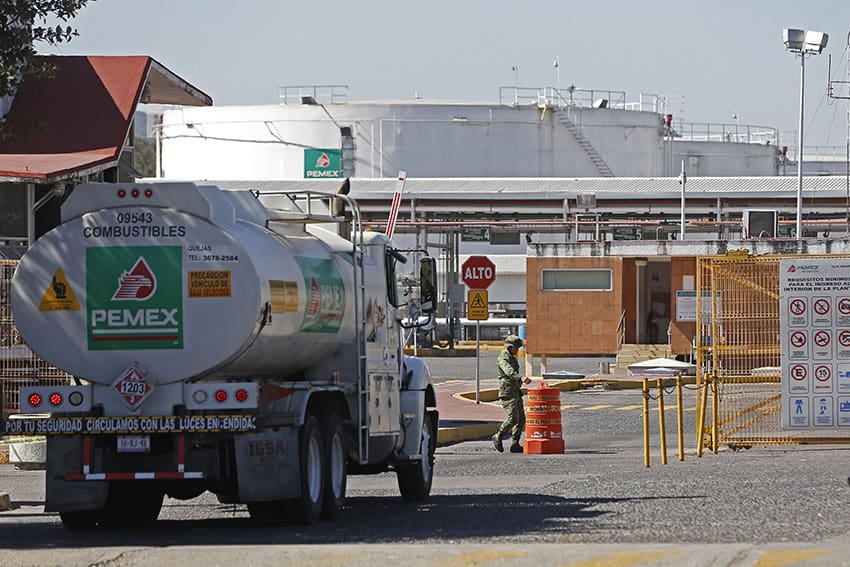
In a section of the trade barriers report focused on Mexico’s energy sector, the USTR first seeks to offer an overview of Mexican energy policy before making various criticisms.
“Mexican energy policy is centered on reinstating the primacy of its state-owned electric utility, Federal Electricity Commission (CFE), and state-owned oil and gas company, Mexican Petroleum (PEMEX),” the section begins.
“Since 2018, Mexico has undertaken many measures to achieve this aim, culminating in the October 2024 ratification of a constitutional amendment to reclassify CFE and PEMEX as ‘public enterprises’ rather than ‘productive enterprises’ in order to limit the participation of private companies in Mexico’s energy market,” the USTR states.
In addition, the report states that “in March 2025, Mexico published a reform package of new energy laws implementing this constitutional amendment and other measures, which include as a principle a guarantee of CFE’s prevalence and its maintenance of at least 54 percent of the average electricity sent to the grid, require CFE ownership of at least 54 percent in any ‘mixed investment’ electricity generation projects, and set out a preference for CFE over private entities in electricity generation and marketing.”
In 2022, the USTR made clear its discontent with Mexico’s energy sector policies by requesting dispute settlement consultations under the USMCA. Canada subsequently joined the U.S. in seeking dispute settlement consultations with Mexico over energy policies that favor state-owned firms over private and foreign companies. More than three years later the dispute hasn’t been resolved.

Former President Andrés Manuel López Obrador (2018-24) made significant changes to Mexico’s energy policies after his predecessor Enrique Peña Nieto opened up the national energy sector to private and foreign companies. AMLO’s changes — maintained by President Claudia Sheinbaum — altered the rules of operation for foreign companies in Mexico, giving rise to the complaints the USTR sets out in the report it submitted to Trump and the U.S. Congress this week.
The USTR’s criticisms of Mexico’s energy sector
In its report, the USTR asserts that “private companies operating in Mexico are often unable to participate effectively, if at all, in Mexico’s energy sector due to frequent delays, unexplained or unjustified rejections, and inaction regarding applications for new permits or permit modifications.”
While serving as U.S. ambassador to Mexico during López Obrador’s presidency, Ken Salazar acknowledged that U.S. energy companies were having problems securing the permits they needed to operate without encumbrance in Mexico.
USMCA trade deal negotiations formally kick off in Washington
The USTR said that “unexplained or unjustified suspensions or revocations of existing permits, as well as other impediments, undermine private companies’ ability to operate energy facilities, import or export electricity or fuel, store or transload fuel, and build or operate retail fuel stations.”
It noted that in 2025, Mexico disbanded its energy regulatory agency and established a new agency — the National Energy Commission (CNE)— under the supervision of SENER [the federal Energy Ministry], further centralizing decision-making authority under SENER.”
The USTR also said that:
- In October 2025, Mexico “published implementing regulations for the Hydrocarbons Sector Law that prohibit certain fuel transloading activities, which decreases logistical flexibility and increases operating costs for U.S. companies, unfairly favoring PEMEX.”
- “Changes to the regulations also impose new restrictions for fuel permits, reduce the term for new import permits from 20 years to five years, and reduce the term for commercialization permits from 30 years to 2 years” — regulatory changes that “do not apply to PEMEX.”
- U.S. stakeholders have “raised concerns about draft regulations previewed in December 2025 that would have placed restrictions on the ability of independent power producers to sell their output and granted CFE the option to acquire the assets at no cost.”
The USTR also said that over the past two years, “U.S. companies supplying the Mexican oil and gas sector have reported an unprecedented challenge with receiving payment from PEMEX for services rendered.”
“As of December 31, 2025, while some U.S. companies have received full or partial payment, others continue to report overdue payments that total over [US] $2.5 billion,” the USTR said.
Other criticisms and concerns
Beyond energy, the USTR outlined various other “non-tariff barriers” to trade with Mexico in its report. They include “technical barriers,” “sanitary and phytosanitary barriers,” and “services barriers.”
The criticisms of Mexico’s energy sector were detailed under the subheading of “investment barriers.”
Under the same sub-heading, the USTR noted that amendments made in 2022 to Mexico’s federal Mining Law “place the exploration, exploitation, and utilization of Mexico’s lithium under the exclusive control of a state-owned company, LitioMx, and exclude private companies from concessions, licenses, contracts, permits, and authorizations to undertake those activities.”
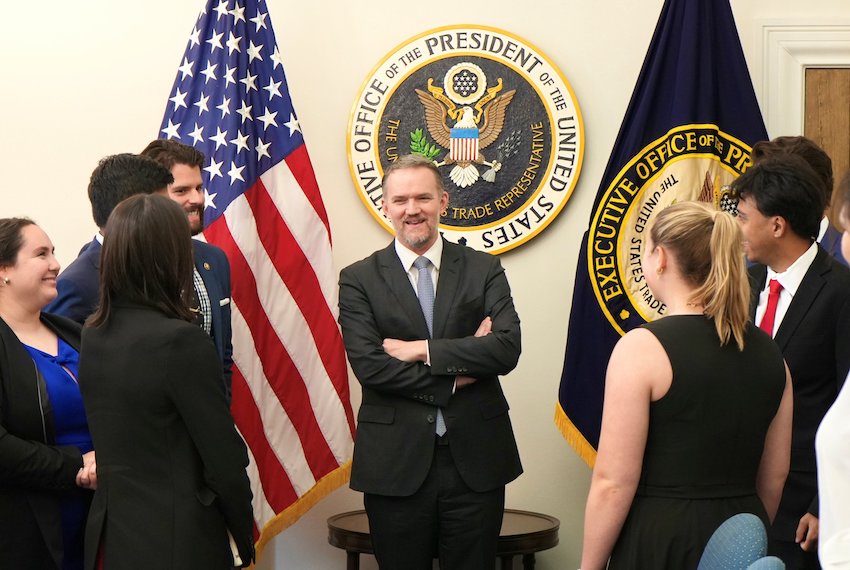
The USTR also raised concerns about labor law enforcement in Mexico and the environmental impacts of “illegal, unreported, and unregulated fishing by Mexican fishing vessels” and “trade in illegally harvested timber” that “puts U.S. companies that comply with environmental laws at an unfair disadvantage.”
Last September, U.S. Trade Representative Jamieson Greer said that Mexico was not complying with the USMCA in a range of areas.
“This could be energy, telecommunications services, agricultural, all kinds of things,” he said.
Despite the United States’ concerns about Mexico’s compliance with the USMCA — and a declaration from Trump that he doesn’t care about the agreement — the Mexican government is confident that it will achieve a good outcome in the review of the free trade pact.
Sheinbaum said last week that Mexico was going “very well” in the USMCA review process, asserting that the fact that formal talks with the U.S. are taking place is “very important.”
“That gives us a lot of certainty,” she said at an event in Nuevo León.
Sheinbaum said that her government retains hope that the United States could lift tariffs on Mexican vehicles, steel and aluminum, and declared that Trump has demonstrated a “good attitude” toward the USMCA review.
“There is certainty for our country and for the future of the trade agreement with the United States and Canada,” she said.
With reports from El País