For street kids in Querétaro, the classroom is coming to them thanks to the efforts of a special education teacher and other volunteers inspired by her actions.
It’s been just eight days since Jemima Peláez Cruz went out for a run and noticed street kids who accompany their parents as they eke out a living at stoplights and on city streets.
With the school year about to start but with distance education measures in place due to the coronavirus, she began to wonder how that would work for someone in their situation. Most of the street kids, many of whom are from small towns in the mountains or other states, don’t have access to the tools they need for a virtual school year, such as a cell phone, computer or television.
Peláez decided she would teach them herself.
She called the program #EnElSemaforoSeAprende (At the Stoplight You Learn) and has seen it mushroom over the past few days as others are drawn to her cause, with potentially hundreds of children in the city’s poorest areas reaping the benefit of a lesson followed up by a free lunch.
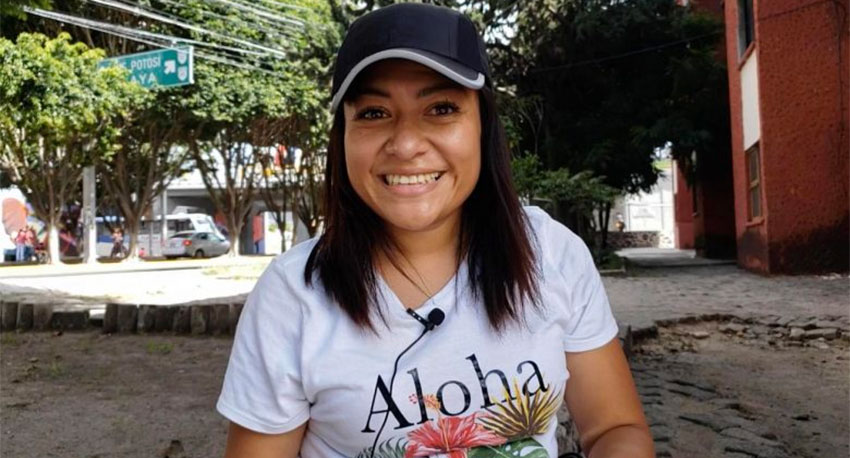
Peláez said she started out teaching just a handful of children on her own, including Daniela, Juan Carlos and Marisol, aged 7, 6 and 4, respectively.
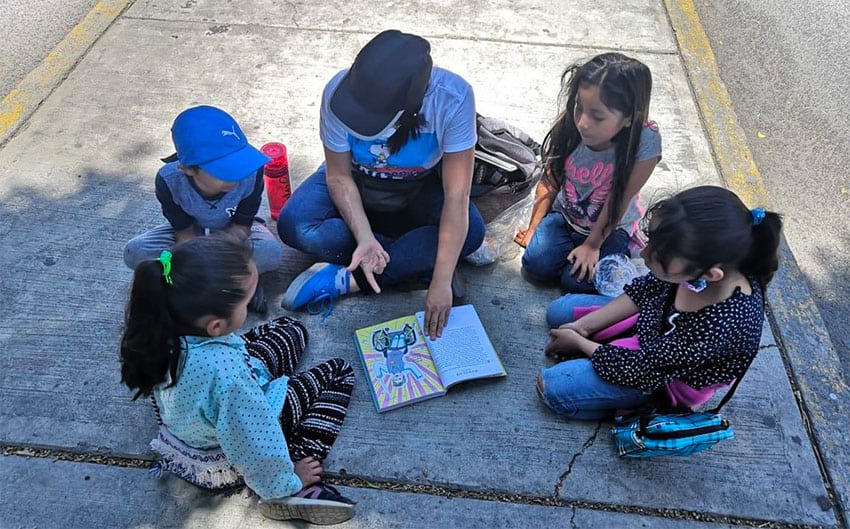
Their classroom is on the sidewalk at the intersection of Avenida Cimatario and the México-Querétaro highway where their mother, Rocío, who carries her fourth child in her arms, sells marzipan, gum and peanuts to cars at the stoplight.

A YouTube video shows cars, motorcycles and buses streaming by as Peláez reads the children a story, helps them color, and directs the siblings to look for seeds under a nearby tree to complete a math lesson.
When she shared what she was doing on social media, she quickly drew attention and support.
“Teachers, engineers, photographers, musicians, illustrators joined the cause, and suddenly I had a group of 20 volunteers,” Peláez said. “I gave two trainings yesterday because we used a manual that I prepared to address reading, writing and math.” She estimates that each volunteer can teach 10 children.
Despite their meager circumstances, the children have big dreams, Peláez said. “They want to be teachers, they want to be police officers. I think we, the adults, see social barriers, but they still don’t feel it, so I am very happy about that.” Part of her conversation with the children is to ask them what they need to do to prepare for their future careers, and the answer, she tells them, is to study.
Teachers from other cities such as Morelia and Mexico City have shown interest, she said, and donations are coming in from as far away as Canada and Germany.
In order to keep the project going, Peláez is asking for help with supplies, including notebooks, erasers, pencils, antibacterial gel and face masks.
“Thank you all for the donations you are giving and making!” she posted to the En El Semáforo Se Aprende Facebook page on Tuesday. We remind you that we are only an idea with a lot of heart that was born a week ago, so we are not an association or NGO … or anything … just a group of volunteers seeking to improve the country’s education.”
Source: Milenio (sp), El Querétano (sp)