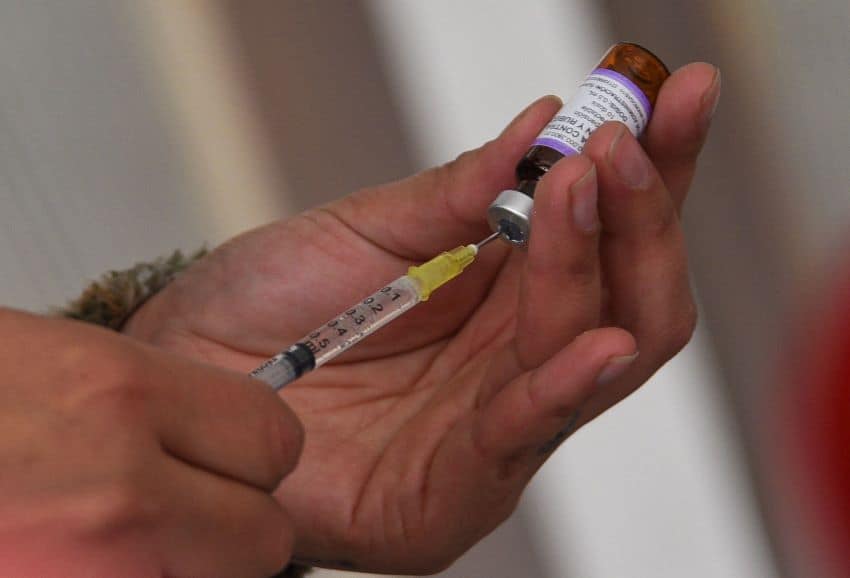
The Pfizer COVID-19 vaccine will be available at some Walmart stores and Red Cross centers across Mexico starting Thursday, a week after it went on sale in some Mexican pharmacies.
In a statement, Walmart Mexico announced that Pfizer’s Comirnaty vaccine would be administered by trained medical personnel in more than 130 Walmart Express and Walmart Supercenter pharmacies in 19 Mexican states, at a cost of 845 pesos (US $50).
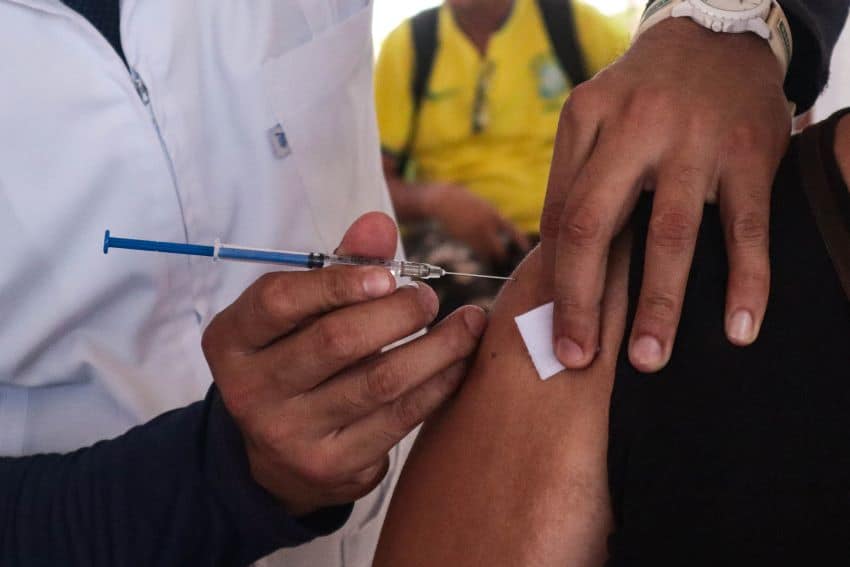
It will be available for people over 12 years old from Dec. 28, and for children aged 5-11 from Jan. 4. The supermarket chain urged interested customers to check availability and hours of operation on its Walmart Pharmacy page.
The vaccine also became available at select Red Cross centers starting on Thursday in Mexico City and México state, at the lower price of 785 pesos (US $46.50). Jorge Alberto Forastieri, Red Cross representative in México state, explained that profits from initial vaccine sales would be used to deliver doses to marginalized communities.
“It’s a very small recovery fee,” he told the Ciro Gómez Leyva morning news program. “We have this recovery quota to reach vulnerable communities and be able to give [the vaccine] at a much better price.”
In the initial phase, Forastieri explained, around 100 doses per day of the vaccine will be available in Red Cross centers in Cuajimalpa and Polanco, in Mexico City, and Toluca, Naucalpan, Cuautitlán and Huixquilucan, in México state. It will be administered to both children and adults between 9 a.m. and 6 p.m.
The Red Cross’ charitable vaccine program will initially focus on vulnerable communities in the mountainous regions of México state, where winter conditions and high costs are preventing many people from accessing the vaccine. The program will later roll out to other areas of the country, as the Red Cross expands its cold-chain distribution network.

Forastieri said that the Red Cross had launched its vaccination program upon seeing the vaccines rapidly sell out after becoming available for purchase in pharmacies across Mexico last week.
“From the moment we saw this – fortunately, the vaccines immediately sold out [only] in the pharmacies – we talked to the company [Pfizer] and they guaranteed to supply us with the vaccines that are necessary,” Forastieri said. “We are going to request them as they run out, to never stop delivering them and covering society’s needs.”
Mexico’s health regulatory agency Cofepris approved the sale of Pfizer’s Cominarty Omicron XBB 1.5 and Moderna’s Spikevax monovalent XBB 1.5 vaccines in early December. Both are effective against the newer Omicron variant XBB 1.5 of COVID-19.
Public hospitals around Mexico offer the Russian Sputnik vaccine and Cuban Abdala vaccine free of charge – but the latter does not protect against newer strains of the virus.
With reports from Expansión Política