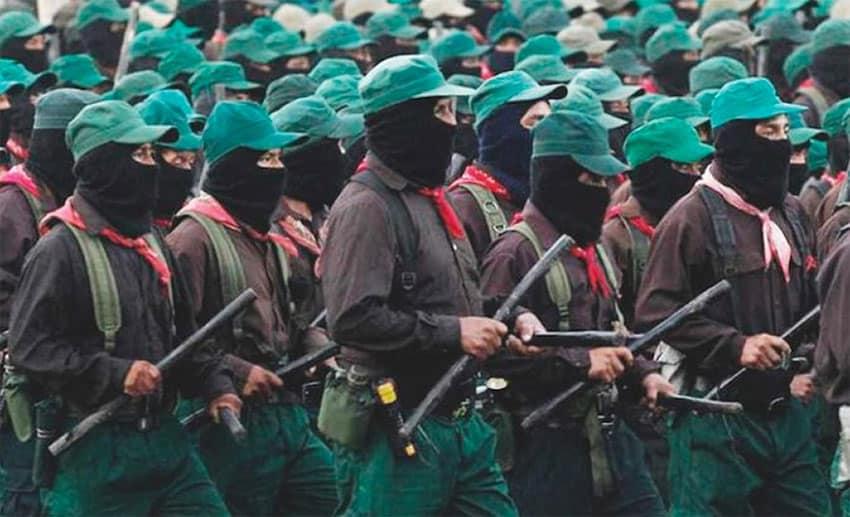
The Zapatistas are on the move in Chiapas, extending their control into another 11 areas of the state.
The Zapatista Army of National Liberation (EZLN) announced in a statement on the weekend it will create 11 new caracoles, or autonomous zones, in the southern state.
Zapatista leader Subcomandante Moisés described the extension as “exponential growth that allows us to break the blockade again,” referring to the Zapatistas’ claim that they have been fenced in by the federal government.
The EZLN already has five caracoles in Chiapas as well as 27 rebel Zapatista autonomous municipalities. The Zapatista army generally doesn’t allow state security forces or government inspectors to enter their communities and children attend schools with their own educational system.
The expansion will give the army 43 rebel areas.
President López Obrador, who has a strained history with the rebel group best known for staging an uprising on January 1, 1994 – the day NAFTA took effect, said on Monday the expansion was “welcome.”
“Go ahead, because that means working to benefit the villages and the people,” he said. “The only thing we don’t want is violence.”

The 11 new autonomous zones, with names including “Esperanza de la Humanidad” (Hope of Humanity), “Floreciendo la semilla rebelde” (The rebellious seed blooms) and “Ernesto Che Guevara,” are located in the municipalities of Ocosingo, Chicomuselo, Motozintla, Amatenango del Valle, Tila, Chilón and San Cristóbal de las Casas.
Despite López Obrador’s reaction to the EZLN announcement, some of the new autonomous zones are likely to be controversial, the Associated Press reported.
One of the new caracoles is to be located in Nuevo Jerusalén, a town amid the ecologically sensitive Lacandon jungle.
Zapatistas have said in the past that nature and farming can co-exist in and around their communities.
However, experts say that slash-and-burn agriculture, the rearing of cattle and thin jungle soil make human settlement and environmental conservation incompatible.
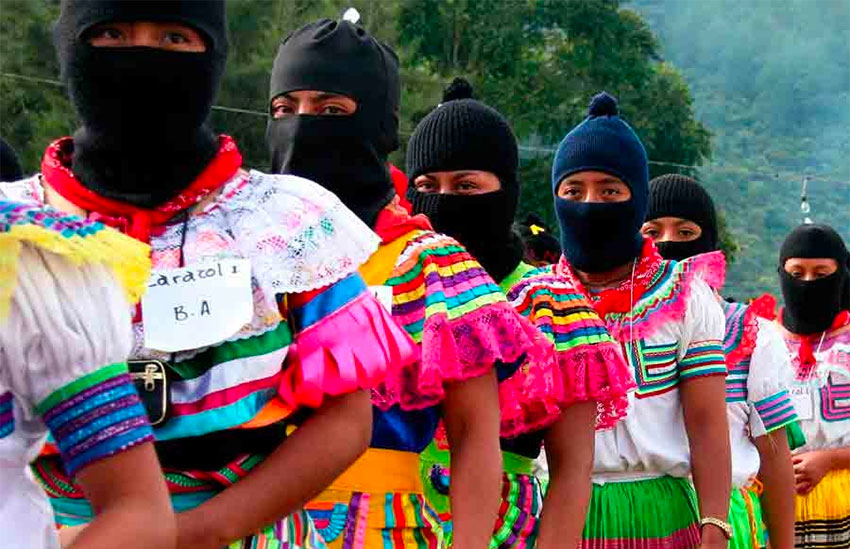
The Zapatistas’ announcement came just days after former EZLN leader Subcomandante Galeano (formerly Subcomandante Marcos) said in another statement that a music festival is being planned to protest against the government’s infrastructure projects for the south of the country, which include the Maya Train, the Dos Bocas oil refinery and the Isthmus of Tehuantepec trade corridor.
The rebel army threw down the gauntlet last New Year’s Eve at a ceremony marking the 25th anniversary of the its 1994 uprising, when Subcomandante Moisés outlined the Zapatistas’ commitment to opposing the government.
“We are going to fight. We are going to confront [them]; we are not going to allow [López Obrador] to come through here with his destructive projects,” he said.
In the statement issued on the weekend, Moisés said the “neoliberal mega-projects” will wipe out entire towns, destroy nature and turn the heritage of indigenous peoples into fat profits for investors.
Although the president expressed his respect for the Zapatistas during a visit to Chiapas last month that respect wasn’t reciprocated.
Moisés called the president “the new overseer” and charged that persecution and bloodshed are continuing under his rule.
Since the new government took office on December 1, a dozen members of the National Indigenous Congress and Indigenous Government Council have been murdered, the EZLN leader said.
Source: Chiapas Paralelo (sp), Associated Press (en)