A Canadian mining company confirmed that 10 employees were kidnapped from one of its project sites in the northern state of Sinaloa last week and announced that it had suspended work on its flagship Panuco silver-gold venture located nearby.
The incident is under investigation, but information remains limited, according to a statement released by Vizsla Silver mining company late Wednesday.
“Local authorities have been notified, and the Company’s crisis management and security response teams are actively engaged. The Company’s immediate priority is the safety and wellbeing of the individuals involved,” the statement said.
The Sinaloa state Attorney General’s Office also issued a statement saying it has opened an investigation into the kidnappings after receiving a report “of the disappearance of 10 individuals on January 24 in a 911 call from a company representative.”
Relatives of the missing have denounced a lack of communication from the company, as well as an absence of institutional support.
El Universal newspaper reported that the family of one of the missing recounted in a social media post that the events occurred around 6:00 a.m. on January 23.
According to this post, “armed individuals entered the La Clementina housing development in Concordia, where the company housed the workers because it was considered a safe area, and took them away without any information about their whereabouts to this day.”

Among the missing are engineers, a geologist, security guards and administrative staff. Seven of the missing are reportedly from Hermosillo, Sonora, and one is from the state of Chihuahua.
State authorities have launched search operations in conjunction with federal authorities, including the military. State authorities also executed a search warrant on Tuesday as part of the investigation, though no additional details were shared.
The Association of Mining, Metallurgical and Geological Engineers of Mexico (AIMMGM) issued a statement expressing “deep concern over the illegal detention of at least 10 professionals from the mining industry,” urging the authorities to “guarantee their safe return.”
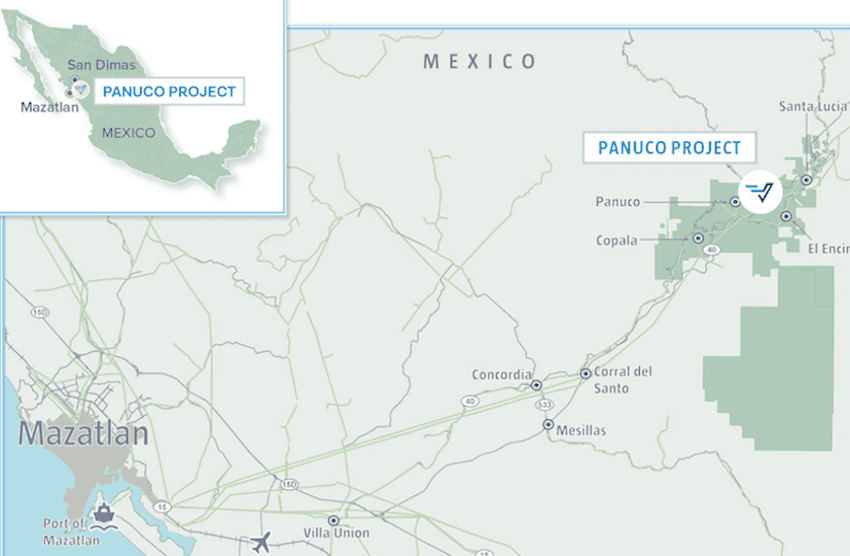
The Concordia site is located near Vizsla Silver’s Panuco venture, a predominantly silver-gold mine with zinc and lead resources that is considered to be an emerging high-grade discovery project.
Located near the city of Mazatlán, Panuco hosts the world’s largest undeveloped, high‑grade silver resource. It is believed to hold 12.8 million proven and probable tonnes grading 2.01 grams of gold per tonne and 249 grams of silver per tonne.
Vizsla Silver, which had been expanding its land position in western Mexico along the highly prospective Sinaloa Silver Belt, projected a mine life of 9.4 years for Panuco and planned to begin production there in the second half of 2027.
The Toronto-based weekly trade journal The Northern Miner said Vizsla Silver shares — which had tripled over the past year — plunged 15% on Thursday morning in Toronto, slashing the company’s market value to about US $2 billion.
With reports from El Universal, CBC, The Northern Miner and NS Energy