“The proof of the pudding is in the eating” has been a favorite expression of philosophers, or maybe even cooks, perhaps since the 14th century.
Mexico and the U.S. share a pudding entitled the Migration Issue. There’s no need to describe the issue, which is front and center from Burma to Brownsville, Texas, but nobody seems able to propose a solution.
I’d like to start.
As any appliance repairman, auto mechanic or medical doctor can attest the best solution is often the simplest. And maybe the least expensive. So it is with illegal migration.
I learned in graduate school in social sciences that the best way to introduce a new idea is to keep it simple to understand and easy to comply with. And cheap.
Kamala Harris’ “Do not come” is a new idea from this U.S. administration. Now let’s make it attractive, cheap and simple to comply with for tens of thousands of already-en-route would be-illegal migrants.
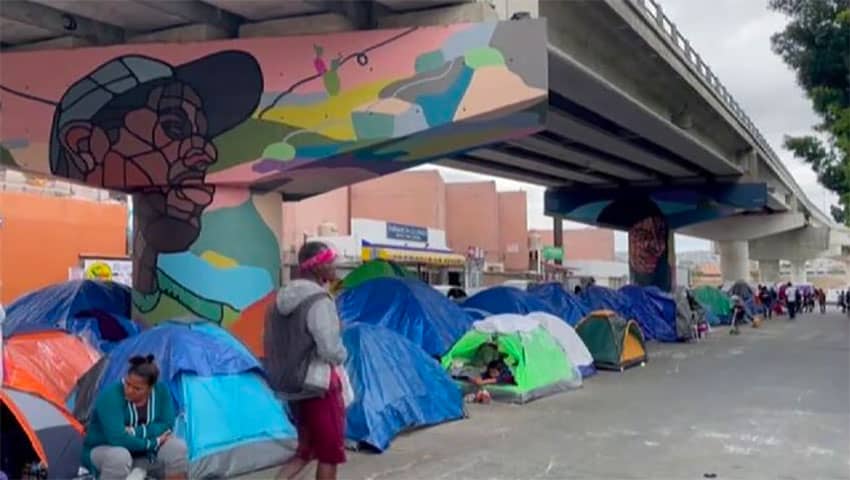
I’ve spent almost countless hours among would-be migrants in Matamoros, on Mexico’s northern border, and Tapachula on the southern border. I’ve crossed at Tijuana, Nuevo Laredo, Puerto Palomas and although not tarrying on my way south have no doubt that there are equally squalid encampments in many other places.

Let’s make it easy, say. attractive for them to go home to Guatemala, Honduras, El Salvador, Haiti and maybe even Africa.
It’s 100 F in the refugee camps, which are filled with unhappy campers in Matamoros or Tapachula, even better if it has been raining. A huge and luxurious comfortable bus of the type Mexico is proud of, spilling out air conditioning, pulls up with two signs on the front —HOME and FREE.
Fill ‘er up. All aboard. An immigration official once told me it costs at least US $100,000 to process each asylum request. Filled, that’s a $5 million bus now, 10 buses means $50 million, chock a block with passengers as happy as Vietnam POW Admiral Stockdale and company returning from Hanoi.
Join me at the international bridge in Matamoros, or in front of Immigration in Tapachula, and you’ll see what I mean.”Sure, I’d like to go home, but how?” is what you’ll hear.
There’s room for all in this scenario. The NGOs and churches can provide food and water, and the U.S. taxpayer has just saved over $4.9 million. Furthermore, Mexico’s and the United States’ diplomatic headaches have been mitigated.
The buses from the northern Mexican border need only travel to Tapachula, Chiapas, or — if Guatemala will cooperate — across to the borders of Honduras and El Salvador. So much for the northern tier $5 billion. No multilateral committees, task forces or humanitarian groups required. Just line up some buses and “they’ve got a ticket to ride.”
Simple? Yes. Tried? No.
Carlisle Johnson writes from his home in Guatemala.