As Latin America’s presidents battle a pandemic that has hit their people and economies harder than any other region, something uniting them is their unpopularity.
Chile’s Sebastián Piñera and Colombia’s Iván Duque have approval ratings of roughly 18%; Brazil’s Jair Bolsonaro’s rating stands at 24% and Argentina’s Alberto Fernández is at 32%, according to recent surveys. Peru has gone through four presidents in a year. Social unrest is sweeping the region.
Long but ineffective lockdowns, scandals over early vaccinations for the well-connected, overloaded public health services and inadequate support for the most vulnerable have fueled popular anger. Even before the pandemic, most Latin Americans had little faith in their governments.
“In May, 80% of Latin Americans said their country was on the wrong track,” said Jean-Christophe Salles, Latin America chief of the pollster Ipsos. “In this context, Latin American presidents appear with a very low level of approval.”
The exception, he added, was Mexico.
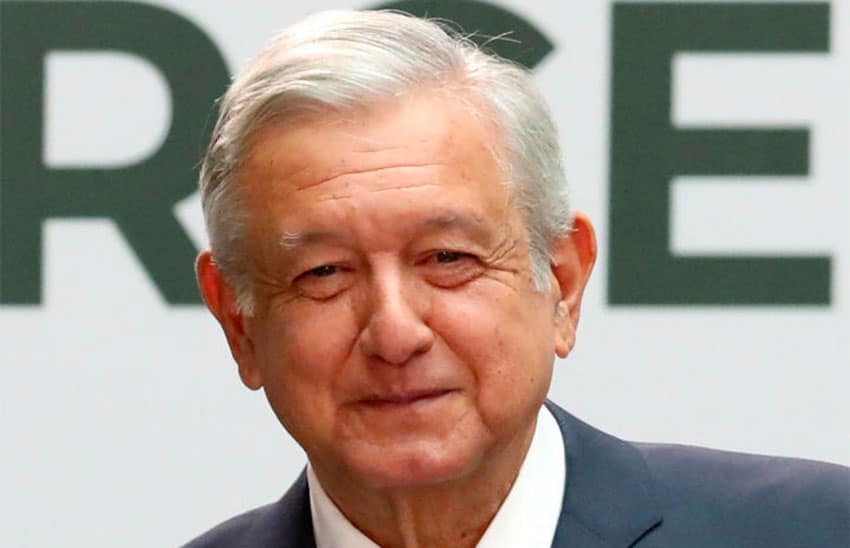
Nearing the midpoint of his six-year term on Sunday last week, President López Obrador and his allies won a string of state governorships and a fresh congressional majority — victories his peers in the region could only dream about.
As he revelled in his electoral successes at a news conference on Tuesday, López Obrador heard his ministers announce that almost one in three of Mexico’s adult population had been vaccinated and schools were reopening.

“As we faced the pandemic and there was an economic crisis … what did they ask me to do?” the president said, referring to Mexico’s elite. “To rescue those at the top — and we opted to support from the bottom up, because that is how it should be, for the sake of humanism, social justice and security.”
López Obrador is famous for his rhetoric and the skillful messaging conceals more awkward truths: Mexico’s excess death toll during the pandemic has been one of the world’s highest, and the government’s refusal to take on extra borrowing has limited its ability to support those hurt most by the pandemic.
Much of López Obrador’s approach to the pandemic has been idiosyncratic: he initially played down the pandemic, was slow to impose lockdowns, made them less restrictive when they did occur and resisted calls to splurge on stimulus spending.
So far, Mexico has suffered the world’s fifth-highest excess mortality percentage since the pandemic began, according to a Financial Times analysis of published data comparing death rates to the historical average.
Yet Alicia Bárcena, head of the UN Economic Commission for Latin America, said Mexico’s government remained much more popular than its peers because of “the perception of the veracity of the commitment which the government has declared since its inauguration to giving priority to attending to the needs of the poor.” In addition, López Obrador was seen as “an austere leader who is not corrupt or corruptible,” unlike some of his predecessors.
“For the majority of the population, who are used to not being well served by their governments, this president arrives with a message of ‘I’m here for the people and my government is not for the elite,’” said Stephanie Brewer, director for Mexico at the Washington Office on Latin America. “Regardless of whether his policies are the best, they have the feeling that he’s on their side.”
A recent World Bank survey found that fewer households in Mexico experienced food insecurity or loss of household income last year than in most other countries in the region.
Martha Bárcena, Mexico’s former ambassador in Washington, said López Obrador had given priority jabs to the most vulnerable and had converted many hospitals into specialist Covid-19 treatment centers. “The poorest and most vulnerable saw that they were attended to in equal conditions to the middle and upper classes,” she added.
As they contemplate protests along the Andes, even some of López Obrador’s harshest business critics admit to a grudging respect for the social peace he has bought Mexico amid the pandemic.
“We may not like López Obrador’s economic policies — in fact, we hate them,” said one banker in Mexico City. “But we have to recognize that he has delivered a few years of political stability, which has spared us from the mess engulfing countries further south.”
© 2021 The Financial Times Ltd. All rights reserved. Please do not copy and paste FT articles and redistribute by email or post to the web.