I’ve never not had crushes on boys. I never went through a stage of saying, “Ewww, I don’t want to play with them, gross!”
Even when I was 4 years old, I had a “boyfriend” at daycare (Joe), and throughout my childhood I was hyper-aware of their presence around me and my own aesthetic and behavior in front of them.
I’ve since calmed down considerably — thank goodness. Now the news that Congress is considering a bill to allow children to change their names and gender has me thinking about that very delicate topic of childhood sexuality and gender identity, and reflecting on my own childhood experiences.
I was a girl, and it didn’t occur to me to identify as anything but a girl. I liked “girl things” — ballet, playing dress-up, singing for my family in a ridiculously high-pitched voice, making lists with my friends of the boys I liked at school. I was shy and sensitive and cried easily, characteristics and behaviors perfectly acceptable for a girl.
I rehearsed for months how I would ask my mom to allow me to start shaving me legs and wearing a little bit of makeup, and I’ll always feel a little ashamed about that time I wore a bikini on a summer trip when she’d forbidden me to do so (the tell-tale sunburn when I got back revealed my deception).
When my best friend in fifth grade told me what “gay” meant (I hadn’t heard the term before in my conservative Texas city), I remember feeling a little surprised, and then not giving it much more thought. I didn’t hear the term “transgender” until college, and even after graduating with a degree in sociology I still didn’t feel I had a complete grasp on the concept.
I didn’t know for much of my life that there were people who didn’t feel they “fit” in their bodies. Had I known, I can’t imagine it would have had any effect on how I felt about myself and who I was.

I’ll freely admit even now that I am still learning. But I do understand enough to know that my not completely understanding something doesn’t automatically mean that it’s wrong or unimportant for those living it. I certainly understand that a tiny sliver of the population identifying as a gender that doesn’t “match” the sex they were born with for our particular society poses no threat to me or anyone else.
It is hard for me to fathom the idea that the thoughts, feelings, attitudes and behaviors produced by nature combined with socialization to create one’s gender identity might be considered “wrong” by the general public. How can the core of someone’s being be wrong?
I have nothing but sympathy for those who are met with rage at worst and confused looks at best when they don’t “match” their biological sex the way our particular society says they should. When I think of children in this situation, it breaks my heart.
The statistics are clear: any kind of gender or sexual identity “deviance” is correlated with sky-high rates of depression, suicide and self-harm . . . and that’s just on the individual level. Family estrangement, abuse and homelessness are also too prevalent in this population. Then of course there’s the run-of-the-mill everyday discrimination they face by society at large.
When the National Front for the Family organized marches across Mexico “in defense of the family” (read: against families composed of anything besides mother, father, children and particularly against Mexico’s impending changes allowing same-sex marriage), my jaw hung open at the news.
I’d naively believed that no one would show up. Did we really have people in our midst that believed that they, the dominant group, were threatened by consenting adults being allowed to marry one another? Apparently so. (Pro tip: if you’re part of the dominant group, then by definition there is no need to “fight for your rights;” your rights are already the law of the land, and giving others the same ones doesn’t take yours away.)
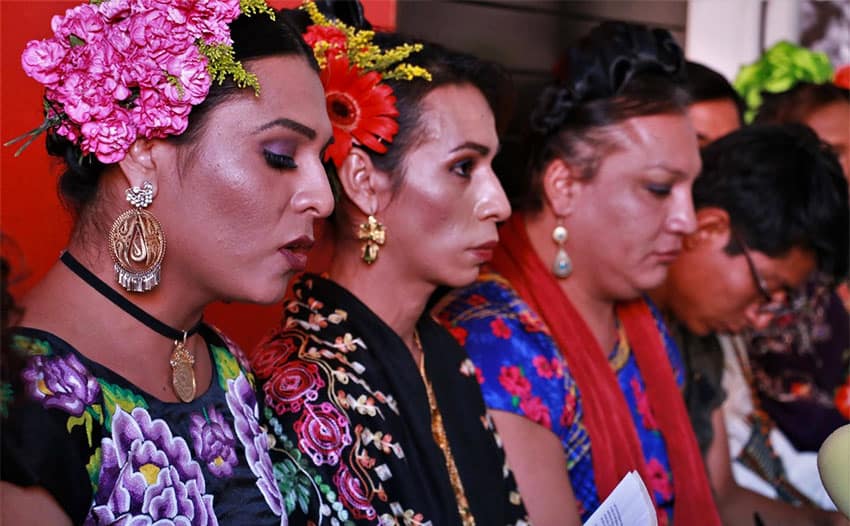
The concept of a “third gender,” or an option outside of the normal male/female binary, is nothing new in human societies. Just in North America several native cultures had clear social positions for “two-spirit” individuals, and to this day in Mexico we have the muxe of Oaxaca. This isn’t a fad made popular by young hipsters who are out to get your children to — do what exactly? If your answer is anything but “respect those different from them,” then it’s the wrong answer.
Just because Mexico has other, bigger problems doesn’t mean that we need to ignore all the ones we consider smaller in the meantime. If we can help children to accept themselves and be respected by others by giving them the legitimacy of a standardized bureaucratic procedure, then let’s do that.
Progress can be both uneven and incremental, but a win is a win. Legitimizing who people know they are is a more than worthy cause.
Sarah DeVries writes from her home in Xalapa, Veracruz.