Home Blog Page 1403

Arrest of general in US shakes López Obrador at home and abroad

0
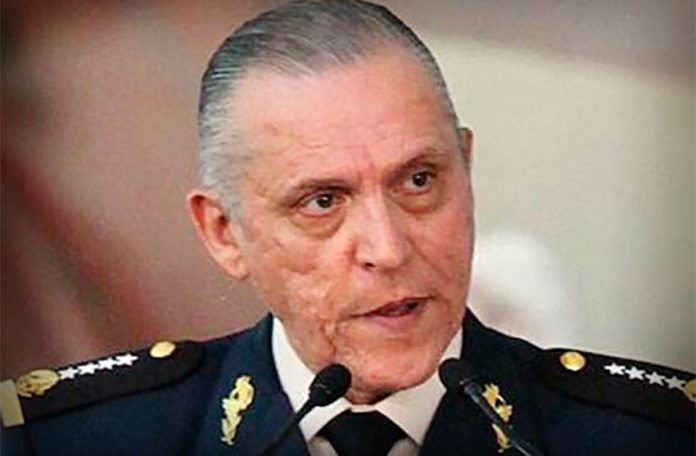
salvador cienfuegos
Cienfuegos: 'The whole leadership of the army are Cienfuegos’ disciples. He promoted them.'

The spectacular arrest of former defence minister Salvador Cienfuegos at Los Angeles airport has questioned two bets Andrés Manuel López Obrador made when he became president in 2018: to rely on the military at home and to foster close relations with the U.S.

The allegations against Cienfuegos, who has not been investigated in Mexico, are as sensational as any narco drama. The retired general, 72, is accused of having exchanged thousands of unencrypted BlackBerry Messenger communications with the H-2 drug cartel, raising questions over how Mexico could have remained oblivious to such huge U.S. phone tapping.

Almost two years to the day of his arrest on October 15, Cienfuegos was a friend of Washington: the U.S. decorated him with the Legion of Merit, one of its most prestigious military awards, for his “extraordinary contributions” to bilateral ties as minister from 2012-2018.

But Washington chose not to tip off Mexico that it would detain the ex-general on charges of being a drug trafficker and money launderer. Cienfuegos, nicknamed the Godfather, was arrested at the request of the Drug Enforcement Administration with no courtesy call to Mexico City. He is planning to fight the charges “energetically,” his lawyer, Duane Lyons, has said.

“This is a very clear message that the U.S. right now doesn’t necessarily have confidence in the current Mexican government when it comes to the bilateral security agenda,” said a former senior Mexican government official. “We might have imagined we had a relationship with the U.S. that we don’t.”
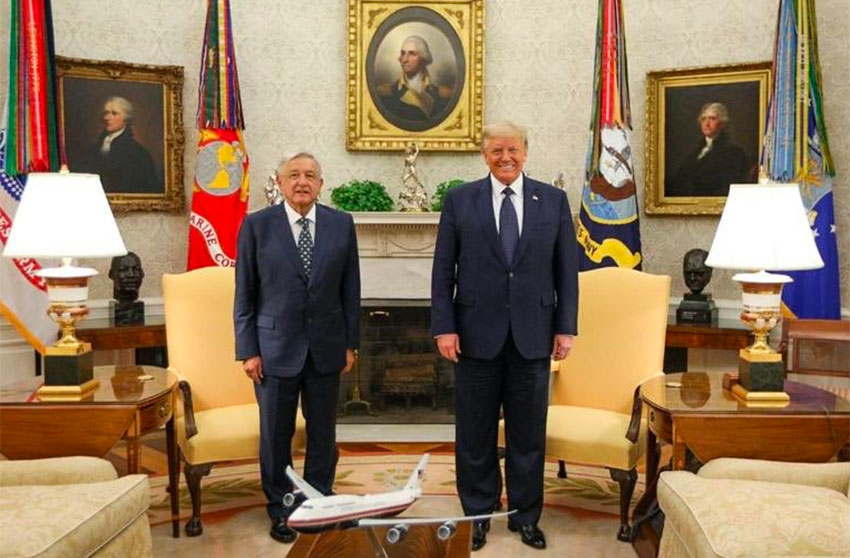
lopez obrador and donald trump
Breakdown in communications is a blow to López Obrador’s foreign policy, analysts say.

The breakdown in communications is a blow to López Obrador’s foreign policy focus to keep President Donald Trump happy, analysts say. He has bent over backwards to preserve relations with Mexico’s top trading partner, even in the face of threats from Trump. He mobilized his National Guard to contain migration to placate Trump and yielded to some of his trade demands to clinch the new NAFTA, the US-Mexico-Canada Agreement.

The Los Angeles arrest shows the feeling is not necessarily mutual. As one former top Mexican military official put it: “(If) you don’t trust, you stop talking.”

He added: “The relationship between Mexican security forces and U.S. defence, security and law enforcement will freeze for a long, long time.”

López Obrador’s other major bet has been on the military, making them what Catalina Pérez Correa, a security specialist at Mexico’s CIDE university, called “the pillar of his government.”

Hours before the arrest, Alejandro Hope, a security analyst and former intelligence official, published a document revealing that the National Guard had been placed under formal defence ministry control.

But Pérez Correa noted that the president has also roped the military into tasks as diverse as building an airport and branches of a state bank, controlling ports, growing trees for a government reforestation program and distributing school textbooks.

López Obrador hails the military as honest — he calls its top brass “incorruptible” — and an essential ally in rooting out corruption.

That assessment is now being challenged, questioning the president’s anti-graft strategy. “The whole leadership of the army are Cienfuegos’ disciples. He promoted all of them,” the former military official said. “If you’re going to send all corrupt officials in the armed forces to jail, you’re going to need more prisons.”

The military now feels humiliated and angry, Hope said. “AMLO is now trapped between the U.S. and the army, and that’s not a good position,” he said, using the president’s nickname.

“He’s bet his presidency on the army and that has been shaken. He has also bet his presidency on not antagonizing the U.S. and now the U.S. has delivered a slap in the face.”

Jorge Castañeda, a former foreign minister, said: “This is the most difficult problem of López Obrador’s administration because there’s no good way out.”

© 2020 The Financial Times Ltd. All rights reserved. Please do not copy and paste FT articles and redistribute by email or post to the web.

Super-delegates accused of using their positions to campaign for governor

0
Alejandro Ruiz of Baja California Sur posts photos on social media showing him working on housing projects.

Federal government super-delegates in at least four states have been accused of improperly using their positions to campaign for governor.

The newspaper Reforma reported Monday that the super-delegates – officials tasked with managing the federal government’s welfare and social programs at the state level – in Baja California, Baja California Sur, Colima and Tlaxcala are not only collecting a monthly salary of more than 126,000 pesos (US $6,000) but also using their positions to improve their chances at gubernatorial elections in 2021.

In Baja California, Alejandro Ruiz Uribe promotes himself on social media by posting photos that show him working on housing projects in poor neighborhoods and handing over food packages to people such as waiters and taxi drivers who lost income due to the coronavirus pandemic.

In Baja California Sur, Víctor Castro Cosío also promotes himself online, posting photos that show him inspecting the construction of branches of the federal government’s Banco del Bienestar (Bank of Well-Being), meeting with fishermen and overseeing the distribution of welfare payments to senior citizens.

In Colima, Indira Vizcaíno Silva uses the government’s tree-planting employment program and school improvement program, both of which are allegedly plagued by corruption, to promote her image, while Lorena Cuéllar does the same in Tlaxcala.

All four super-delegates are expected to seek the ruling Morena party’s nomination to run as candidates for governor next year.

Pablo Amílcar Sandoval, who resigned as the federal super-delegate to Guerrero at the start of this month, has also been accused of using his former role to improve his chances of success at that state’s gubernatorial election.

The national president of the National Action Party took to Twitter on Monday to denounce the super-delegates’ improper use of their positions.

“The use and abuse of the social programs continues,” Marko Cortés wrote. “The money comes from the taxes Mexicans pay and it’s to combat poverty, not for the Morena super-delegates to campaign and … promote their image.”

Higinio Martínez, a Morena senator, called for super-delegates found to be improperly using their positions for personal gain to be “immediately sanctioned and removed.”

Addressing the accusations, President López Obrador called on citizens to report any evidence of officials using public funds and government programs for their own benefit.

“[The super-delegates] can’t campaign and if they’re doing it, and there’s proof, they must be reported,” he said. “Electoral fraud is now [classified as] a serious crime,” the president added.

Indeed, officials can face hefty fines and prison sentences if found guilty of electoral fraud.

López Obrador said that government officials are free to pursue elected positions at next year’s elections but added that to do so they must resign from their current positions by the end of this month.

“We’re not going to use the public budget to help candidates and parties. Those who are in the government and want to participate [in the elections] will tender their resignations this week,” he said.

Security Minister Alfonso Durazo, who is seeking to be the Morena party candidate for governor in his native Sonora, presented his resignation today.

The super-delegates’ use of their positions to campaign for elected office was predicted by opposition party lawmakers before López Obrador took office in December 2018.

“The super-delegates idea gives the impression of being a factory for pre-candidates,” Senator Miguel Ángel Osorio Chong, a former interior minister and governor of Hidalgo, said in November 2018.

Source: Reforma (sp), Infobae (sp) 

Mexico City mayor tests positive for coronavirus

0
Mayor Sheinbaum
Mayor Sheinbaum tested positive by is asymptomatic.

Mexico City Mayor Claudia Sheinbaum announced Tuesday that she had tested positive for Covid-19 but was currently asymptomatic.

It was her third Covid test after she participated in an October 16 event in México state attended by Navy Secretary Rafael Ojeda, who President López Obrador announced on October 18 had been diagnosed with Covid.

In her Twitter account Tuesday morning, the mayor assured the public that she was fine and had no plans to stop working.

“Last night, I was informed that I tested positive for Covid,” Sheinbaum said. “I feel fine and strong and I am being followed medically by the state’s Ministry of Health and the Institute of Medical Sciences and Nutrition. At the moment, I am without symptoms. I will continue working and coordinating my activities with the same commitment as always.”

Nevertheless, at least one of the mayor’s scheduled plans were changed suddenly today. She was supposed to open a potable water plant in Ciudad Deportiva and instead held a press conference.

Just yesterday, Sheinbaum held an event to honor 53 Mexico City medical personnel, mainly for their work treating Covid patients. Also yesterday, the administration discovered that four reporters who regularly cover the mayor have tested positive for Covid.

At the event on October 16, which was to tour work being done on the new Mexico City airport at the Santa Lucía Air Force Base in México state, Sheinbaum followed normal health safety protocols to protect herself and was not in direct contact with Ojeda.

Sheinbaum’s is the latest in a line of Mexican leaders who have been diagnosed with the coronavirus since the spring:

  • March 28: Hidalgo Governor Omar Fayad announced his diagnosis. He quarantined at home and said that all who had been in contact with him had also taken precautions.
  • March 29: Tabasco Governor Adán Augusto López was diagnosed and was under medical care for 35 days.
  • March 30: Querétaro Governor Francisco Domínguez announced he had contracted Covid. He returned to his duties about two weeks later.
  • June 9: Guerrero Governor Héctor Astudillo announced his Covid diagnosis.
  • July 2: Tamaulipas Governor Francisco García Cabeza de Vaca announced he was infected, saying that he would continue working.
  • July 16: Quintana Roo Governor Carlos Joaquín González announced that during a routine medical examination he had been found to be an asymptomatic Covid-19 carrier. He quarantined himself and conducted state business from home.
  • July 27: Durango Governor José Rosas Aispuro announced his diagnosis on social media. He also elected to quarantine and work from home.
  • September 10: Michoacán Governor Silvano Aureoles announced on his Twitter account that after experiencing symptoms, he had tested positive for Covid.

Source: Milenio (sp), El Financiero (sp)

Dissident governors ready for political and legal battle against feds over funding

0
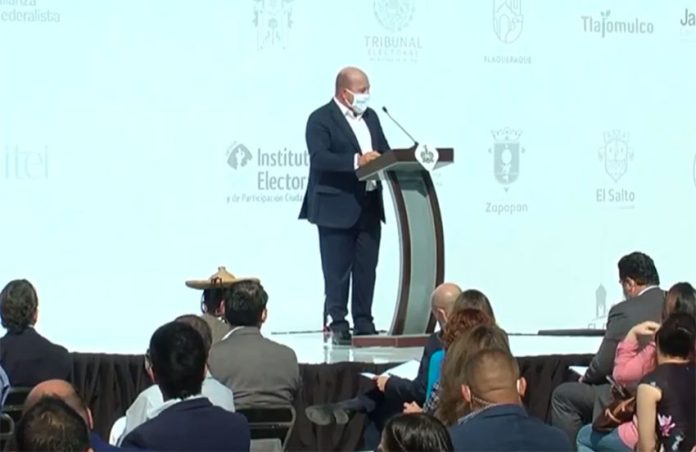
Jalisco Governor Alfaro
Jalisco Governor Alfaro: 'The president is dividing the nation.'

Ten governors held simultaneous events on Monday to demand that the federal government provide more funding to their states and to denounce the abolition of 109 public trusts.

Attended by businesspeople, municipal government officials, members of civil society organizations and others, the events took place in the 10 states led by the governors of the Federalist Alliance, a group that has called President López Obrador a threat to democracy and which is aiming to be a counterbalance to what they see as his attempt to concentrate power in the federal government.

The 10 governors are from Chihuahua, Jalisco, Nuevo León, Durango, Guanajuato, Tamaulipas, Coahuila, Colima, Michoacán and Aguascalientes.

The simultaneous protest events came seven weeks after the federal government revealed in its 2021 budget that it intends to cut funding for Mexico’s 32 states by 5.5% next year and less than a week after the Senate voted in favor of abolishing 109 public trusts.

The dissident governors threatened to withdraw from the federal pact – an agreement that binds the states together and is supposed to guarantee them fair and equitable federal funding while granting them political sovereignty and autonomy – if the federal government doesn’t meet their funding demands and continue to provide adequate resources to the areas financed by the abolished trusts.

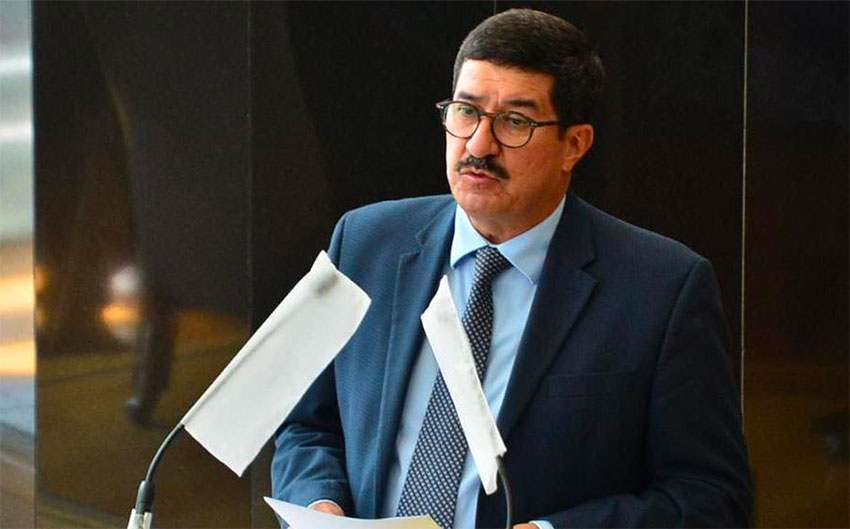
Chihuahua's Corral
Chihuahua’s Corral: ‘Indifference and deaf ears.’

The alliance governors have already withdrawn from the National Conference of Governors, an organization that provides a forum for discussions between state and federal leaders.

Chihuahua Governor Javier Corral said Monday that the Federalist Alliance is ready for a political and legal battle against the federal government over funding, adding that the group could seek intervention from international authorities.

“We’re not going to allow abuse or the trampling [of our rights],” he said.

“If the response [to our demands] continues to be indifference and deaf ears, we’re ready to take up a political and legal battle. If [the federal government] doesn’t listen to our states, it could mark the beginning of the rupture of the federal pact.”

At an event in Guadalajara, Jalisco Governor Enrique Alfaro and representatives from a range of economic sectors denounced the abolition of the public trusts and the federal government’s decision to slash the state’s 2021 funding by 9.2 billion pesos (US $438.9 million).

“We’re here leaving behind our party colors and agendas; we’re putting our differences to one side for a purpose that unites us – defending Jalisco,” the governor said.

“No free and sovereign state that has a minimum of dignity can continue to be part of a federation when the government of the republic ignores us, attacks us, insults us and takes away what belongs to us.”

Alfaro also took aim at López Obrador for dividing the nation and preventing the possibility of reconciliation with the dissident states by labelling those who don’t agree with him as “corrupt” or “conservative.”

He said that the silence of some states in the face of the president’s attacks legitimizes the federal government’s growing centralism.

(The government has installed “super-delegates” in states to oversee the distribution of federal funds.)

Alfaro said the 8% reduction in federal funding in Jalisco will place priority infrastructure projects at risk, take money away from municipal governments, crush the state’s environmental agenda, hurt the health system and undermine scientific and technological work.

He said that he and the other disgruntled governors are willing to enter into discussions with the federal government with a view to reaching an agreement on funding but added that they are also ready to launch a legal and political battle “if it’s necessary.”

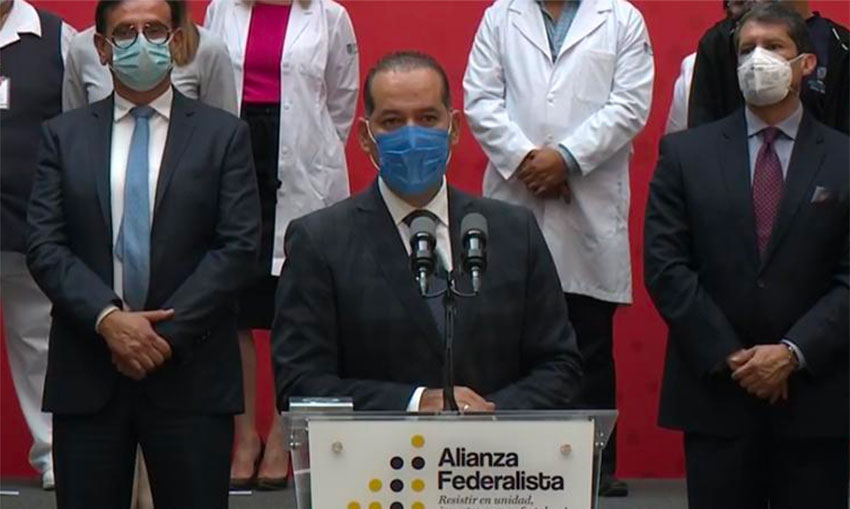
Governor Orozco of Aguascalientes
Governor Orozco of Aguascalientes: federal government determined ‘to destroy the federal system.’

Nuevo León Governor Jaime Rodríguez said that states’ ability to invest in public transit, education, highways and healthcare will be undermined by the federal government’s funding cuts. At the same time, unemployment and poverty will increase, he charged.

The governors of Durango, Guanajuato, Tamaulipas, Coahuila, Colima, Michoacán and Aguascalientes presented similar arguments against the federal government’s cuts.

Martín Orozco of Aguascalientes said there is a “determination” on the part of the federal government to “destroy the federal system” and replace it with “absolute power,” charging that the Congress – in which the ruling party has a majority in both houses – has become a rubber stamp for the executive.

He described the abolition of the public trusts as an authoritarian decision that goes against the democratic spirt upon which the nation was forged.

“From Baja California to Yucatán, all Mexicans are fighting for their most legitimate needs. The [federal] lawmakers are there to defend the rights of the citizens, not the interests of a party. [The abolition of the trusts] affects research, science, sports, art and culture. It weakens the fight against poverty and people’s quality of life,” Orozco said.

Source: Reforma (sp), El Universal (sp), La Razón (sp) 

Covid appears to have been good for bicycle manufacturing

0
Electrobike is one of the manufacturers that have seen a spike in sales.

Fear of the coronavirus seems at least partly responsible for record-breaking numbers in bicycle manufacturing and sales nationwide in August.

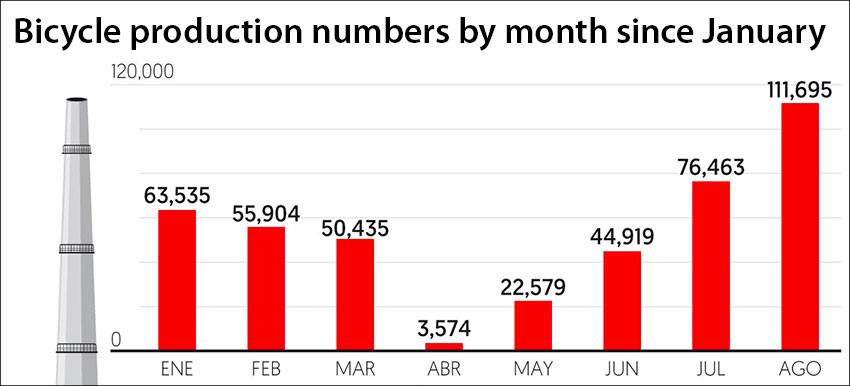
The national statistics institute, Inegi, says there were 111,695 bicycles produced during the month, a 21% rise compared to August of last year, and the highest increase in any month since June 2018.

“We don’t know for certain that it’s about fear of the pandemic, but people are looking for ways to maintain a safe distance,” Jaime Ramírez Vázquez, a business director with Electrobike, which has stores throughout the country.

He recently told El Financiero newspaper, “Our store online has been receiving orders every day despite us having to shut down our physical locations. We’ve seen a 150% increase in interested buyers.”

Manufacturing representatives also attribute the rise in demand to the coronavirus pandemic, saying that bicycles have always been more popular in cities because they allow people to traverse long distances, maintain a safe distance from others, and avoid public transportation, and are more economical than a motorcycle. With the pandemic, people have turned to bikes in greater numbers, they say.

Bicycle production on the rise.
Bicycle production on the rise. el financiero

National Association of Bicycle Manufacturers president Fernando Meijía Basurto recently told El Financiero that bicycle manufacturers began noticing by June that they were receiving more orders, soon after the country began instituting lockdowns. When they were declared essential businesses and allowed to stay open, they began producing to meet the new demand.

“We were not like the malls, which had to wait longer to begin operating again,” Meijía said.

In April, manufacturing numbers fell sharply. According to Inegi, there were only 3,574 bicycles made nationwide. However, the numbers began to climb rapidly in May and then May’s numbers were doubled in June.

The trend had unexpected side benefits for Mexico City, where Rodrigo Díaz, the city’s deputy minister for planning, said that since April the number of cyclists using bike lanes on Insurgentes Avenue — Mexico City’s longest roadway — has increased 250%. At a recent meeting of the Mexican Association of Vehicle Lessors, Díaz told attendees that the increased number of cyclists in the city is reducing traffic congestion.

“With the pandemic, the number of cyclists has risen nationally. We need to make more infrastructure for this form of transport,” he said.

Source: El Financiero (sp)

Minister backtracks: misogyny in cabinet was only ‘a perception’

0
Minister Sánchez: happy to be part of cabinet.

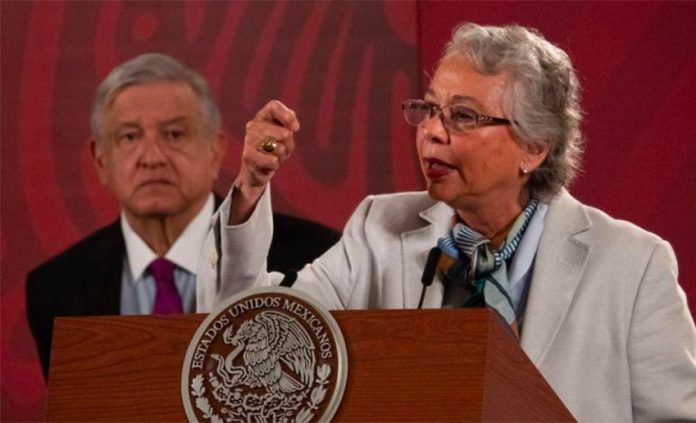
Interior Minister Olga Sánchez has backtracked on remarks she made last week about misogyny in the federal security cabinet, saying Monday that it was only her “perception” that she has been discriminated against.

Sánchez, the first woman to serve as federal interior minister and a former Supreme Court judge, said last Tuesday that there was “considerable” misogyny in the security cabinet, which is convened by President López Obrador every morning.

“Many of the challenges were to demonstrate that women are as capable [as men] or more so. Even today there are very considerable misogyny issues,” she said.

“There have been times … when sometimes my opinion — and I don’t mean the president, on the contrary, the president has always given me my place — but among the members, my opinion was not taken into account at times, even if I was right and even if I was contributing something important.”

Speaking at a press conference on Monday, Sánchez said that her “hypersensitivity” about issues related to the “patriarchal structure” caused her to perceive that there was misogyny in the security cabinet.

She added that what she perceived as “an issue of misogyny” was “probably” not perceived as such by many of the participants in the security cabinet meetings.

Sánchez also said that she is very happy in the cabinet and with López Obrador, who has been criticized for failing to give women’s issues, including gender violence, the attention they deserve.

The interior minister told yesterday’s press conference that the government is focusing on combating violence against women in municipalities with a high incidence of gender crimes.

“I believe that we’ll be able to achieve not just the containment [of gender violence] but a reduction,” she said.

Data presented last week by Security Minister Alfonso Durazo showed that femicides increased slightly in the first nine months of the year compared to the same period last year but Sánchez rejected any suggestion that 2020 will be the worst year on record for the crime.

However, she acknowledged that the statistics – there were 724 femicides between January and September – are concerning and also recognized that domestic violence against women has increased as people spend more time at home due to the coronavirus pandemic.

López Obrador provoked controversy in May when amid the national lockdown he claimed that 90% of calls made by women to denounce domestic violence and seek help are false.

The president was heavily criticized for his claim, especially by feminist groups, which said it provided more evidence of his minimization of the gender violence problem.

Source: La Razón (sp) 

Federal lawmaker wants to legislate higher wages for Oxxo workers

0
Convenience store workers' wages are too low, says lawmaker.

Employees of convenience stores such as Oxxo and 7-Eleven should earn as much as bank tellers because they do similar jobs, according to a ruling party lawmaker.

Alejandro Carvajal Hidalgo, a deputy with the Morena party, told a press conference Monday that he is backing a bill that proposes that employees of convenience stores as well as customer service staff of pharmacies and retail chains such as Sanborns, Suburbia and Coppel be paid the same as tellers.

The lawmaker said that tellers earn an average of 14,000 pesos (US $670) per month, which he said was about 300% higher than the monthly salaries of convenience store workers.

But employees of stores such as Oxxo carry out similar duties to tellers because they take bank deposits from customers, provide cash withdrawals and process a range of different payments Carvajal said.

Given that such employees “carry out hundreds of thousands of bank operations” they should receive the same remuneration as bank tellers, he said.

The lawmaker, a member of the social security committee of the lower house of Congress, noted that in addition to providing bank-like services, employees of convenience stores, pharmacies and retail chains also charge customers for their purchases and carry out maintenance tasks.

Therefore they have three different roles but still receive salaries and benefits well below those of bank tellers, he said.

Carrying out basic bank transactions such as deposits and transfers is common at convenience stores, especially Oxxo, the nation’s most ubiquitous chain.

According to the National Banking and Securities Commission, Oxxo offers basic banking services at 20,962 locations across Mexico and 43% of all transactions are completed at its stores.

By contrast, commercial banks have fewer than 13,000 branches across the country and there are none in some rural municipalities.

Source: Merca 2.0 (sp) 

More than half of all buses in Mexico are operating illegally

0
One of Mexico City's brand new electric buses.

Mexico has a lot of old and illegal buses on the road.

According to federal statistics, 53% of all buses — 56,631 in total — are illegal because they are more than 15 years old, and 748 of those buses are more than 50 years old, the majority of which are used to transport tourists.

Older buses are a major source of air pollution.

Experts say that the Ministry of Communications and Transportation is aware of the violations, but refuses to take action to force bus operators to comply with the law.

“The ministry knows what vehicles it has, what license plates and how old each one is, but it has not had the strength to say ‘we will no longer give this vehicle license plates,’” said Salvador Saavedra, director of the consulting firm Tecnología para el Transporte.

The number of illegal buses operating on the nation’s roads is up from 33.8% in 2016.

Of the legally obsolete buses, 30,000 are used for passenger transportation with fixed schedules and established terminals, and 26,618 are used for tourism.

Mexico City recently took delivery of the first of 10 fully electric buses which it acquired at a cost of about US $750,000 each. The city said the new buses reduce energy use by 80% and in 10 years of operation will prevent the emission of 1,300 tonnes of carbon and 14 tonnes of harmful pollutants.

Source: Reforma (sp)

Hurricane Zeta makes landfall in Quintana Roo

0
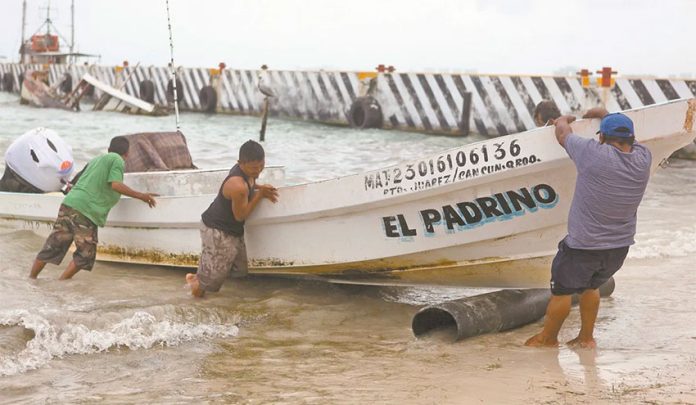
Fishermen in Quintana Roo prepare for the arrival of the hurricane.
Fishermen in Quintana Roo prepare for the arrival of the storm.

Hurricane Zeta was downgraded to a tropical storm as it passed over the northern portion of the Yucatán Peninsula Monday night and Tuesday morning, the second time in 20 days residents of Quintana Roo and Yucatán have braced themselves for a hurricane. 

Zeta made landfall north of Tulum, Quintana Roo, Monday night as a Category 1 hurricane, the National Water Commission said, with maximum sustained winds of 110 kilometers per hour with gusts up to 140.

Torrential rains fell in northern Quintana Roo and eastern Yucatán while Chiapas, Campeche and Tabasco also felt the effects of the storm. 

Before the hurricane hit Yucatán Governor Mauricio Vila ordered businesses to close and residents to stay indoors. Ports were closed to navigation.

Some families in coastal San Felipe and Río Lagartos were evacuated to Panabá and Tizimín to minimize risks. 

In Quintana Roo, Governor Carlos Joaquín González asked residents to remain calm and not buy food in bulk in supermarkets as they did before the arrival of Hurricane Delta less than three weeks ago. 

Businesses were ordered closed as of 2 p.m. Monday in Tulum, Lázaro Cárdenas, Solidaridad, Puerto Morelos, Benito Juárez, Isla Mujeres and Cozumel.

Residents were evacuated in Banco Chinchorro, Othón P. Blanco, Punta Allen, Tulum, María Elena Island and Punta Herrero. 

Tourists were not evacuated but asked to stay in their hotels and avoid beaches, and the Cancún airport remained open.

Power lines and trees were downed by the storm, but no injuries were reported.

Zeta was projected to move out over the Gulf of Mexico where it was expected to regain hurricane force as it moves toward the southern United States, where it is forecast to make landfall on Wednesday. 

Zeta is the 27th named storm of the 2020 hurricane season in the Atlantic, which has seen the second-highest number of storms on record. In 2005 there were 28 named storms, but this year could easily surpass that as the hurricane season officially ends on November 30.

Source: Milenio (sp)

6 National Guard members arrested for Chihuahua murder

0
national guard members
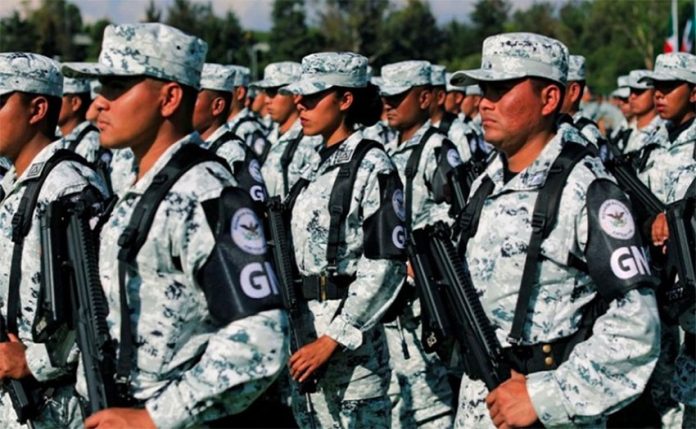
The arrests of the guardsmen will stain the reputation of the new security force.

Federal authorities have arrested six members of the National Guard in connection with the murder of a woman in Delicias, Chihuahua, in September.

Yessica Silva and her husband Jaime Torres, both farmers, allegedly came under fire by the National Guard while driving home on September 8 after attending a protest against the diversion of water to the United States at La Boquilla dam.

Silva died at the scene while Torres was seriously wounded and spent two weeks in the hospital.

The National Guard announced on Twitter Tuesday morning that the federal Attorney General’s Office (FGR) had uncovered evidence that suggested that “some elements of our institution” were responsible for the attack.

As a result, six guardsmen were taken into custody, the National Guard said, adding that it had cooperated fully with the FGR.

“We reiterate that the National Guard will not tolerate abuses or the excessive use of force by its personnel,” the security force said.

The announcement of the arrests comes two days after farmers opposed to the diversion of water lifted an almost two-month-long rail blockade in the municipality of Meoqui, which borders Delicias.

The protesting farmers have submitted a document to the federal government that sets out nine demands including justice for Silva and Torres and the release of three farmers who were arrested the same day the couple was attacked.

They agreed to lift their blockade after the Chihuahua government made a commitment to support their demands.

The National Guard’s alleged murder of Silva will stain the reputation of the security force, which was created by the current federal government and officially inaugurated in June 2019.

Before its creation, President López Obrador pledged that the force would respect human rights and be like the United Nations peacekeeping forces.

He has promised to restore peace to Mexico by addressing the root causes of violence rather than subduing it with force and says that his government is putting an end to abuses committed by federal security forces.

But in addition to the alleged murder by the National Guard, both the army and the navy are accused of carrying out extrajudicial killings since López Obrador took office in December 2018.

Source: El Universal (sp)