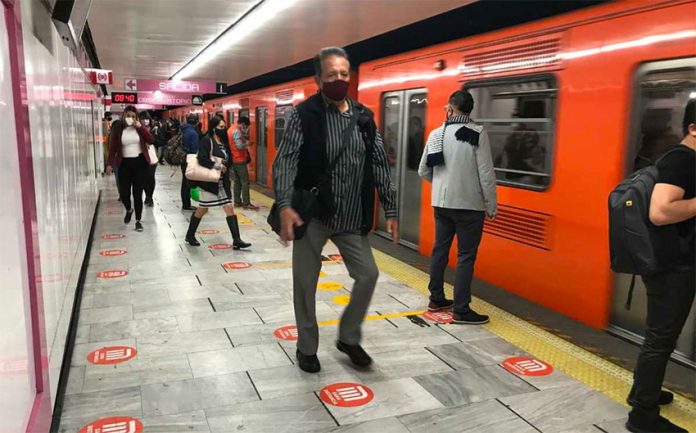
Metro passengers at the Pino Suárez station on Line 1.
Line 1 of Mexico City’s Metro reopened Monday after being shut down for two weeks due to a fire on January 9.
According to preliminary reports by the Mexico City Attorney General’s Office, the fire appears to have been caused by an equipment malfunction at the Buen Tono substation. It took the life of a police officer, who fell from the building as a result of the blaze, and over 30 people had to be treated for smoke inhalation.
The blaze temporarily shut down Lines 1–6 of the Metro, affecting over 1 million passengers. Until Monday, Lines 1, 2 and 3 had remained closed.
Line 1 currently has 10 trains in operation and will be adding the rest gradually, said the Metro general director Florencia Serranía. Staff will be available in stations along the route to assist commuters, she said.
Mexico City Mayor Claudia Sheinbaum has predicted that Line 3 will reopen on February 1 and Line 2 on February 8.
Line 1 reopened today despite flooding last Wednesday at some stations. Excess rainwater that would normally be pumped out of the underground stations rose as high as the bottom of stairways because of the lack of electric power.
Stations on Line 1 have been cleaned and sanitized since then, and no damage to the trains’ engines was detected, promised Serranía, who jointly supervised the final preparations to reopen the line with Sheinbaum on Sunday. Serranía said staff went train by train doing inspections for damage and successful test runs were done with empty cars over the weekend.
The city continues to offer a patchwork of options for commuters on all three lines, mainly the city’s municipal bus system, but also the trolleybus lines, licensed transportation companies and even the city’s police vehicles.
Adrián Lajous, the head of the city’s Ministry of Mobility (Semovi), announced Saturday that the city would be expanding bus routes on Line 2 to combat an issue detected Friday in which licensed bus companies being used as a supplemental service were lingering at certain stops, trying to fill their buses and causing inefficiencies in the system.
“What we saw was an inefficient use of these vehicles, with some very full — particularly those run by licensed bus companies — and others with 10% to 15% occupancy,” he said.
He said the municipal bus system is well-equipped to handle the influx of Metro passengers and that there would be staff available to help direct passengers.
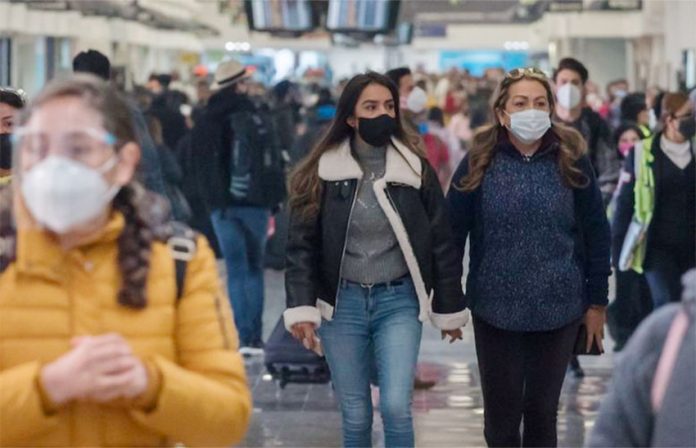
A requirement for travelers entering the United States to go into self-quarantine will not be good for Mexican tourism, according to an aviation and tourism expert.
Fernando Gómez Suárez, an academic at the Panamerican University, told the newspaper Milenio that fewer U.S. tourists will come to Mexico if they have to go into isolation for at least seven days upon returning home.
United States President Joe Biden signed an executive order last Thursday that requires travelers to produce proof of a recent negative Covid-19 test and comply with Centers for Disease Control and Prevention guidelines concerning international travel, including recommended periods of self-quarantine.
The new rules take effect Tuesday. The CDC recommends that people stay at home for seven days after returning from high risk international travel even if they test negative for Covid-19.
(Mexico is one of the worst affected countries by the pandemic, ranking 13th for total cases and fourth for Covid-19 deaths. The CDC warns against travel to Mexico due to the “very high level of Covid-19.)
“If you don’t get tested, it’s safest to stay home for 10 days after travel. Avoid being around people who are at increased risk for severe illness for 14 days, whether you get tested or not,” the CDC says on its website.
Gómez said the quarantine requirement is a blow for Mexican and foreign airlines that fly between the United States and Mexico and vice versa. Demand for air travel between the two countries and airlines’ revenue will both fall, he said.
Other tourism businesses are also set to take a hit as travelers from the United States make up about 60% of all international tourists to Mexico, according to Ministry of Tourism data.
Large numbers of international tourists, including many United States citizens, have traveled to Mexico during the pandemic precisely because the government doesn’t require proof of a negative Covid-19 test or stipulate a mandatory quarantine period.
The federal government’s response to the pandemic has been widely condemned, with much of the criticism focusing on Mexico’s low Covid-19 testing rate and the failure to enforce a strict lockdown.
Now, the introduction of the United States rules, and similar ones implemented by Canada this month, will require a significantly higher number of tests to be performed in Mexico to meet the demand from tourists from those two countries who are returning home and Mexicans and foreign residents of Mexico heading north.
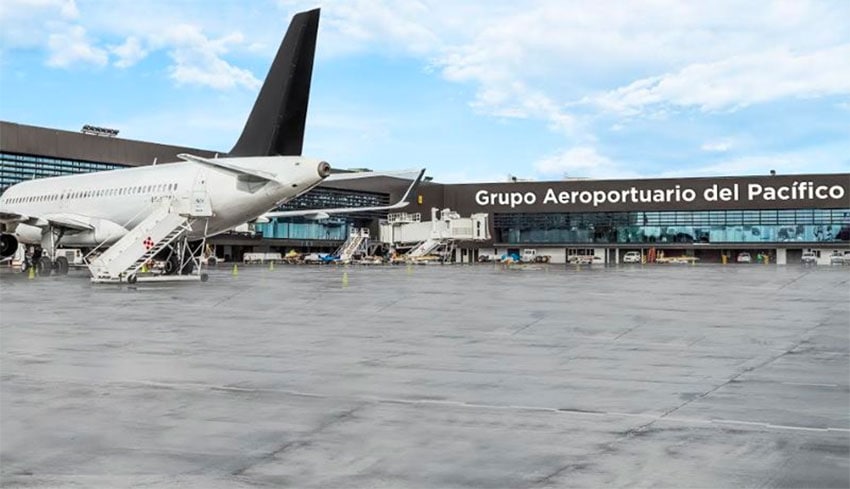
Testing is available to passengers at airports operated by GAP.
Dr. Laurie Ann Ximénez-Fyvie, director of the Molecular Genetics Laboratory at the National Autonomous University, told the newspaper The Guardian that Mexico will struggle to comply with the new rules because it hasn’t established an adequate testing network.
“Simply meeting the demand of passengers traveling abroad is going to be a terrible problem when testing capacity isn’t up to the necessary level,” she said.
Ximénez-Fyvie said that public and private hospitals have the capacity to meet an increased demand but materials for processing the tests, and political will to coordinate the effort, are in short supply.
“It’s not that we don’t have the resources or the abilities or the infrastructure.The problem here has been the lack of willingness to see that it gets done,” she said.
The Guardian reported that the new testing requirements have fueled speculation that non-accredited laboratories and doctors that commonly provide medical services to tourists could create a black market in which falsified test results and medical documentation are provided to people traveling to the United States, Canada or other countries where similar rules are in place.
“If you add to the normal situation 15,000 [air passengers] a day, then you have to do something and you have to react,” he said.
Castro’s company, The Guardian reported, is in talks with hotels in Quintana Roo destinations such as Cancún, Playa del Carmen and Tulum to help tourists get tested in the required 72 hours before returning to the United States. The CEO is also seeking an accredited lab to conduct testing at the Cancún airport, a major gateway to Mexico for U.S. tourists.
Many large hotel chains that cater to American visitors have already announced they will offer onsite testing or help connect customers to nearby labs and hospitals, while the Pacific Airport Group (GAP) announced that PCR and antigen testing would be available as of Monday to international travelers at all of its airports, which are located in Guadalajara, Tijuana, Los Cabos, Puerto Vallarta, Guanajuato, Hermosillo, Mexicali, Morelia, La Paz, Aguascalientes, Los Mochis and Manzanillo.
A rapid antigen test will cost 450 pesos (US $22) while a PCR test will cost 1,450 pesos (US $72), GAP said. Travelers seeking rapid tests should arrive at the airport an hour earlier than recommended by their airline.
Travelers to the U.S. who have recovered from Covid-19 are exempt from the negative test requirement but must provide documentation showing they have recovered in the 90 days preceding travel.
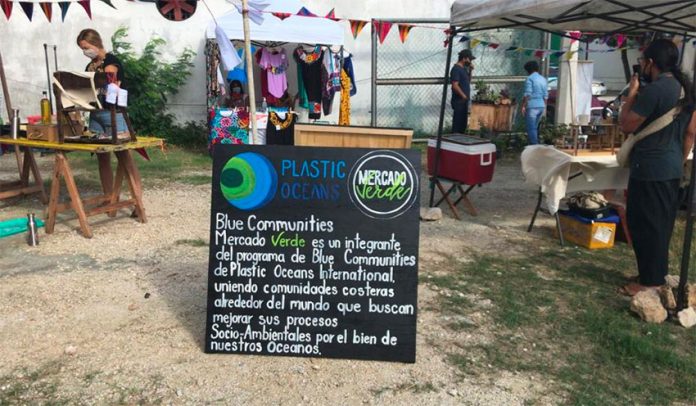
Campeche's plastic-free green market is held every Saturday.
In Mexico’s southeast, the little known state of Campeche quietly continues to attract international attention for its progressive, community-driven environmental programs.
Most recently, Plastic Oceans International — one of the most significant international nonprofits fighting single-use plastics and plastic waste — launched a new, groundbreaking BlueCommunities initiative, with Campeche featuring as the first, and currently only, partner in Mexico.
BlueCommunities is a global initiative which brings waterfront communities across the world together to link impactful, local environmental actions, particularly the fight against plastic pollution. The initiative has been developed with the UN sustainable development goals in mind; 17 goals acting as a call to action, at state and local levels, aiming to address global challenges to prosperity and create a more sustainable future for all.
Inaugurally the initiative has been launched in six countries and participating communities: Detroit, U.S.; Alapuzzah, India; Durban, South Africa; Chiloe Island, Chile; Easter Island; and Campeche, Mexico.
“It reminds us we are not alone,” says Laura Fernanda, lead organizer of the Mercado Verde Campeche (Campeche green market). “We’ve been running for six years now arguing that commerce has to have a local focus, be zero waste and be a safe space for equal rights. They may all seem to be different issues but ultimately it is all about generating a place and building a community where we can present the kind of society we want to be. The Mercado Verde has been plastic-free for two years now.”
As with the Mercado Verde, and in keeping with the philosophy of the initiative, Plastic Oceans has sought to partner with groups who best understand the interwoven dynamics of local politics, economy and culture, collaborating with existing projects which are already working in the community, or supporting the growth of new ones. By 2022, it is hoped that more than 250 communities will be onboard, totaling more than 2,000 individuals collaborating to achieve cleaner waterways.
In Campeche, Yuumtsil Káak Nàab — another partner organization — has been involved for a number of years in the conservation of the critically endangered hawksbill turtle, with protection efforts led by local biologist Luis Gongora Domínguez. The work of Yuumtsil Káak Nàab in Campeche is exemplary of the kind of positive and measurable change that BlueCommunities strives for, with 2020 proving to be a record year for nests and releases — as well as continually advocating from within the community for political engagement with the environment, as well as undertaking beach cleanups and educational drives.
As Charles Rolsky, director of science for Plastic Oceans International, explains: “Suggesting that reducing our plastic usage is critical would be a massive understatement relative to data highlighting our current usage. Each year, humans produce around 360 million tonnes of plastic. This includes billions of plastic bottles alone. Single-use plastics represent perhaps the most unnecessary form of plastic at a staggering rate of 130 kilograms per person, per year.
“It gets worse. More ominous than larger plastic items are microplastics, the byproduct of macroplastic degradation due to such factors as the presence of UV light. These small particles have found their way into common household items such as cosmetics, bottled water and salt. Due to their physical and chemical properties, they are able to absorb dangerous contaminants at high enough concentrations to cause harm to a plethora of biota, humans included. These contaminants are known to act as endocrine disruptors and cancer causing agents. Because of their small size, microplastics have been shown to enter food chains at lower levels, eventually making their way up to top-tiered predators.”
Remedial measures will no longer be enough; there needs to be a significant shift in the global attitude to plastic in order to stop the sea, and the global food chain, from being overwhelmed by litter. There is no simple solution to the issue. Unilaterally banning single-use plastics is not particularly feasible given that it could result in the use of substitutes which have a highly detrimental environmental impact in other ways.
A new law in Mexico City banning the use of single use plastics came into effect earlier this month in a bid to make Mexico’s capital a more sustainable place to live. We thus enter into a complex system of trade-offs where the damage caused by one thing must be weighed against another.
In countries where inequality is rampant and infrastructure is scarce, a movement away from cheap, durable plastics is low on the agenda, yet it is in these places, primarily in countries in Africa and Asia, where we see the most dumping of rubbish. And while teaching communities about the negative impact on ocean — and indeed global — ecosystems is a good first step, education is only valuable if there is material infrastructure in place to support a sustainable change in lifestyle.
Generating collective strength and cohesion, BlueCommunities is looking to amplify the voices of projects like the Campeche turtle project in order to create a global voice, and a global movement towards remediating some of the damage done to our oceans.
“BlueCommunities recognizes and embraces the value of grassroots local actions as a means for creating change on a global scale,” says Tod Hardin, chief operating office for Plastic Oceans International. “By making a difference in local environments — within our local communities — we collaborate with our partners to give voice to meaningful actions that can inspire others worldwide.”
Ultimately, the biggest obstacles in the conservation and sustainable management of the ocean are rooted in the transboundary nature of ocean care, and a fractured perception of the dynamic interaction between the welfare of the oceans and human activity. There is a great deal of work to be done, but BlueCommunities, and the change of orientation it will engender, will bridge some of these gaps.
Shannon Collins is environment correspondent at Ninth Wave Global, an environmental organization and think tank. She writes from Campeche.
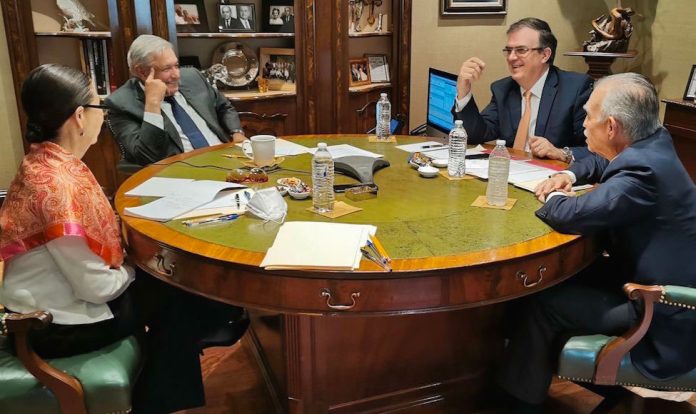
The president during a weekend meeting in Nuevo León. Foreign Minister Ebrard is second from right.
President López Obrador is in isolation at his home in the National Palace after testing positive for Covid-19, becoming the latest of several world leaders and one of more than 1.7 million Mexicans who have contracted the infectious disease.
He said on Twitter Sunday night that he had mild symptoms but was already receiving medical treatment.
“As always, I’m optimistic. We will all move forward,” López Obrador wrote, adding that Interior Minister Olga Sánchez would take his place at his morning news conferences.
The president said he would continue to attend to public affairs, noting he would speak to Russian President Vladimir Putin on Monday about the possibility of Russia supplying Mexico with its Sputnik V vaccine.
Health Ministry Director of Epidemiology José Luis Alomía said Sunday night that a multidisciplinary team of doctors headed by Health Minister Jorge Alcocer was treating and monitoring López Obrador.
The president met Saturday with Clara Luz Flores, who is seeking to run for governor of Nuevo León.
Interior Minister Sánchez said Monday that the president was “strong” and “stable” and predicted that he would recover quickly.
“He’s optimistic, he’s a responsible leader, an example to follow,” she said, despite the fact that López Obrador has only worn a face mask when absolutely necessary during the pandemic and downplayed the serious nature of the virus. “He’s a leader who inspires us and he’ll be with us to continue the mandate in a few days.”
Sánchez said that AMLO, as the president is known, is at home with his family but stressed that they are following health protocols to prevent further spread of the coronavirus. The interior minister said the president’s wife, Beatriz Gutiérrez Müller, had tested negative and was in good health.
Sánchez also said that she tested negative via a rapid test and was awaiting the results of a PCR test. The interior minister, who would become interim president if López Obrador were to succumb to Covid-19, is one of a long list of close contacts of the president.
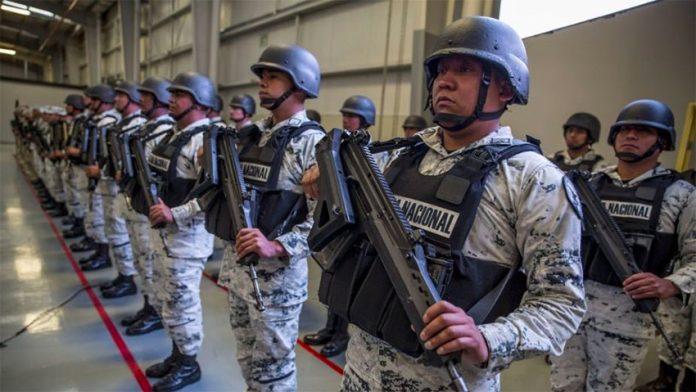
AMLO completed a working tour of Nuevo León and San Luis Potosí over the weekend before returning to Mexico City on a commercial flight on Sunday. On Friday he was in Sabinas Hidalgo, Nuevo León, where he inaugurated a new National Guard base.
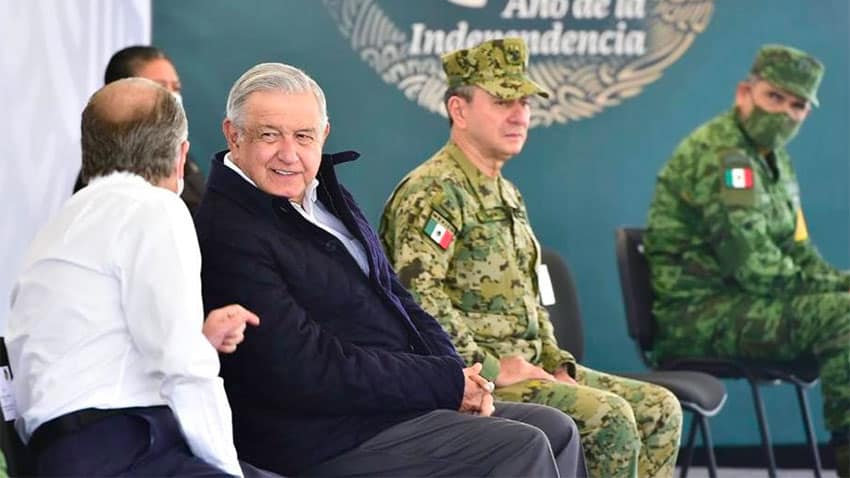
Numerous state and federal officials accompanied the president at the event including Governor Jaime Rodríguez, Security Minister Rosa Icela Rodríguez, Interior Minister Sánchez, Defense Minister Luis Cresencio Sandoval and Navy Minister Rafael Ojeda.
The newspaper Reforma reported that the governor and cabinet officials were in close contact with López Obrador, who as usual was not wearing a face mask.
From Sabinas Hidalgo, AMLO traveled to Monterrey, where at the home of his former chief of staff, Alfonso Romo, he held a telephone conversation with United States President Joe Biden.
Beneath a social media post in which he said that he spoke to Biden about migration, the coronavirus pandemic and development cooperation, López Obrador posted a photo that showed him with with Romo, Foreign Affairs Minister Marcelo Ebrard and Security Minister Rodríguez. None of them was wearing a mask.
Accompanied by Economy Minister Tatiana Clouthier, AMLO also met with business leaders in Monterrey on Friday, while on Saturday he had breakfast with Nuevo León gubernatorial aspirant Clara Luz Flores.
Also on Saturday, the president was in close contact with Welfare Minister Javier May during a visit to Linares, Nuevo León, and San Luis Potosí Governor Juan Manuel Carreras and other local officials during a visit to the municipality of Moctezuma.
López Obrador concluded his three-day working tour with an event to inaugurate National Guard facilities in Soledad de Graciano Sánchez, a municipality that is part of the San Luis Potosí city metropolitan area. He subsequently came into contact with an unknown number of people as he passed through the San Luis Potosí airport before flying coach to Mexico City.
López Obrador at one of several weekend meetings during a tour in the north.
Some officials announced they had gone into isolation as a result of being in contact with AMLO in recent days but as of 10:00 a.m. Monday none had confirmed testing positive for Covid-19.
The president, who at the start of the pandemic played down the threat of the virus before declaring in late April that the outbreak had been controlled, is now one of more than 10 leaders who have contracted Covid-19. Among the others are former United States president Donald Trump, Brazilian President Jair Bolsonaro, British Prime Minister Boris Johnson and French President Emmanuel Macron.
AMLO’s infection comes as Mexico records higher coronavirus case numbers and Covid-19 deaths than at any other time of the pandemic.
The daily case tally exceeded 20,000 on four consecutive days between Wednesday and Sunday before declining to 10,872 on Sunday. Mexico’s accumulated tally currently stands at 1.76 million, the 13th highest total in the world.
The five worst days of the pandemic in terms of deaths all occurred last week with more than 1,400 fatalities reported last Tuesday, Wednesday, Thursday, Friday and Saturday. An additional 530 fatalities were registered Sunday, lifting Mexico’s official Covid-19 death toll to 149,614, the fourth highest total in the world.
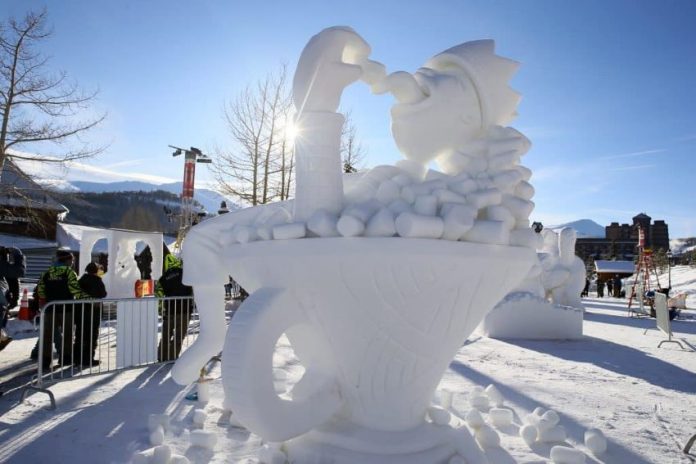
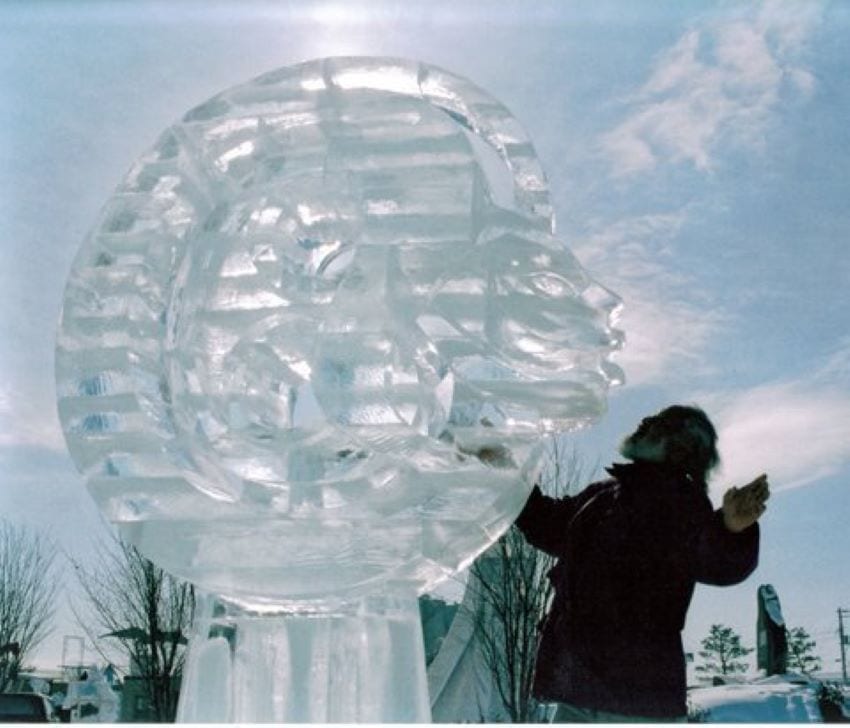
Mexicans compete in and win snow and ice sculpting championships worldwide. This sculpture, entitled “Greed”, won the top prize at a 2020 Colorado competition.
Most foreigners flee to Mexico to escape the ice and snow, but some Mexicans actually go looking for it.
Born in 1943 in Mexico City, internationally recognized snow and ice sculpture sculptor Abel Ramírez Aguilar only began competing in the sport in the 1980s, after encountering snow for the first time in his 40s. Visiting friends in Quebec, his first experience of snow was magical and sensual.
But snow did not make him a sculptor. He already had a long and distinguished sculpting career working bronze, stone and wood as well as teaching at the prestigious La Esmeralda art school in Mexico City. His challenge with this new pastime was to learn how to apply his skills to two media not available in large quantities in his home country — snow and ice.
His apprenticeship began when he participated in events in Quebec as an amateur, attracting attention almost immediately. He also impressed his Canadian friends: without his knowledge, they registered him to compete in a snow-and-ice sculpting competition held in conjunction with the 1992 Olympic Winter Games in France.
Much to his surprise, and to the delight of his students at La Esmeralda, his entry won a gold medal and more invitations to compete. This was the start of a 20-year career competing in ice and snow sculpture in various parts of North America, Europe and Asia.
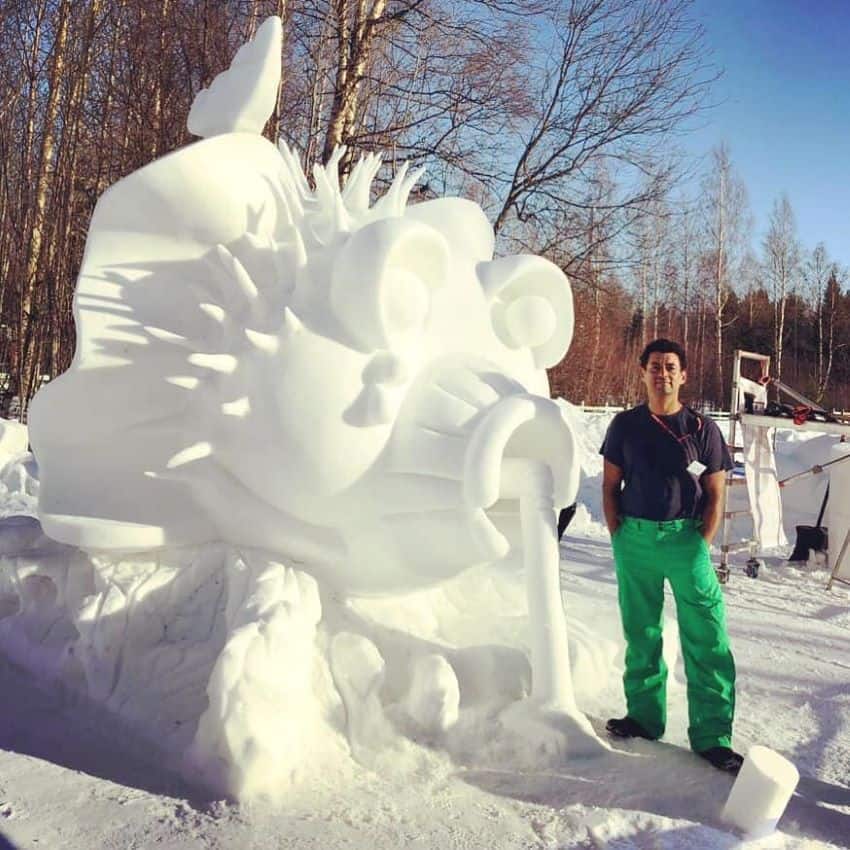
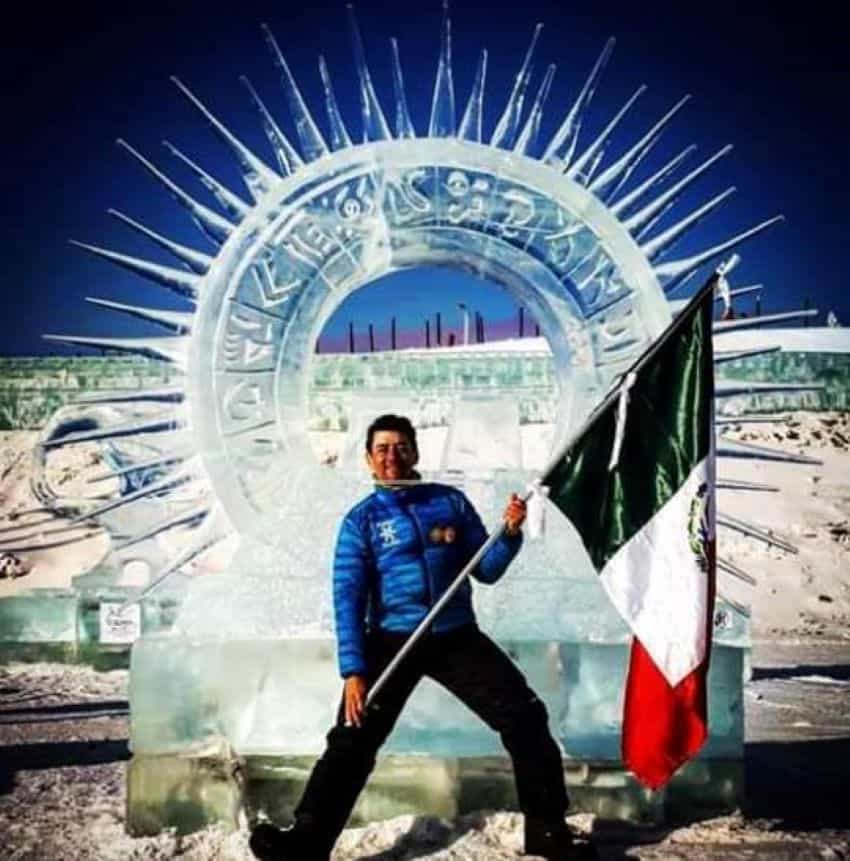
Carlos Ramírez Pereyra and his creation at a Finnish event in 2019.
Monumental ice and snow sculptures are not created by one person but rather teams. From almost the beginning, Ramírez Aguilar captained groups, inviting other Mexicans to join him. Although he has trained many like him, to date it has not resulted in any kind of formal or informal organization of Mexican ice and snow sculptors. He retired from the sport in the 2000s, although he is still an active sculptor in more traditional media.
Ice and snow sculptors here still get started much the same way that Ramírez Aguilar did: a casual connection introduces them to the world of monumental snow and ice art and they get hooked. Today, one of the most notable competitive sculptors in Mexico is Carlos Miguel Ramírez Pereyra, who is from the “city of the palms,” tropical Colima.
He, too, fell into it by accident, invited by another competitive sculptor who needed a last-minute fourth member for a team going to a Breckenridge, Colorado, event in 2008. He is not an artist; his training is in computer science, and he was studying for a second degree in architecture when he received the call to compete.
To date, Ramírez Pereyra has worked with 74 others to create 33 monumental pieces in 16 countries. He attends up to four competitions each year, inviting friends and others with sculpting abilities to join him on his “cold adventures.” He was part of the Mexican teams that won Breckenridge both in 2019 and 2020. He has even gone on to work in competitions in sand, hay and corn — materials that are in much greater supply in Mexico.
Competing is not easy, and artists consider participation more of an adventure than a serious professional activity. Ramírez Pereyra’s family thinks he is a little crazy to be so dedicated to this. Although accepted teams generally receive financial support for their participation, that may cover no more than 70% of travel costs. In addition, there is the need for cold-weather clothing not available in Mexico — special boots designed for temperatures of -40 C, for example. Participants often need to save money to afford the costs of competing, and this requirement alone is enough to limit many who might otherwise represent Mexico more often.
Despite that, Mexican artists have acquitted themselves admirably all over the world.
Abel Ramírez Aguilar with his Mayan glyph ice sculpture at the International Competition of Ice Sculpture in Higashikawa, Japan, in 1995.
The annual competition in Breckenridge still sparks the most interest from south of the border. At least one team from Mexico has competed there every year for at least 15 years. Mexican teams have placed first on multiple occasions: a Mexican team won the gold medal here in both 2020 and 2019.
It is where Ramírez Pereyra and Ramírez Aguilar met, one at the beginning of his competitive career and one near the end.
Ramírez Pereyra says that the reception Mexican sculptures receive all over the world is still amazing. People continue to be surprised to see Mexicans in these competitions at all since the country is so associated with sun and beaches. They ask, “How do you practice?” — to which Ramírez Pereyra says that he cannot, which makes his and other sculptors’ success in this field even more impressive.
Mexican ice and snow sculptors have a strong tendency to work in themes related to their nationality, history and ethnicity, particularly pre-Hispanic gods and symbols or national symbols such as the Mexican flag. They also use images from folk art such as alebrijes. Ramírez Aguilar says that since such sculptures are displayed in an international setting, nationalist themes are the most appropriate. It also helps that such symbols allow for Mexican artists’ work to stand out among the competition rather than try and copy what other artists do.
However, there is also some indication that these artists are branching out: the Mexican team at Breckenridge in 2020 — which took the gold — was titled Greed; it was an image of a fat king eating while sitting on a pile of food.
Rob Neyland, the founder of the Breckenridge International Snow Sculptures Championships, calls the Mexican participants “one of the darlings of this international competition.”
Carlos Ramírez Pereyra with his ice sculpture in China
“When [the Mexicans] first attended years ago, coming from a country without snow, their sculptures were clumsy but inspired,” he said. “They took notes — studying the tools and techniques they saw. They brought a whimsical humor, humility, passion and the pursuit of excellence.”
“Before you knew it,” he adds, “they were showing up and kicking ass!”
Leigh Thelmadatter arrived in Mexico 17 years ago and fell in love with the land and the culture. She publishes a blog called Creative Hands of Mexicoand her first book, Mexican Cartonería: Paper, Paste and Fiesta, was published last year. Her culture blog appears regularly on Mexico News Daily.
Business group suggests more National Guard be posted in the state.
A day after it was confirmed that Guanajuato recorded its most violent year on record in 2020, the federal security minister met with the state’s governor on Thursday to discuss a joint strategy to combat the worrying security situation.
The federal government reported Wednesday that there were 4,490 homicides in Guanajuato last year, an increase of 27% compared to 2019.
Guanajuato, where the Santa Rosa de Lima Cartel, the Jalisco New Generation Cartel and numerous smaller criminal gangs operate, has now recorded more homicides than any other state for three consecutive years.
Federal Security Minister Rosa Icela Rodríguez Velázquez met with Guanajuato Governor Diego Sinhue Rodríguez Vallejo in Mexico City to discuss the situation and how it can be improved.
“We met with Guanajuato Governor Diego Sinhue to coordinate actions to reduce violence in the state. #TogetherWeBuildPeace,” tweeted Rodríguez Velázquez, who became security minister after Alfonso Durazo announced his resignation late last year in order to run for governor of Sonora.
The Guanajuato governor also took to Twitter to comment on the meeting.
“Coordinated work is necessary for the success of security policies and together we can achieve it. We appreciate the support and willingness of Security Minister Rosa Icela Rodríguez to collaborate on the joint security strategy in Guanajuato,” he wrote.
Neither the governor nor the security minister provided specific details about what they discussed or whether any changes would be made to the security strategy in Guanajuato.
The National Guard, which was created by the government in 2019, is carrying out public security tasks in the Bajío region state but one business group believes that not enough members of the new federal force have been deployed there.
The León branch of the Mexican Employers Federation (Coparmex) questioned why more guardsmen are deployed in Mexico City and México state than in Guanajuato.
Despite Guanajuato being the most violent state in the country, it ranks third in terms of the number of National Guard members stationed there, Coparmex said in a statement.
“It has the half the number [of guardsmen] as Mexico City and México state, which are far from being … as violent as Guanajuato,” it said. “In Guanajuato the [federal government] promise of pacification is far from being met.”
A tobacco company executive has blamed the coronavirus pandemic for a slump in cigarette sales of almost 25% in Mexico last year.
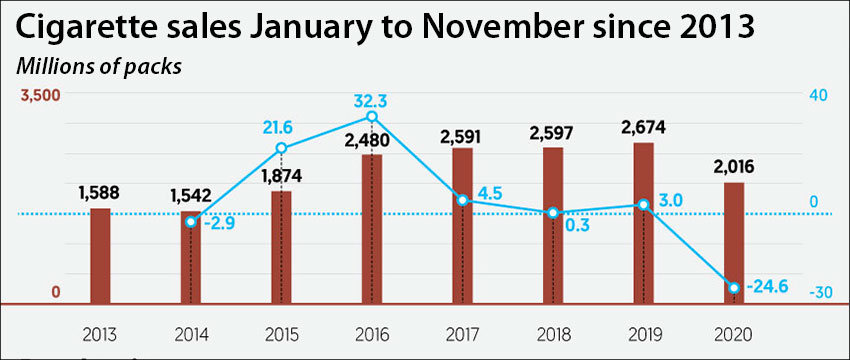
Smokers bought just under 2.02 billion packs of cigarettes in the first 11 months of 2020, according to the national statistics agency Inegi. The figure represents a reduction of 24.6% compared to the 2.67 billion packs purchased in the same period of 2019.
The annual decline in sales for the first 11 months of 2020 was the largest on record.
The newspaper El Financiero calculated that Mexico’s approximately 15 million smokers each smoked an average of 2.8 packs of cigarettes per week between January and November last year compared to 3.8 packs per week in the same period of 2019.
Tadeu Marroco, finance director at British American Tobacco, acknowledged that the cigarette market has declined significantly in Mexico.
Percent change year to year is indicated in blue. milenioel financiero
“We’ve been very affected by Covid-19,” he said during a call with analysts.
Some people have apparently stopped smoking altogether or cut back due to concerns about how they, as smokers, would be affected if they contracted the coronavirus. Others may have reduced their tobacco intake because they had less disposable income last year. The pandemic and associated restrictions caused millions of Mexican to lose their jobs or see their income decline.
Another factor in the slump in cigarette sales could be the shift towards the use of e-cigarettes and vaporizers. An estimated 1.3 million people use vapes in Mexico even though their importation and sale here is banned.
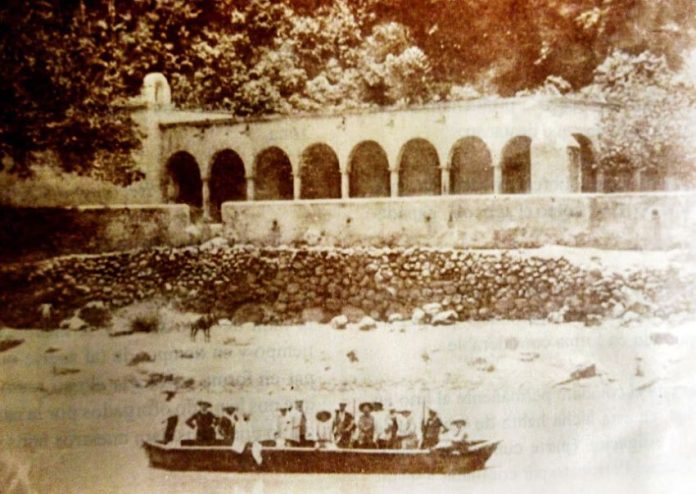
A boat ferries people across the Santiago River in Huentitán Canyon, Jalisco. Photos courtesy of Jalisco Desconocido
The northern border of Guadalajara is formed by the 500-meter-deep Huentitán Canyon, at the bottom of which flows the Santiago River.
In modern days, the canyon is seldom visited except by hardy hikers and athletes looking to test their endurance, but once upon a time the area was of strategic importance for Guadalajara.
The fertile and tropical climate at the base of the canyon provided the perfect environment for orchards, while to the north lay undeveloped areas upon which the citizens of Guadalajara almost entirely depended for firewood.
The important role the canyon played in Guadalajara’s development was brought to my attention recently when members of an organization called Jalisco Desconocido made a surprising discovery in the bush far below the level of the city streets.
“We found it!” announced Luis Abarca, the group’s leader. “We located the legendary hacienda which once managed Paso de Ibarra, named after Spanish conquistador Miguel de Ibarra and one of the major crossing points of the Santiago River.”
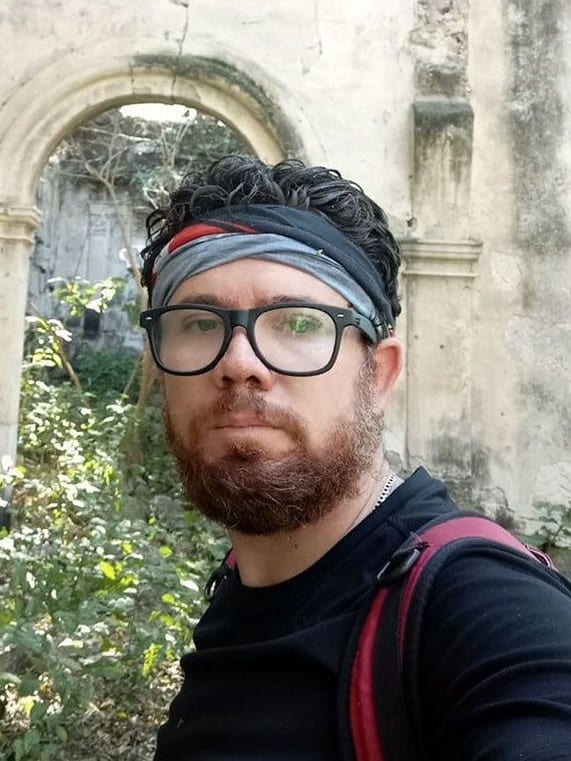
Luis Abarca, leader of Jalisco Desconocido.
Hacienda de Ibarra was a working estate, supplying mangos, papayas, sugar cane and oranges to Guadalajara, not to mention its curious caracolillo (peaberry) coffee beans.
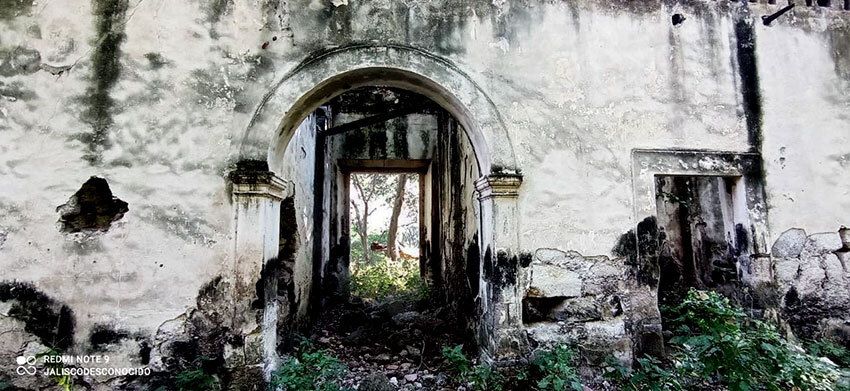
“We were truly amazed to see that the old hacienda, built in 1820, is still standing and still beautiful even though it is now enshrouded in vines and creepers,” said Abarca.
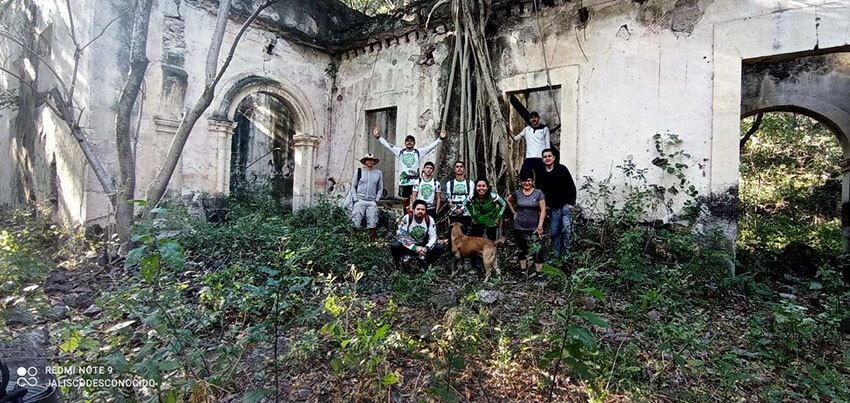
Jalisco Desconocido is a group of six persons who enjoy hunting for old trails and forgotten historical monuments.
“We’ve been exploring Huentitán Canyon for eight years,” Abarca told me. “In the process, we’ve come upon the ruins of quite a few historical sites, such as the hacienda of Don Marcelo Alatorre, La Casa Colorada and the remains of several military camps, but during all this time, we had no idea that this Hacienda de Ibarra was down there.”
While viewing the barranca using Google Maps, the group glimpsed what looked like a building alongside the river. Abarca and José Francisco Posadas then decided to hike to the bottom of the canyon and hunt for the old hacienda but found no trail of any sort as they made their way downriver.
“We needed machetes to chop our way through jungle, thorns, cacti and other kinds of maleza [weeds],” said Abarca.
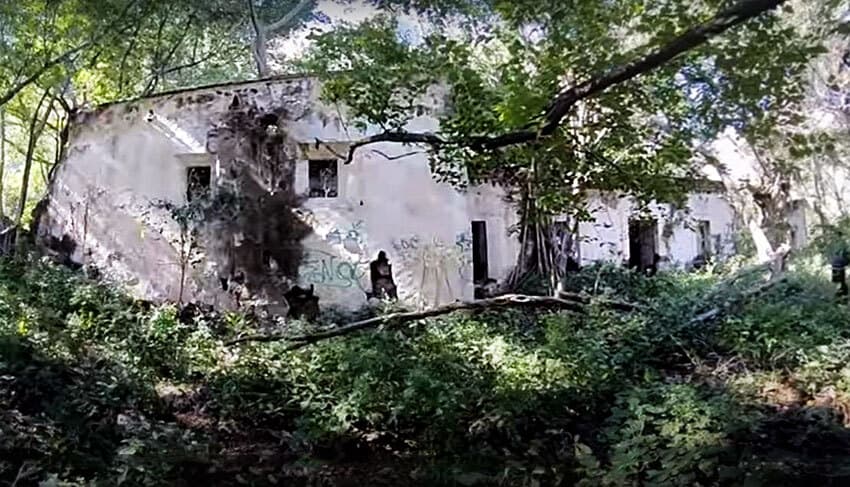
The ruins of Hacienda de Ibarra, hidden deep in Huentitán Canyon, north of Guadalajara. The estate managed an important Santiago River ferry crossing.
When they finally got to the spot they were looking for, sure enough, there was an old hacienda there.
“That first visit to Hacienda de Ibarra was really heavy and took nine hours, including the 500-meter climb back up to the top,” Abarca says.
To understand what the explorers found, it is necessary to go back to the early 1800s, when the city had expanded as far north as possible, right up to the edge of the huge geological fault that separates the states of Jalisco and Zacatecas.
The people on both sides needed a way to get goods across this formidable obstacle.
“There were several points where they could cross the river, such as the Hacienda Del Jabali, Puente Grande and this Hacienda de Ibarra,” Abarca said. “The Puente Grande route was much longer, so they preferred Jabali and Ibarra.
Hacienda del Jabali charged a lot more money than Hacienda de Ibarra, but they offered security.
Members of Jalisco Desconocido at the well-preserved ruins of Hacienda de Ibarra.
“They would provide armed guards who would accompany parties from the north all the way to Guadalajara,” Abarca explains.
Hacienda de Ibarra, on the other hand, was much cheaper.
“The owner had boats to ferry your merchandise across the river, but once you had disembarked it was your problem to get the goods to Guadalajara,” Abarca says.
According to researcher Jorge Robles, crossing the Paso de Ibarra in the 1800s was anything but an easy task. People, goods, animals and even stagecoaches had to be ferried to the other side.
“To achieve this,” writes Robles, “a thick rope made of maguey fibers was stretched across the river. The boatmen would then grab onto it and, using pure muscle power, would literally haul their panga [boat] or raft from one side to the other.”
This risky procedure could only be done under ideal conditions. When the river was rough or too high, service could be suspended for days.
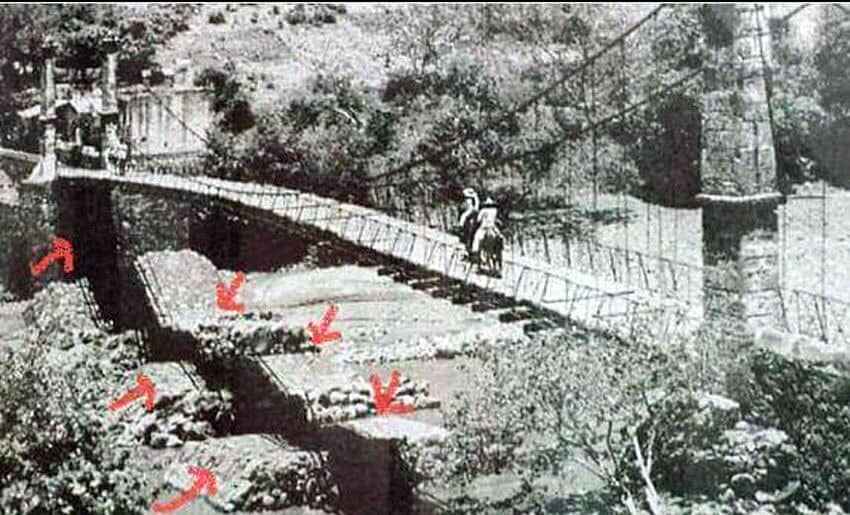
The Puente de Arcediano, said to be the third suspension bridge built on the American continent. Arrows show the ruins of an earlier bridge.
“Once you got across Paso de Ibarra,” Abarca says, “you would have to follow the river for several kilometers and then haul your goods up a steep trail to the city. All along the way, it is said, there would be brigands lying in wait for you.”
These bandits were so bold as to threaten the life of the hacienda owner’s children. As a result, the family abandoned their home, leaving someone to look after it.
Meanwhile, the Alatorre family, who had a hacienda on the other side of the river, decided at some point to construct the first bridge over the Santiago River, which would make this whole transportation process far easier, says Abarca.
However, once they finished, they soon ran into a problem.
“With great difficulty, and at great cost, they succeeded in building the bridge, but the very next time the river flooded, the whole thing was totally destroyed,” he said.
It must have been evident to the Alatorres that they needed another, totally different, type of bridge. Fortunately for them, the newspapers of the day were touting the inauguration, in 1883, of the Brooklyn Bridge in New York, at that time the longest suspension bridge in the world.
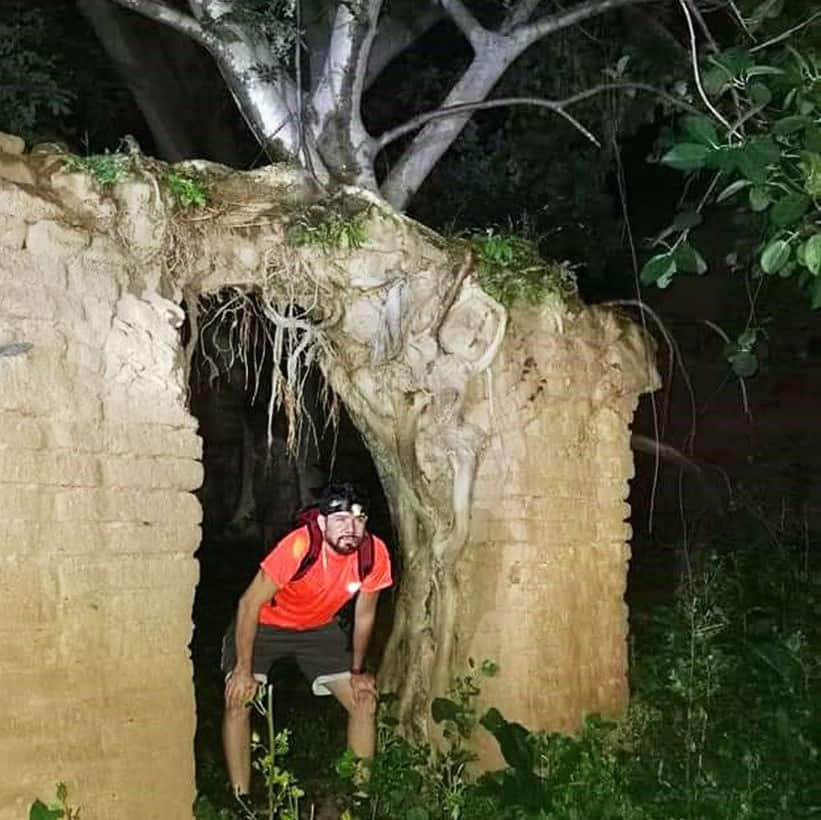
Only this crumbling arch remains of Hacienda de Alatorre.
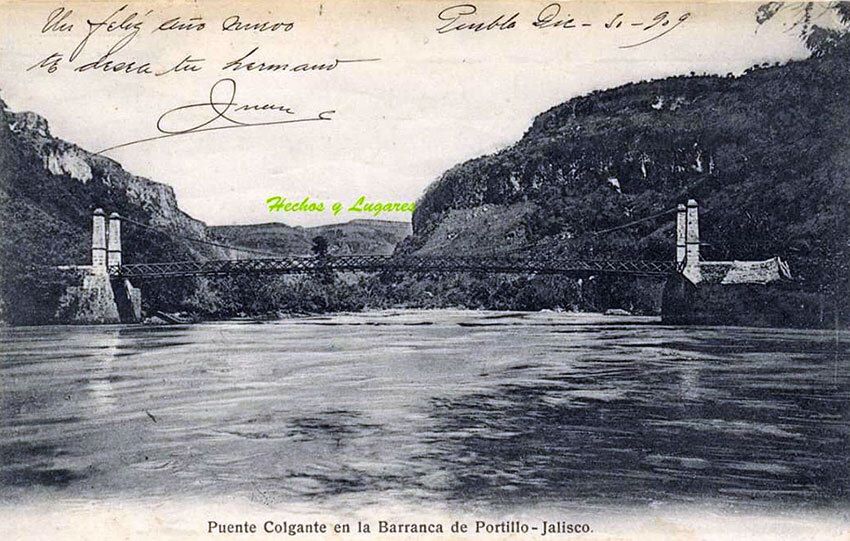
This was exactly the design the Alatorres were looking for, and in 1894 the Puente de Arcediano was built at Paso de Ibarra by engineer Salvador Collado.
This, it is claimed, was the third suspension bridge built on the American continent.
It served its purpose well, resisting the vicissitudes of climate and the ravages of the Santiago River right up until 2005, when it was dismantled and rebuilt further downstream in anticipation of a dam project that never happened.
“The Puente de Arcediano lasted 111 years, but such was not the fate of Don Marcelo Alatorre’s hacienda,” says Abarca. “All that’s left of it today is one arch which, I’m sorry to say, is being ‘eaten’ by tree roots and will soon be no more.”
How the Hacienda de Ibarra’s ruins managed to fare so much better, I don’t know, but if you’d like to have a peek at it — without hiking down and back up the Huentitán Canyon — take a look at Jalisco Desconocido’s five-minute video Ex-Hacienda de Ibarra, Barranca de Huentitán, Jalisco Mexico. My congratulations to little groups like Jalisco Desconocido, who seek out and explore vestiges of Mexico’s colorful history, and are willing to share them with us.
The writer has lived near Guadalajara, Jalisco, for 31 years, and is the author of “A Guide to West Mexico’s Guachimontones and Surrounding Area” and co-author of “Outdoors in Western Mexico.” More of his writing can be found on his website.
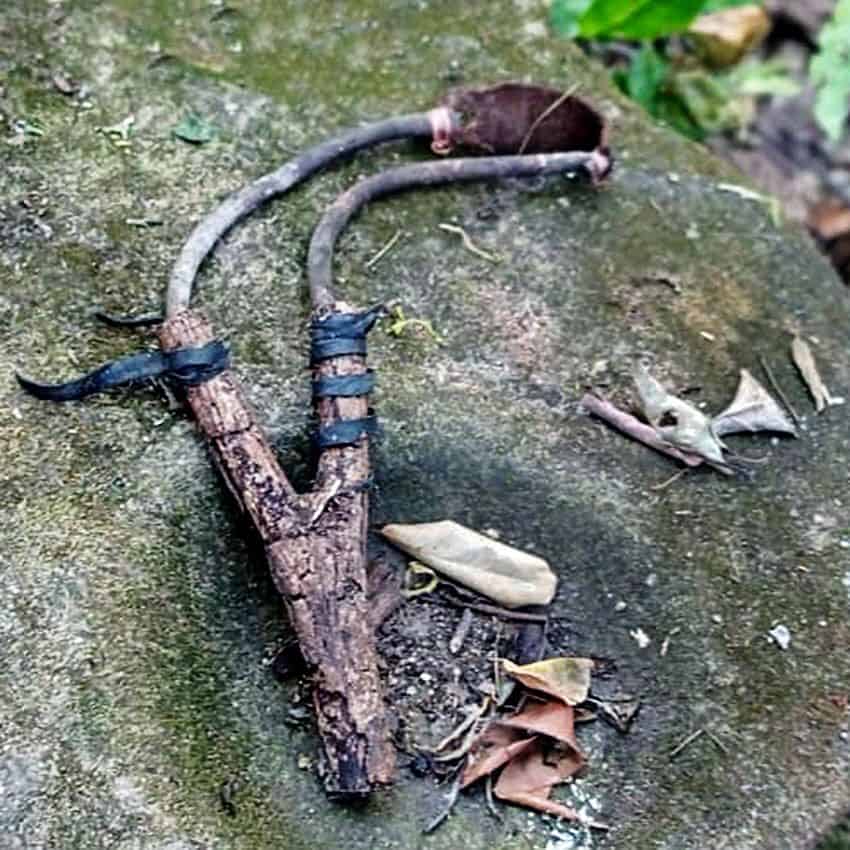
Old slingshot found below the floor of Hacienda de Ibarra.
Early postcard showing the Arcediano Bridge.
The ruins of Hacienda de Ibarra as it looks today.
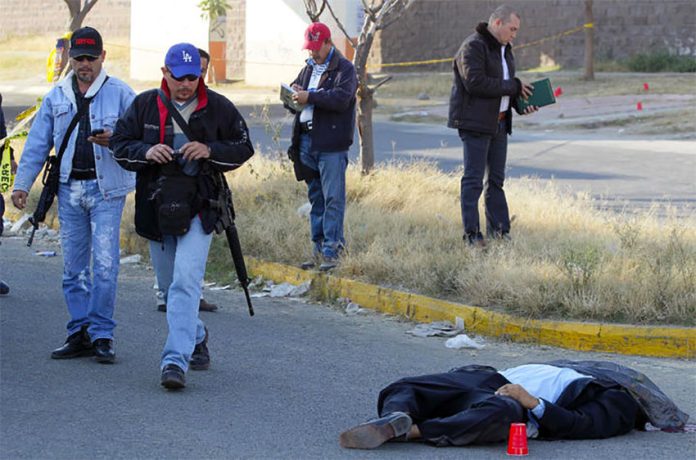
Just another homicide, one of about 3,000 that occur monthly.
The 0.4% decline in homicides in 2020 is not the result of any federal government action or policy, according to an independent crime watch group.
The government reported Wednesday that there were 34,515 homicides last year, a reduction of 133 compared to 2019, which was the most violent year on record.
President López Obrador acknowledged that his administration still has a lot to do to improve security but asserted that it has made “significant progress” in the fight against crime.
Presenting a crime report on Thursday, the director of the National Citizens Observatory (ONC) said it’s difficult to say that the slight decline in homicides “is a success derived from an action or public policy of federal authorities.”
The federal government increased the size of the National Guard in 2020, maintained social programs designed to address the root causes of violence and published a decree ordering the armed forces to continue carrying out public security tasks for another four years but according to Francisco Rivas, there is no “specific public policy” to which the “minimal decrease” in violence can be attributed.
Rather, the 0.4% decline in homicides was a consequence of a reduction in people’s mobility due to the coronavirus pandemic, the ONC chief said.
“There is evidence to affirm that the slight decrease in homicides is due to the lockdown [measures],” he said.
There was no successful public policy to reduce violence and 2020 was a “disappointing year” in terms of security, Rivas added.
“In 2020, homicidal violence was maintained at a historical high. … This scenario is a result of the lack of coherence in the policies with which [the government] is aiming to pacify the country,” he said.
“… Mexico has not been pacified but rather militarized,” Rivas added, referring to the government’s continued use of the armed forces for public security tasks even though López Obrador pledged before he took office to withdraw the military from the streets.
He also noted that the current government has assigned more non-military tasks to the armed forces, including the construction of infrastructure projects such as the new Mexico City airport and the management of customs and ports.
“The exoneration of the former defense minister, General [Salvador] Cienfuegos, is a clear sign of the power of the armed forces and the contempt of the federal government for justice,” Rivas claimed, referring to the rapid investigation that cleared the ex-army chief of drug trafficking and money laundering charges.
Although the government hailed the slight reduction in murders last year, the fact remains that 2020 was the second most violent year on record.
Writing in the newspaper El Universal, security analyst Alejandro Hope acknowledged that it was preferable to have fewer murder victims than more but emphasized the minute size of last year’s reduction in violence.
“A reduction of 132 murders in a year is equivalent to one less murder every three days (approximately),” Hope wrote. “In a country in which we have a murder every 15 minutes, that’s not much change.”
The fact remains that about 3,000 people are murdered every month, Hope said, noting that there has been minimal change to Mexico’s homicide numbers during the past three years.
“[What are] the causes of this tragic stability? We don’t know. Or at least not all of them,” he wrote.
“If one gets close with a magnifying glass at a local level it’s perhaps possible to find dynamics that can explain some slight changes in [violence] trends. If one goes up to the stratosphere some structural causes – like impunity and economic inequality – might appear on the radar. But all in all nobody really has a good theory to explain our long homicidal plateau,” Hope continued.
“If the causes of the phenomenon are opaque, its consequences are clear. One of them at least: we’ve normalized having high levels of homicidal violence. The monthly reports of the National Public Security System and [the statistics agency] Inegi are no longer news anywhere. It’s not a cause for media attention nor public debate that 3,000 human beings are murdered every month.”
The analyst said that there is “organizational density” and “political action” against Mexico’s femicide problem but charged that no one is raising their voice to demand an effective response to the homicide problem and an end to “silence and impunity.”
“Both society and the political class have decided that while there are no abrupt increases [in homicide numbers] or spectacular massacres they can tolerate extremely high levels of lethal violence,” Hope wrote.
“I’m afraid that this won’t change soon and that what we have seen in these three years will continue for the foreseeable future: 3,000 people murdered each month without anyone raising an eyebrow.”
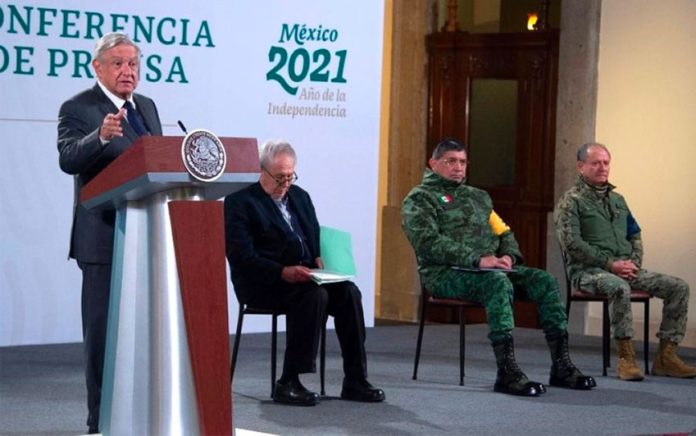
The vaccines must be approved for use in Mexico, the president told Friday's press conference.
State governments and private companies will be permitted to buy and administer Covid-19 vaccines as long as they inform federal authorities of their plans, President López Obrador said Friday, countering an earlier statement by a senior health official.
He said that governments and companies that decide to do so must forward their purchase agreements to federal authorities. They must tell the government how many doses they are buying, when they will arrive and where they will be administered, López Obrador said.
The president stressed that state governments and private companies will only be permitted to buy and administer vaccines that have been approved for use in Mexico.
“For example Pfizer [and] AstraZeneca [vaccines], … those that are being administered in the world, those that have been authorized in Mexico or are about to be authorized,” López Obrador said.
He said the reason why state governments and private companies must tell federal authorities where they intend to inoculate people is so that there is no duplication.
“There is a national vaccination plan and we’re going to fulfill the commitment to vaccinate all Mexicans,” López Obrador said.
However, the government has no intention to monopolize the vaccination process, he explained, adding that whoever wants to buy vaccines is free to do so.
“If we said they can’t imagine what Reforma [a frequently critical national newspaper] would be saying. ‘The business sector wants to buy the vaccine but the government doesn’t let them’. … If they want to carry out a plan [to vaccinate workers] parallel to the national plan, there is no problem. They just have to say where they’re going to vaccinate and who they’re going to vaccinate and … [inform] whether the vaccines are good,” López Obrador said.
He didn’t reveal whether the private sector would be permitted to charge people for shots they receive.
The president’s announcement comes after Deputy Health Minister Hugo López-Gatell, the government’s coronavirus point man, said federal authorities didn’t want states to be involved in the vaccination process.
“From a technical point of view, the guideline is to recommended not to do that,” López-Gatell said, adding that if each state had its own vaccination strategy Mexico would become more like a “disorganized anarchic community” than a country.
The federal government began its national vaccination program on December 24 and as of Friday morning had administered 567,379 doses of the Pfizer/BioNTech vaccine to health workers.
Mexico will not receive a new shipment of doses of that vaccine until the middle of next month because Pfizer is carrying out upgrades to its plant in Belgium in order to boost production.
Millions of shots of the AstraZeneca/Oxford University, Sputnik V and CanSino Biologics vaccines are expected to arrive in the coming weeks and the government is aiming to inoculate just over 14 million people by the end of March.