Home Blog Page 1885

1,300 migrants make a getaway from Chiapas shelter; 700 returned

0
Migrants ride north aboard the freight train called The Beast.

Approximately 1,300 migrants fled a detention center in Tapachula, Chiapas, last night but 700 were later detained and returned to the facility.

The National Immigration Institute (INM) said in a statement that shortly after 8:00pm “there was a large-scale unauthorized departure of people housed at the Siglo XXI migration station.”

Most of the migrants who made the getaway were Cubans, the INM added, explaining that they currently make up the majority of people being held at the center.

The statement said there was no confrontation between INM personnel and the migrants because the former have no “containment equipment.”

The newspaper El Universal said the migrants escaped while many INM agents and Federal Police officers were not at the detention center because they were transferring another group of foreigners to the facility.

They fled because they expected to be deported, the newspaper said. Some of them were among 367 migrants who were detained Monday in Pijijiapan.

After leaving the immigration facility, some of the migrants fled on foot on a highway that leads to the center of Tapachula, while others boarded public transportation.

As of last night, approximately 600 people had not been located, the INM said.

Cubans migrants said that since yesterday morning there had been disputes at the overcrowded detention center over personal space and the limited number of mattresses.

Farther north in Chiapas, around 600 migrants left the town of Arriaga yesterday on a freight train that is known colloquially as “La Bestia” (The Beast). The group was expected to arrive today in Ixtepec, Oaxaca.

There are still around 5,000 migrants in Chiapas, mainly in the towns of Tonalá, Pijijiapan, Tapachula and Mapastepec.

Young migrants wait for train to leave Arriaga, Chiapas, and take them north.

It has become increasingly difficult for migrants to avoid Federal Police and IMN operations, which force them to register their entry into Mexico.

Sources familiar with Mexican immigration policy said last week that near-daily pressure from the United States government had resulted in the secretariats of the Interior (Segob) and Foreign Affairs (SRE) pushing the INM to adopt a tougher approach towards migrants.

Interior Secretary Olga Sánchez Cordero said this week that around 300,000 migrants traveled through Mexico en route to the United States in the first three months of this year.

The government issued about 13,000 humanitarian visas to migrants that entered Mexico at the southern border in January but authorities have largely discontinued the initiative.

Some migrants have been issued 20-day transit visas that allow them to continue their journey to the northern border but others have only received permission to remain in the south of the country.

Two large groups of migrants – 204 from Honduras and 148 from Cuba – were deported last week after they were located traveling through the country without having first regularized their immigration status.

Support for those traveling along the well-trodden migrant route in southern Mexico has declined considerably compared to late last year when municipal governments, church groups and residents routinely provided food and shelter.

“People don’t support us, they don’t even give us water. Help in the shelters has been reduced, we feed ourselves with mangos and other fruit we get during the journey,” said José Antonio, a Honduran migrant who intended to hop on La Bestia.

Despite the dangers of riding atop a freight train, José Antonio believes that it represents his only hope of leaving Chiapas to continue the journey towards the United States.

“It’s the best option amid the trap set by the government.”

Source: El Universal (sp) 
Minimum wage to be set next month for domestic workers

0
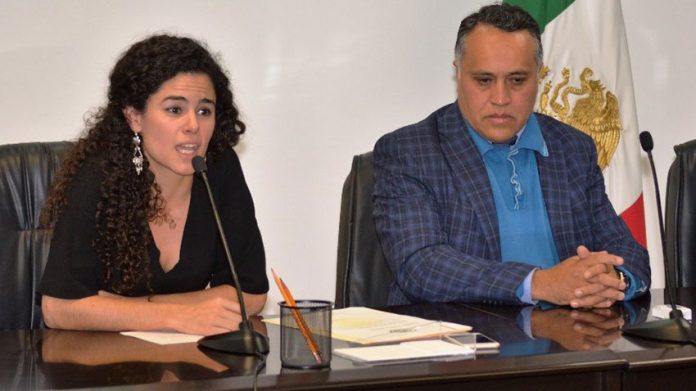
Labor Secretary Luis María Alcalde and Conasami chief Peñaloza at his swearing in ceremony in December.

The federal government will set a minimum wage for domestic workers next month, said National Minimum Wage Commission (Conasami) president Andrés Peñaloza.

Of the more than 2.3 million people who work as domestic employees in Mexico, the commission expects 950,000 will benefit directly from the requirement.

“We cannot ignore that there are 950,000 domestic workers that make less than the minimum wage . . . We are talking about a direct positive impact on the [their] lives . . .”

The commission president suggested that the minimum wage should be a “well-balanced” amount so as not to be so high as to stifle new employment, and at the same time create formal work arrangements that benefit employees.

Suggestions for the minimum wage level range from the current national minimum wage of 102.68 pesos daily (US $5.40) to 300 pesos (US $15.80), proposed by labor unions and other organizations.

“This will be the first step towards settling a historic debt not only with this sector, but with all workers that have lost all purchasing power for decades on end,” Peñaloza said, staking out the commission’s new position on the issue after years of holding down wage increases.

The commission estimates that of the 1.3 million households that employ domestic workers, 67% pay employees more than seven times the national minimum wage.

“These households are paying 250, 300, 500 or even 700 pesos a day. Even with a set minimum wage, there is no reason that they should not continue to pay that amount; what we want is to promote formalization with a contract.”

He added that despite a new labor law recently approved by the Senate that states that domestic employees should not earn less than double the national minimum wage, or 205.38 pesos daily, the final decision on the matter belongs to Conasami according to the constitution.

According to the newspaper El Sol de México, the vast majority of domestic employees are women, more than 98% of whom do not have access to basic health care. Thirty-six percent begin their employment while still minors, and 96% carry out their duties without any formal contract or guarantee of salary or benefits.

Peñaloza was named head of Conasami in December by Labor Secretary Luisa María Alcalde, who said at the time that “change is in the air” for the commission. Peñaloza replaced Basilio González, who had held the post for 27 years.

“We will work together toward a new policy to restore the minimum wage,” Alcalde said.

Source: El Financiero (sp), El Sol de México (sp)

Escape the heat in western Mexico with a visit to magical town of Tapalpa

0
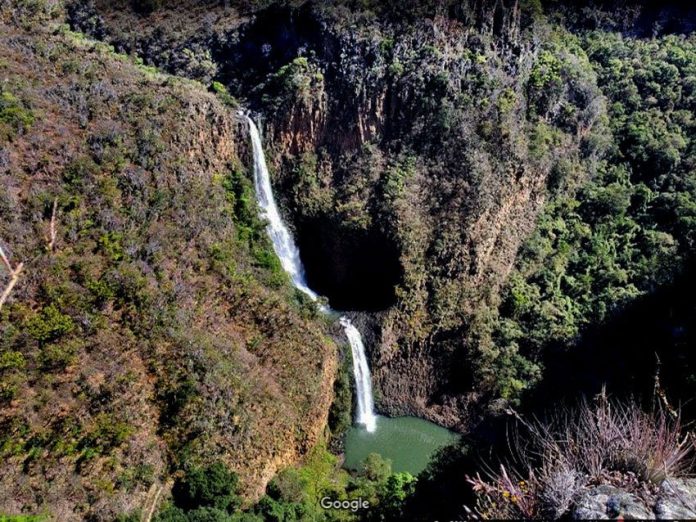
View from on high of El Salto del Nogal, near Tapalpa, Jalisco
View from on high of El Salto del Nogal, near Tapalpa, Jalisco. Combiajando

In the highlands of western Mexico, April and May are, without a doubt, the hottest months of the entire year.

Because those who live here normally enjoy one of the best climates planet Earth has to offer, few people bother to install air conditioning in their homes, opting instead to aguantar or suffer patiently until the last day of May, knowing that in June the ancient god of water, Tlaloc, will surely bring the first showers of the rainy season, immediately cooling the air and restoring those perfect temperatures to which they are accustomed.

Meanwhile, whenever the opportunity arises, the people of western Mexico, especially those who live in Guadalajara, escape the heat by heading either to the beach or to the mountains. Here, let’s take a look at their favorite choice of mountain towns, Tapalpa.

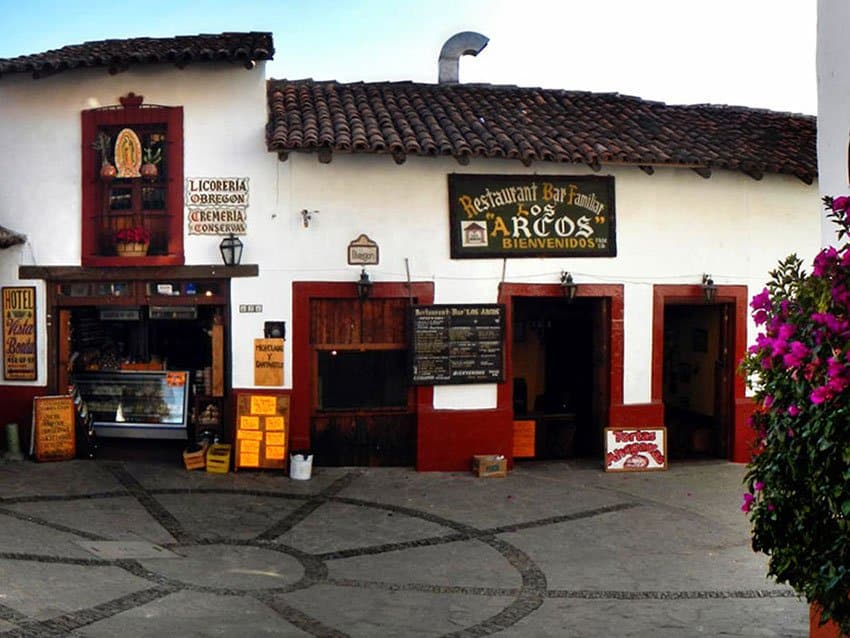
Tapalpa is located 90 kilometers southwest of Guadalajara and its elevation is about 2,000 meters above sea level. Because it is well over a mile high, it has a cool climate and because it’s a Pueblo Mágico it also has a cool look: steep and narrow cobblestone streets, whitewashed buildings with red-tile roofs, and picturesque wooden balconies.

Visiting Tapalpa means strolling through these little streets without a care in the world, deeply breathing the cool, crisp, clean air and thus awakening an appetite for the pueblo’s most famous dish, borrego al pastor: lamb marinated in spices and grilled on a spike, “shepherd style.”

Shops in Tapalpa.
Shops in Tapalpa.

When night falls, you can relax in front of a crackling fireplace with a flavorful ponche de granada, grenadine punch made with tequila or mezcal, eventually collapsing into bed and sleeping like a lion.

In the early 1500s, the Spaniards arrived in this area and found an indigenous settlement “about three leagues” from the present-day location of Tapalpa. These people, called Atlaccos, put up no resistance to the conquerors, who started a colony between 1531 and 1532.

It was, however, only in 1825 that the population was big enough to be called a pueblo. Even today there are only about 5,500 people living in the town which, by the way, was declared a Pueblo Mágico in 2011.

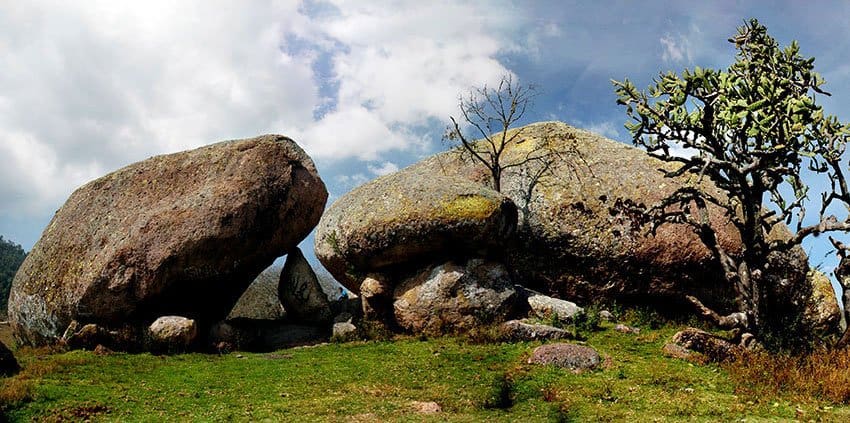
Only a 15-minute drive north of Tapalpa lie Las Piedrotas, the “Great Big Rocks,” huddled in clusters like enormous dinosaur eggs in a wide meadow with no other such rocks in sight. A barbed-wire fence forces visitors to park on the roadside and pass through a caracol — the rural equivalent of a turnstyle — to wander about among those massive monoliths.

Well, to tell you the truth, those Piedrotas are actually mere pebbles in comparison with another rock called La Piedra Gorda, The Fat Rock, a monolith located only four kilometers from town, but a bit difficult to reach, although the view from its peak is well worth the effort.

The last time I visited the Piedra Gorda was with friends who planned to install a bolt in the rock to which visitors could attach a safety line while peering over the edge of a sheer drop of some 50 meters.

Las Piedrotas.
Las Piedrotas. Note small figure between the rocks.

We drove northwest out of Tapalpa to the DIF (Family Development Center) and parked. Here the altitude is about 2,090 meters above sea level. We crossed a stream by leaping from rock to rock and then walked along a rough brecha (dirt road) which is closed to vehicles (except those of people living in the area).

Eventually we crossed a charming meadow filled with wildflowers. Since Tapalpa has a strange tradition in which people throw Santa María flowers at one another on Mexican Independence Day, we waged a few battles of our own before continuing uphill to La Piedra Gorda, which is nestled among a few smaller rocks.

There’s a sort of ladder here to help you get up to the top of the rock where you suddenly come upon a magnificent, eye-popping view. It’s Mother Nature making IMAX look like a postage stamp, from an altitude of about 2,400 meters above sea level (7,874 feet).

This hike is 4.5 kilometers one way and took us about 90 minutes, strolling along at a leisurely pace.

Anyone who visits Tapalpa will soon hear about “a wonderful waterfall over 100 meters high.”

This is El Salto del Nogal, the Walnut Cascade, and it is most certainly worth visiting if you are in good physical condition.

[soliloquy id="77274"]

The drive from Tapalpa takes just a little over half an hour and the hike down to the waterfall about the same amount of time. Just how long you will need to get back up, of course, depends on what kind of shape you are in.

The trail takes you across a bubbling brook, through several stone walls and then you are on your way down, down, down into a deep canyon.

At a certain point you’ll see some shallow shelter caves in the cliff to your left. This spot, I am told, is called The Convent and they say several Cristeros hid there during the Cristero War (1926–29) when the Mexican government tried to eliminate the power of the Catholic Church.

During most of your descent you’ll hear the roar of the mighty waterfall but you won’t be able to see it until you reach the very bottom, where there is a large pool of water dotted with huge boulders and dwarfed by the majestic foaming white ribbon linking the pool to a patch of blue sky far above.

Unfortunately, the icy water temperature plus a powerful wind generated by the falls make it difficult to swim in this pool but there is a smaller, windless waterfall with its own “perfect pool” for swimming just a little further downstream.

To reach the trail to the waterfall, ask Google Maps to take you to “Cascada el Salto del Nogal, Tapalpa.”

[wpgmza id=”185″]

What else is there to do in the vicinity of this magical town?

Actually, there is so much that I plan to continue this description next week, so if you are thinking of visiting the Sierra de Tapalpa, you’d better allow several days, so you can have a good look around.

The writer has lived near Guadalajara, Jalisco, for more than 30 years and is the author of A Guide to West Mexico’s Guachimontones and Surrounding Area and co-author of Outdoors in Western Mexico. More of his writing can be found on his website.

Private sector laments lack of consultation on elimination of economic zones

0
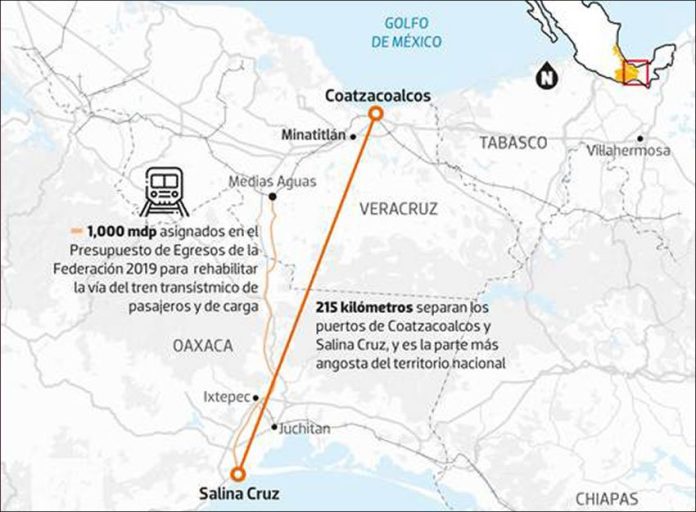
A new state-owned company will develop the Isthmus of Tehuantepec corridor.

Business groups have rejected the federal government’s decision to eliminate the country’s seven Special Economic Zones (SEZs), expressing disappointment that they were not consulted.

President López Obrador confirmed yesterday that the zones will disappear, declaring that they were of “no benefit” to the economy.

Francisco Cervantes, president of the Confederation of Industrial Chambers (Concamin), said the private sector will analyze the impact of the decision on investment and the economy as a whole.

Businesses have already committed an estimated US $8.2 billion to projects in the seven SEZs, investments which are now in doubt, although Cervantes said Concamin had been informed that the government “will seek to respect” agreements already made.

But companies that decide to continue with their plans will not enjoy the zero corporate tax rate for 10 years as promised by the previous federal government, which created the SEZs in late 2017 and early 2018.

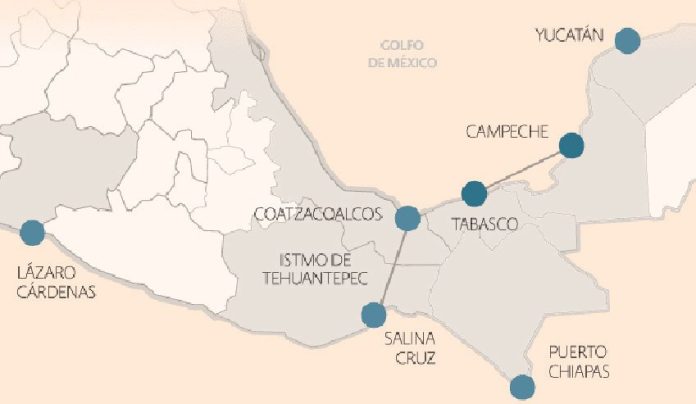
The seven zones are located in Puerto Chiapas, Chiapas; Salina Cruz, Oaxaca; Lázaro Cárdenas-La Union, Michoacán and Guerrero; Coatzacoalcos, Veracruz; Seybaplaya, Campeche; Dos Bocas, Tabasco; and Progreso, Yucatán.

Cervantes said that Concamin and the Business Coordinating Council (CCE) were disappointed that the government didn’t advise them of its intention to eliminate the SEZs before yesterday’s announcement was made.

“. . . It’s a new government, a new vision, and this shouldn’t surprise us. What surprises us is that we weren’t consulted, we would have liked to have been informed [by the government] first, not by the press. That’s the sentiment of Concamin and the CCE,” Cervantes said.

Cervantes and CCE president Carlos Salazar Lomelín both said they are waiting to see what projects the government proposes to stimulate economic development in the regions of the country that will no longer have SEZs.

The Maya Train and the Isthmus of Tehuantepec trade corridor are two major projects that the López Obrador administration has already announced and according to a report today in the newspaper El Sol de México, they will replace the SEZs.

The government argues that the two projects will bring significant economic and social benefits to the south and southeast of the country.

The Pacific port of Salina Cruz.

To manage the isthmus project, which includes modernization of a rail line between Salina Cruz, Oaxaca and Coatzacoalcos, Veracruz, a new state-owned company in which the private sector will also invest is on the verge of being created, El Sol de México said

While both public and private investment are slated to fund the Maya Train and isthmus projects, the president of the National Chamber for Industrial Transformation (Canacintra) contended that López Obrador decision to cancel the SEZs is evidence that he has a clear preference for the former.

“I believe that he’s sending a bad signal, that he doesn’t want private investment but rather [he wants] everything to be public, but private [investment in Mexico] is seven times greater than what the government contributes,” Enoch Castellano Férez told the newspaper El Financiero.

José Manuel López Campos, president of the Confederation of Chambers of Commerce, Services and Tourism (Concanaco), was also critical of the president’s decision to eliminate the SEZs because they were designed to attract investment and create employment in underprivileged parts of the country.

Agustín Arriaga Diez, president of the Michoacán branch of the CCE, said that “with the cancelation of the [special] economic zones in the country, the confidence of investors will be lost and [Mexico’s] international competitiveness will be reduced.”

Source: El Financiero (sp), El Sol de México (sp) 

3rd terminal coming at Mexico City airport, a 4th one under study

0
Benito Juárez airport in Mexico City, where a third terminal is in the works.

Plans are being drawn up for a third passenger terminal at Mexico City International Airport (AICM) and the possibility of a fourth one is being analyzed, according to the capital’s airport chief.

Gerardo Ferrando, CEO of the Mexico City Airport Group (GACM), said in an interview that the master plan for the third terminal is being drawn up and predicted that it will open next year.

The terminal will be built near the maintenance base of the company Mexicana MRO Services and will be used solely for arriving passengers. The project will ease crowding at the existing terminals but it will not increase the airport’s operational capacity.

Ferrando said that a fourth terminal that will allow Mexico’s busiest airport to better cope with increasing passenger numbers could be built at a later date.

“There are certain discomforts at T1 and T2, that’s why T3 is coming and eventually T4. Everything that will be done is for greater comfort,” he said.

The GACM has a 3-billion-peso (US $157.7-million) budget this year to fund the projects and to carry out other improvements.

Ferrando also said that infrastructure operator Aleática is prepared to sell its 49% share in the Toluca International Airport to the GACM, which already owns 25% of the facility. The México state government holds the remaining 26%.

The Toluca airport is part of the federal government’s three-pronged plan to meet rising demand for airline services in the Valley of Mexico.

It will be upgraded to a meet the demands of eight million passengers annually, while it is expected that around 18 million passengers will use the new Santa Lucía airport during its first year of operations.

President López Obrador announced yesterday that construction of the 78-billion-peso (US $4.1-billion) airport will begin Monday and it is expected to open in 2021.

The government intends to increase the combined capacity of the AICM, the Toluca airport and the Santa Lucía facility to 120 million passengers annually.

López Obrador announced that he was canceling the previous government’s US $13-billion airport project at Texcoco, México state, a month before he took office last year.

The decision followed a public consultation that found just under 70% support to cancel the partially-built project.

Source: El Financiero (sp), El Universal (sp) 

Thousands of manta rays surprise tourists in Oaxaca

0
Manta rays gather in the waters off the Oaxaca coast.
Manta rays gather in the waters off the Oaxaca coast. ALEX KROTKOV

People in Puerto Escondido, Oaxaca, were treated to a surprise show when thousands of manta rays gathered in the shallow waters of a beach on Sunday evening, occasionally leaping out of the water.

Beachgoers took pictures and video of the aquatic reunion, and local resident Alex Krotkov was even able to capture the rare moment from above with the help of a drone.

Hugo Ibáñez López, representative of the environmental protection group Vivemar, told journalists that what was unusual about Sunday evening’s sighting was not the presence of the myliobatiformes, which is not unusual off the coast of Oaxaca, but rather their huge numbers.

Ibáñez’s group is dedicated to the protection of marine life on local beaches, especially the sea turtles that swim ashore to lay their eggs on the beach.

The environmentalist said that ongoing monitoring by Vivemar revealed that the manta rays’ arrival was preceded by a dramatic drop in ocean temperature.

Drone camera zooms in on manta rays.
Drone camera zooms in on manta rays. ALEX KROTKOV

He and several colleagues observed them from a small boat.

“. . . the manta rays were all between 40 and 80 centimeters long. There were thousands of them — a tonne — and they were very playful. They leapt out of the water when they caught sardines to eat. It was a show put on by nature.”

The group remained in the waters off Puerto Escondido from Sunday evening until midday on Monday.

Source: Excelsior (sp), El Heraldo (sp)

Slain muralist believed the world needed more love and color

0
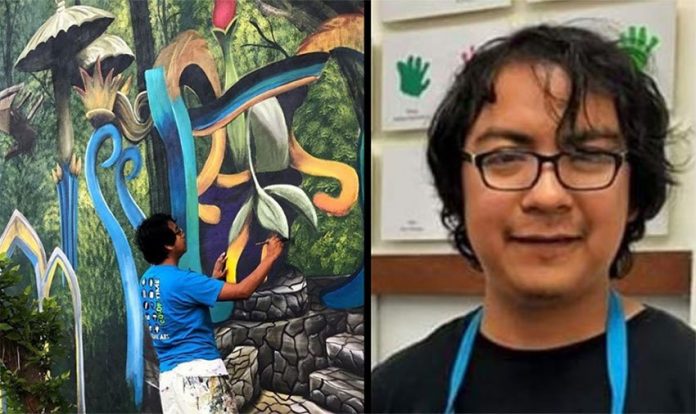
Héctor Domínguez: more love and color.

A muralist and environmental activist who was murdered at his home in San Luis Potosí had a simple belief: that the world needed more color and love.

Héctor Domínguez was shot dead last Friday night after two armed men broke into his family’s Ciudad Valles home. His father and brother were also killed in the attack.

The 35-year-old became interested in visual arts as a child and almost a decade ago founded the Fénix Art collective, which painted murals in urban spaces in and around Ciudad Valles, San Luis Potosí’s second largest city.

Domínguez painted countless brightly-colored murals featuring wild animals, calaveras (skulls) and super heroes such as Darth Vader and Superman, among other subject matter.

He posted more than a thousand photographs of his art to his Instagram account accompanied by captions including “freedom,” “you are what you decide to be” and “the world needs more color and love.”


View this post on Instagram


#freedom !

A post shared by Héctor Domínguez (@hectordominguezr) on

The day after he was slain marked the ninth anniversary of the creation of the Fénix Art collective. Apart from painting, Domínguez had also recently participated in efforts to clean up the local river.

The motive for the artist’s murder is unclear but it was not the first time he was targeted.

Armed men shot at and wounded Domínguez last September as he was leaving a Ciudad Valles school where he gave art classes. Weeks before that attack, Domínguez’s largest mural was defaced with black paint, apparently as a warning that his days were numbered.

The artist subsequently stopped painting in Ciudad Valles and focused his work on towns in the Huasteca Potosina region.

The artist’s aunt said that Domínguez also sought protection from authorities but in seven months, only one police car was seen watching over his house.

“If they had done their work, this wouldn’t have happened to my nephew. The result was a triple homicide, my brother and my two nephews,” Luz Domínguez said.


View this post on Instagram


Freedom 🦋 #fenixart #coloralascalles

A post shared by Héctor Domínguez (@hectordominguezr) on

State authorities are currently investigating the crime and Attorney General Federico Garza said that they had determined that only one gun was used in the attack.

He added that the few security cameras located in the area where Domínguez lived are out of order.

The San Luis Potosí Congress today held a minute of silence in memory of the murdered muralist but the peace was broken by several lawmakers who pleaded with the government to ensure that justice is served in the case.

People mourning Domínguez’s death have left scores of candles at the site of his most recent work, a 40-meter-long mural at a local primary school.

Source: Milenio (sp), La Orquesta (sp), Imagen Radio (sp) Quadratin (sp) 

AMLO cancels Special Economic Zones; ‘they were of no benefit’

0
The Special Economic Zones whose cancellation was announced today.
The Special Economic Zones whose elimination was announced today.

President López Obrador confirmed today that his government will eliminate the country’s seven Special Economic Zones (SEZs), declaring that they were of “no benefit” to the economy.

The president responded bluntly to a reporter who asked at his morning press conference whether the SEZs are going to disappear.

“Yes, completely,” López Obrador said.

“They were supposed to help but they never did anything to help. They [the former government] did business, they bought land, they squandered resources [but] there was no benefit at all.”

The Enrique Peña Nieto-led administration created SEZs in Puerto Chiapas, Chiapas; Salina Cruz, Oaxaca; Lázaro Cárdenas-La Union, Michoacán and Guerrero; Coatzacoalcos, Veracruz; Seybaplaya, Campeche; Dos Bocas, Tabasco; and Progreso, Yucatán.

Each zone offered generous financial incentives to attract investment including a zero corporate tax rate for 10 years.

Gerardo Gutiérrez Candiani, former head of the federal agency responsible for the SEZs, had predicted they would attract investment of US $42 billion over the next 15 to 20 years.

But last month his successor, Rafael Marín Mollinedo, said the government was analyzing the viability of the zones and that the Secretariat of Finance (SHCP) had taken the view that it would be more beneficial to concentrate government resources on the establishment of a trade corridor on the Isthmus of Tehuantepec.

Sources inside the president’s office confirmed that the government will pursue “development projects” instead of the SEZs.

The zones were created in late 2017 and early 2018. One year ago, the federal government announced a 50-billion-peso stimulus package to encourage investment in them.

In addition to canceling the SEZs, López Obrador said that his administration has eliminated other government programs and agencies that generated little or no benefit for the country.

“The Tourism Promotion Council was canceled yesterday,” he said, referring to a vote in the lower house of Congress that approved the agency’s disbandment.

“It was a bottomless pit, it didn’t promote tourism, it used money to buy loyalty . . . to pay for advertising in newspapers . . . Do you remember [international trade and investment agency] ProMéxico? It doesn’t exist anymore either.”

Source: El Financiero (sp) 

Mexican named world’s best female chef for ‘dynamic, inventive’ cooking

0
Soto at her New York City restaurant Cosme.

A 28-year-old Mexican chef who owns two restaurants in New York City has been named the world’s best female chef.

Daniela Soto Innes was awarded the title by organizers of the World’s 50 Best Restaurants.

The organization commended Soto, the youngest winner ever, for her “dynamic and inventive” cooking at the contemporary Mexican restaurants Comse and Atla.

Born in Mexico City and raised in Houston, Texas, she returned to her home turf to spend her formative years training under chef Enrique Olvera at the award-winning Pujol restaurant in Mexico City.

By 2014, Soto had settled in New York, where she and Olvera opened Cosme, promptly gaining the attention of local gastronomy fans.

Chefs Olvera and Soto.

Two years later she was given the Rising Star Award by the James Beard Foundation and this year she has been shortlisted for best chef.

At Cosme, the menu is anchored with Mexican flavors and traditions and includes dishes such as duck carnitas, barbacoa with shishito peppers, quelites, avocado and salsa, and corn husk meringue desserts.

Her second restaurant, Atla, is an all-day casual eatery that serves Mexican classics like huevos rancheros and quesadillas.

Soto and Olvera are now working on opening two new restaurants in Los Angeles later this year, a Japanese-influenced Mexican restaurant and a taquería.

“Both older talent and young talent deserve all the respect at all times, and we should be able to hear what has to be said,” she told World’s 50 Best in reference to her own youth.

“It doesn’t matter whether you’ve been cooking 40 years or one year. There are cooks who weren’t even cooks when they joined me a year ago, and they’ve taught me a lot more than what I knew when I was 14.”

Soto said she hopes to inspire and support people of all ages, races and nationalities in becoming cooks.

“I grew up with a line of really strong women that love to cook. When I was born, my mother was a lawyer . . . but she wanted to be a chef because my grandma had a bakery and my great grandma went to cooking school. Everything was about who made the best cake, who made the best ceviche, who made the best mole. I just knew that it was the thing that made me the happiest,” she said.

Soto wrote on Instagram that the award was “for the Cosme team, for my family, for Mexico. For the kick-ass women and men that give us their support!”

She will accept her award at the World’s 50 Best Restaurants presentation on June 25 in Singapore.

Source: Yahoo News (en), Sin Embargo (sp)

Playa del Carmen homicides up six times over last year

0
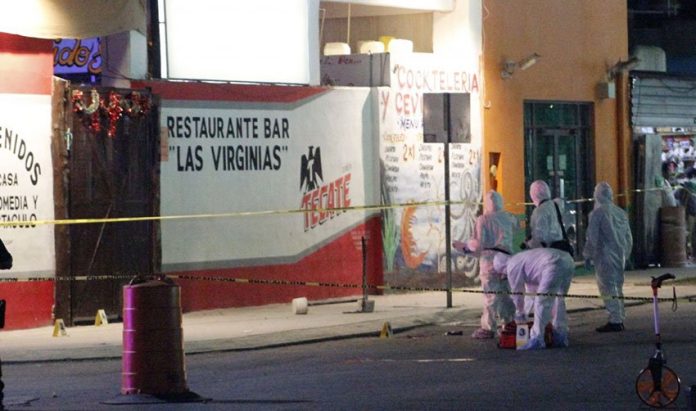
A police line in Playa del Carmen.

The number of homicides in Playa del Carmen, Quintana Roo, in the first quarter of 2019 was six times higher than the same period last year, statistics show.

There were 55 homicides in Solidaridad, the municipality where the resort city is located, between January and March compared to nine in the first three months of last year.

The figure accounts for one-third of all murders in the state in the first quarter of this year and is equivalent to one-half of the total number of homicides in Solidaridad last year.

Only Benito Juárez, the municipality where Cancún is located, recorded a higher number of homicides between January and March, with 96.

The high murder rate in Playa del Carmen continues a trend that began in July last year.

There were 28 intentional homicides between January and June 2018 but 82 in the six-month period to December, an increase of almost 200%. The surging murder rate came a year after Cancún saw a similarly steep rise in homicides.

In the first week of this year, seven people were killed in a bar shooting in Playa del Carmen, after which Mayor Laura Beristain said that municipal authorities would work “hand-in-hand with the state government in a head-on fight against crime” and that “we cannot and must not allow the image of Solidaridad as a tourist destination to continue to be stained.”

The following month, she appealed to President López Obrador to call on the media in Quintana Roo to stop “bashing” Playa del Carmen by publishing front page stories about violence.

During the presentation of the government’s national tourism strategy in Chetumal, Beristain claimed that newspapers were publishing sensationalist headlines such as “Solidaridad, 100 days of blood” and “Solidaridad, violence and crime grow” to retaliate against a loss of government advertising revenue.

“It’s not true, that [kind of violence] is not happening in Playa del Carmen, Solidaridad . . .” she said.

However, the most recent homicide statistics paint a different picture.

According to the president of the Citizens’ Observatory of Quintana Roo, a civil society organization, the growing levels of violence in Solidaridad are the result of a turf war between criminal groups.

“The municipal seat, Playa del Carmen, is one of the main markets [in the state] for drug dealing, and it’s an important plaza that several organized crime groups are competing for,” Gerardo Bonilla said.

“The problem is that Quintana Roo doesn’t have the institutional strength to deal with a phenomenon of this nature,” he added.

Bonilla charged that Governor Carlos Joaquín, who presented a new anti-crime strategy in February, has lost control of the security situation and expressed skepticism that the deployment of the National Guard will make a difference.

He also stressed that violence is a statewide problem, pointing out that Quintana Roo was considered the ninth most peaceful state in Mexico in 2017 but has now dropped to 29th.

“. . . To have lost 20 places in a couple of years and to now be one of the three most insecure states is not a minor matter,” he said.

Source: El Financiero (sp)