Home Blog Page 1902

Senate leader says marijuana legalization debate set to begin

0
marijuana

Debate on the legalization of marijuana will begin in the Senate next week, the leader of the Morena party in the upper house of Congress said on Friday.

Ricardo Monreal Ávila said that Senate committees will review proposals to legalize use of the drug and that legislation could be drafted by the third week of October.

Morena Senator and marijuana advocate Jesusa Rodríguez Martínez said that a total of 13 proposals will be reviewed in open sessions during which a range of views, including those of the general public, will be heard.

The Supreme Court published eight precedents in February on the recreational use of marijuana that determined that prohibition of the drug is unconstitutional.

Mexico United Against Crime, a group that opposes the prohibition of drugs, said the court has done its job and it is now up to lawmakers to legalize marijuana.

At a summit on the legalization and regulation of marijuana held in the Senate on Friday, Gil Kerlikowske, a former director of the United States Office of National Drug Control Policy, said that legalization must be backed by “robust regulation” to ensure that minors don’t have access to the drug.

He pointed to research that says that marijuana use can be especially harmful to the still-developing brains of young people.

“. . . We have to make sure that young people don’t use and are not exposed to this product,” Kerlikowske said.

The production, packaging and labeling of commercially available marijuana must be carefully regulated by any law that authorizes the recreational use of the drug, he said.

The former official, who was also commissioner of U.S. Customs and Border Protection during the administration of ex-president Barack Obama, recommended the imposition of taxes on marijuana and said that the revenue raised should be used for drug prevention and rehabilitation programs and to combat the black market for the drug.

In 11 U.S. states where recreational marijuana use is now legal, the illegal market for the drug hasn’t shrunk, Kerlikowske said.

“If you want a controlled environment for marijuana, you have to do everything possible to eliminate the black market . . .”

Source: El Universal (sp) 

CORRECTION: The previous version of this story contained a typo that confused the constitutionality of the prohibition of the drug. The court ruled in February it was not constitutional. 

Jalisco drove employment growth in August with 21.9% of the country’s total

0
Agri-food sector was one contributor to job growth.

Jalisco drove national employment growth in August, creating 21.9% of all new jobs across the country.

Official statistics show that the Mexican economy added 36,631 new jobs last month and 8,019 of those were in the western state.

Governor Enrique Alfaro Ramírez said that last month’s job numbers are 54% higher than the historical average for Jalisco during August.

Economic Development Secretary Ernesto Sánchez Proal said the numbers showed that the government’s strategies to attract investment to Jalisco and support the export of locally-made products are working.

Alejandro Guzmán Larralde, the state government’s strategic coordinator for growth and economic development, highlighted that the strong employment figures can partially be attributed to the recovery of jobs in the agri-food sector.

“It’s great news that our agri-food sector is recuperating jobs lost in the previous two months. The government is continuing to invest in infrastructure that provides the necessary conditions to increase our competitiveness and maintain . . . investment that increases employment, remuneration and the quality of life of Jalisco residents,” he said.

Statistics from the Mexican Social Security Institute show that Jalisco ranks third for job creation during the first eight months of the year behind only Mexico City and Nuevo León. The Jalisco economy added 39,138 formal sector jobs between January and August, maintaining an employment growth average of 2.2%, which is 0.5% higher than the national average.

Guzmán said the government is predicting economic expansion of 3% in Jalisco in 2019, a figure well above the central bank’s latest outlook for the national economy of growth in the range of 0.2% and 0.7%.

Source: El Economista (sp) 

Federal Police renew National Guard protest, blocking airport

0
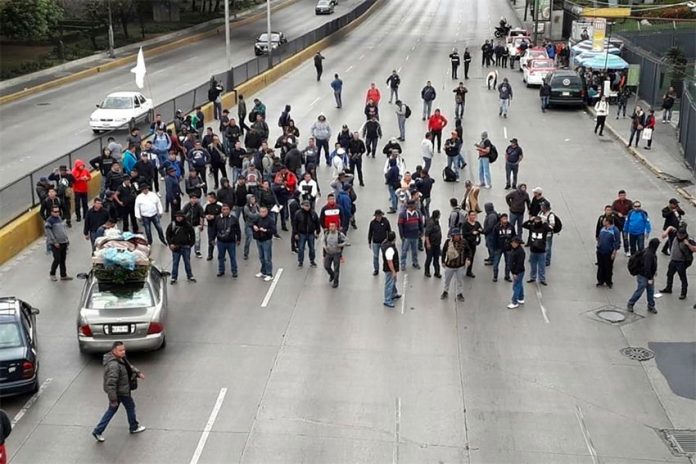
Federal Police blockade the Circuito Interior on Friday.
Federal Police blockade the Circuito Interior in Mexico City on Friday.

A group of Federal Police officers blocked access to the Mexico City airport on Friday, renewing their protest against transfer into the National Guard.

At least 100 officers dressed in civilian clothes blocked the Circuito Interior freeway near the entrance to Terminal 1 of the airport, the newspaper El Universal reported. The protest, which began shortly before 1:00pm, came after officers had attended a meeting at Federal Police headquarters in the Mexico City borough of Iztapalapa.

Federal Police first protested against their incorporation into the National Guard in early July, arguing that their salaries will be cut and they will lose benefits. They also claimed that if they refuse to join the new force, they will lose their jobs.

Protesting officers today demanded the payment of compensation and called federal Security Secretary Alfonso Durazo a liar.

Durazo and President López Obrador have both said that no Federal Police officers will be forced to join the National Guard.

The security secretary announced in July that the Federal Police will be disbanded within 18 months but explained that if officers don’t want to enter the National Guard, they will have the opportunity to join a range of other organizations such as the National Immigration Institute, Civil Protection services, customs or the National Anti-Kidnapping Commission.

The federal Security Secretariat (SSPC) said on Twitter on Friday that no officers will be dismissed, explaining that they will be able to choose from 11 different work options.

In another post just after 3:30pm, the SSP said it was open to dialogue with the protesting officers and urged them to reconsider their decision to block traffic.

However, as of 4:30pm, the protest on Circuito Interior was continuing, the newspaper Milenio reported.

The Mexico City Metro system said on Twitter that people who need to get to the airport can use its Line 5 services to the stations Hangares and Terminal Aérea, while transportation authorities advised motorists to use alternate routes such as Avenida Oceanía.

Officers taking part in today’s protests were described as a “radical wing” of the Federal Police by some of their colleagues. Leaders of past protests said the demonstrating officers were acting independently and without their endorsement.

About 500 Mexico City police officers were deployed to the area around the airport to monitor the demonstration and prevent the protesters from entering the terminal.

The blockade has affected traffic attempting to reach both Terminal 1 and Terminal 2 of the airport, the newspaper El Financiero said.

Photographs posted to social media showed some people getting into police vehicles in order to get to the airport with enough time to check in and make their flights. However, others who didn’t have the option of abandoning the vehicle in which they were traveling were left stranded.

Source: Reforma (sp), El Financiero (sp), El Universal (sp) 

Proud Mexicans? You bet. Poll finds 91% ‘very proud’ of their nationality

0
El Grito, maximum expression of pride, will be heard on Sunday.

National pride among Mexicans is strongest in Jalisco and weakest in Mexico City, according to a new poll.

Conducted by the newspaper El Financiero across all 31 states and the capital, the survey shows that 91% of those polled are “very proud” of their nationality.

In Jalisco – home to two of Mexico’s most famous and beloved icons: tequila and Mariachi music – 96% of all respondents said that they are very proud Mexicans, 1% higher than the figure recorded in each of Chihuahua, Baja California, Colima and Yucatán.

Ninety percent or more of respondents in 23 of Mexico’s 32 federal entities said that they are very proud of their nationality, while the figure dipped below 90% in just eight states and the capital.

However, the lowest percentage of respondents who said that they are very proud Mexicans – 86% in Mexico City – is just 10 points below the high recorded in Jalisco.

The next lowest figures were recorded in Aguascalientes, Chiapas and Morelos, where 87%, 88% and 88% of respondents, respectively, said that they are very proud citizens of the United Mexican States, Mexico’s official name.

The nationwide figures, gleaned via telephone interviews with at least 400 residents of each state, indicate that, overall, Mexicans are very proud of their country.

The poll also shows that most people are very proud of the state in which they live.

At the top of the list is Yucatan, where 96% of respondents said that they are very proud of their state.

Among the reasons for which yucatecos can feel pride is that the capital, Mérida, was recently ranked the safest city in Latin America and the second safest in North America. More broadly, Yucatán is well known for its unique cuisine, archaeological sites such as Chichén Itzá and Uxmal and strong Mayan culture.

State pride is also very strong in Sonora, Oaxaca, Jalisco, Sinaloa, Nayarit, Tlaxcala and Durango. Between 85% and 90% of respondents in those states said they are very proud of the place in which they live.

Residents of México state, Mexico City, Coahuila and Guerrero are less enamored with their home states but still 65%, 68%, 71% and 73%, respectively, said that they are very proud of them.

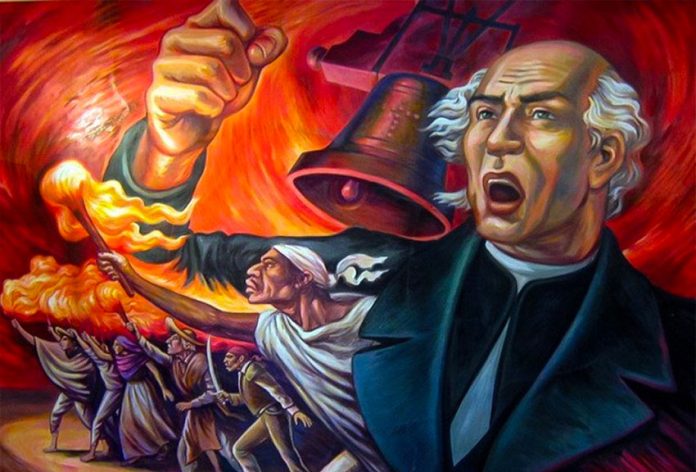
The maximum expression of Mexican pride will be on display this Sunday when millions of people gather across the country to celebrate the 209th anniversary of Mexico’s independence and participate in a pride-filled and rousing reenactment of El Grito de Dolores, the cry for a revolt against the Spanish colonial government delivered by Miguel Hidalgo y Costilla in 1810.

Source: El Financiero (sp) 

This master mezcalier came for the mushrooms but stayed for the mezcal

0
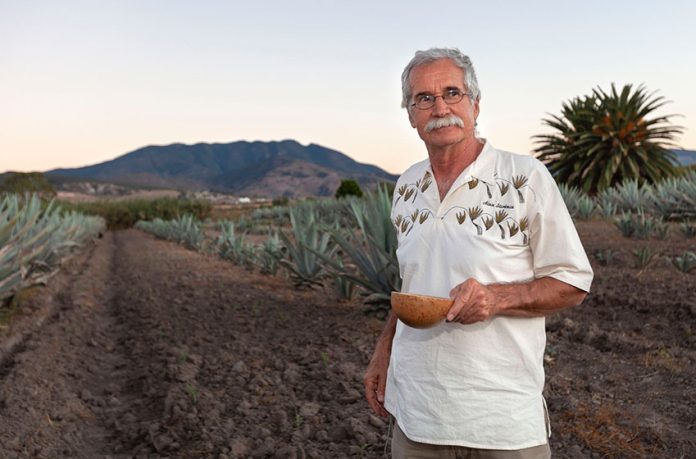
Mezcal expert Alvin Starkman.
Mezcal expert Alvin Starkman. spike mafford

“My friends all went to Woodstock. I went to Huautla,” says Alvin Starkman of his first trip to Oaxaca. “I didn’t get to meet María Sabina, but I did try the mushrooms, and that was a great experience.”

The Mazatec shaman’s niños santos (holy children), as she called them, may have been what initially drew Starkman to Oaxaca, but what convinced him to stay was the mezcal. Though not until quite a bit later.

He says it’s possible he tried mezcal back in 1969 but, like a good hippie, he doesn’t remember. It wasn’t until he returned with his wife and daughter in 1991 that he recalls his first captivating sips.

“That’s when mezcal started to come onto my radar,” he says.

Between this trip and his move to Mexico in 2004, he returned to Oaxaca many times to research mezcal and meet palenqueros, as mezcal producers are called.

He spent his first few years in the state getting to know more and more artisanal mezcal producers, either by asking friends where they got the stuff they were drinking, or just wandering the valleys with his wife.

“I’d see smoke and say, ‘Oh, maybe they’re making mezcal there.’ And we’d go off and meet new palenqueros.”

He now knows over 60 artisanal mezcal producers across the state, many of whom he considers good friends. They invite him to weddings, quinceañeras, baptisms and other family celebrations.

Soon the rest of the world began to take a similar interest in Oaxaca’s signature spirit.

“The mezcal boom, I think, started in earnest around 2007-2008, and more and more people started coming to Oaxaca to learn about mezcal,” he says.

That’s when Alvin saw his niche. There were tours with mezcal tastings on the itineraries, but they usually just tacked a 10-minute spiel onto the end of a whirlwind day of the major sights in Oaxaca’s Central Valleys.

“Nobody was offering a true, comprehensive cultural experience to learn about the palenqueros, their cultures, how they make mezcal — not for tourists — but rather for people in their villages, for bar and restaurant owners in Oaxaca and other parts of the country.”

He took a master mezcalier certification program in Mexico City, jumped through the countless hoops of Mexican bureaucracy, and in 2011 had his permit to teach about the culture and production of mezcal and other pre-Hispanic drinks.

Thus, Mezcal Educational Tours was born. He now gets so many requests for tours each week he’s had to hire an assistant to manage the business.

But it’s not only tourists that Alvin takes through the dry desert hills of the Valles Centrales. He also consults entrepreneurs and bar owners, helping them find the right artisanal producer for the mezcal they want to sell.

He has now helped develop around a dozen brands for export, one of which is the recently launched Dos Hombres, owned by Breaking Bad stars Bryan Cranston and Aaron Paul.

“It was nice spending time with them, teaching them about mezcal,” he says, though he had a bit more in common with Cranston than the younger Paul.

“I spent a good bit of time just one-on-one with Bryan, and although he’s a famous celebrity with oodles of money, we seemed to have a fair bit in common — our attitudes on life and slowing down as we get older.”

Starkman says his love of mezcal largely stems from the human connections it creates.

The endeavor has allowed him and his wife to make a unique connection with their goddaughter Lucy. They took the money from the tours and invested it in her education. She just finished medical school and is now interning at a hospital in León, Guanajuato.

He appreciates the hard work that goes into producing mezcal and the pride that palenqueros have in their craft.

“Since the early ‘90s, I’ve noticed how palenqueros explain their craft with their heads held up high because of the pride they have in what they do,” he says.

Its history and tradition fascinate him. Depending on which school of mezcal history one subscribes to, the beverage is either 500 or 2,000 years old.

“How many industries go back four-five hundred or 2,000 years?” he asks.

Despite its age, if producers work hard to maintain their artisanal methods, he sees a bright, sustainable future for the storied product. Recently artisanal brands have been sold to large beverage corporations like Pernod Ricard, Diageo and Bacardi.

“It’s good because mezcal is now getting exposure in parts of the world where it never had exposure before,” he says. “The issue from my perspective is — how do you increase supply to meet the demand and still maintain the artisanal, the ancestral nature of the product? It’s a balancing act.”

He has faith in the palenqueros he knows to do just that.

When it comes to his own future, Starkman is just as positive about the road ahead. “I couldn’t have asked for a better story for the last half of my life than what has ended up happening.”

Do you know someone you think would be a good subject for Expat Stories? Send us your nomination with a short explanation telling us a little about the person and why you think he or she would be interesting to Mexico News Daily readers, along with contact information for the nominee.


Stomp on some grapes, enjoy some wine at Aguascalientes’ Vino Fest

0
Enjoy wine, cheese and more at Vino Fest Aguascalientes.

Aguascalientes will put its long history of wine production on display at the first annual Vino Fest Aguascalientes 2019.

To be held on September 17-22, the event will include over 80 cultural activities, sporting events, artistic exhibitions and vineyard tours, as well as traditional barefoot grape stomping.

“Aguascalientes has a long vinicultural tradition dating back to 1575, reaching its apogee in 1980 when the state was the country’s top wine producer,” said Aguascalientes Tourism Secretary Jorge López Martín.

The festival will kick off with a concert by Armando Manzanero and Francisco Céspedes on September 17 in the Plaza de las Tres Centurias in downtown Aguascalientes.

There will also be a video mapping show that will trace the history of wine production in the state on the buildings in the square.

Festival-goers will also be able to attend the Mexico Selection by Concours Mondial de Bruxelles, a major wine-tasting competition. A panel of national and international judges will identify the best wines and spirits Mexico has to offer the global market.

The event will also host tours of vineyards in the region, including Boedgas de la Parra, Vinícola Santa Elenea, Bodegas Origen, Viñedos Casa Leal and Hacienda de Letras. The tours will provide a history of the vineyards and demonstrations of the winemaking process, and will include tastings.

The Vino Fest Equestrian Cup will be held in a local baseball stadium, featuring an obstacle course for riders and their horses, while the visual art exhibition Vid Art 2019 will feature sculptures made from wine bottles.

Of course, to accompany tastings, there will be an exhibition of artisanal cheeses and other agricultural products, as well as an area for artisanal breads.

The grape stomping events will be held on Friday and Saturday.

The festival will close with an awards ceremony to present prizes to the winners of the various categories in the Mexico Selection.

Entrance to Vino Fest Aguascalientes 2019 is free, and 85% of the activities are also completely free of charge.

Source: El Universal (sp)

No protection for witness of alleged police massacre: rights group

0
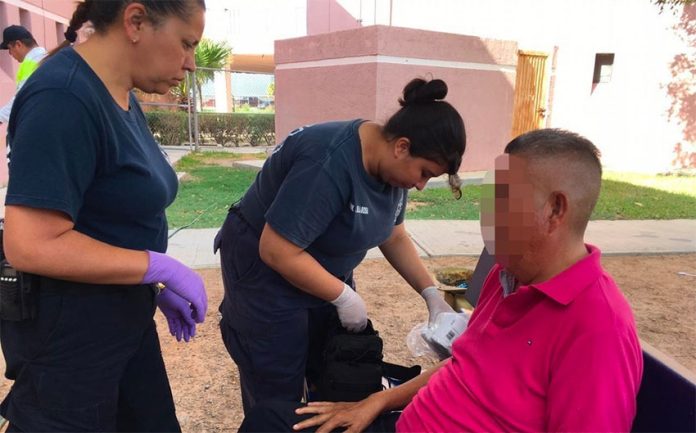
Paramedics treat the witness to an alleged massacre in Nuevo Laredo before transferring him to hospital.

The Nuevo Laredo Human Rights Committee (CDHNL) is accusing authorities of failing to offer protection to a key witness of an alleged massacre by police on September 5.

Identified as Ramón, the witness has spoken to the National Human Rights Commission but fears retaliation from Tamaulipas state police, according to CDHNL president Raymundo Ramos, who said on Friday that arrangements have been made to transfer the man to the United States.

“Emotionally, he’s in a very bad state, he gets very scared, very worried every time he sees a state police officer, and he has no protection,” Ramos said in an interview with Grupo Fórmula. “He has already been interviewed by the National Human Rights Commission, he already gave his testimony, and we’re looking into ways to protect him, so that he doesn’t become the victim of retaliation.”

The murders occurred in the Valles de Anáhuac neighborhood of Nuevo Laredo where police say they killed five men and three women in a shootout. However, witness testimony and video evidence gathered by the CDHNL suggests the victims were shot execution-style after having been arrested, and that police manipulated the scene to support their claim that there had been a battle.

Tamaulipas Governor Francisco García Cabeza de Vaca announced on Twitter that state Attorney General’s Office is looking into the incident, and will request assistance from the United States Federal Bureau of Investigation. He also said that the officers implicated have been suspended, and will face criminal penalties if they are found to have committed extrajudicial killings.

In his morning press conference on Thursday, President López Obrador promised that the federal government will support the investigation into the incident.

“Prosecutors are conducting an investigation, and we will help them with everything,” he said. “We’re not going to allow executions or massacres of anyone, we won’t tolerate it. There will be investigations, and those responsible will be punished.”

Source: Milenio (sp)

37 bodies confirmed in 119 bags of body parts found in Jalisco

0
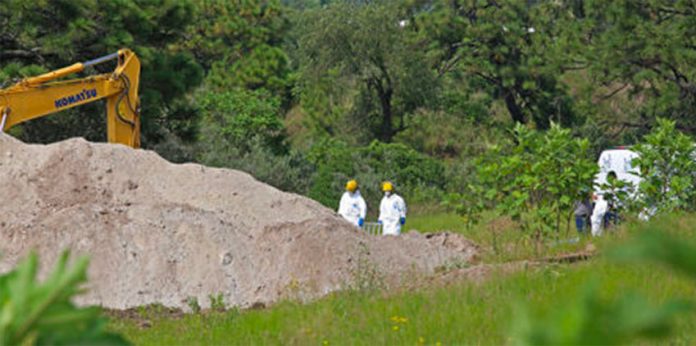
Excavating human remains in Zapopan.

The Jalisco government has confirmed the remains of 37 people have been found among body parts left in 119 plastic bags that were buried on a property in Zapopan, a municipality in the metropolitan area of Guadalajara.

Security cabinet chief Macedonio Tamez Guajardo said that forensic specialists have discovered the complete remains of nine bodies and the partial remains of 16 as well as six heads and six backs.

“It saddens me to speak in this way but society has a right to know what is happening,” Tamez said.

The official said the bodies are in “varying states of decomposition” and therefore some will be easier to identify than others. However, Tamez asserted that identification of all the victims is possible.

He said that the sex and age of the victims have not yet been determined and that authorities don’t know where they were killed or by whom.

However, Tamez added that there could be a connection between the mass grave discovered last week in the neighborhood of La Primavera and an organized crime safe house in Ciudad Granja, Zapopan, where six bodies were discovered on August 12.

While none of the remains of the 37 victims have yet been identified, family members of missing persons have begun approaching the Jalisco Institute of Forensic Science to seek information about the latest discovery, the official said.

“. . . In due course, [information] will be provided to them,” Tamez said.

He rejected a claim made by an organization of family members of missing persons that the state’s morgues are overwhelmed.

“There’s no crisis . . . no saturation [in morgues],” Tamez said, although he conceded that forensic staff face a heavy workload.

The security chief said the process to hire more forensic personnel is underway, adding that bodies are constantly being identified and returned to their families for burial.

Jalisco-based journalist Stephen Woodman said in an interview with Business Insider published on Thursday that state authorities have found 20 clandestine burial sites in the Guadalajara area this year.

In the first seven months of the year, homicides in Jalisco increased by 21% compared to the same period of 2018, and more than 3,000 people are listed as missing in the state.

The western state is the home of Mexico’s most powerful and dangerous criminal organization, the Jalisco New Generation Cartel, which is involved in turf wars with other crime groups in several parts of the country.

Source: Milenio (sp) 

US seeks security guarantees for avocado inspectors in Michoacán

0
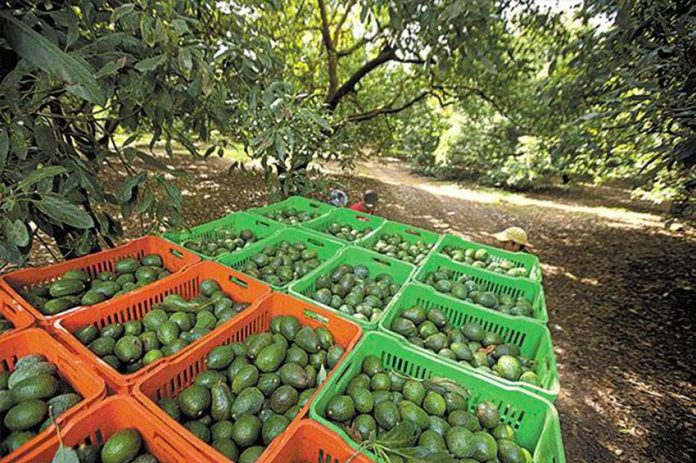
Crime gangs threaten Michoacán's avocado exports.

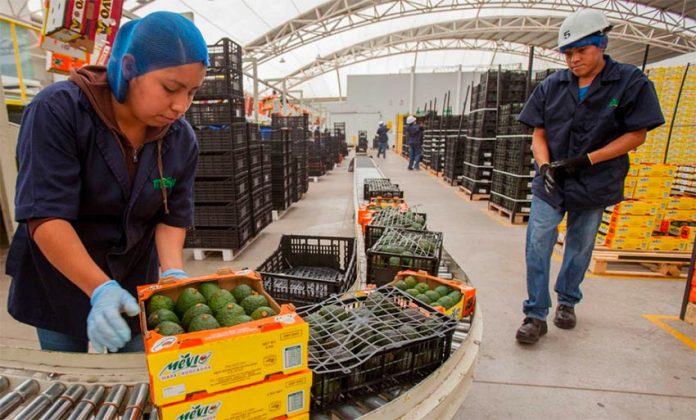
The United States Department of Agriculture (USDA) is threatening to suspend its avocado certification program after threats and violence against inspectors in Michoacán.

According to military sources who spoke with the newspaper Reforma, the USDA issued a travel warning for 38 Michoacán municipalities, most of which have significant avocado production.

There are 58 USDA employees stationed in Michoacán who are responsible for inspecting conditions on farms that grow avocados for export to the United States.

On August 16, USDA agents were threatened by a suspected criminal gang after cancelling the certification of an avocado farm in the community of Copal in the municipality of Ziracuaretiro.

Last week, a group of USDA agents traveling with local authorities in Ziracuaretiro were robbed and their vehicle was stolen. After the incident, officials from the U.S. Consulate in Guadalajara met with an association of avocado growers to demand better security for USDA agents, threatening to end the export program if the situation does not improve.

On Monday, the USDA issued the travel warning and requested the cooperation of Gabriel Villaseñor, the leader of the Mexican Avocado Producers and Packers Association (APEAM), to improve security.

Marie Martin, USDA director for pre-authorization in Mexico, told Reforma that the avocado export program will be suspended if USDA personnel are put at risk again.

“In future situations that cause a security violation or an imminent physical threat, we will immediately suspend the program,” she said.

Source: Reforma (sp)

Police put to work as construction laborers despite officer shortage

0
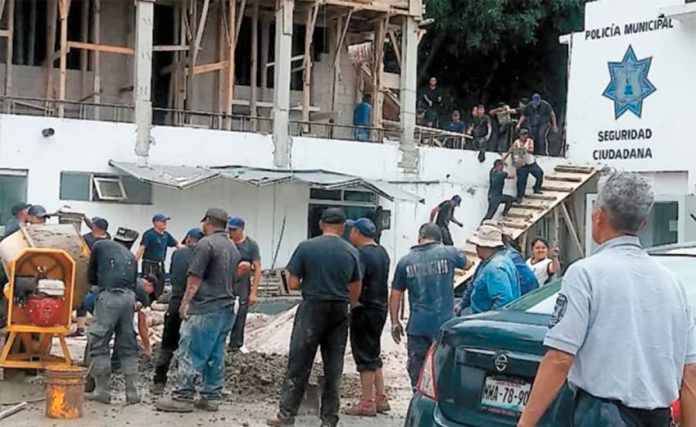
Cops fill in as albañiles.

Despite a shortage of police, officers were called on to do some construction work in Naucalpan, México state, where there appears to be a similar shortage of albañiles, or laborers.

Some 20 officers and academy cadets were seen working on a new floor at police headquarters in the Alce Blanco neighborhood on Thursday.

“Everyone has to pitch in,” police Captain Lázaro Gaytán Aguirre told the newspaper El Universal.

“It’s only eight officers working on it,” he added.

However, El Universal documented at least 20 officers at work on the building.

They were mixing cement and moving it in buckets up to the roof of the station, where they had raised walls to add another story.

“The remodeling work they’re doing is just for today, they’ll finish today. It’s a new story we’re putting in to make space,” Gaytán said.

“We’re using officers to do it because we’re trying to make the best use of the resource,” he added.

Gaytán insisted that crime rates in Naucalpan have dropped, but did not provide specific data. He did, however, admit to a 600-officer shortage in the municipality.

Sources: El Universal (sp), El Heraldo de México (sp)