Home Blog Page 1908

Mayor refused security support, claims state wanted too much money

0
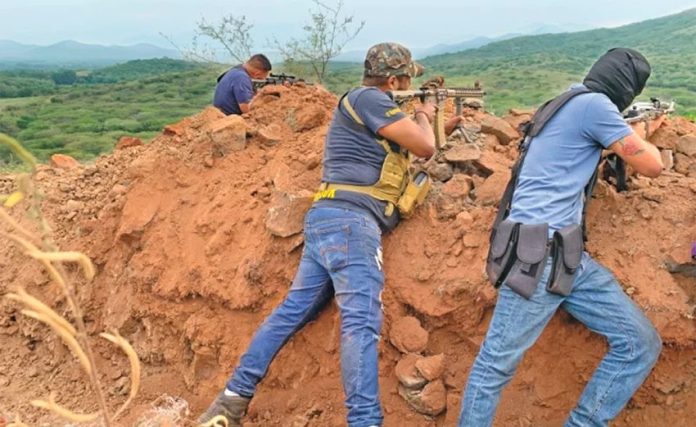
Tepacaltepec's self-defense force ready to take on the Jalisco cartel.

The mayor of Tepalcatepec, Michoacán, where nine presumed hitmen of the Jalisco New Generation Cartel were killed in clashes on Friday, repeatedly refused offers of security support from the state, according to government officials.

Michoacán authorities told the newspaper El Universal that Felipe Martínez Pérez refused to sign agreements to certify municipal police and to send state police to Tepalcatepec on five separate occasions.

But the mayor says it came down to a lack of funds to pay for it.

Mayor Martínez – who this week accused both state and federal authorities of leaving the municipality to fend for itself – said he refused to sign the agreements because the state government was asking for around 350,000 pesos (US $17,800) in exchange for its support.

That amount, Martínez explained, represents about 35% of Tepalcatepec’s entire annual security budget of just over 1 million pesos.

“What happened is that [they wanted] to charge us 35% of the security fund, and if we pay that how are we going to get by? That’s the problem,” he said.

The mayor also said that federal authorities have asked the municipality to provide land for the construction of barracks for the National Guard but he claimed that a lack of resources made it impossible for his government to comply with the request.

“We don’t have the money,” Martínez said, explaining that municipal authorities haven’t found anyone willing to donate or lend land to the federal government either.

“. . . It’s not that I’ve denied [the request], it’s just that there’s no way [to satisfy it],” the mayor said.

Source: El Universal (sp) 

Anti-corruption legislation threatens to trigger ‘brain drain’ at regulator

0
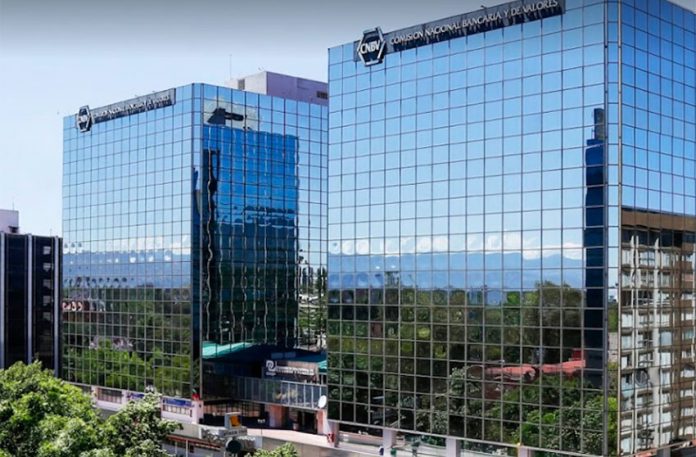
The national banking regulator could lose more senior staff.

Anti-corruption legislation promoted by President López Obrador threatens to trigger a brain drain from Mexico’s banking and securities regulator.

The so-called “revolving door” bill, which seeks to ban high-ranking public officials from taking jobs with companies they regulated for a period of 10 years, will be considered by the lower house of Congress this month. The proposed law has already been revised by the Senate.

Leaders from the ruling Morena party, which leads a coalition with a majority in both houses of Congress, have said that passing the bill is a priority for the fall session.

López Obrador has called the revolving door between government and the private sector a “cancer of corruption.”

Introducing the proposal in February, he described the employment of former high-ranking officials in private companies shortly after they leave public office as “immoral and a shame.”

But many senior officials of the National Banking and Securities Commission (CNBV), which has been criticized for maintaining cozy relationships with the private sector, believe that a 10-year ban is too harsh.

According to a dozen current and former CNBV employees who spoke to the news agency Bloomberg, many high-level workers have indicated that they will quit should the law take effect.

Some have already penned resignation letters that they keep in their pockets to submit as soon as the law is approved, Bloomberg said.

About one-fifth of CNBV employees have already resigned since López Obrador took office and slashed the salaries and benefits of high-ranking officials. A further exodus of workers would further weaken the regulator that oversees Mexico’s entire banking and financial sector.

“It would be devastating to the regulator,” said former CNBV official Mauricio Basila, referring to the likely approval of the 10-year ban. “The best people would leave rather than stay.”

Sources told Bloomberg that the pace of banking audits, the drafting of new regulations and the approval of licenses have all slowed since the departure of officials who were unhappy about the pay cuts they were forced to take.

A second wave of resignations stemming from approval of the “revolving door” legislation could diminish CNBV’s capacity to ensure the stability of the banking system and prevent fraud, cyberattacks and money laundering, the sources said.

Iván Alemán, a financial consultant and former CNBV official who was responsible for money laundering prevention, said that weaker regulation will lead to greater risk taking across Mexico’s financial sector.

“Once financial entities see that auditing by inspection has relaxed, they will loosen their own controls,” he said.

Craig Holman, a government affairs lobbyist for Washington-based consumer advocacy organization Public Citizen, told Bloomberg that a 10-year ban on officials taking jobs in companies they regulated is tough but “certainly not too harsh.

“The revolving door is one of the most pernicious influence-peddling schemes that plagues governments everywhere,” he said.

However, others took a different view.

“Ten years is just way too harsh,” said Nalleli Arias, a former CNBV deputy director of money laundering prevention who left the regulator last year after hearing rumors about the private sector restrictions.

Jacobo García, a public integrity expert at the OECD, said that eradicating corruption is essential but suggested that establishing effective controls would be a better strategy than imposing lengthy private sector employment bans.

“The sources of potential conflicts of interest need to be well regulated but it is important that there is a balance between reasonable restrictions and the job possibilities of public servants,” he said.

Source: Bloomberg (en) 

In 24 hours, 3 babies abandoned in Mexico City

0
One of the babies had been left in a cardboard box.

Mexico City authorities are investigating after three newborn babies were found abandoned at different points around the city in 24 hours.

The first discovery took place on Wednesday evening when a baby was reported to have been left at a church on Jilguero street in the Bellavista neighborhood of Álvaro Obregón. When police arrived they found a two-day-old baby girl, who was subsequently taken to a pediatric hospital.

The second occurred on Wednesday night in the neighborhood of Ajusco Coyoacán, where a baby boy was found in a cardboard box outside a school.

The third child, a girl, was found in a washroom at a mall in the borough of Miguel Hidalgo on Thursday morning.

The Attorney General’s Office said three criminal investigations had been opened into the cases.

There were two such incidents in August.

A newborn baby girl was left naked on the roadside August 7 in Venustiano Carranza, and the body of a newborn baby was discovered — also on the roadside — August 15 in Xochimilco.

There were six cases of abandoned babies in Mexico City in 2018, according to the DIF family services agency.

Source: El Universal (sp)

Mexico City announces 40-billion-peso modernization plan for Metro

0
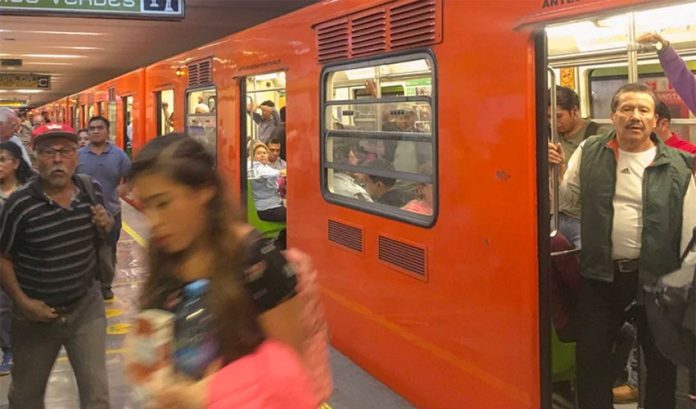
Transit system will get an upgrade.

Mexico City Mayor Claudia Sheinbaum has announced a 40-billion-peso (US $2-billion) investment to modernize the Metro transit system over the next five years.

She made the announcement Wednesday at an event celebrating the 50th anniversary of the transportation system.

“The best way to celebrate the 50th anniversary of the #MetroCDMX is to commit ourselves to the next 50,” she posted on her Twitter account. “Here, what we’re going to do includes modernization, re-strengthening, improving stations, stairways, new trains.”

The city government plans to improve train control and automation, user information and payment systems.

It also plans to increase the capacity of the network in order to reduce wait times and the saturation of stations.

Mayor Sheinbaum, center, at Wednesday's Metro announcement.
Mayor Sheinbaum, center, at Wednesday’s Metro announcement.

The plan includes the purchase of 30 new rail cars for Line 1 between 2020 and 2024. The bigger, more modern cars are intended to increase capacity, reduce technical failures and save on maintenance.

The 17.74-billion-peso investment in the one line will have an impact on the entire system. With 20 stations and 13 connections, improvements on Line 1 are expected to have a positive effect on the rest of the system.

Line 1 will also see tracks upgraded and updated electric and electronic systems. The modernization of its communications-based control system will allow for the hourly train frequency to increase from 30 to 36.

The plan also includes repairs to the system’s escalators, bringing them up to international standards, as well as improved lighting, ventilation and fire emergency systems.

The Mexico City Metro has 12 lines, extending over 226.49 kilometers of tracks and connecting 195 stations.

Its current fleet of 3,333 train cars transports more than 1.6 billion passengers per year.

Sheinbaum touched on the decision to modernize the system rather than add a new line. “We could have decided to install a new line, but we made the decision to modernize the Metro because if we don’t modernize, if we don’t move on to a new phase, it will be difficult to talk of adding new lines.”

“It’s up us to establish new technology that will allow the Metro to move more users and function better with the lines it already has,” she added.

Source: Infobae (sp), El Sol de México (sp)

El Chapo says assets should go to Mexico’s indigenous peoples

0
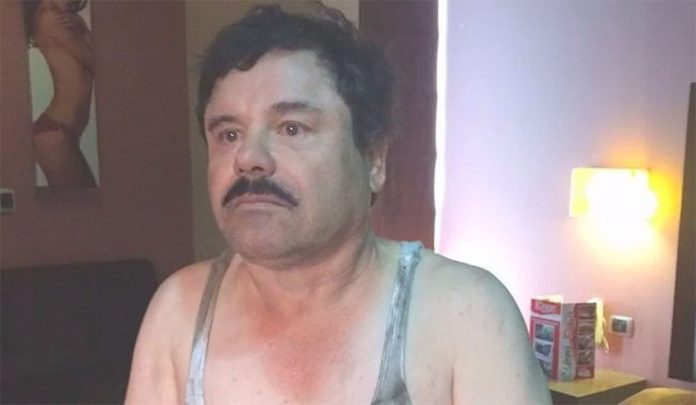
'El Chapo' Guzmán wants his assets to go to indigenous peoples.
'El Chapo' Guzmán expressed his wish in a phone call with his mother and sisters.

Convicted drug trafficker Joaquín “El Chapo” Guzmán wants his money to go to Mexico’s indigenous communities, a lawyer for the former Sinaloa Cartel leader said on Wednesday.

José Luis González Meza said that his client told his mother and sisters via telephone that he was aware that the United States was seeking to seize US $14 billion of his assets.

Guzmán “said the money doesn’t belong to the United States but to the government of Mexico,” the lawyer told a press conference.

González added that “El Chapo” expressed his full support for his wealth to be returned to Mexico on the condition that President López Obrador distribute it to indigenous communities.

The announcement of Guzmán’s wish came two and a half months after López Obrador said that his government would seek to seize the former drug lord’s assets.

To that end, the Senate is proposing the creation of a binational commission to negotiate the return of assets seized from Guzmán and any other Mexican criminals who are tried and convicted in the United States.

The president said on Thursday he liked the idea. “. . . it looks good to me. I applaud the announcement.”

González also said yesterday that he is seeking Guzmán’s repatriation to Mexico. He was extradited to the United States in January 2017 and found guilty on trafficking charges in February.

During his 11-week-trial, jurors heard tales of grisly killings, political payoffs, high living and a massive drug-smuggling operation that resulted in huge quantities of cocaine and other drugs crossing Mexico’s northern border.

At a sentencing hearing in July, federal Judge Brian Cogan handed down a prison term of life plus 30 years and ordered the 62-year-old former narco to forfeit US $12.6 billion, an amount that represents the total amount of illegal drugs the jury determined he shipped to the U.S.

Guzmán is now incarcerated is the so-called “Supermax” prison in Florence, Colorado, the United States’ most secure penitentiary.

Source: EFE (sp) 

14 police hostages freed after 17 hours of negotiations

0
Governor Barbosa: no force was necessary to free hostages.

Armed civilians in Cañada Morelos, Puebla, released 14 police hostages Wednesday after 17 hours of dialogue with authorities.

The state police officers had been held since Tuesday night by a group of 50 civilians, whom the governor described as train robbers, demanding the release of three individuals detained by the National Guard on weapons and robbery charges.

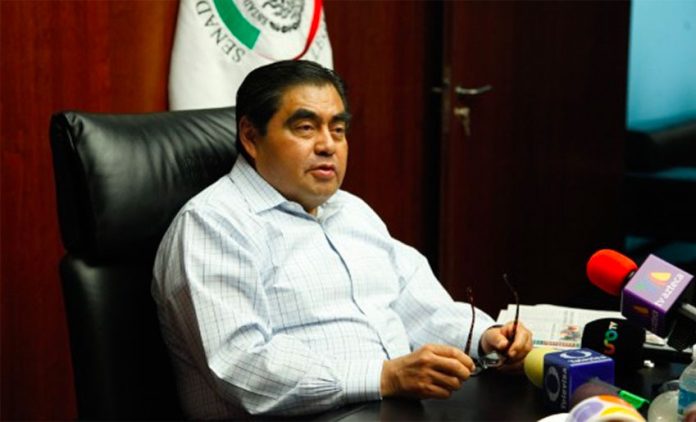
Puebla Governor Miguel Barbosa Huerta said the release was achieved through dialogue between authorities and the hostage takers.

“A few minutes ago the detained persons were freed in Cerro Gordo, Cañada de Morelos,” he said. “This thanks to the dialogue of a committee of the Secretariat of Public Security, the army, the National Guard and the attorneys general of the republic and the state.”

It was not revealed what the authorities offered in exchange for the hostages’ release.

The hostage takers burned a patrol vehicle to press for the release of jailed suspects.

Several hours earlier, Barbosa told a press conference that the hostage takers were in the business of highway and train robbery and operated under the direction of a former mayor.

Authorities arrested 17 citizens who were involved in the hostage-taking and setting fire to a police patrol car.

Barbosa insisted that the government of Puebla will continue to use communication to solve conflicts, rather than force.

“This dialogue with the community was done without negotiation or failure to apply the law. It is very satisfactory that this was resolved within the framework of the rule of law and with respect to human rights . . . In Puebla, we respect the law,” he said.

Meanwhile, respect for the law was not evident in the Cañada Morelos community of Llano Grande Wednesday evening.

While all attention was focused on the discussions to seek the release of the 14 police officers, about 200 residents placed obstacles on the tracks to halt a train and steal its cargo.

They made off with several tonnes of grain before National Guardsmen showed up.

Sources: Mileno (sp), El Heraldo de México (sp), La Jornada (sp), El Sol de Puebla (sp)

Waterspout draws lots of attention in Manzanillo, Colima

0
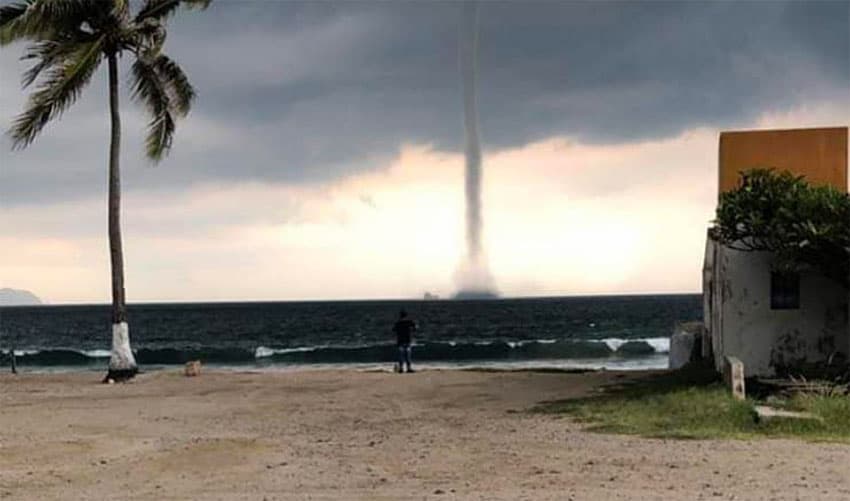
The waterspout that appeared in Manzanillo on Wednesday.

Towering hundreds of meters over the sea, a waterspout formed Wednesday in a bay in Manzanillo, Colima.

Commonly called a culebra de mar (water snake) in Mexico, the tornado-like phenomenon appeared in Santiago bay, the smaller of Manzanillo’s two main coves.

It captured people’s attention around 1:30 in the afternoon before dissipating upon making landfall.

Waterspouts are common in the area during the rainy season, and can also occur over lakes and rivers.

On July 24, a group of surfers spotted one over the open ocean while they were riding waves off Peña Blanca Beach, in Manzanillo bay.

The waterspout was visible from many areas of the port.

According to experts, the whirlwind formed by a waterspout can reach speeds up to 80 kilometers an hour, and the column can reach heights of 900 meters above the water.

The diameter is usually 15 to 46 meters, though larger ones can be as wide as 100 meters.

A waterspout dissipates when it hits land or the air inside the whirlwind becomes cold, losing the energy to spin. Although stronger ones can last up to an hour, the average lifetime of a waterspout is just 10-15 minutes.

The energy in a waterspout is equivalent to a weak tornado on land. Though not devastating on a large scale, they can be potentially dangerous to boats and coastal infrastructure.

Sources: AF Medios (sp)

Medicinal marijuana group sees Mexico becoming the top producer

0
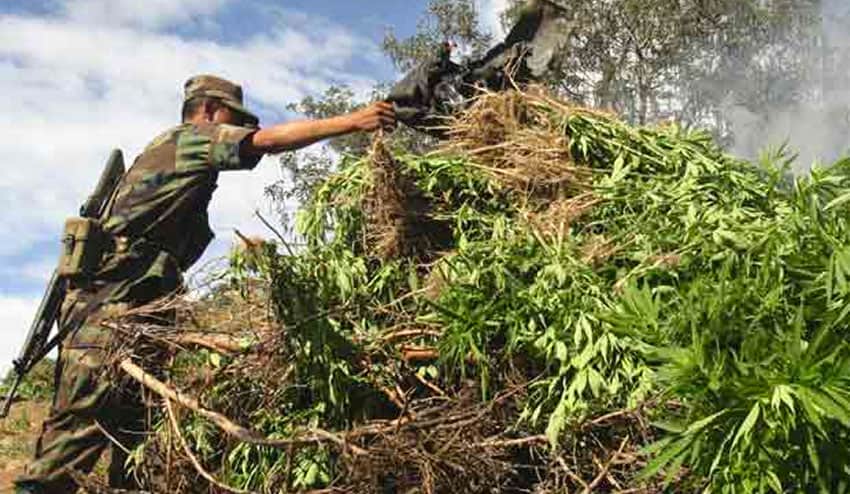
Mexico already has the expertise in the cultivation of marijuana.
Mexico already has the expertise in cultivation.

Mexico could become the biggest medicinal marijuana producer in the world in five years if the government gives the green light for the cultivation of the plant, according to the president of an industry group.

Luis David Suárez Rodríguez, president of the Mexican Medicinal Marijuana Association, told the newspaper El Universal that there is no country that is better suited to the cultivation of cannabis than Mexico, adding that farmers already have ample experience growing the crop.

“Even though [they grow it] illegally, they know the plant, they’ve worked with it so legalizing its medicinal use would change the equation. It’s a social justice issue . . . our country . . . would change and those communities that were beaten down by the war against drug trafficking could be legal producers. It would be our green gold,” he said.

Suárez said that government approval and regulation of the use and cultivation of medicinal marijuana would allow Mexico to cash in on a lucrative global market, whose annual worth is currently estimated at around US $150 billion.

“I’m convinced that if we look at [cannabis cultivation] as development policy and we start to plant marijuana, we would be the biggest producer in the world in five years. The whole world would be buying cannabis and hemp from us. It could be a strategy to fill the nation’s coffers,” he said, adding that the government currently doesn’t collect any tax from marijuana.

This is the current marijuana strategy.

“. . . The Latin American region has been ravaged by the war on drugs but countries such as Uruguay, Colombia, Argentina, Brazil and Mexico have started to change that paradigm. Laws have been changed and now we want to be players at another level . . . We want to conduct clinical investigations and to produce and sell the products derived from the plant, and we want the communities that grow this marvelous medicine to benefit,” Suárez said.

The Supreme Court in August ordered the Health Secretariat to publish guidelines for medicinal marijuana use within 180 days while last February it published eight precedents on the recreational use of marijuana which determined that prohibition of the drug is unconstitutional.

Suárez said that last month’s ruling is “very important” because it’s essential to have guidelines that regulate the sale and use of medicinal marijuana.

He said that patients will have more certainty that the marijuana-based medications they purchase actually do contain cannabis and are free of contaminants such as pesticides.

“. . . Leaving the market unregulated, anything can come in [to the country], from a product that is marvelous to one that is poor quality and which only [seeks to] fool people . . .”

Source: El Universal (sp) 

Retirement communities for Americans, Canadians eyed in Quintana Roo

0
Potential for development seen in US and Canadian retirees.

An association whose purpose is to promote the retirement industry is aiming to attract 150,000 Americans and Canadians to Quintana Roo in the next five years through the construction of new residential estates tailored to the needs of retirees.

Javier Govi, president of AMAR, said the organization has already held talks with the hotel chains Iberostar and Mayakoba about the development of residential projects in the north of the Caribbean coast state.

He said that AMAR is also involved in the construction of two residential towers in Cancún whose target market is wealthy North American retirees, adding that it has signed an agreement with the Association of Cancún Real Estate Professionals to join forces to develop infrastructure targeting the same community. They include specialist medical centers and recreation facilities.

Govi said that studies conducted by AMAR show that the income of people who live in areas where there are international retirement communities is 1.5 times higher than average as a result of retirees’ spending on the goods and services they require.

He added that residents also benefit from spending on urban infrastructure aimed at older people, such as mobility access ramps.

AMAR estimated three years ago that there were some 27,000 retired foreigners living in Mexico, bringing in income of US $223 million. It predicts that the latter figure will increase to $1.37 billion by 2030.

The south of Quintana Roo also appears set to benefit from a greater influx of retirees. Canadian company K & A Associates announced early this year that it will build a US $400-million medical-residential project in the state capital, Chetumal.

Source: El Economista (sp) 

Disorder in Coatzacoalcos: police untrained and unregistered

0
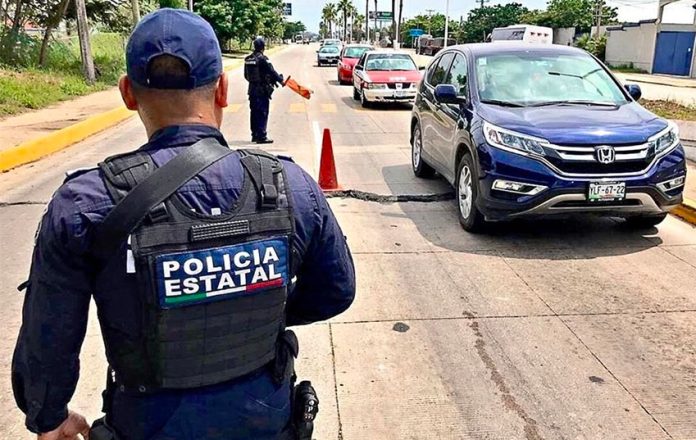
State police on patrol in Coatzacoalcos.
State police on patrol in the Veracruz municipality.

Commanders of the Veracruz state police have accused Coatzacoalcos municipal police of operating amid widespread corruption and irregularities.

They reproached a lack of security cameras, insufficient training and alleged ties with organized crime.

“The police are not trained, there is no official register of officers and many are merely sinecures,” said an unidentified state police officer. “And what can I say about those connected to narco-trafficking?”

In addition, there are 40 video surveillance cameras in the city, but none is in working condition.

Veracruz state police were deployed to Coatzacoalcos after the attack on the El Caballo Blanco bar that left 30 people dead on August 27.

Municipal administrator Yazmín Martínez charged that acting Police Chief Omar Berdón Arres is unqualified for the position, and hadn’t even finished secondary school.

She denounced the unnecessary firing of a number of officers, even though many were more qualified than the interim chief. She said she had requested intervention by the state government as far back as May, because the municipality had gone for months without a permanent police chief.

Federal Security Secretary Alfonso Durazo announced on Monday a pilot project in Sonora in which local officers who fail evaluation tests are replaced with marines.

Coatzacoalcos, an industrial city and port whose economy relies on the oil industry, might well qualify for the project should the pilot prove successful.

Source: Reforma (sp)