Home Blog Page 1914

Escandón Market is quintessential middle-class CDMX neighborhood market

0
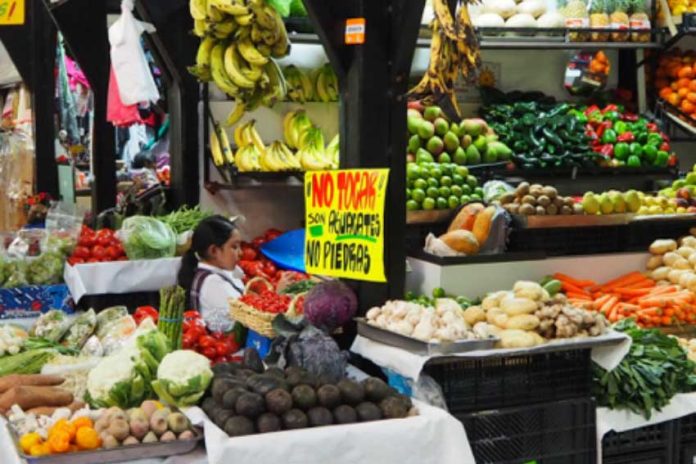
Keep your hands off the avocados at El Regreso de Jr. Díaz, says the sign: they're not stones.

Fresh-cut flowers, fried fish, incense and salon perms – the smells of the neighborhood market. Put a 100-peso bill to your nose, it’s all there.

The newest Marvel movie plays on a flat screen, while a little girl in a plaid skirt works on her homework below, eyes jumping between screen and page. Butchers smack their cleavers into chicken and beef. Sewing machines and blenders whir. Commerce.

Right at the center of the blissful, upper-middle-class, family-oriented neighborhood of Escandón, just below Jardín Morelos Park, sits Mercado Escandón.

A trip to the Escandón Market is worth it for the regular stuff you might need throughout the week, if only to avoid the pain and confusion of a nearby Soriana Hiper – where first you lose your cart, then you lose your mind.

At the market entrance on Martí, friendly Emilio Flores Romero has been selling children’s costumes at his booth with no name for 20 years.
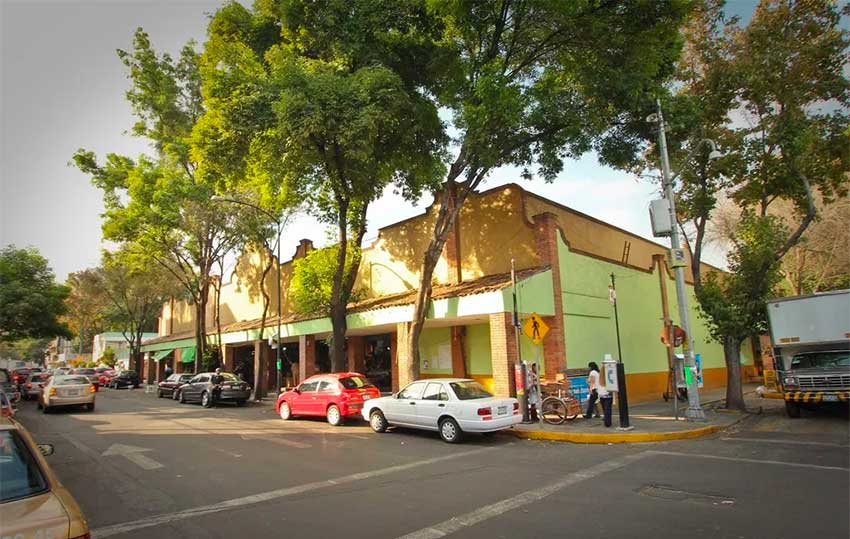
Escandón Market in Miguel Hidalgo.

He has a wide selection and says people come from all over to buy, “for birthday parties or just because they like to dress up,” he says. “Right now we’re selling a lot of animals and butterflies, because Día de la Primavera [the first day of spring] is coming up.”

Plumbers and handymen have offices at Mercado Escandón. There are flower arrangers, toy salespeople, religious goods and free parking! It’s downright wholesome. Escandón is the only market I’ve ever been to that gives you a city-issued legal receipt for your five-peso bathroom purchase.

Just don’t forget that this is Mexico, and the vendors are still lamenting the loss of 40 million pesos that the government allocated for renovations in 2013, half from the Office of Economic Development (SEDECO) and half from the borough of Miguel Hidalgo.

And what have they done? Barely fixed the roof? Improved the parking garage? Where did the money go? Many point the finger at then delegate and current mayor Víctor Hugo Romo, claiming he simply failed to use the money for improvements.

The roof still leaks in places, and there’s a pretty major crack in the ceiling of the bottom level of the parking garage.

Unfortunately, there are no improvements in sight. Yet, as they continue to fight alleged corruption, vendors continue to do what appears to be a brisk business.
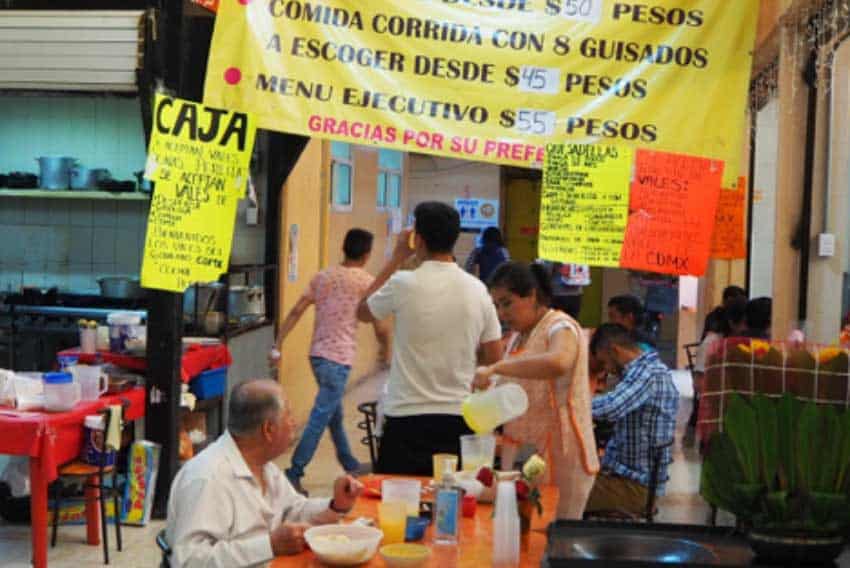
La Perlita has the best flautas in the market and you can pay with gasoline vouchers.

At the popular lunch stand Los Tucanes, known for enchiladas, croquettes and huge chiles rellenos, where a full meal with an agua del día, consommé, rice and salad runs 50 to 70 pesos (US $2.60-$3.60), I meet Miguel Ángel Sánchez, who’s worked at the market for 32 years.

His family has been in Escandón for generations, and his father was one of the founders of the market when it began in 1958. “My dad sold fruits and vegetables before the market was here. People sold out of carts or on blankets. There weren’t any supermarkets, so people came together to sell in this spot.”

Undoubtedly the most popular restaurant, that can be quite the party on weekends, is Marisquería Playa Escondida. Their marlin, shrimp and scallop cocktails are the visible favorites, but the encrusted tuna or grilled salmon steaks are probably among the best you’re likely to find.

Escondida is one of the few consistently full counters and the only place you’re likely to see anyone drinking a michelada on a Monday.

There are always a number of locals enjoying the wares, but the nearby Hotel & Villas Patriotismo brings in a steady line of tourists from Europe and South America.

Mercado Escandón isn’t the weirdest or fanciest of Mexico City’s markets. In fact it’s the market’s ordinary, no-nonsense posture that makes it so enjoyable.
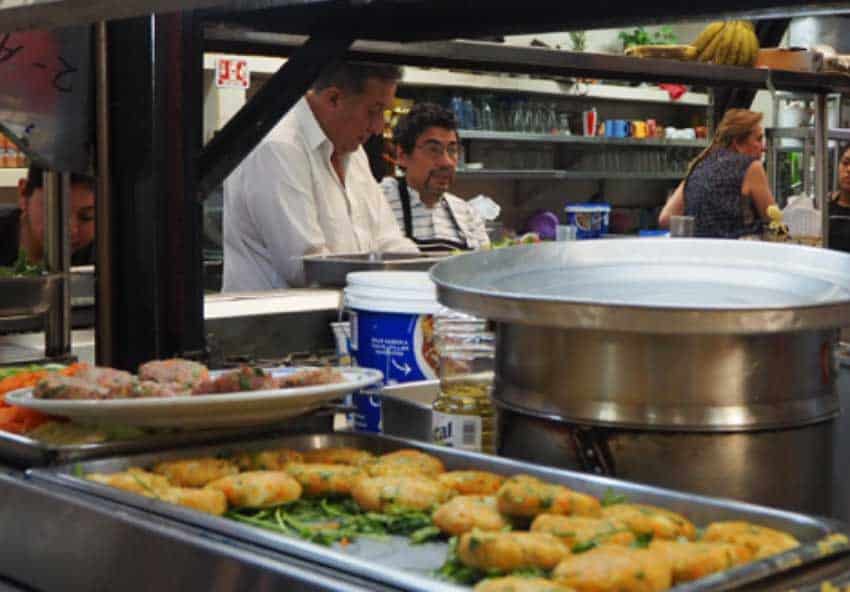
Miguel Ángel Sánchez takes a quick break after the lunch rush at Los Tucanes.

The consistent line in front of Pollería Zani tells you it’s good. Maybe not the cheapest fruits and vegetables you can find, but they’re always available. And you’re likely to get some extra service, like a bit of manteca rubbed on your freshly cut steak to keep it moist on the grill.

As Miguel Ángel Sánchez tells me, “Supermarkets changed our local markets a lot, but here you can still get meats and fish with less preservatives. It’s more natural.”

• Mercado Escandón is located on the corners of José Martí and Agricultura, Colonia Escandón, Mexico City; open Monday through Sunday, 8:00am to 8:00pm.

• Every Tuesday on José Martí, just east of the market, runs Tianguis Escandón, an extended “market on wheels” from 8:00am to 6:00pm.

This is the third in a series on the markets and weekly tianguis (markets on wheels) of Mexico City.
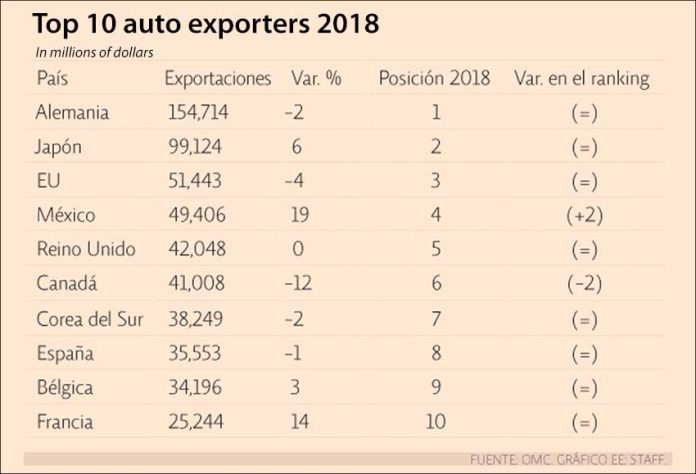
Mexico moves into fourth place in automobile exports

0
auto exporters
World's top 10. el economista

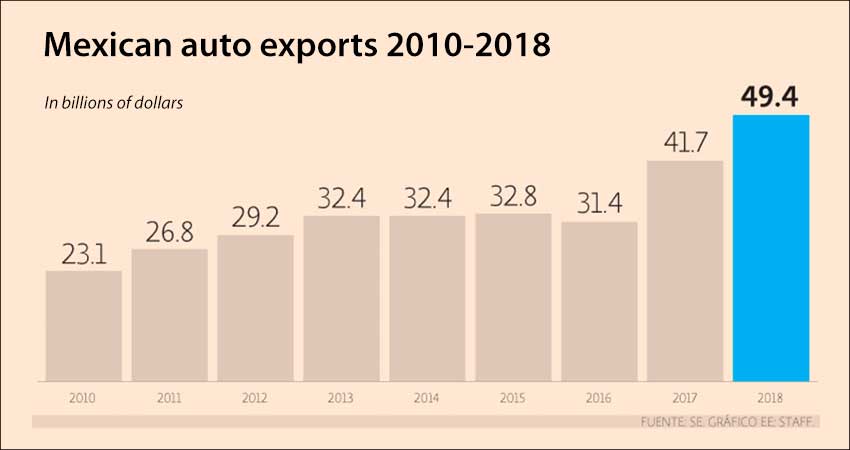
Mexico overtook the United Kingdom and Canada to become the fourth biggest automobile exporter by value in the world in 2018, statistics show.

The value of Mexican-made vehicle exports increased by 19% compared to 2017 to reach just over US $49.4 billion, according to the World Trade Organization (WTO).

Just under 3.5 million vehicles were shipped abroad from Mexico, a 6% increase on 2017 numbers.

Mexico’s ranking of fourth among auto-exporting nations represents an improvement of six places compared to 2008, when it ranked 10th.

Foreign sales of vehicles made in the U.K. remained steady in 2018 at just over $42 billion while Canadian auto exports declined by 12% to just over $41 billion.

Mexico's exports since 2010.
Mexico’s exports since 2010. el economista

Germany was the biggest auto exporter, shipping vehicles worth $154.7 billion abroad, followed by Japan and the United States, which achieved foreign sales of $99.1 billion and $54.4 billion respectively.

According to Moisés Zavaleta, director of strategy at the consultancy firm Ansley, “Mexico has the potential to keep increasing its production of vehicles” as a result of the “integration of the North American market.”

Just over 70% of all Mexican auto exports went to the United States last year while 8% went to Germany and just under 6% were shipped to Canada, according to data from the Secretariat of the Economy (SE).

Brazil, Italy and China were among the other destination countries for Mexican-made vehicles.

This year, the Mexican auto sector is expected to benefit from the elimination of tariffs on cars sent to Brazil and Pacific Rim countries which entered into the Trans-Pacific Partnership free trade agreement.

Among the auto makers that have plants in Mexico are Audi, Baic, Fiat Chrysler, Ford, General Motors, Honda, Kia, Mazda, Nissan, Toyota and Volkswagen.

Source: El Economista (sp) 

Mayor’s new wheels offer protection against an AK-47 assault rifle

0
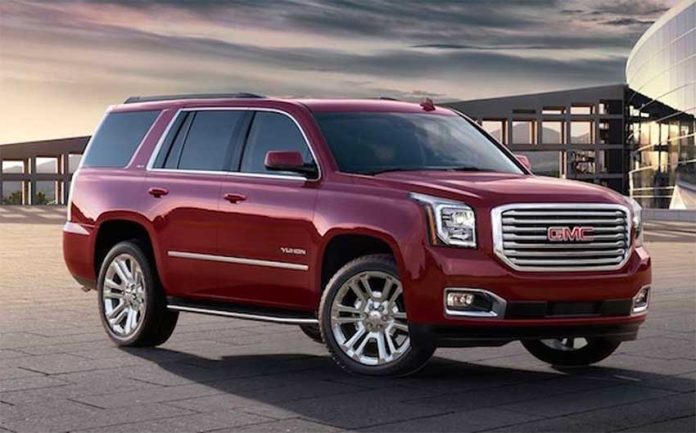
The mayor has her eyes on a new Yukon.

Not even bazookas and AK-47 assault rifles will be capable of penetrating the armored vehicle that the mayor of Los Cabos, Baja California Sur, intends to lease.

Armida Castro Guzmán called on suppliers to bid for a 30-month contract to supply a Class III armored Yukon SUV made by United States auto maker General Motors.

The Castro-led administration is seeking to lease that vehicle and 171 others, according to public tender documents posted online.

Five Chevrolet Suburban SUVs will be available for municipal councilors. Among the other vehicles the government wants to lease are more than 100 pickup trucks, five ambulances and a garbage truck.

According to the news website BCS Noticias, four companies initially made bids to supply the vehicles but two have since pulled out of the tendering process.

The company Umo Financiera del Centro, which said it could supply the 172 vehicles sought for 128.4 million pesos (US $6.6 million), appears likely to win the contract, BCS Noticias said.

Los Cabos government official Uriel Cabrera Flores said the successful bidder will be announced Friday.

Castro took office late last year after winning the 2018 mayoral election for the Morena party.

Los Cabos was ranked as the most violent city in the world in 2017 by the Citizens’ Council for Public Security and Criminal Justice, a Mexican non-governmental organization.

However, violence has fallen in the resort city and it didn’t feature among the 50 most violent cities in the world in the rankings for 2018.

Source: Milenio (Sp), BCS Noticias (sp) 

In light of US tariffs, Chinese manufacturers move to Mexico

0
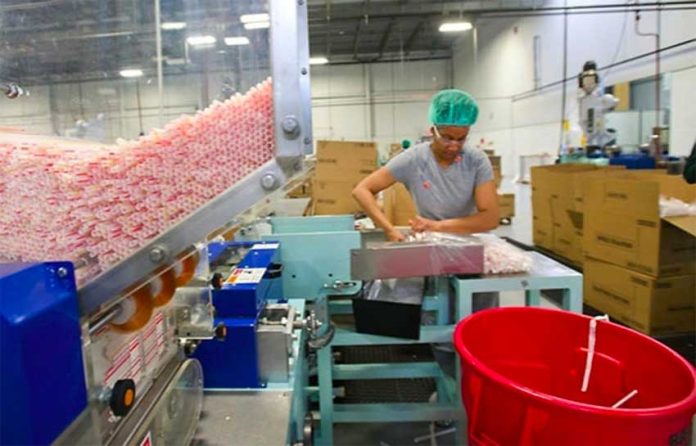
Chinese manufacturer Fuling Global is moving straw production to Mexico.

Mexico is an unexpected winner in the trade war between the United States and China: several Chinese manufacturers have relocated to the country and Mexican exports to the U.S. surged in 2018.

After United States President Donald Trump imposed tariffs on US $250 billion worth of Chinese imports, companies from the world’s largest exporting nation started looking for alternatives that would allow them to sidestep the protectionist lurch.

One such company was Fuling Global Inc., a manufacturer based in the city of Wenling that built itself into a lucrative business by making paper cups and straws for restaurants in the United States.

To avoid Trump’s tariffs on paper products, the company is opening a US $4-million factory in the northern city of Monterrey, Nuevo León, and will soon begin sending millions of paper straws across the border.

“We had to look for other ways to do business,” said Fuling chief financial officer Gilbert Lee.

Not only will the company’s products enter the United States tariff-free but it will also significantly reduce its shipping costs, offsetting higher labor costs in Mexico compared to China.

“Mexico is a very logical and advantageous location for us,” Lee said.

The tariffs on Chinese exports to the United States also helped Mexico to make big gains last year in shipments to the U.S. of a variety of locally-made products.

Exports of Mexican-made vehicles, leather goods, aluminum products, fertilizer, knitted fabrics, hats, ores and iron and steel products to the United States all increased last year compared to 2017, while exports of the same Chinese-made products that were hit by the U.S. tariffs declined.

That helped Mexico to increase its total exports to its northern neighbor by 10.3% in 2018 to just over US $346.5 billion.

Mexico’s trade surplus with the United States increased at an even greater rate of 15% to hit a record high of more than US $81.5 billion.

Meanwhile, Chinese exports to the United States slowed by around a third.

News agency Bloomberg said that “Mexico’s bonanza underscores the difficulty in trying to win a trade war where companies can shift production or find new sources to avoid tariffs.”

Alan Russell, CEO of Tecma Group, a Texas firm that helps companies to open and run factories in Mexico, said that in his 35 years in the industry relocation interest from Chinese manufacturers has never been higher.

“Any company manufacturing in China has had a wake-up call,” he said, while describing that effect of Trump’s tariffs as “a case of unintended consequences.”

The tariffs on Chinese imports have also caused United States companies such as Taskmaster Components to look to Mexico to cut costs.

For almost 20 years, the company has imported large wheels and tires from China and assembled them for RV and trailer manufacturers.

But Taskmaster Components now wants to invest in a factory in Mexico in order to take advantage of the country’s proximity to the United States and access to ports and an educated workforce.

“A lot of people are moving production down there,” said Amanda Walker, the company’s chief operating officer. “Everything about Mexico is attractive.”

Source: Bloomberg (sp) 

Governor confirms new luxury development in Los Cabos

0
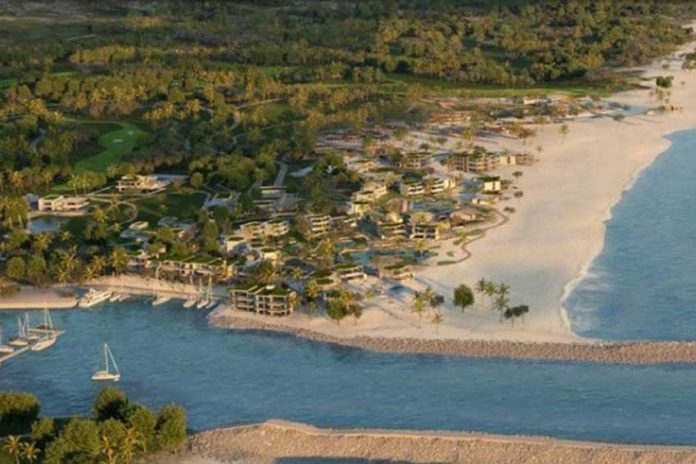
Site of the Los Cabos development.

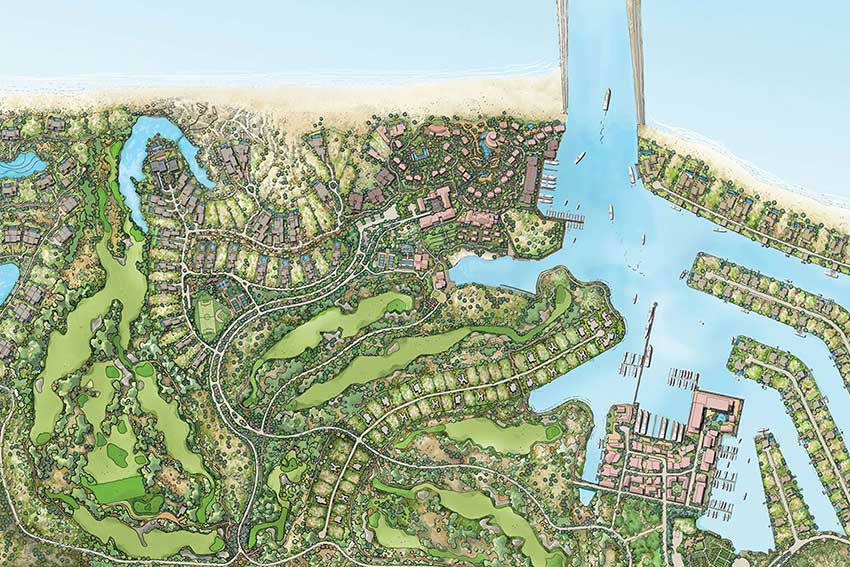
A 360-hectare beachfront property in Los Cabos, Baja California Sur, will be developed as a “luxury mega-project,” the governor has announced.

Construction of the project known as Costa Palmas, first announced one year ago for La Ribera in east Cabo,  will begin soon, said Governor Carlos Mendoza Davis.

Consisting of a resort, residential development, marina and golf course, the project is expected to generate yearly revenue of more than US $1.3 billion, the governor said, directly benefiting residents of La Ribera.

Some 5,000 direct jobs and 10,000 indirect will be created around the luxury development, which will increase Los Cabos’ annual visitor capacity by 5,000.

Mendoza said Costa Palmas will also contribute to improving Los Cabos’ ranking as a luxury destination.

Costa Palmas at La Ribera.
Proposed site layout at Costa Palmas.

The project’s first phase will be built in six stages and include 14 homes, a pool, a children’s club and a 145-room hotel.

“The development of Baja California Sur cannot be achieved without progress in each of its regions,” said the governor. “We are working on attracting more and better investment projects to the entire state.”

He described the state as the most exclusive sun and beach destination in Mexico, visited every year by millions of tourists, which is why large companies want to invest in the state.

Source: BCS Noticias (sp)

Protesting teacher college students block Michoacán railway tracks

0
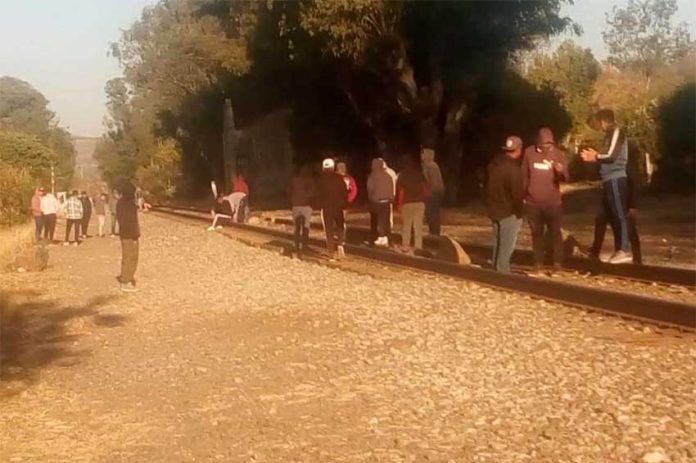
Students block the tracks in Michoacán.

Some freight trains in Michoacán have stopped running once again due to blockades, set up this time by students of a teacher training college.

Today is the third day of the blockades in Tiripetío in the municipality of Morelia, which as of Wednesday morning had left 15 trains stranded.

“We’re totally defenseless,” declared the president of the Industrialists Association of Michoacán (AIEMAC)

“The federal government must intervene immediately,” wrote Ricardo Bernal Vargas on social media.

He demanded that the federal and state governments create and implement an immediate response protocol that keeps protesters away from the state’s railways and highways, asserting that the federal crimes of blockading those means of communication “must be punished.”

“These threats to the rule of law are untenable, they are not the way to exert pressure. We demand that the state and federal governments move against these actions and not yield to blackmail,” he continued.

“We urge the government to remove this blockade; we cannot allow putting the brakes on the state’s economic activity, which affects the economy of the country.”

The students are protesting over an administrative matter at their school.

Trains were last halted in the state by teachers protesting unpaid salaries and bonuses. The state-wide shutdown of the rail system went for a month and cost an estimated 30 billion pesos before an agreement was negotiated.

Source: El Universal (sp)

AMLO’s request for apology by Spain criticized, ridiculed and defended

0
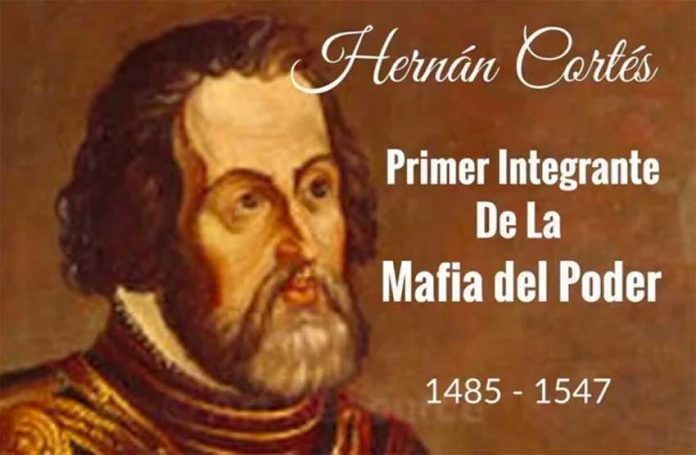
the first member of the mafia of power,
AMLO's request has produced several memes on social media. Here, Cortés is described as the first member of the mafia of power.

President López Obrador has come under fire from opposition lawmakers and others for his request to the king of Spain and Pope Francis that they apologize for the conquest of Mexico.

Institutional Revolutionary Party (PRI) Senator and former interior secretary Miguel Ángel Osorio Chong appeared to question the president’s sanity in light of López Obrador’s revelation that he sent the two men a letter “to ask that they make an account of the injustices and apologize to the indigenous peoples for the violations” committed “with the cross and the sword” during the conquest.

“President Andrés Manuel López Obrador should be subjected to constant medical evaluation,” Osorio said. “That apology that he requested from the king of Spain and the Vatican about the conquest, that’s out of order.”

Democratic Revolutionary Party (PRD) Senator Miguel Ángel Mancera said that López Obrador’s apology request only served to drive Mexico and Spain apart and damage “the friendly relationship” that the two countries enjoy today.

The former Mexico City mayor also charged that by making his request public, the president had sought and succeeded in diverting attention from more pressing issues.

“Now we’re all talking about this issue,” Mancera said.

National Action Party (PAN) Senator Mauricio Kuri also contended that López Obrador’s intention was to distract people from focusing on issues of real importance such as security and corruption at Pemex.

“. . . Why is he diverting attention to other issues instead of looking at what’s happening in his government,” he said.

Juan Carlos Romero Hicks, leader of the PAN in the lower house of Congress, said that López Obrador had only succeeded in generating “national and international animosity,” while PRI lawmaker Héctor Yunes Landa suggested that the president should instead ask the CNTE teachers’ union to apologize for blocking access to the Chamber of Deputies and shutting down all congressional activity.

As expected, lawmakers from the ruling Morena party defended López Obrador’s request for an apology from the Spanish crown and the Catholic church for the conquest, which began with the arrival in Mexico of conquistador Hernán Cortés in 1519.

“The claim is correct,” said Morena Senate leader Ricardo Monreal Ávila. “It’s time for reconciliation and that comes from an act of acceptance from those who invaded and looted the country.”

On Monday, the Spanish government said in a brief statement that it regretted that Mexico’s president had made public the letter to Felipe VI, whose contents “we vigorously reject,” while a spokesman for the Vatican said that the pope “has already spoken with clarity about this issue.”

During a visit to Bolivia in 2015, Pope Francis asked for forgiveness for the “many and grave sins against the indigenous peoples of America.”

The issue came up today in Argentina where celebrated Peruvian author Mario Vargas Llosa suggested, before an audience that included the king of Spain, that López Obrador’s letter was misdirected.

The 2010 winner of the Nobel Prize in Literature said Mexico’s president should have sent the letter to himself. He should have asked “why Mexico, five centuries after its incorporation into the western world and 200 years after independence, still has so many millions of poor, ignorant and exploited Indians.”

The apology request has also generated activity among creators of memes on social media. In one, the conqueror Cortés is described as the first member of the “mafia of power,” the president’s favorite term for describing corrupt politicians.

Another bore the announcement that public consultations would be held to judge Christopher Columbus, Cortés and “La Malinche,” the latter’s lady friend and widely considered as a traitor to the Aztecs.

Source: El Universal (sp), EFE (sp), Aristegui Noticias (sp) 

Google’s Waze carpooling launched throughout Mexico

0
The Waze navigation app.

The Google-owned GPS navigation app Waze has announced the launch of its carpooling service across Mexico.

Waze Carpool is an app that matches drivers and riders who travel similar routes between their homes and workplaces or schools.

“It’s about sharing costs. We’re not creating carpooling as a profession but rather creating a community and reducing traffic,” said Waze México director Ingrid Avilés.

The Waze Carpool app allows people to find a ride-share companion using a variety of filters that limit potential travel mates based on factors such as workplace location, gender and even whether they have social media friends in common.

Once a match is found, the driver and passenger agree on a pick-up point to start their shared journey.

Noam Bardin, global CEO of Waze, says the purpose of the service is to reduce the number of cars on the road.

“. . . We see traffic as a community problem and that’s why we’re launching carpooling,” he said.

In the traffic-clogged streets of Mexico City, an average of just 1.2 people travel in each car but with the launch of Waze Carpool, that average could begin to creep up.

Avilés explained that riders pay for their share of gasoline expenses via the app with a bank card and that drivers are limited to completing just two trips per day.

During the first month of operations in Mexico, passengers will pay just 10 pesos (US $0.50) for each trip they take while drivers can earn up to 100 pesos (US $5).

With four million active users in Mexico, Waze has a large pool of potential drivers who could choose to offer spare seats in their cars and thus help to reduce traffic and contamination in the nation’s cities.

The service could be particularly beneficial in greater Mexico City, where car ownership has soared since the year 2000 and drivers often spend hours on the road on a daily basis.

The TomTom Traffic Index ranks the Mexican capital as the world’s most traffic congested city, one in which motorists can expect to spend an additional 227 hours a year — nine and a half full days — in traffic on top of their regular travel time.

Source: Expansión (sp), Entrepreneur (sp) 

Tijuana security strategy has reduced homicides by 21% since February 4

0
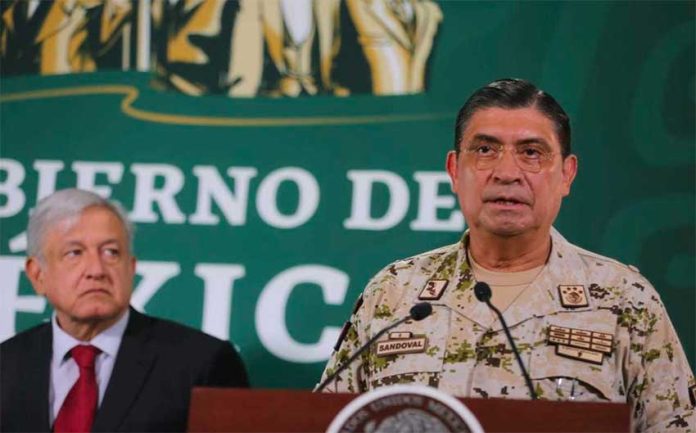
López Obrador listens as Defence Secretary Sandoval discusses advances in Tijuana.

A security strategy launched last month in Tijuana has made significant progress, President López Obrador told a press conference in the Baja California city this morning.

Appearing with Defense Secretary Luis Crescencio Sandoval, the president cited a decline in murders in the border city following the implementation of the new strategy on February 4.

“An agreement was made with the state’s governor to confront this situation and launch a special operation, together with the army, the navy and federal, state and local police to face the emergency, which has seen significant results. [There has been] a considerable decline in the most important indicator: homicides.”

Sandoval said the operation deployed a joint force of 5,114 personnel to combat and contain violence, detaining 150 suspects and confiscating 21 kilograms of crystal methamphetamine, 529 kilograms of marijuana, 38 kilograms of fentanyl, eight kilograms of cocaine, 45 illegal firearms and 36 vehicles.

Security forces also freed 15 people who were being held against their will.

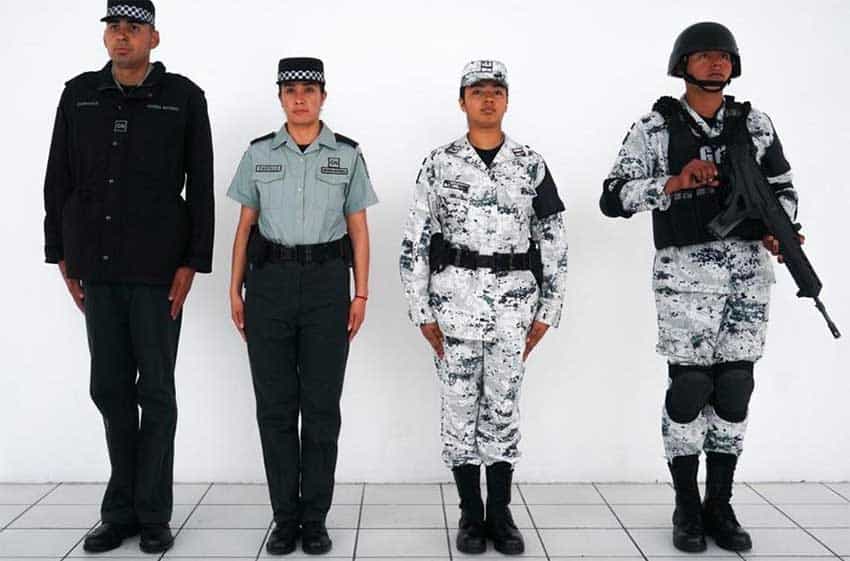
The uniforms of the new National Guard.

The defence chief said that prior to launching the new strategy Tijuana was recording an average of 5.2 homicides a day. That figure is down 21%, he said.

He added that operations have been accompanied by a corresponding increase in police reports by residents and an uptick in the local economy and the number of tourists.

Sandoval also used the press conference to introduce the uniforms to be worn by the National Guard, the new security force that is the centerpiece of the new government’s security strategy.

He said that officers of the force will begin wearing the uniforms within a month and a half when 21,000 army and navy personnel begin three months of basic training followed by five months of specialized training in public security.

In eight months’ time, Sandoval said, they will be ready to go to work.

López Obrador told the conference that the head of the National Guard will be named in the next 10 days.

Source: Milenio (sp), Grupo Fórmula (sp)

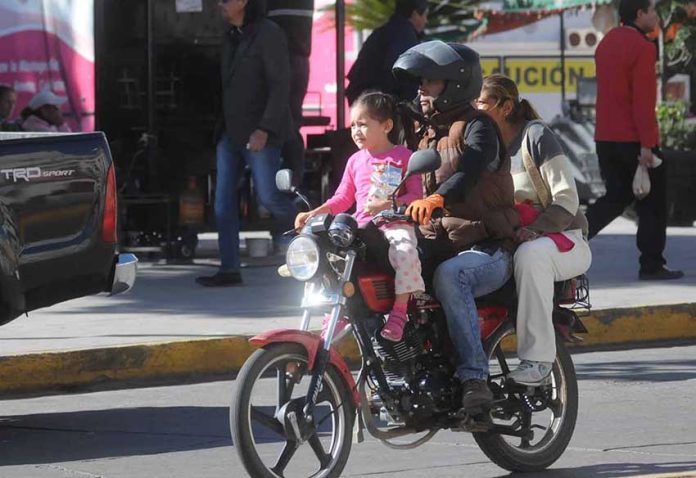
Los Cabos will fine motorcyclists for carrying children

0
child on motorcycle
A no-no in Los Cabos.

Municipal authorities in Los Cabos, Baja California Sur, will impose fines on motorcyclists traveling with children, a councilor said yesterday.

“On the subject of motorcycles, traveling with minors is not allowed, either with the passenger at the front or the back,” Israel López Martínez said in an interview, explaining that the change in the law is a road safety measure.

He also said that adult passengers will be fined if they’re not wearing a helmet.

López, who is also the president of the municipal government’s legislative affairs committee, added that authorities have decided to modify an article of a transportation bylaw in order to explicitly state that “it is totally prohibited to use an electronic device while driving.”

That decision was taken, he said, because statistics show that the majority of car accidents are caused by distracted drivers.

In addition, López said that the law has been modified to make it illegal not to wear a seatbelt when traveling both in the front and rear seats of a motor vehicle.

Source: BCS Noticias (sp)