Home Blog Page 1921

Celso Piña, a musical legend, dies of heart attack at 66

0
Rebel of the Accordion, Celso Piña.

Celso Piña, a cumbia music legend who was known as “the rebel of the accordion,” died on Wednesday in his home town of Monterrey, Nuevo León.

The singer, songwriter, composer and accordionist passed away in the San Vicente Hospital after suffering a heart attack. He was 66.

Piña’s record label, La Tuna Records, announced the death in a brief statement.

“With deep pain, we communicate the unexpected departure of the maestro Celso Piña who passed away today [Wednesday] in Monterrey at 12:38pm from a heart attack,” the statement said.

“Our deepest condolences to his family, friends and fans. We’re left with an intense void but he leaves us a great musical legacy . . . Rest in peace, Celso Piña, Rebel of the Accordion.”

Born in Monterrey in 1953, Piña was put to work when he was just seven years old collecting discarded fruit from bins at supermarkets and in wealthy neighborhoods of the city before cleaning what he found and reselling it in his own neighborhood.

He also worked as a tortilla delivery boy, smelter, corn miller and upholsterer in his early years before he started playing his first instrument – the güiro, a percussion instrument – at the age of 15.

“I can’t say that I was attracted to music since I was a child because it’s not true,” Piña once said in an interview.

“What I did find out later on is that I had a good ear for music but like many others who have a good ear, I could have lived my whole life without knowing it.”

The discovery of his talent was just the beginning for Piña, who went on to become a pioneer in the fusion of the tropical sounds of cumbia with a range of other genres including norteña, ska, reggae, rap, pop and hip-hop.

After buying his first accordion in 1980, the instrument with which he will forever be associated, Piña began playing music with his brothers before forming the band Celso Piña y su Ronda Bogotá with whom he would record songs such as La Cumbia de la Paz, Como El Viento and a cover of La Piragua by José Barros.

Music legend Celso Piña.

During a long career, he collaborated with musicians as diverse as Café Tacuba, Ely Guerra, Natalia Lafourcade, Lila Downs, Gloria Trevi, Grupo Pesado and Control Machete, among others.

All told, Piña recorded 27 albums, the last of which was a 2017 collaboration with the Baja California orchestra.

In 2002, he was nominated for two Grammy awards in the best contemporary tropical album and best alternative artist categories, while in 2004 he played at an event in Monterrey attended by Nobel Prize-winning Colombian novelist Gabriel García Márquez.

The author and his wife, Mercedes Barcha, “danced like they were in the clouds, as a Colombian cumbia should be danced,” Piña said in a 2014 interview.

The last time Piña played in public was at the Surf Music Fest in Acapulco, Guerrero, on July 4, but he was booked to perform concerts in both the United States and Mexico later this month and in September.

There can be no doubting that he was enamored by his craft right to the end of his prolific creative life.

“There is no one who can resist cumbia,” Piña wrote on Twitter just hours before he died in a post that included a video of him performing with Mexican rapper Pato Machete.

Source: Milenio (sp) 

Tropical Storm Ivo closes schools, ports on Pacific coast

0
It's been a wet one in Mazatlán.

Heavy rains and high winds caused by Tropical Storm Ivo forced the closure of schools, ports and tourism services along Mexico’s Pacific coast Thursday morning.

Residents of Mazatlán, Sinaloa, woke to flooding after 89.4 millimeters of rain fell overnight, 10 millimeters more than the area has received all year. Winds reached speeds of 50 kilometers per hour.

Civil Protection personnel and municipal police evacuated around 50 people from flooded homes, according to government sources.

Mazatlán Civil Protection coordinator Eloy Ruiz Gastélum stated that there had been no need for temporary shelters, and all those who were evacuated were staying with family to wait out the flooding.

He urged residents to stay in their homes unless absolutely necessary.

In Baja California Sur, the Cabo San Lucas harbormaster closed the port at noon, and tourist service providers were forced to suspend operations.

Officials expected the storm to dump 85 to 125 millimeters of rain in Los Cabos on Thursday.

The National Meteorological Service (SMN) reported that Ivo will continue to bring rain to Nayarit, Jalisco, Colima and Michoacán until Saturday.

The Cabo San Lucas harbormaster expected the port to resume normal functions on Saturday.

Sources: El Sol de La Laguna (sp), BCS Noticias (sp), Por Los Pasillos (sp)

Opposition to Santa Lucía airport politically motivated: AMLO

0
The president told reporters he was happy and relaxed despite injunctions against new airport.

President López Obrador claimed today that legal opposition to the Santa Lucía airport is politically motivated, asserting that opponents of his government “don’t want the transformation” he is bringing to Mexico.

“They want us to look bad . . . for the airport not to be built,” López Obrador told reporters at his morning press conference.

The president said that “there is no reason” for the opposition, pointing out that the site where the airport will be built has been used as an air force base for 60 years.

The only motivation is “political,” López Obrador charged.

The president reiterated his claim that the injunction requests against the airport filed by the #NoMásDerroches (No More Waste) Collective – a group made up of civil society organizations, law firms and more than 100 citizens – amount to “legal sabotage.”

“All the lawyers of conservatism” are involved in the legal action, López Obrador said, implying that they were supporters of the past “neoliberal” governments against which he frequently rails.

“Even the association of Claudio X. González, who has always had differences with us,” is supporting the legal action, the president said in reference to Mexicans Against Corruption and Impunity, one of the #NoMásDerroches members.

“. . .  Mr. Claudio X. González . . . was an advisor to [former president Carlos] Salinas and a promoter of the policies of privatization,” López Obrador added.

The collective has already been granted several injunctions against the Santa Lucía project including one issued by a judge yesterday that overruled the environmental authorization granted by the Environment Secretariat in July.

A lawyer for the collective said in June that reviving the abandoned Mexico City airport project at Texcoco is “legally possible.”

López Obrador today acknowledged that as many as 147 separate injunction requests have been filed against the Santa Lucía airport but expressed confidence that the government will be able to overcome them.

The president said that when he was mayor of Mexico City his government faced legal opposition against the plan to build the elevated road network known as the Segundo Piso, explaining that the main injunction was filed by “a great lawyer, an outstanding lawyer” but was nevertheless defeated.

Now, he charged, “there might be a lot of injunctions but the lawyers aren’t so good.”

The president doubled down on his decision to cancel the previous government’s airport project at Texcoco, asserting that its completion would cost much more than the estimated 300 billion pesos (US $15 billion).

López Obrador scrapped the project after a legally questionable public consultation.

“The criminal association between the economic power and political power is over. The government is for everyone, not for a faction, that’s the change . . .” he said today.

“. . . We’re not going to give in, we’re going to continue to confront all this questioning without losing our heads, without authoritarian acts, respecting the judicial power, enforcing the rule of law . . . There’s no need to get angry. We’re happy, happy, happy, relaxed, relaxed, relaxed.”

Source: Reforma (sp) 

Protection program for journalists, rights defenders unsustainable: UN

0
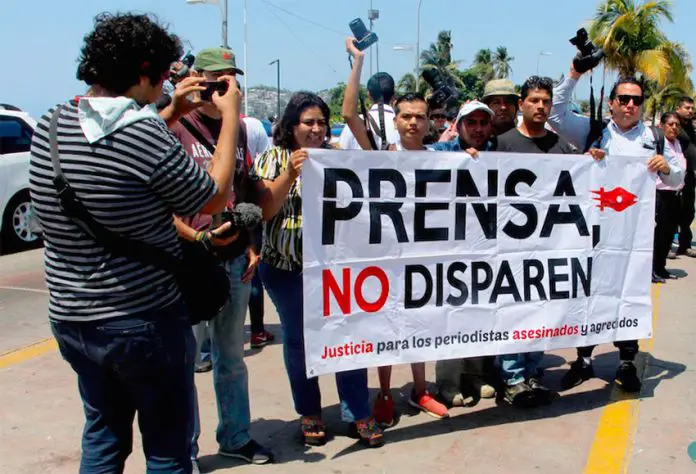
'Press, don't shoot,' reads the banner held by journalists during a protest calling for justice.

A government program to protect journalists and human rights defenders is plagued by underfunding, bad management and a lack of coordination, according to a report by the Office of the United Nations High Commissioner on Human Rights (OHCHR).

The report found that the Protection Mechanism for Human Rights Defenders and Journalists, which was created in 2012, has a budget of 207.6 million pesos (US $10.5 million) for 2019, enough to cover only 64% of the projected costs for the year, and less than it received in 2018 and 2017.

The scheme was providing protection to 903 people by April 30 of this year, a number that is expected to rise to 1,131 by the end of the year, with a projected cost of 325 million pesos. Of those receiving protection, 582 are human rights defenders, while the remaining 321 are journalists.

On April 4, the Interior Secretariat requested an additional 150 million pesos for the program, but there has been no word on the outcome.

The OHCHR report predicts that there will be approximately 3,400 people needing protection by 2024, and warned that as the number of beneficiaries grows, the program will become inefficient and unsustainable.

“To guarantee a more effective functioning of the Mechanism, the Mexican state should make sure that it receives the necessary human, economic and material resources so that its functionaries can fulfill their mandate of protection,” said the report.

With 36 employees, the program is also understaffed, according to the report. The employees responsible for reevaluations have an average case load of 155 beneficiaries and as of April 24, the program was three months behind on reevaluations and evaluations.

In its recommendations to the government, the OHCHR joined the Inter-American Human Rights Commission in calling for the transparency and functioning of the program to be improved.

Source: El Economista (sp)

6 Federal Police arrested for murder in connection with 2015 massacre

0
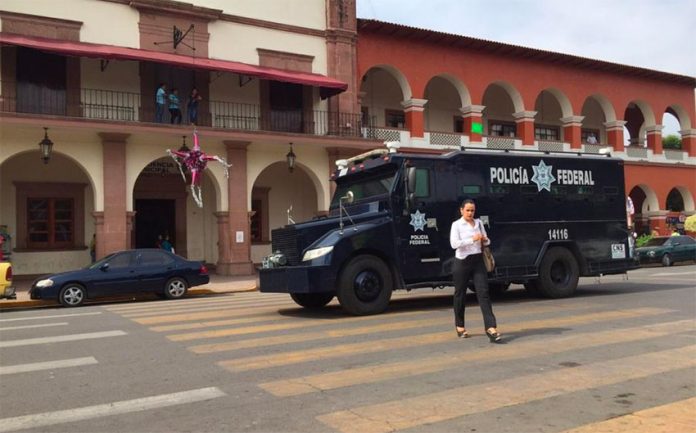
Police on patrol at the Apatzingán municipal palace in 2015.

Six Federal Police officers have been arrested for murder in connection with a 2015 massacre at Apatzingán, Michoacán.

The clash between citizens who had taken over the Apatzingán municipal headquarters and the Mexican military and Federal Police on January 6 left 16 people dead and many more wounded.

After the killings there were conflicting reports about the occupation of the municipal offices including a claim that the occupants were members of the Viagras crime gang.

But the subsequent investigation found those inside the building were actually unarmed civilians.

A human rights commission report later the same year found that Federal Police used excessive force, resulting in the deaths of five people and the extrajudicial execution of another.

The federal Attorney General’s Office (FGR) said yesterday the Federal Police force gave full cooperation and facilitated the arrests.

“The six people were detained with complete respect for their human rights, without violence or impact on third parties, in order to be brought before the judge,” said the Attorney General’s Office.

Some officers denounced the arrests of their colleagues, claiming they were deceived, having been summoned to Federal Police facilities without being given a reason.

The six suspects are among dissident police who have protested against their transfer to the National Guard.

Source: Milenio (sp)

Highway checkpoint nets 24,000 turtle eggs in Oaxaca

0
Bags of turtle eggs seized on the coastal highway in Oaxaca.

Environmental officers and state police have seized 24,000 olive ridley turtle eggs at a checkpoint on Highway 200 near Salina Cruz, Oaxaca.

The seizure occurred during the second arrival of turtles for the 2019-2020 nesting season on the beach at Morro Ayuta, one of the most important nesting sites in the world for the olive ridley marine turtle.

The federal environmental protection agency, Profepa, said 48 black plastic bags containing 24,000 fresh eggs were found during the search of a vehicle.

Officers also seized the vehicle and arrested its driver, suspected to be one the chief traffickers in turtle eggs in the region.

“This seizure is one of the largest we have carried out,” Profepa said. “What’s more, the person [apprehended] is apparently a repeat offender and presumably one of the largest gatherers and distributors of turtle eggs in the region.”

The maximum penalty for trafficking in turtle eggs is nine years in prison and a fine of up to 300,000 pesos (US $15,000).

Although the law protecting turtles is enforced along the Pacific coast of Oaxaca and in most of the Isthmus of Tehuantepec region, officials turn a blind eye to turtle egg commerce in Juchitán, where the eggs are openly sold in street markets.

Although this year’s seizure was large, it was not the largest this year. Officials seized 47,000 turtle eggs near Mazunte, Oaxaca, earlier this month.

Source: Reforma (sp)

As farmers stop growing poppies, time for dialogue with gangs: bishop

0
Rangel: an opportunity to talk peace.

A Catholic bishop in Guerrero is encouraging the government to open dialogue with organized crime groups as part of a strategy to reduce violence.

Salvador Rangel, the bishop of the Chilpancingo-Chilapa Diocese in Guerrero, told Grupo Fórmula that a decline in opium poppy production in Guerrero is an opportunity to work toward peace.

“Now, people aren’t planting poppies, and we should take advantage of the moment to bring peace . . .” he said. “[The farmers] are leaving to go to the big cities or to the United States, and a lot of the leaders of community police don’t have work anymore.”

Declining prices for illicit opium because of competition from synthetic drugs like fentanyl has pushed many Guerrero farmers to stop planting opium poppies over the past few years. According to Rangel, the price of a kilo of opium has fallen from a peak of 40,000 pesos (US $2,000) two years ago to as low as 3,500 pesos.

However, the decline of the illegal drug economy has not been accompanied by falling rates of violence, as drug trafficking groups turn to other crimes like extortion to make up for lost profits.

Earlier this week, Interior Secretary Olga Sánchez Cordero announced that the government will begin negotiations with “armed groups” in several parts of the country, but later clarified that she was referring to self-defense groups, not organized crime.

However, Bishop Rangel said that while he supports dialogue with self-defense groups, the government should also start conversations with “other armed groups,” a theme he has expressed many times in the past.

“I’ve always said that we need to have dialogue, dialogue is a great tool to understand others, because if we each stay in our corners and do not cede, peace will slip out of our hands,” he said. “The government needs to open itself up to listen, listening is a great thing. And not just with community groups, but with others too.”

Rangel mentioned that he had met with Santiago “El Carrete” Mazari Hernández, the leader of Los Rojos, one of the most powerful gangs in Guerrero and Morelos, before he was arrested earlier this month.

Source: Milenio (sp), El Universal (sp)

States warn feds they’re negotiating with criminal gangs, not self-defense forces

0
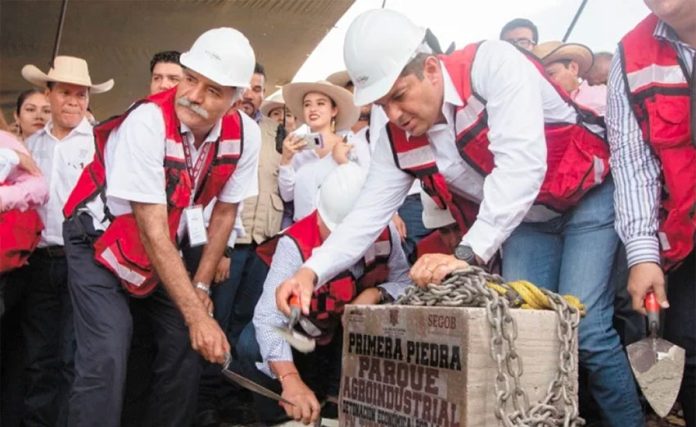
Mireles, left, and Peralta lay first stone of new agro-industrial plant.

The governors of three states have warned the federal government that it is negotiating with criminal gangs and not self-defense groups as the López Obrador administration claims.

Interior Secretary Olga Sánchez Cordero said Tuesday that her department is in talks with armed groups “and they have told us that they do not want to continue” to engage in violence.

She said that Interior Secretariat (Segob) officials have met with groups in Guerrero, Tamaulipas and La Huacana, Michoacán, “that have been fighting each other but have now expressed their intention to disarm” and contribute to the pacification of Mexico.

The Interior Secretariat quickly clarified that Sánchez was speaking about “authentic self-defense organizations” rather than criminal groups.

“The federal government does not have nor will have dialogue with any organized crime group,” Segob said on Twitter.

President López Obrador also denied that his government is engaged in dialogue with criminal organizations.

However, Governor Silvano Aureoles of Michoacán was skeptical, charging that “there are no self-defense groups” in the state “but rather criminals who call themselves self-defense.”

He added that it is “a mistake” for the federal government to seek agreements with such groups.

Guerrero Governor Héctor Astudillo said the federal government needs to reveal exactly who it has negotiated with because there are groups in the state that “disguise themselves” as self-defense” but are in fact allied with organized crime.

Francisco García Cabeza de Vaca of Tamaulipas asserted that there are no self-defense groups at all in the northern border state – only armed criminal groups that are trying to take control of certain regions.

If the government is making agreements with “armed groups or whatever they want to call them,” it must be completely transparent and [they must] announce what deals have been made, he said.

A Tamaulipas self-defense force called Columna Armada Pedro José Méndez is suspected to have morphed into another crime gang.

Aureoles also criticized the visit yesterday by Segob undersecretary Ricardo Peralta to the Tierra Caliente municipality of La Huacana, where he laid the symbolic first stone for a new agro-industrial park.

With that act, the undersecretary has “empowered” criminals and “given resources” to them, the Michoacán governor charged, recalling that in May so-called self-defense force members detained and disarmed soldiers deployed to La Huacana.

Military intelligence reports indicated that members of the Jalisco New Generation Cartel had in fact led the disarmament and detainment of the soldiers.

“It concerns me that we’re going around rewarding criminals,” Aureoles said.

“. . . In general, the self-defenses forces have a high criminal content. It pains me that those who insulted, abused and humiliated the soldiers of Mexico, one of our most beloved institutions – the Mexican army – are being rewarded . . .” he said.

Peralta, who was accompanied during his visit to La Huacana by former self-defense force leader José Manuel Mireles, denied that the project was part of a pact with criminal groups.

“We don’t make deals with anyone from organized crime . . . people who are committing crimes, the only meeting they’re going to have is with justice,” he said.

He also denied that the government was negotiating with criminals.

“. . . It was suggested that what we were doing was meeting with organized crime groups. Here, in this place, I don’t see anyone other than hard-working people, people’s representatives, representatives of the state government, mayors . . .” he said.

Peralta rejected the claim that public resources would benefit criminals, pointing out that the government is not even investing in the construction of the agro-industrial plant.

He did, however, assert that the project will help to change the course of a region that has been plagued by violence.

“This is not the first stone for the agro-industrial plant in La Huacana, this is the first stone to change the history of the stigmatized towns and regions of our country because stigmatizing a region is re-victimizing it for what it already suffered in the past,” Peralta said.

Meanwhile, Mireles said that the “brave men and women of the Tierra Caliente” region are hard-working people, not “violent people.”

“. . . When we’re given the opportunity, we’re going to work for the development of our people,” he said.

Source: Milenio (sp), El Universal (sp) 

New blow for airport: judge suspends project on environmental grounds

0
The army is ready to start building the new airport, but another judge's ruling has delayed it further.

A judge today overruled the environmental approval for the Santa Lucía airport that was granted by the federal Environment Secretariat (Semarnat) in July.

The México state district judge issued a suspension order against Semarnat’s authorization, a ruling that is yet another blow to the government’s plan to build a new airport on the site of the Santa Lucía Air Force Base,  located almost 50 kilometers north of central Mexico City.

Today’s decision came in response to an injunction request filed by the #NoMásDerroches (No More Waste) Collective, a group made up of civil society organizations, law firms and more than 100 citizens.

The group has filed more than 80 injunction requests against the airport project and has already been granted several.

The collective said in a statement that the latest ruling was handed down because Semarnat itself recognized that the project will cause damage to ecosystems located in the vicinity of the site.

The group said the judge noted that Semarnat’s environmental impact authorization recognized that in order to build the airport, vegetation would have to be removed and flora and fauna would have to be relocated.

The judge’s ruling also took into account Semarnat’s acknowledgment that construction of the airport would affect water drainage and capture capacities, increase air pollution and cause damage to communities in the area that would be difficult to repair, #NoMásDerroches said.

“With this new injunctive relief . . . the commencement of construction of the Santa Lucía airport will have to wait until a definitive ruling is issued . . . [Today’s ruling] prohibits the execution of the environmental impact authorization until the judge analyzes whether it complies with environmental principles and guarantees the right to a healthy environment . . .” the collective said.

The decision follows a ruling by a federal judge last week that the abandoned airport project at Texcoco must be left intact. Plans to restore a drained lake at the site and thus leave the foundations of the X-shaped terminal building and a section of runway underwater were revealed in June.

The Secretariat of National Defense (Sedena), which is building the Santa Lucía project, said last month that the airport will open in January 2022, six months later than originally anticipated.

However, according to the master plan, its construction will take 30 months, meaning that even if the project were to start this month, it would not be completed until February 2022.

Communications and Transportation Secretary Javier Jiménez Espriú said yesterday that he had “no idea” how long the project might be delayed, explaining that the government is “waiting for the judicial resolution of the injunctions.”

The Santa Lucía airport is part of a three-pronged plan to meet growing demand for airline services in the greater Mexico City area. The government also plans to upgrade the Mexico City and Toluca airports. A third terminal is planned for the former.

The estimated cost of the Santa Lucía airport has increased twice even before construction has begun.

Building the airport and a highway connecting Mexico City, as well as relocating military facilities on the air force base site, will cost 91.97 billion pesos (US $4.7 billion), Sedena said.

Source: El Financiero (sp) 

Fossil discovery reveals paleontological wealth of southern Jalisco

0
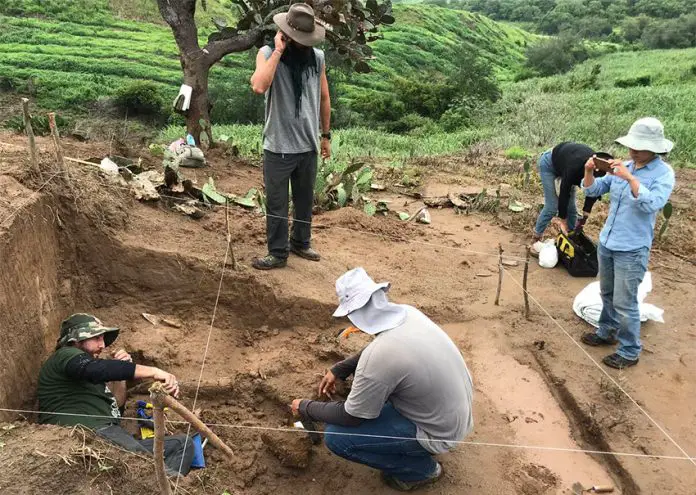
Archaeologists in Zapotiltic, Jalisco.

A recent discovery of prehistoric animal bones that are believed to be at least 13,000 years old has revealed the paleontological wealth of southern Jalisco.

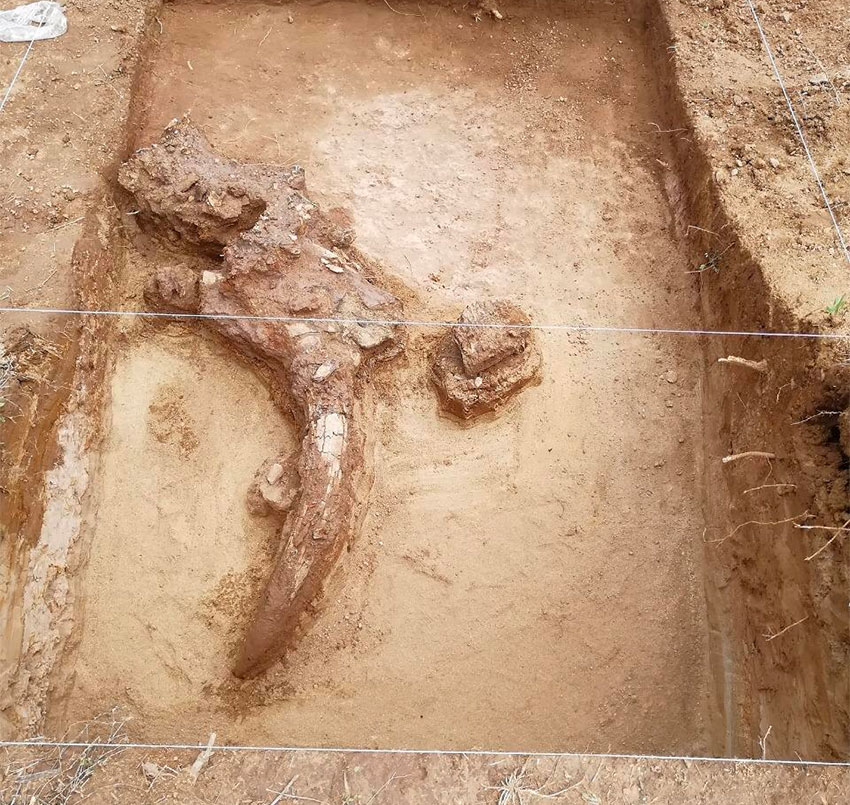
Community museum worker and amateur paleontologist Antonio Vargas Moreno was walking on a hill in the town of San José de la Tinaja last month when he found what later would be identified as part of the skull of a mammoth.

The cranium was exposed after heavy rain caused erosion on the hillside.

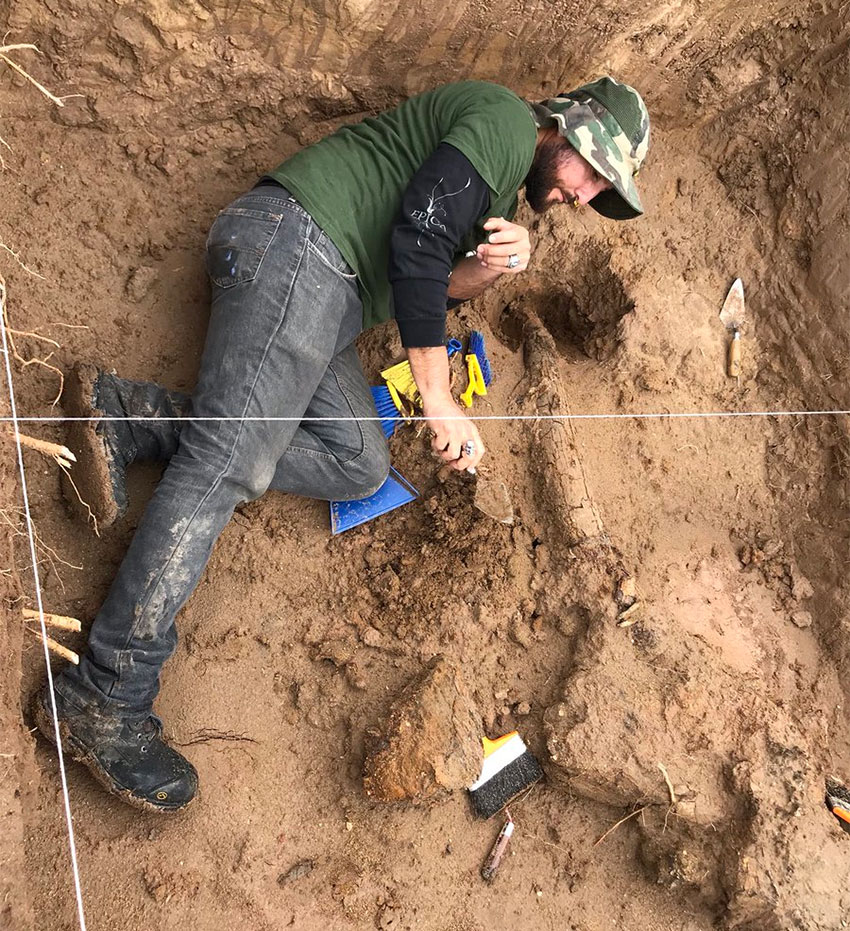
Vargas advised the Paleontology Museum in Guadalajara and the National Institute of Anthropology and History (INAH) about his find, and experts from both subsequently traveled to San José, a community of some 400 residents in the municipality of Zapotiltic.

INAH Jalisco archaeologist Eduardo Ladrón de Guevara told the news agency EFE that further investigation of the hill revealed the presence of more mammoth bones as well as those of a prehistoric horse and a glyptodon, an ancestor of the armadillo.

Fossilized remains in San José de la Tinaja.

The animals inhabited southern Jalisco up until about 13,000 years ago and were attracted to the area where the bones were found due to the presence of lakes and lagoons.

Archaeologists extracted the mammoth skull and, along with the other bones, it was transferred to the Paleontology Museum.

“Jalisco is rich in [animal] remains,” Ladrón said, adding that people who find fossilized bones often keep them in their own homes.

He explained that’s not a crime because under Mexican law, anyone can be a custodian of archaeological heritage.

However, Ladrón said that the option is “not advisable” because ancient bones can deteriorate without adequate conservation measures.

The remains transferred to Guadalajara will be subjected to a restoration process after which they will be ready to put on public display, said Paleontology Museum official Ricardo Alonso.

Archaeologist at work.

“We do a mechanical cleaning then a strengthening [process] to harden the remains,” he said, adding that broken bones are put back together “piece by piece” until they are ready for exhibition.

Alonso said that restoring all the recently-discovered bones could take as long as a year, a process that Ladrón said “allows us to reconstruct part of the history of the state and country.”

Source: EFE (sp)