A reporter at a daily newspaper in Tabasco was shot dead in front of her house Tuesday night in Huimanguillo.
Municipal authorities said two men on a motorcycle approached Norma Sarabia around 9:30 last night and addressed the reporter by name before shooting her several times and fleeing.
Sarabia was a correspondent for Tabasco Hoy in Huimanguillo, one of the most violent municipalities in the state. She also collaborated with other Tabasco media, including Diario Presente, El Sol del Sureste and Diario Avance.
Police are investigating whether the attack was related to Sarabia’s work as a journalist or as a teacher in a local school.
Tabasco Hoy editorial director Héctor Tapia told the news agency EFE that Sarabia had expressed fear about working in Huimanguillo.
“More than once, she made comments about being afraid, about how difficult it was in Huimanguillo with the insecurity, and that she had received threats,” he said. “Eventually we decided she should stop signing her articles.”
Tapia added that the killing has shocked the newspaper’s staff and has left them feeling vulnerable.
Sarabia had worked at the newspaper for about 15 years covering crime and violence, everything from car accidents to homicides and kidnappings. In the months before her death, she covered at least a dozen murders, chronicling the rising violence in the area around Huimanguillo, much of which is related to organized crime and fuel theft.
Sarabia had previously reported being threatened in 2014 after covering the death while in custody of a former police officer accused of involvement in kidnappings.
Sarabia is the 14th journalist killed in Mexico since President López Obrador took office in December, and the first woman journalist to be killed, according to the organization Reporteras en Guardia.
She is also the second journalist to be killed this year in Tabasco, after radio host Jesús Eugenio Ramos Rodríguez was killed in Emiliano Zapata on February 9.
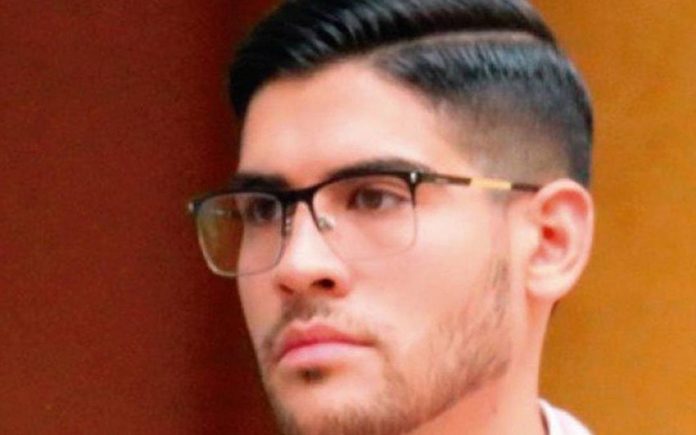
Kidnapping and murder victim, 22-year-old Norberto Ronquillo.
Mexico City police are under investigation for their allegedly slow response to a kidnapping case in which the victim was killed, and for possible collusion with the perpetrators of the crimes.
Norberto Ronquillo, a 22-year-old student originally from Chihuahua, was kidnapped on June 4 after leaving the Pedregal University in southern Mexico City. His body was found in forested land in the borough of Xochimilco on Sunday.
The Mexico City Attorney General’s Office (PGJ) has ordered an immediate and exhaustive investigation into the conduct of officers from the police’s anti-kidnapping unit who were assigned to the case.
Ronquillo’s family claim that in the 72 hours after he was kidnapped police failed to properly investigate the case. Officers also allegedly failed to correctly secure the crime scene.
Ronquillo was intercepted by another vehicle after leaving the university in his car last Tuesday night, security camera footage shows. He was then abducted and placed in a second vehicle used by the kidnappers.
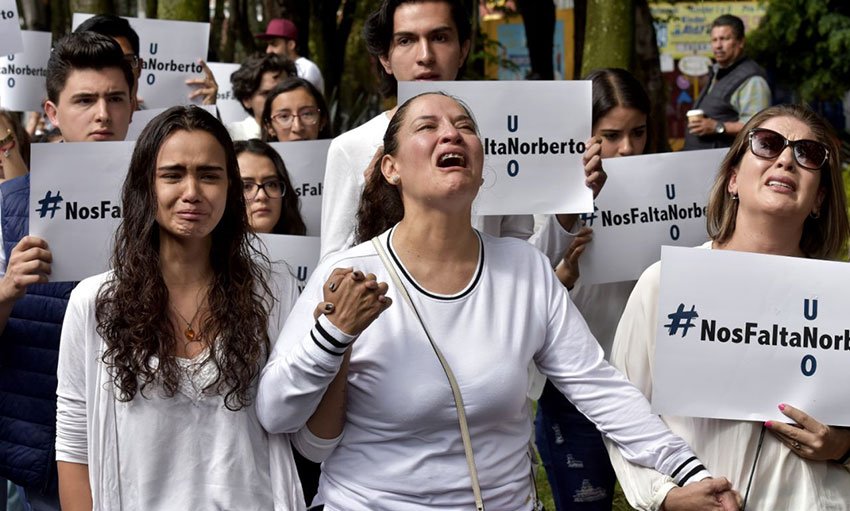
A mother’s grief: Norelia Hernández is overcome during a march to demand justice for her kidnapped son.
Shortly after, Ronquillo’s family received a telephone call demanding the payment of a 5-million-peso (US $261,500) ransom.
On Wednesday, the family transferred 500,000 pesos to the kidnappers but didn’t receive any response.
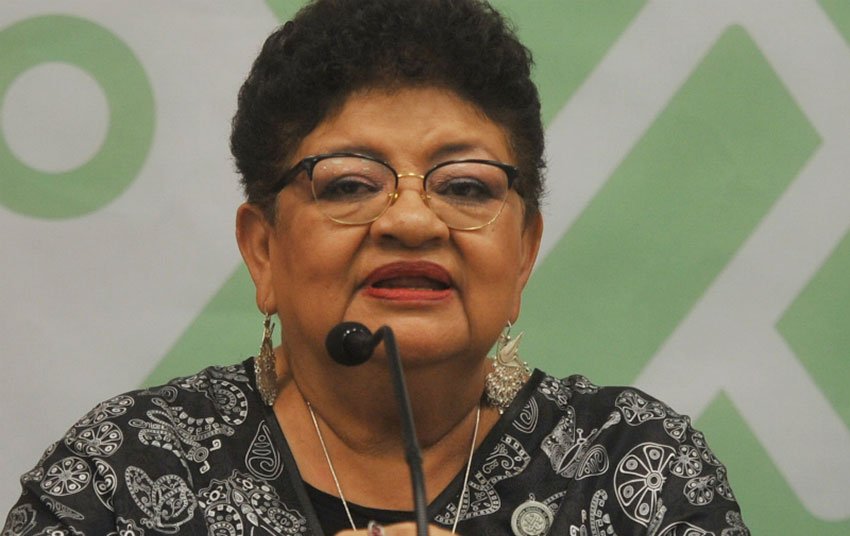
According to Attorney General Ernestina Godoy, Ronquillo was killed just hours after he was kidnapped.
However, the Institute of Forensic Sciences said an autopsy showed that he wasn’t killed until the day before his body was discovered, meaning that he was held captive for four days.
The cause of death was suffocation.
Godoy said “we have some very solid lines of investigation and as part of the inquiry there will be [a review] of the conduct of all the officers” involved in the case.
Attorney General Godoy released information that conflicted with autopsy findings.
“Everyone involved is subject to investigation, we’ll do everything in our hands [to ensure that] that this act doesn’t go unpunished . . .”
One officer has already been interviewed by the PJG for allegedly failing to correctly secure the car in which Ronquillo was traveling before he was kidnapped.
One line of investigation is based on a theory that the kidnappers were friends or acquaintances of Ronquillo and knew that he came from a wealthy family.
Security camera footage revealed that the kidnappers appeared to know the route he would take after leaving his university. Security footage also allowed authorities to map the route they took after the kidnapping occurred.
Two properties that were possibly used as safe houses have been identified and are under investigation.
Ronquillo’s family has called for the federal Attorney General’s Office to assume responsibility for the case due to the slow, and perhaps criminally complicit, response of Mexico City authorities, while the rector of the Pedregal University said the incident must serve as a wake-up call for authorities.
“What we’re asking of the authorities is to act correctly, in this case we believe that vital time was lost. We want Norberto’s case to . . . serve as an example so that [the authorities] do what is necessary to save someone’s life. We don’t want more cases [like this] in the city,” Armando Martínez said.
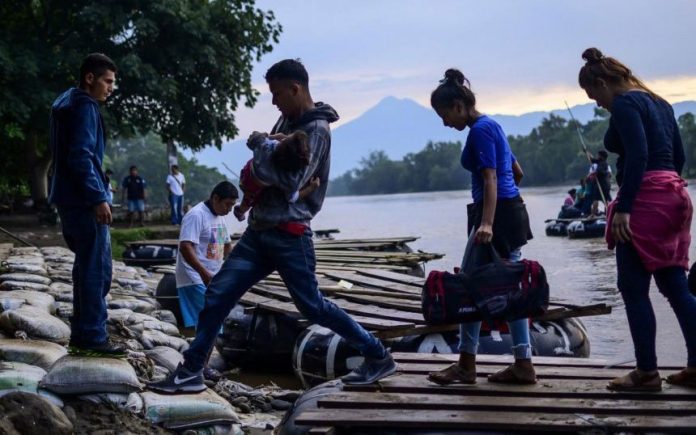
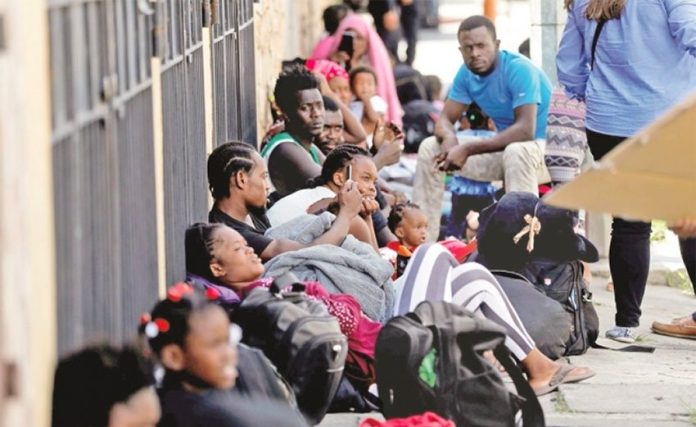
The new migration agreement between Mexico and the United States will further stretch the limited resources of already overwhelmed migrant shelters, says a shelter director in Reynosa, Tamaulipas.
A key part of the deal reached by the two countries last Friday is Mexico’s agreement to accept the return of all migrants seeking asylum in the United States as they await the outcome of their claims.
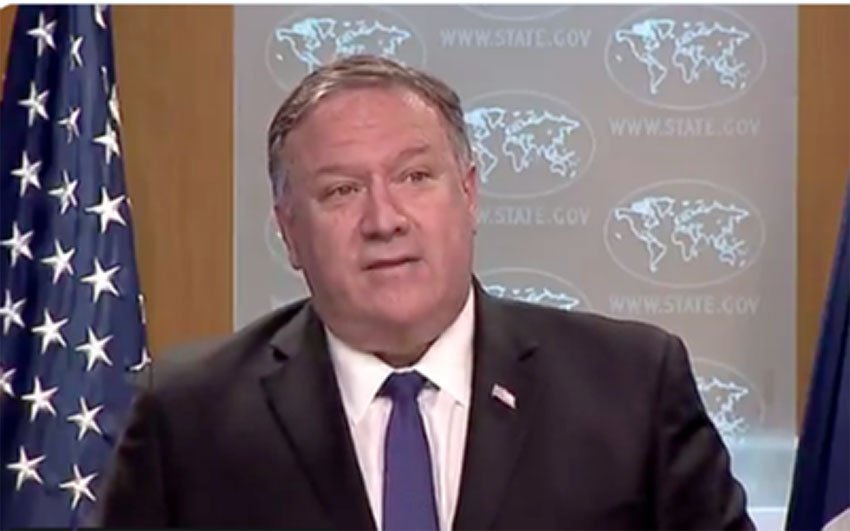
“Those crossing the U.S. southern border to seek asylum will be rapidly returned to Mexico where they may await the adjudication of their asylum claims,” U.S. Secretary of State Mike Pompeo said yesterday.
“We’ve seen this before, we were able to do this to the tune of a couple of hundred people per day, we now have the capacity to do this full throttle,” he added.
Héctor Silva, director of Casa Senda de Vida (Path of Life House) in Reynosa, said that shelters will be unable to cope with the increased arrival of migrants under the so-called “Remain in Mexico” plan.
“If they send us a greater number of migrants, we’ll have a bigger problem that we won’t be able to solve. That’s what the governments should think about, not making political or tariff agreements . . . They’re dealing with people,” he said.
Silva said that funding provided to the country’s migrant shelters from the federal government is insufficient, explaining that “we’re surviving with donations.”
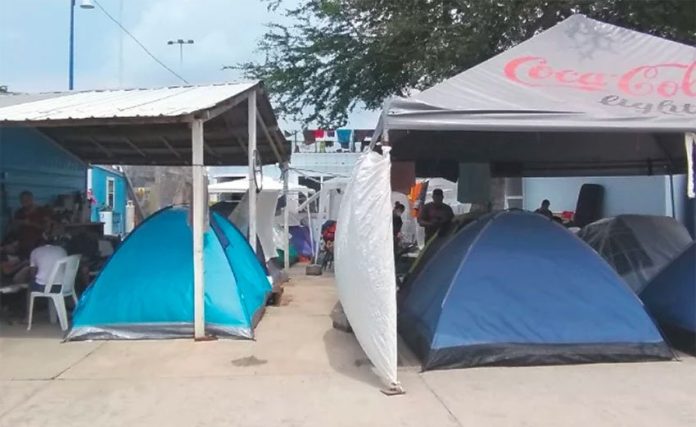
The Casa Senda de Vida is currently housing 520 migrants, he added, a figure that is more than double its capacity of 250.
“We’ve improvised dormitories in tents. It’s not fair that because of political matters or agreements between countries that we [have to] provide attention that is not dignified for any human being,” Silva said, adding that turning people away is not an option.
“We’ve had temperatures of up to 45 degrees and . . . heavy rain. Governments should consider that we’re dealing with human beings who have come from suffering in their countries of origin and even here, they have to go hungry.”
Another critic of the new migration pact is Tijuana Mayor Juan Manuel Gastélum.
He said the agreement – which allowed Mexico to stave off tariffs threatened by President Donald Trump – doesn’t provide clear protocols for attending to migrants who arrive in northern border cities.
“We’re back to the same thing, we don’t have clear operational rules, how’s it going to work, we don’t have any information . . . and there’s confusion,” Gastélum said.
The mayor added that he hoped his government could sit down with federal authorities to establish protocols that set out the responsibilities of the municipality in attending to migrants and those of the state and federal governments – including the funding they will provide.
“I’m waiting for them to turn around and see Tijuana . . .”
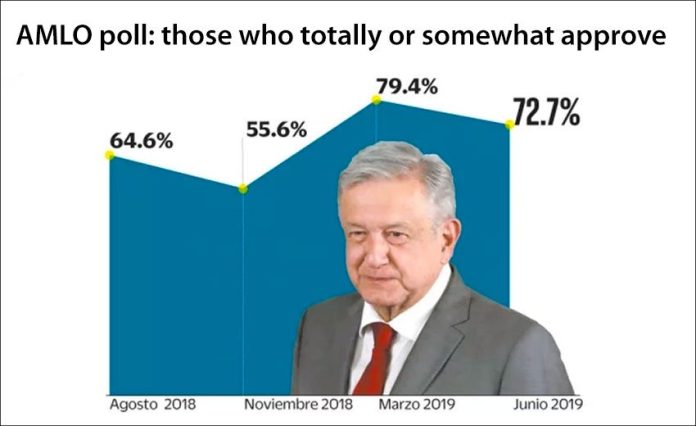
AMLO's approval rating in August and November 2018 and March and June 2019. el universal
President López Obrador’s approval rating has dropped but he remains a highly popular leader, a new opinion poll shows.
A survey published today by El Universal shows that 72.7% of respondents approve of López Obrador’s performance as president, a decline of 6.7% compared to the newspaper’s previous poll in March.
Just over six months into his six-year term, López Obrador was given an overall rating of 7.33 out of 10, whereas in March he scored 7.7.
The president’s management of education and governance issues as well as his crusade against corruption were considered the most positive aspects of his performance.
However, 50% of all poll respondents disapproved of López Obrador’s management of migration problems.
Asked to identify the federal government’s greatest achievement, 21% of respondents cited the implementation of social programs while 20% mentioned the crackdown on fuel theft.
One in 10 respondents regarded the combating of corruption as the government’s biggest accomplishment but a higher percentage – 12% – said there had been no notable achievement.
Just over 16% said the López Obrador administration hasn’t made any significant errors since taking office last December, while 10% cited the government’ security strategy as a mistake.
However, the government has expressed confidence that the centerpiece of its security plan, the newly-created National Guard, will be effective in reducing the high rates of violent crime plaguing the country.
Just over 8% of poll respondents said that the government had erred in its implementation of social programs, 7% cited cuts to the health sector as a mistake and 5.6% were critical of the management of the economy.
The survey found that 55% of respondents believe that López Obrador will fulfill his campaign promises while 15% said he won’t, a 5% increase compared to the previous poll.
An even higher percentage – 65% – said Mexico will improve during the current administration but the figure represents an 8% decline compared to March. Just over 12% of respondents said the country will get worse during López Obrador’s six-year term.
Nine in 10 people said López Obrador should tell United States President Donald Trump to stop his verbal attacks on Mexicans, while 61% said they supported the government stopping undocumented migrants from entering the country.
As measures are implemented to tighten the southern border as a result of an agreement with the United States, Mexico will help provide jobs for Central American migrants entering the country from Guatemala, the president said.
Andrés Manuel López Obrador told his morning press conference today that his administration’s corruption clean-up campaign has freed up funding and economic resources necessary to deal with the migration crisis.
“That is the importance of not permitting corruption and decadence in government; now that we need additional resources, we have them. We do not have to ask for credit because the finance department has the resources we need.”
The president suggested that some of the migrants could find work within in Sembrando Vida (Sowing Life), the federal government’s ambitious program to plant timber and fruit trees on one million hectares of land in rural Mexico.
Alternatively, López Obrador said that migrants might find opportunities as workers in the federal government’s plan for earthquake reconstruction in Oaxaca, or at the new oil refinery in Dos Bocas, Tabasco.
He said he had instructed his cabinet to broaden federal programs in the region to provide more sources of employment for migrants.
The president offered an assurance that all migrants arriving in Mexico will receive humanitarian treatment from authorities.
The president’s remarks come just days after the Mexican government’s last-minute agreement with the United States to deploy the National Guard to the country’s southern border and allow migrants seeking asylum in the U.S. to remain in Mexico while awaiting a decision from authorities.
Calling the agreement “an interesting challenge,” President López Obrador said the Mexican people and investors are content because the pact not only avoided a financial crisis for Mexico, it will strengthen the peso.
“We are always going to look for agreements, opt for dialogue and, with hard work, succeed in developing the region.”
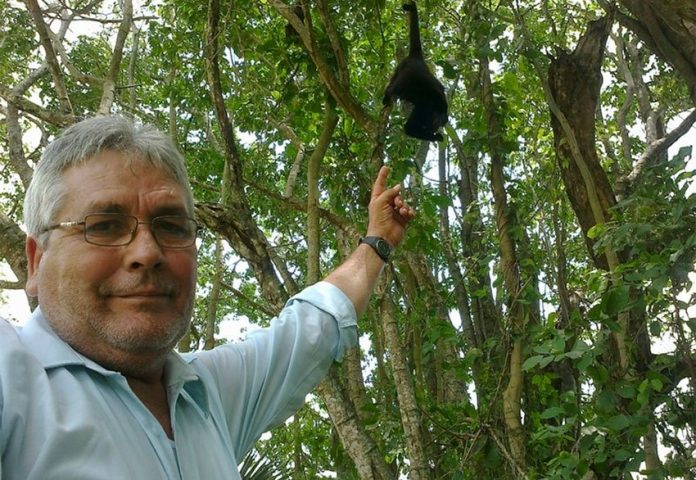
An environmental activist from Tabasco who worked to preserve the habitat of howler monkeys was found dead yesterday in Chiapas.
The body of José Luis Álvarez Flores was found in Calatraba, a community in the municipality of Palenque. The 64-year-old was reportedly shot at least five times.
Álvarez established a 345-hectare sanctuary for the howler monkey in the Tabasco municipality of Emiliano Zapata in 2012. Around 100 monkeys as well as iguanas and bare-throated tiger herons call the sanctuary home.
More recently, Álvarez denounced on several occasions the illegal extraction of sand and stones from the Usumacinta River.
Tabasco environmental official Miguel Pérez told news the agency EFE that the activist had asked authorities for protection after receiving death threats but none was provided. Messages threatening Álvarez’s family and other environmentalists were left with his body, he said.
“This is abominable, he was a nice person, his fault was to fight against the illegal extraction of sand, that was his struggle,” Pérez said.
“We condemn this cowardly murder, we demand justice and the protection of his family and two other [environmental] defenders who were threatened.”
Álvarez is the first environment activist from Tabasco to be murdered but 125 environmentalists have been killed in Mexico in recent decades, according to the international NGO Global Witness.
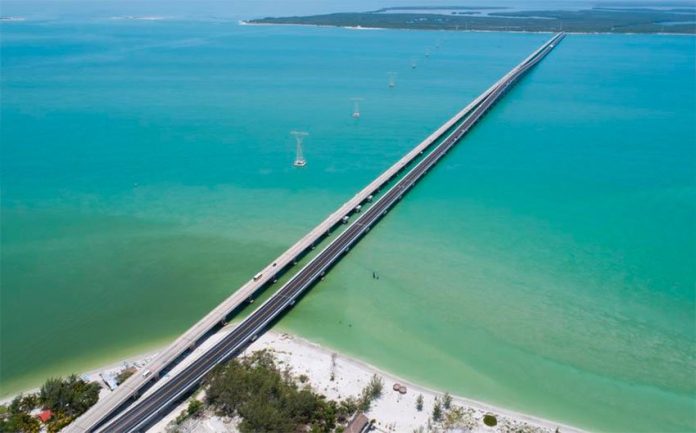
Mexico’s second-longest bridge has been officially opened in Campeche, linking Isla del Carmen to the mainland.
Governor Alejandro Moreno Cárdenas and Communications and Transportation Secretary Javier Jiménez Epriú inaugurated the new Puente de la Unidad (Unity bridge) on Monday.
“This is a bridge that belongs to all Campechanos, to all Mexicans,” Governor Moreno said at the inauguration. “This project fills us with pride, and it shows that us Campechanos can aspire to bigger things, and that we can do everything we say we’ll do.”
Secretary Jiménez said the bridge will not only benefit Campeche, but also the thousands of people who travel to the Yucatán peninsula every year.
“This inauguration represents the fulfillment of President Andrés Manuel López Obrador’s promise to use federal resources on projects that optimize the efficiency of our infrastructure, benefit as many people as possible, and promote regional development,” said Jiménez.
[wpgmza id=”208″]
The bridge was built over a period of more than two years, with an investment of almost 2 billion pesos (US $105 million), of which 250 million pesos came from the federal government. At 3.2 kilometers, it is the second-longest bridge in Mexico and the fifth-longest in Latin America.
It replaces the old Puente de la Unidad, built in 1982. The old bridge has been in a state of poor repair for at least 12 years, and will soon be unusable.
Moreno said the previous federal administrations had not taken the need for a new bridge seriously, and that the project is 12 years overdue.
“This should have been built before my term,” he said. “But two federal administrations went by, 12 years, that the federal government didn’t support Campeche. But my responsibility was to build it, and finish it, and we did it in a record time of 24 months and 19 days.”
The new bridge is expected to last for at least 50 years.
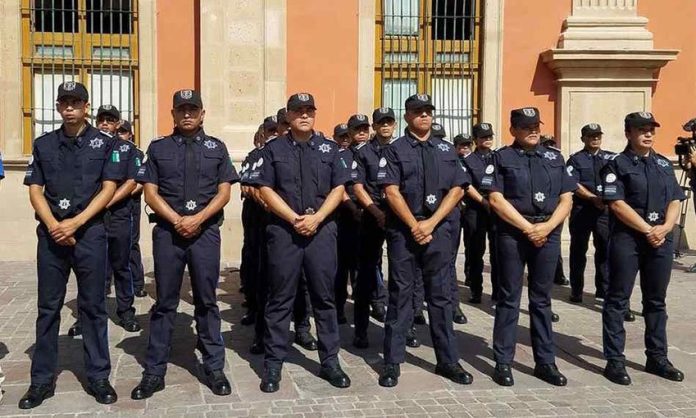
In spite of offering a generous wage and benefits package for new recruits, the state of Guanajuato is still 650 officers away from reaching its goal of expanding the state police force by 1,000 officers, according to state Security Secretary Álvar Cabeza de Vaca.
“We have a goal of reaching 1,000 hires this year, and so far we’ve reached 350,” he told the newspaper Milenio. “The wage for a police officer is more than 16,300 pesos (US $852) per month in the state, and the state guarantees that you’ll have a lifelong career . . . Because of our professionalization committee, we have the highest standards for state police of any state in the country.”
Guanajuato hopes to expand its state police force, which currently consists of 3,200 officers, to over 4,000.
Cabeza de Vaca added that police officers in Guanajuato also receive benefits like paid vacation, annual bonuses and medical insurance.
At an event in May to inaugurate the recruitment plan, Government Secretary Luis Ernesto Ayala Torres invited residents with a “vocation of service” to sign up.
“We’re not just trying to reach a numerical goal, we’re looking for professional quality,” he said. “We’re looking for people who not only want to earn a dignified salary, but also have a clear desire to protect Guanajuato and protect their families.”
But the riskiness of the job may be keeping people from signing up. Guanajuato has become one of the most violent states in the country, recording the highest number homicides in 2018.
It’s especially dangerous for police officers. More cops are killed on the job in Guanajuato than in any other state in Mexico, with 64 in 2018, and 17 so far this year. And almost all the crimes go unpunished; only 11 people have been sentenced for killing officers in Guanajuato since 2011.
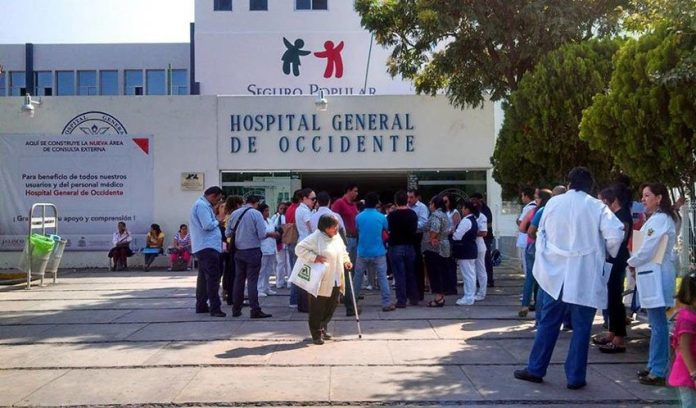
A Seguro Popular hospital: not the best of options.
For patients in Mexico’s health system, quality of care can vary greatly depending on which insurance system a patient is enrolled in, according to a doctor who works in two.
Dr. Moisés Díaz Mier, a surgeon who works at two hospitals in Mexico City, said that recent budget cuts have hit the Seguro Popular especially hard.
Díaz is in a good position to judge the quality of care across different insurance systems: every day, he works one shift at the General Ignacio Zaragoza Hospital, which serves patients enrolled in ISSSTE insurance, and one shift at the Tláhuac Hospital, which serves patients enrolled in Seguro Popular.
“I live two realities in one day,” he said. “In the morning, the ISSSTE, and at night, the Seguro Popular. An optimum reality in the ISSSTE, and a suboptimal reality with the Seguro Popular, in the Tláhuac Hospital.”
Díaz said that chronic problems at the latter hospitals include shortages of medicine, equipment and personnel, which leads to lower standards of care for patients. In contrast, Díaz says that at the ISSSTE hospital, “if I ask for something, I get it the next day.”
ISSSTE provides health care to government workers while the Seguro Popular provides insurance to people who are not covered by other programs.
Díaz also criticized the president’s decision to cut funding for academic travel to foreign countries, saying that such travel is necessary because educational opportunities for medical professionals are lacking in Mexico.
“If there’s nowhere we can get up-to-date training, we have to leave the country, but if we can’t leave because they’re cutting the scholarships, we’ll just stay as we are,” he said. “You don’t live like a king on a scholarship, you live with other people in a small room. They’re not tourists, they’re still students.”
Mexico’s efforts to reduce migration through the country to the United States will be evaluated on a daily basis, U.S. Secretary of State Mike Pompeo said yesterday.
Pompeo told a press conference that the effectiveness of the measures to which Mexico committed as part of the agreement reached last week to avoid tariffs on Mexican exports to the United States – including the deployment of 6,000 National Guard troops to the border with Guatemala – will be evaluated by the U.S. government “literally daily.”
He acknowledged that there won’t be an “instantaneous” reduction in migration flows to the United States but stressed that the work to curb the arrival of undocumented immigrants “has already begun.”
The secretary of state said that in a month or 45 days, the governments of the United States and Mexico will have “a good sense of whether we’re able to achieve these outcomes in the way we’re hoping that we can.”
The agreement with Mexico “reflects diplomacy at its finest,” Pompeo said, adding that “the deal continues the Trump administration’s commitment . . . to confront the tide of illegal immigration and many other problems along our southern border, including drug trafficking issues.”
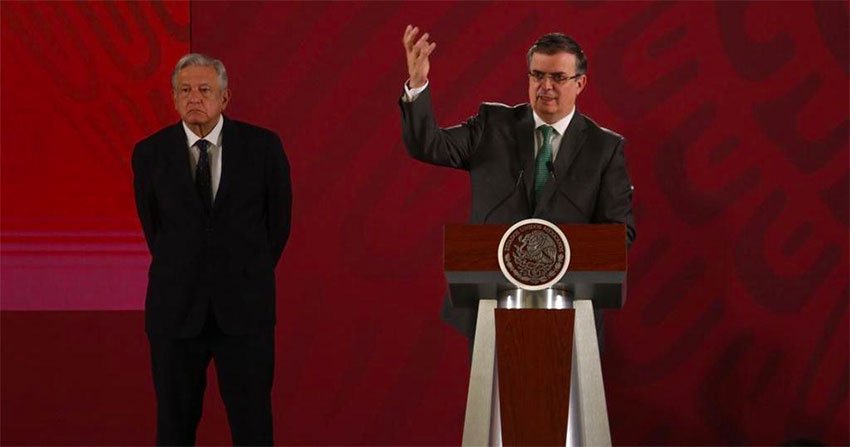
Ebrard speaks yesterday at the president’s morning press conference.
He described Mexico’s commitment to deploy the 6,000 troops to the southern border as “the biggest effort to date that the Mexicans have made and something that we pressed for,” adding that “we’ll work closely with them to make sure that is a successful effort.”
As a result of Mexico’s agreement to an expansion of the Migrant Protection Protocols – the U.S. government policy commonly known as the “Remain in Mexico” plan – Pompeo said that U.S. authorities now have the capacity to return asylum seekers to Mexico at “full throttle.”
That “will make a fundamental difference in the calculus for those deciding to transit Mexico to try to get into the United States,” he said.
However, if the agreement with Mexico doesn’t make “sufficient progress” to reduce illegal immigration into the United States, there is a risk that the tariffs averted by last week’s deal “will go back in place,” Pompeo said.
The secretary of state added that the United States hadn’t offered any additional financial assistance to Mexico or Central American countries to implement measures aimed at delivering the immigration outcomes it is seeking.
“Where we find it in our interest in the Northern Triangle [of Central America] or in Mexico to provide resources that make sense to protect the American people, we’ll do that but in the first instance these nations have the responsibility to take care of these immigration problems in their home country,” Pompeo said.
Secretary of State Pompeo.
However, the United States is sending federal agents to Guatemala to complement the deployment of National Guard troops to the southern border, according to the Guatemalan government.
After refuting a report that United States Homeland Security personnel would help Guatemala control the movement of migrants, the Guatemalan Ministry of the Interior said yesterday that it is awaiting the arrival of 98 U.S. agents.
Guatemalan migrants’ advocate Julia González said the United States deployment to northern Guatemala coupled with Mexico’s commitment to send troops to its southern border effectively creates a “double wall” against migrants trying to reach the U.S.
But the archbishop of San Salvador in El Salvador said the deployment of additional security forces won’t ultimately be able to stop people leaving Central America to escape the high levels of poverty and violence.
“The way to stop migration is to solve the problems that we have here,” José Luis Escobar said.
He said it was “sad” that President López Obrador had caved in to pressure from the United States whereas previously he acted “with so much humanity” towards migrants.
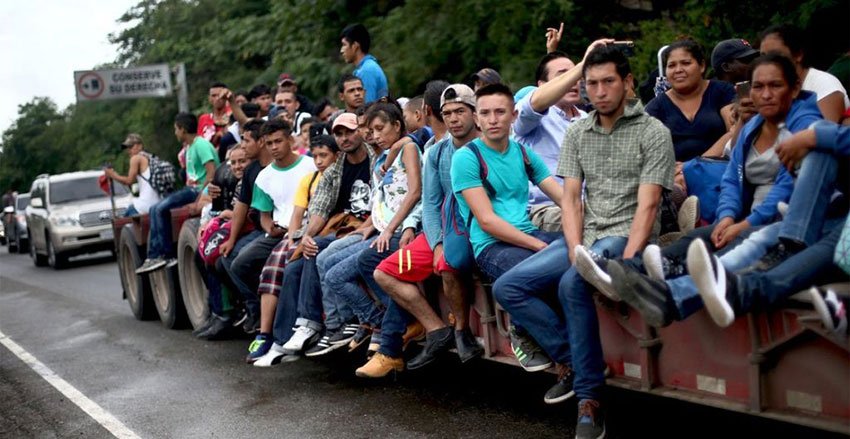
Migrants hitch a ride on a trailer.
López Obrador today described the task of reducing migration in a period of three months as an “interesting challenge.”
The president announced the creation of a special commission headed by Foreign Secretary Marcelo Ebrard to comply with the commitments it has agreed upon.
Ebrard said the deployment of the National Guard will be stepped up today.
Mexico’s agreement to send such a large contingent of the new security force to the border prompted Amnesty International to warn that arresting migrants en masse without considering their individual circumstances is a violation of international law.
The humanitarian organization also said that it has received reports that migrants have been forced to go without food and water for more than eight hours after being detained, warning that the health of babies and children could be placed at particular risk.
AI said that deporting migrants to countries where their lives could be placed at risk is a violation of international law.
Most of the migrants entering Mexico at the southern border come from Honduras, El Salvador and Guatemala, which are among the most violent countries in the world.
Meanwhile, President Trump asserted again today that there is an unrevealed aspect of the deal between Mexico and the United States.
“. . . Biggest part of deal with Mexico has not yet been revealed!” he wrote on Twitter.
Trump made a similar claim yesterday, stating that the there is a “very important part of the immigration and security deal” that “will be revealed in the not too distant future and will need a vote by Mexico’s legislative body!”
However, Foreign Secretary Ebrard said yesterday that there was no part of the deal that has not already been disclosed.