Home Blog Page 2027

Baja 1000 race will go ahead next month despite fine, says tourism official

0
A truck gets air during last year's Baja 1000.

The Baja 1000 off-road motorsport race will proceed as planned next month despite federal authorities having provisionally suspending the event and fining the race’s sanctioning body, a tourism official says.

Amador Arteaga Sahagún, chief of Ensenada tourism promotion agency Proturismo, said that Score International is already arranging to settle the 507,000-peso (US $27,000) fine imposed by the federal Environmental Protection Agency (Profepa) for environmental damage caused during last year’s race.

Vehicles destroyed protected cactus in the Valle de los Cirios protected area, which was included in the race route despite Score not having the required permission to do so, Profepa said.

Arteaga is adamant that the staging of this year’s event is not in any doubt and described its suspension as nothing more than a precautionary measure.

“There are some half-truths floating around, there is a fine against the company Score, it was just notified last week that it breached the environmental impact statement for the 2017 Baja 1000 because its request [to include Valle de los Cirios in the race route] was not presented in a timely manner. The fine is an administrative procedure; today we spoke to the Semarnat [federal Environment Secretariat] delegate and next week we’ll be resolving the issue,” Arteaga said.

“The company [Score] is taking the necessary steps to overcome all of this . . . [so that] the race, which is expected to have around 340 participants, is a complete success.”

Arteaga explained that the Valle de los Cirios, named after the cirio tree and located in the south of the municipality of Ensenada, would also form part of the route this year but stressed that Score had sought all the required permissions well in advance and that they would be approved once the outstanding fine has been paid.

“. . . We’re talking about an economic spillover of US $3 million . . . for a US $25,000 fine . . .a cancellation is not going to happen . . .” he said.

“It’s a race that cannot be stopped, it’s an administrative offense that we’re fixing, companies have to adhere to Mexican regulations and that’s what Score is doing.”

The 51st edition of the Baja 1000, one of the most prestigious off-road races in the world, is scheduled to take place between November 14 and 18.

Source: La Cronica (sp) 

October means three days of fun and frolic in which to celebrate death

0
Dressed for Halloween? No, Day of the Dead.

October in Mexico is a busy time of year for both the natives as well as for us gringo invaders. October is when all of the snowbirds begin their migration to the balmy climes of Mexico.

Over the winter roosting period, the typical snowbird will transition from pinks and reds to a deep tone reminiscent of oiled mahogany just prior to their return to the frozen wastelands of the north.

October is also the beginning of the annual marijuana harvest, mostly in remote mountainous areas throughout the country. By Christmas time, exuberant youths in worn huaraches will be blazing down dirt roads (in this same mountainous area), proudly ensconced in their new trucks, or in ATVs.

October is also when many expats who live in the tropical areas of Mexico emerge from their air conditioned cocoons, the summer sequester now ended, to face the tolerable weather of the coming “season.”

But when I think of October, the overwhelming thought which jumps to mind is Día de Muertos. Day of the Dead means three days of high-quality cultural adventure available throughout the country, where the price of participation is an open heart and a ready smile.

Growing up in a different culture, I only knew about Halloween and even then it only meant kids in costume going house to house and loudly announcing themselves with “trick or treat.” I never suspected October 31 to be anything more than a frenzied quest to capture and horde as much candy as possible.

Here in Mexico, the practice of “trick or treat” is called calaverita (sugar skull) and the children ask ¿Me da mi calaverita? or can you give me my sugar skull? However, this three-day event is about far more than a massive sugar hit for children.

The traditional belief is that the gates of heaven will open at midnight October 31 and the spirits of all the departed children will have 24 hours to commune with their earthly families. At midnight on the 1st of November, the spirits of the adults will also have 24 hours to reunite with family.

So here in Mexico, Halloween is just the first day of a triduum that is dedicated to remembering the dead, including saints (hallows), martyrs (these are non-Islamic), and of course all the faithful but departed family members.

Part Christian, part pagan and totally Mexican, this celebration eclipses Christmas, and is only surpassed by Holy Week. So for three days, wherever you go, you see dead people, or at least their skeletal remains.

The Mexican culture embraces death in a manner quite mysterious to those of us who grew up north of the border. Death, here in the land of mañana, is a continuum which has been woven into the sanguinary fabric of this society.

With centuries of violent politics, revolutions and uprisings, along with the daily hardships of life mingled with an irrepressible tradition of superstition, there is a need for three whole days of celebratory remembrance.

Even though other cultures have developed ceremonies which coincide with Día de Muertos, only in Mexico do people get great joy from a meticulously costumed cadaver decorously known as The Catrina.

Over the last 100 years, The Catrina has become the reverential image of Death in Mexico. This osteological assemblage comes in a multitude of configurations and runs the gamut between cleverly configured candies and grandiose steel sculptures.

Her skull and exposed bones look to have been picked clean by a punctilious pack of zopilotes (buzzards), and then bleached by the relentless Mexican sun. Her garishly colorful costume combined with her ghoulish visage gives me an impression of the grim reaper on acid. Her toothy grimace leers at the living across the elusive portal of time to remind us that we are all mortal and that death is the final arbiter.

Four years ago, my captured tourist woman and I communed with death for the full three days in Mexico City; what a hoot. The evenings along the esplanade through the historic district were filled with revelers, most of whom were in some type of costume.

For a mere 10 pesos you could have your picture taken next to a seven-foot, fully cloaked Catrina, or purchase white chocolate skulls and dark chocolate skeletons of various sizes. The hand-drawn signs outside the many bakeries proclaimed pan de muerte or “bread of death,” most likely to be shared with a long dead aunt.

Mexican children scurried among the wandering throngs, cloaked in a variety of sepulchral vestments. We did not see any fairies, clowns, pirates, angels, cowboys, ballerinas, cuddly animals or anything that could be construed as guileless or benevolent; only ghouls. Of course, this fits perfectly with the cultural hoopla for these three moribund days.

So at an early age Mexican children assimilate a sense of finality that declares death trumps all; fear not the dark side of life, just party on! As long as there are white chocolate skulls and dark chocolate skeletons to muddle the horror of the netherworlds, death goes down quite easily.

On November 2, the last of the three days, families gather at cemeteries with baskets filled with food and drink to share a meal with the dearly departed. Some families will openly shed tears while others address their loss with a frivolity which belays the solemnity of personal loss.

That frivolity can include sizable bands which play for many hours at ear-splitting volume. Indeed, there is a cemetery in Culiacán, Sinaloa, in which the fiesta is elaborate, lengthy as well as dangerous for outsiders.

The “narco” cemetery in Culiacán has numerous mausoleums which are equal in size to a fully furnished three or four-bedroom house, and which have kitchens and satellite TV. It is almost like there is an ongoing competition for families to bury their bad boys with more bling than any of their rivals.

However, all rivalries are put aside for this one day of the year as families celebrate the short lives of those who gave them wealth. As day fades into night, and the tequila flows freely, the sounds of automatic weapons being fired into the air echoes across the city.

Throughout the rest of Mexico this celebration of death may not be as extravagant as Mexico City, or as dangerous as Culiacán, but is still three days of fun and frolic not to be missed.

So create a costume, have your face painted and embrace your mortality, you need not die to join the party. Nevertheless, just in case, it might be safest to avoid eating the Bread of Death.

The writer describes himself as a very middle-aged man who lives full-time in Mazatlán with a captured tourist woman and the ghost of a half wild dog. He can be reached at buscardero@yahoo.com.

As a gun battle rages, students in Tamaulipas school take selfies

0
A selfie taken during Reynosa gunfight.

It was just another day at school for students in Reynosa yesterday: taking selfies as a gun battle raged on the street outside.

Students at the CeTis 131 Technical High School in the Tamaulipas border city took selfies and filmed videos in which loud gunshots can be heard ringing out.

Such is the frequency of violent clashes in Reynosa that some students appear to have become desensitized to the violence and as a consequence have lost all fear that a stray bullet could cross their path.

“Our third shootout together. And the ones that are still to come,” reads the caption of a photograph posted to social media in which two students appear.

In one video that has gone viral, three male students leave their school and walk along a street seemingly unperturbed by the nearby gunfight.

“This is normal in Reynosa, walking along like this, nothing happens to you,” one student remarks before joking that they’re protected because they have bulletproof vests and helmets, which evidently, they do not.

Another video shows students leaving their classroom to go out to the schoolyard so that their phones will be able to better pick up the sound of the gunshots, while in yet more footage students are seen lying on the floor, presumably as they have been instructed to do.

In light of the carefree attitude demonstrated by some students and the seriousness of the situation — there have been three shootouts in recent days in Reynosa that left four armed men dead and five people injured — the city’s education chief urged students and teachers to not expose themselves to situations of heightened risk.

“Teachers have instructions about what they should do in these kinds of cases, the main thing is to protect students and not allow them to leave until everything is calm . . .” Georgina Aparicio said.

She added that authorities will continue to drive home the message to students that the security situation in Reynosa is not something that can be taken lightly or considered a game.

In response to the recent violence, the Tamaulipas Public Security Secretariat is currently conducting a “safe schools” operation in Reynosa that involves state police maintaining a presence at and around schools when classes start and finish.

Source: El Universal (sp), SDP Noticias (sp) 

10 new magical towns named in central and northern Mexico

0
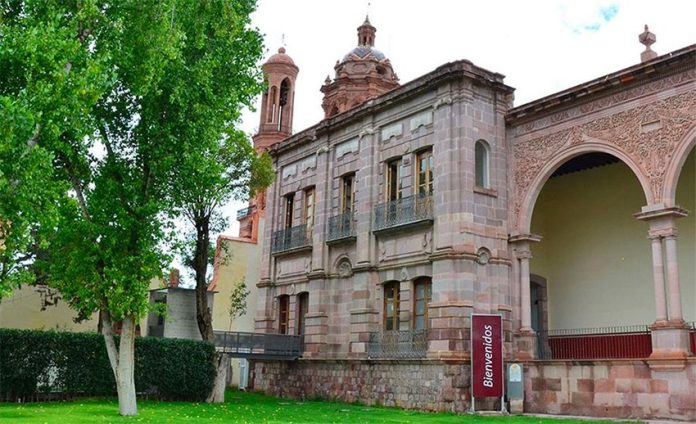
Guadalupe, Zacatecas, one of the new Magical Towns.
Guadalupe, Zacatecas, one of the new magical towns.

There are now 121 towns on the list of those considered magical with the addition this week of 10 new Pueblos Mágicos by the federal Secretariat of Tourism.

Located in central and northern Mexico, the new magical towns are Muzquiz, Coahuila; Nombre de Dios, Durango; Comonfort, Guanajuato; Zimapán, Hidalgo; Tlaquepaque, Jalisco; Compostela, Nayarit; Bustamante, Nuevo León, Amealco de Bonfil, Querétaro, Aquismon, San Luis Potosí; and Guadalupe, Zacatecas.

The magical town brand was launched in 2001 to showcase tourist destinations other than beach resorts, explained Tourism Secretary Enrique de la Madrid Cordero, explaining that a total of 3 billion pesos (US $158.9 million) has been invested in improving the infrastructure in the designated towns.

De la Madrid introduced the new additions — the 10 were selected from a list of 88 applicants — during the fifth annual magical towns fair yesterday in Morelia, Michoacán.

Today the tourism secretary said the incoming federal government, which takes office December 1, was in agreement with the expanded list. He said the nominee to succeed him agreed with the proposal to add the new towns despite having said he felt the number of towns was excessive.

Miguel Torruco Marqués also criticized the program for having become politicized.

Source: El Financiero (sp)

[soliloquy id="63073"]

Stars indicate new magical towns; blue circles indicate destinations nearby.


Despite coming consultation over new airport the old one needs major work

0
Incoming transportation secretary Jiménez Espriú.

Regardless of the imminent public consultation on the viability of Mexico City’s new airport, the existing one — plus the airport at Toluca — require “major surgery” costing just under 5 billion pesos (US $264.3 million).

The federal Secretary of Communications and Transportations in the next administration, Javier Jiménez Espriú, told a press conference yesterday that “immediate measures” are required.

They include the “rehabilitation of the Benito Juárez International Airport [in Mexico City], its rehabilitation, modernization and update.”

Jiménez said that finishing the new airport will not be possible before incoming president López Obrador finishes his term in late 2024. So repairs, he said, require urgent action.

For the Mexico City airport, Jiménez said, the sinking of the land, drainage and water supply need to be addressed, along with the implementation of streamlined passenger management processes, all of which is estimated to cost 3 billion pesos.

Modernizing the facilities in Toluca, capital of México state, will require an additional 1 to 2 billion.

The modernization of both air terminals, continued Jiménez, “must start immediately.”

The renovations will give the two a combined capacity of 60 million passengers, “similar to the proposed 70 million contemplated for the first stage of the new airport,” he said.

Public consultation is to be held later this month to determine whether to continue with the construction of the new airport at Mexico City, estimated to have advanced 20% (according to the incoming administration of López Obrador) and 33% (in the current government’s estimation).

Source: Milenio (sp)

Coahuila festival celebrates arrival of monarch butterflies

0
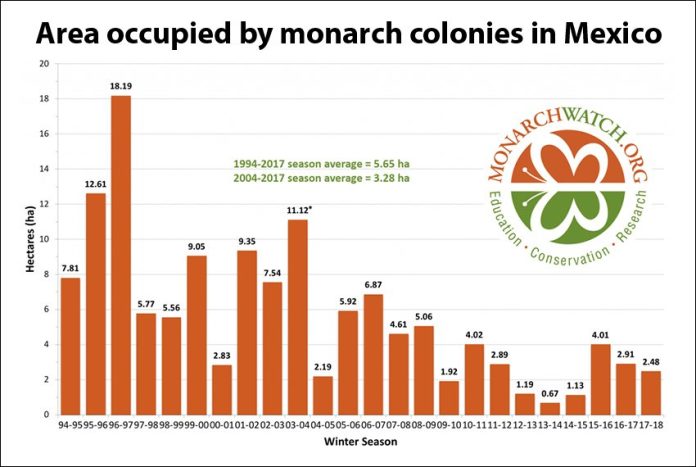
Butterfly overwintering data since 1994-1995.
Butterfly overwintering data since 1994-1995. monarchwatch.org

The monarch butterflies are coming, which meant it was time for a party in Coahuila.

The border city of Ciudad Acuña was the site of the annual festival this week to herald the arrival of the migratory insect.

For the last 20 years students of all ages have celebrated the southbound migration with poetry, songs and dance, according to state Environment Secretary Eglantina Canales Gutiérrez, whose department collaborates with the Education Secretariat to organize the event.

“It is a great migration . . . it’s so pretty and interesting that the people and the teachers of the region have taken this migratory phenomenon as symbolic,” she said.

Such festivals highlight the importance of the monarchs in the state and the rest of the country.

Canales told the newspaper Milenio that the first monarchs have already been sighted in the state, and will soon start arriving in the thousands due to the imminent arrival of a cold front.

They always arrive in Coahuila between October 15 and 20, she said.

The number of monarch butterflies arriving to spend the winter in the forests of Michoacán and México state has shrunk by almost 90% in the last 25 years.

The trend reversed during the 2015-2016 season when the area of forest covered by the monarchs jumped from 1.13 to 4.01 hectares, making it the first rise in five years.

But the 2016-2017 season saw another decline, to 2.91 hectares, followed by a similar shrinkage to 2.48 hectares during the last season.

Factors affecting butterfly populations are a decline of milkweed plants for monarchs to lay their eggs on and for the caterpillars to eat, pesticides and insufficient habitat for their journeys north and south, shifting weather patterns and the reduction of forest habitat in Mexico.

Source: Milenio (sp)

Extortion in Acapulco: from taxi drivers to banana boat operators, everyone pays

0
Many businesses have been forced to close due to extortion.

No one is immune from extortion in Acapulco.

Taxi drivers, beer vendors, hammock peddlers, masseurs and banana boat operators are all among those targeted by criminal gangs in the resort city on Guerrero’s Pacific coast.

Refusal to pay the extortion fees known as derecho de piso or protección is at one’s own peril. Death could be the consequence.

According to a report published today by the newspaper Milenio, criminal organizations in Acapulco are currently using two main modus operandi to collect extortion payments.

One involves targets being given written messages demanding that regular payments be made at an Oxxo convenience store to a specified account.

Victims are instructed to send their payment receipts via the WhatsApp messaging application to a supplied number.

The other method in favor is express kidnapping: targets are abducted and immediate ransoms are demanded, often by the victim being forced to withdraw money at an ATM.

The Independent Cartel of Acapulco, the criminal group known as La Barredora — a splinter group of the Pacific Cartel — and the Beltrán Leyva cartel all use the papelito (slip of paper) method, Milenio said.

The amounts they demand vary but nobody is exempt.

Milenio confirmed cases in which a masseuse who charges 150 pesos (US $8) per massage makes a weekly payment of 400 pesos (US $21); a man selling mangos on the beach pays 150 pesos; a hammock and bag vendor, 200 pesos; aquatic tourism operators, 300 pesos; beach restaurants, 500 pesos.

“Here, we’re all included, they come and ask us for the famous weekly payment. We don’t earn much because there are no customers but we still have to find money to give to those men. You see, there have been a lot of deaths around here,” said Carmen, a masseuse who works on the city’s beaches.

In the center of the city, the situation is the same for hundreds more.

A woman who sells chilate, a traditional Guerrero beverage made out of cocoa, rice, cinnamon and sugar, always makes her weekly extortion payment on time out of fear of what could happen to her if she failed to do so.

“It’s a crisis, the situation is very difficult,” said another vendor identified only as Gloria.

“We’re forced to give them a fee because if we don’t, we have problems. We have families to take care of and this is our only source of work . . . Every day we come out [to work] asking God to protect us and for this to end.”

According to the National Public Security System, there were 61 official complaints about extortion in the first eight months of this year, a 30% increase on the same period last year.

However, the number of cases that go unreported due to fear of reprisals is undoubtedly much higher.

Roberto Jacinto, president of the Acapulco branch of the National Chamber of Commerce (Canaco), said that 300 of 2,000 members have closed their businesses this year due to extortion.

His counterpart at the Mexican Employers Federation (Coparmex) said that 20 members of that organization who owned small and medium-sized businesses have shut their doors for the same reason, leaving 700 people out of work.

Extortion has also devastated the taxi industry, with 80 stands disappearing in recent years.

Rogelio Hernández, president of a local transportation association, said that not only are taxi drivers and other public transportation workers susceptible to extortion they are also highly vulnerable to violence if they refuse to cooperate.

“. . . [criminals] get in as passengers, kill [drivers] and leave a message on a sign [to warn other drivers]. We ask the authorities to stop this without excuses,” he said.

Source: Milenio (sp) 

Cerro del Teúl in Zacatecas: 1-kilometer trail through 18 centuries of history

0
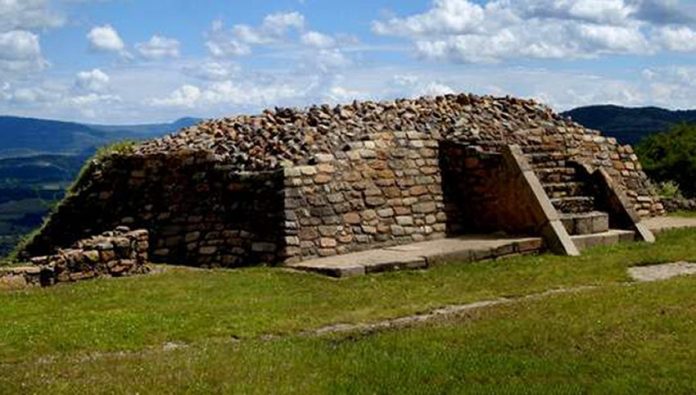
The pyramid and plaza at Zacatecas's Cerro del Teúl.

The city of Teúl de González Ortega is located in the southern part of the state of Zacatecas 100 kilometers north of Guadalajara and is a Pueblo Mágico, or Magical Town, and well deserves the name.

I found the houses pretty, the streets clean and well paved, and there seemed to be picturesque arches everywhere. It can also be said that everywhere you wander in this town, you can always see the Cerro de Teúl on the horizon, so stately and imposing that even the notorious conquistador Nuño Beltrán de Guzmán remarked upon its grandeur.

On October 5, the archaeological site on the Cerro was inaugurated, and it seemed the whole town turned out for the event. There was standing room only as politician after politician alluded to the deep love of the local people for this mountain of theirs and to the wholehearted support the archaeologists had received for their project.

“My friends,” archaeologist Laura Solar told the crowd, “we are finally finished doing our work and we will no longer keep you away from your beloved peñol. From now on it will be open to the public every day of the week but Monday.”

I learned that excavations and studies had been carried out by Solar and archaeologist Peter Jiménez for 10 long years and that this particular site is considered of monumental importance because it was occupied continuously for 17 to 19 centuries, so its history matches and reflects the history of northwestern Mexico.

A very wide, smooth, well-marked trail leads from the town up the mountainside, with stairs built in a few strategic places and occasional shaded spots with benches where you can catch your breath and take a rest.

The most dramatic “rest stop” is a very long shelter cave with seats carved into the living rock by ancient peoples. Here you can sit in the shade and enjoy a magnificent, panoramic view of Teul de González. Also carved into the rock wall are horizontal and vertical channels for collecting the spring water which oozes out of this mountain at various points.

It’s good that there are plenty of places to rest along the trail, because this is one steep hill. There is a vertical difference of 171 meters between the town and the shaft tomb up at the very top, but it’s only a one-kilometer walk through spectacular scenery.

Scattered along the way are well-designed explanatory signs (sorry, entirely in Spanish), each of which is linked to an app called “Explora Cerro del Teùl,” which you can download free from the Google Play Store. The app uses GPS to recognize where you are and presents lots of info, cartoon style.

People were oohing and ahhing about this ultramodern guide, but as for me I’d still rather read a sign than squint at a tiny screen obviously not designed for bright sunlight.

Up, up you go and suddenly you reach a wide, flat area with a plaza, the ruins of a pyramid and a sunken patio where great crowds used to gather for “mitote ceremonies,” dances held, for example, in May to assure the arrival of the rains and in October or November asking the gods to end them.

Here the archaeologists found many fragments of simple ceramics that had been used to prepare food for these big crowds.

Something else the archaeologists found buried beneath this patio, I was surprised to learn, were around 60 skeletons, probably the remains of ancient VIPs.

“These people,” Laura Solar told us, “typically had artificially flattened heads and their teeth had been filed to sharp points.  All these skeletons have been sent off for study by bioarchaeologists, but there are probably many more bodies under here that we haven’t uncovered yet, just a few centimeters beneath your feet.”

A few steps from the patio we came to the I-shaped ball court, which is very nicely preserved. There, our guide showed us two of four big statues carved in stone, which had once stood at the four extremities of the ball court. “These figures,” said Solar, “are shown dressed in the typical sportswear and gloves of the day.”

Most curious of all was the fact that one of the four statues found here had been deliberately sculpted in two parts: a body and a head, apparently in relation to the pre-Hispanic custom of honoring the captain of the winning team with decapitation.

A few steps up above the ball court you come to the last feature of the archaeological tour: a shaft tomb, clearly indicating how far back the Cerro del Teúl goes. This method of burial was in vogue 2,000 years ago, but probably died out around 400 AD.

The pit or shaft could be as deep as 20 meters, with several chambers at the bottom, each containing at least one body accompanied by many ofrendas (offerings), perhaps in the thousands. To protect the tomb from looting, the shaft would typically be filled in with dirt.

Back down at the visitors’ center, who did I bump into but Peter Jiménez, with whom I had previously corresponded — all in Spanish — without ever realizing he spoke English. “Actually, I’m from Rochester, Minnesota,” he told me. “I came to Mexico to study archaeology when I was 17 and I just stayed here. I’ve been doing archaeology here in Zacatecas for 34 years.”

“How long have you been involved in this project?” I asked him.

“Well, I first came here to Teúl in 1984, hoping to work on this site, but we realized that the ruins at La Quemada, further north in Zacatecas, were in dreadful condition and we’d better fix that place up before starting on a new one. At one time I had 520 people working for me at La Quemada, picking up the stones so we could put everything back together again.

“That site was like an old man in an emergency room, with kidney problems, liver problems and brain problems. So we had to do emergency archaeology there to save the site.”

Eventually Jiménez came back to Teúl, where he has been working for 10 years. “The Cerro del Teúl is tremendously important,” he told me. “While La Quemada had only about six centuries of occupation, Teúl has been continuously occupied for 15 to 16 centuries, stretching from the shaft-tomb period to the arrival of the Spaniards.

[wpgmza id=”93″]

“It shows us that dramatic changes did not mean people died or vanished, but simply that new ideas came along and the directionality vector changed. People started imitating lifestyles from somewhere else. Long-duration sites like this one at Teúl help us to see these changes.”

The newly opened archaeological site has a visitors’ center, restrooms and a first aid center and is open Tuesdays to Sundays from 9:00am to 5:00pm. To get there, ask Google to take you to “Zona arqueológico del Teúl.”

The writer has lived near Guadalajara, Jalisco, for more than 30 years and is the author of A Guide to West Mexico’s Guachimontones and Surrounding Area and co-author of Outdoors in Western Mexico. More of his writing can be found on his website.

[soliloquy id="63010"]

7 dead in Monterrey construction accident; project was ‘completely illegal’

0
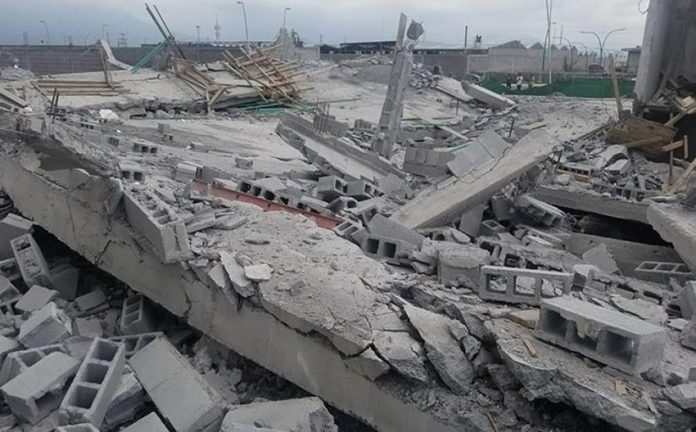
The rubble of a construction project that collapsed in Monterrey.

A shopping mall under construction in Monterrey, Nuevo León, collapsed yesterday, killing seven people, authorities said.

A further 14 people were injured and rescue workers continued searching this morning for one person trapped under the rubble. All the victims are believed to be construction workers.

Around 150 rescue workers including military personnel have contributed to search and rescue efforts.

Assistant attorney general Luis Enrique Orozco Suárez confirmed that only one person is missing and not nine as had been reported last night. Six of the seven men killed have been identified, he said.

Nuevo León Civil Protection deputy director Miguel Ángel Perales Hernández said that three concrete slabs collapsed at around midday, crushing the workers. The cause of the collapse is unclear.

Work on the three-story building in the Cumbres del Sol district was being carried out without a building permit, municipal authorities said.

Monterrey urban development secretary Luis Bortoni said the project was suspended in November 2017 after a wall on the perimeter of the site collapsed. “It’s a completely illegal construction . . .” he said.

Both the director of the project and the owner of the property could face criminal charges, including negligent homicide. Authorities are still attempting to locate the former.

Nuevo León Governor Jaime Rodríguez Calderón last night visited the site of the disaster and pledged that the state government would provide medical and psychological care to the families of victims.

Source: El Financiero (sp), Milenio (sp), Excelsior (sp) 

Apple Leisure to invest US $1 billion in six new hotels in Quintana Roo

0
Breathless Riviera Cancún: Apple Leisure Group plans to build more.

Travel and hospitality conglomerate Apple Leisure Group will invest an estimated US $1 billion over the next three years to open six new hotels in Quintana Roo.

The 450-room Sunscape Star Hotel, located on Costa Mujeres just north of Cancún, will be the first of the six new properties to open, welcoming its first guests in April 2019.

Construction of a 534-room Now Natura Hotel and 407-room Secret Marinas Resort will begin in Puerto Morelos next year. Both properties are expected to open at the end of 2020.

Construction of two new resorts under Apple’s adult-only Breathless brand will also commence next year in Playa del Carmen. Together the two properties will have 700 rooms.

A project to build another 500-room Breathless property is already under way in Cancún’s hotel zone.

A new Reflect Krystal Grand Hotel, a joint venture of Apple and the Santa Fe Hotel Group, was inaugurated this week as part of the events of Cancún Travel Mart 2018.

Apple Lesiure Group CEO Alejandro Zozaya Gorostiza said that Quintana Roo is already the consortium’s most important destination and that it has more hotel rooms in the state than any other chain.

However, he said that insecurity in Quintana Roo has caused a decline in visitor numbers especially from the United States, which has forced the company’s hotels to drop rates and seek to attract tourists from other markets.

The biggest losses have come from the cancellation of conferences and weddings, Zozaya explained.

The tourism industry is currently working with the state government to prepare a new tourism campaign for the United States as part of efforts to shake off the bad reputation the Mexican Caribbean has acquired due to rising levels of violence.

Zozaya said that he didn’t expect the sector to begin to recover until 2020.

Authorities hope that a new military police base inaugurated just north of Cancún this week will help to combat the crime problem.

Cancún and surrounding areas “should offer optimal security conditions for the millions of visitors who come here each year,” President Peña Nieto said.

Source: El Economista (sp)