Thursday, February 26, 2026
Home Blog Page 2056

7 die after 11 passengers thrown from back of pickup in Chihuahua accident

0
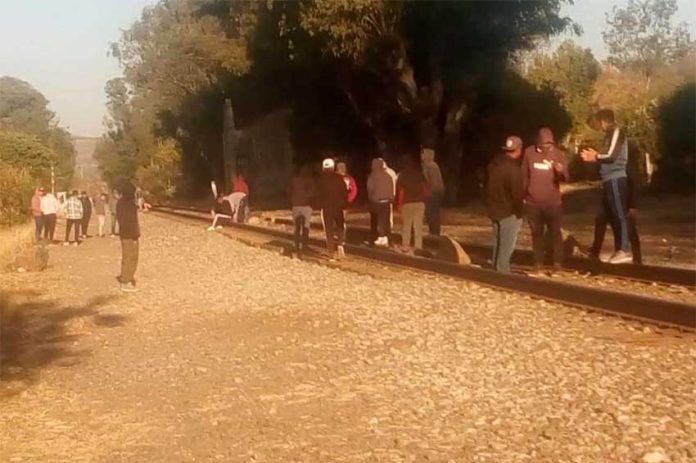
Scene of Sunday's fatal accident.

Seven young people were killed in the city of Chihuahua early Sunday morning when they were thrown from the back of a pickup truck after the driver lost control.

Five of the passengers, who were aged 18 to 24, died at the scene; the remaining 11 were rushed to hospital in critical condition. Two later died and the other four were in intensive care late yesterday.

Police said evidence shows the Chevrolet Silverado truck was traveling at an excessive speed when the driver lost control and struck a retaining wall.

The driver and her boyfriend fled the scene, police said.

The occupants of the truck are believed to have been at a party and were on their way to a private home when the accident occurred at the intersection of Nogales and Venceremos streets.

Source: El Universal (sp)

Intelligence reports identify 15 cartels behind the wave of violence

0
Territorial disputes: 15 gangs are engaged in turf wars.

Fifteen warring drug cartels are behind the wave of violence sweeping across parts of Mexico, according to new intelligence reports from the National Security Commission (CNS).

The reports, updated this month and informed by intelligence provided by the Federal Police and the Secretariat of National Defense (Sedena), identify turf wars between criminal organizations to control the “plaza” — and consequently criminal activity — in different regions of the country as the main reason for rising levels of violent crime.

Internal disputes within cartels and the splintering of criminal organizations into smaller groups are other factors driving up crime rates, National Security Commissioner Renato Sales said.

Guanajuato has become the epicenter of a war between the Jalisco New Generation Cartel (CJNG) and the Santa Rosa de Lima Cartel that is fueled mainly by the ambition to control the lucrative pipeline petroleum theft racket and to a lesser extent drug trafficking, the CNS said.

Violence has surged in the state this year, with more intentional homicides in the first six months of the year than the total number recorded for all of last year, according to the National Public Security System (SNSP).

Farther north, the Sinaloa Cartel — formerly headed by Joaquín “El Chapo” Guzmán — is involved in bloody infighting between one faction headed by the infamous capo’s sons and another led by Ismael “El Mayo” Zambada.

El Chapo was extradited to the United States in January last year and is currently awaiting trial on charges of drug trafficking, money laundering, kidnapping and murder.

In Baja California, high homicide numbers are attributed to a turf war between an alliance made up of the Sinaloa and Arellano Félix cartels and another consisting of the CJNG and the Tijuana New Generation Cartel.

To the east in Chihuahua, and especially in the border city of Ciudad Juárez, a battle between La Línea and Los Aztecas gangs to control the “plaza” is responsible for a large part of the current violence.

The former gang is a unit of the Juárez Cartel while the latter, also known as Barrio Azteca, was previously in alliance with La Línea.

In Guerrero, the port city and tourist draw Acapulco continues to be plagued by violence due to a dispute between the Beltrán Leyva Cartel and the Independent Cartel of Acapulco to control drug trafficking and extortion.

In Jalisco, where violence has also increased this year, the CJNG and the New Plaza Cartel are engaged in a violent dispute.

The former was allegedly responsible for the abduction and murder of three film students near Guadalajara in March and the attack in May on Luis Carlos Nájera, the former attorney general of Jalisco who is now the state’s labor secretary.

Turf wars in Tamaulipas between the Gulf Cartel and Los Zetas; in Veracruz between the CJNG and Los Zetas; in Colima between the Sinaloa Cartel and the CJNG; in Michoacán between Los Viagra and the CJNG; and in Durango between the Sinaloa Cartel and the Cártel del Poniente (West Cartel) are behind a high number of the homicides in those states, the CNS said.

Other cartels the commission cited in its reports are the Cártel del Noreste (Northeast Cartel) — a faction of Los Zetas — and La Familia Michoacana.

Rising levels of violent crime in Ciudad Obregón, Sonora, was the trigger for a large protest in that city yesterday.

Hundreds of demonstrators, mainly dressed in black, marched for two kilometers from the north of the city to the municipal headquarters.

Among the participants were family members of scores of victims of homicide and kidnappings.

Homicide figures for the first six months of 2018 were up 15% compared to the same period last year, making the January to June period the most violent of at least the past two decades.

Source: Milenio (sp)

Mexico continues to lead the medal standings at Barranquilla games

0
Joana Jiménez beams after her gold-medal performance in synchro swimming.
An ecstatic Joana Jiménez after her gold-medal performance in synchro swimming.

Mexico continues to dominate the Central American and Caribbean Games in Barranquilla, Colombia, enjoying a healthy lead in the medal count.

With almost a week of competition still remaining, Mexico had 207 medals as of late this afternoon: 86 gold, 72 silver and 49 bronze.

Host-nation Colombia is in second place with 144 medals followed by Cuba with 113.

Swimmer Fernanda González picked up five medals in Barranquilla this year and in the process became Mexico’s greatest ever performer at the games, which are held every four years.

A 28-year-old backstroke and medley swimmer, González now has 20 medals from four appearances at the Central American and Caribbean Games, including 10 gold.

“The truth is I’m very satisfied that I’ve got 20 Central American medals during my entire sporting career, it sounds easier than it is . . . the truth is that each medal cost me sweat and tears and each medal has a special meaning . . .” she said.

Mexico won a total of 43 medals in the pool, including 15 gold, making swimming the country’s most successful sport so far at this year’s games.

Shooting, in which Mexico’s competitors have won 21 medals including 12 gold, has been the second most fruitful sport while the taekwondo contingent matched González’s career medal tally by winning 20 medals, including eight gold, to make the martial art the third most successful sport so far for the 675-member delegation.

Mexico has also done well in diving, picking up 13 medals including six gold; equestrian, nine medals including five gold; modern pentathlon, six medals including two gold; racquetball, six medals including five gold; rowing, 11 medals including six gold; squash, nine medals including five gold; and weightlifting, 14 medals including four gold.

Among the sports that will feature in the final week of competition and for which medals are still up for grabs are archery, athletics, badminton, baseball, boxing, fencing, judo, tennis and wrestling.

The Mexican women’s soccer team will also be looking to add another gold medal to the tally when they face Costa Rica in the final on Monday night.

The games, which were first held in Mexico City in 1926, will conclude on August 3.

Source: Milenio (sp)

At least 15 deaths in 5 states attributed to two-week-old heat wave

0
High temperatures recorded around Mexico this week.

In much of Mexico these are the dog days of summer, or canícula in Spanish, but it’s been a brutal period since it began 13 days ago.

At least 15 people have died in Baja California, Sonora, Sinaloa, Tamaulipas and Tabasco due to extreme heat.

Temperatures in Baja California, where seven people have died, have been recorded as high as 54 C.

The northern state reported a total of six heat-related deaths in all of last year. In addition to the seven deaths there have been 29 reports of people falling ill due to the high temperatures.

They have also taken their toll in Sonora, where the Health Secretariat has reported five deaths during the current hot spell.

In Sinaloa, authorities continue to investigate the death of a two-year-old girl who was found unconscious inside a vehicle in Los Mochis. Preliminary reports indicate that the toddler was playing hide-and-seek and chose the SUV as a hiding place.

It is believed that the girl was unable to open the door to get out during midday temperatures of 38 C.

In the Gulf of Mexico state of Tabasco, where temperatures have reached 40 C, a five-year-old girl with cerebral palsy died due to heat stroke.

The hot spell is also affecting an estimated 8,500 families in Teapa that take their water from the Puxatán River, whose levels have seen a drastic drop. A population of 30,000 living in an area around the river could also be affected if the levels continue dropping.

The national Civil Protection office has declared a state of emergency in 640 municipalities in 24 states due to the heat wave, freeing up emergency funds for health and food requirements of people affected.

Authorities advise that the most vulnerable — children and seniors — remain indoors as much as possible.

The National Meteorogical Service forecasts the hot weather will continue in at least 25 states.

Source: El Universal (sp)

Tamaulipas offers 85 million pesos in rewards in 85 missing-persons cases

0
Families protest against disappearances.

The Tamaulipas government is offering 85 million pesos (US $4.5 million) in rewards in the cases of 85 missing persons, most of whom disappeared between 2010 and 2015.

The state’s Attorney General’s office (PGJE) said that 69 of the persons sought are men, 16 are women and 36 of the victims were aged between 21 and 30 when they last had contact with their families.

The government will pay 1 million pesos (US $53,600) to anyone who provides information that leads to any of the 85 being located, the PGJE said.

All but 12 disappeared during the six-year term of former state governor Egidio Torre Cantú, who left office in September 2016.

The remainder of the listed cases occurred during the term of current Governor Francisco García Cabeza de Vaca.

The 85 persons for whom the rewards are offered represent just 1.4% of the 5,999 people who have officially been reported as missing in the northern border state.

According to the National Registry of Data on Missing and Disappeared Persons, no state has more missing persons.

Among those listed in the rewards program are 38-year-old Carlos Ornelas Puga, who was abducted from a church in the municipality of Jiménez in November 2013, Milinaly Piña Pérez, who at age 13 disappeared in August 2014 while traveling on the Ciudad Victoria-Ciudad Mante highway, and journalist and news outlet owner Víctor Calzado González who disappeared in September 2011.

The full list of the 89 missing persons covered by the rewards program is published on the PGJE website.

Another wave of missing persons cases has been reported in Tamaulipas this year.

The United Nations said in May that there are “strong indications” that federal security forces were responsible for the disappearance of 23 people, including at least five minors, in Nuevo Laredo between February and May.

The federal Attorney General’s office launched an investigation and after finding the bodies of nine people who were reported missing, turned its focus to the Zetas drug cartel.

A local activist and member of a collective made up of the family members of disappearance victims claims that the presence of the military on the streets of Tamaulipas has led to more rather than less crime in the state.

“The interference of the army in police duties has worsened the situation, not lowered the rate of violence or drug trafficking, homicides or kidnappings. On the contrary, they’ve increased,” Guillermo Gutiérrez Riestra said.

Across Mexico, there are now more than 37,000 missing persons, a figure that has risen by 40% since 2014.

Source: Reforma (sp)

Manatee rescue plan under way in Tabasco as death toll reaches 27

0
A manatee rescue plan is under way in Tabasco.
Rescue operation has begun in Tabasco.

Seven more manatees have died in the last week in Tabasco, bringing the total to 27 and triggering an official rescue plan.

Twenty-one have been found dead in the Bitzal River and Maluco rivers area in the municipality of Macuspana, where 30 are estimated to remain. The reason for the deaths has not been established.

Specialists from the National Association of Breeding Centers and Zoological Parks (Azcarm) and the Juárez Autonomous University of Tabasco (UJAT) have joined state and federal environmental officials in an effort to locate and capture the mammals, sometimes known as sea cows.

Captured specimens will be weighed and measured, and readings of their breathing and heart rate will be monitored during the transfer.

The specialists will also collect samples of nasal and anal tissue, blood and feces and, if possible, urine for analysis.

The manatees will be transported by water to the Tres Brazos Station at the Pantanos de Centla Biosphere Reserve where they will be kept in artificial pools containing river water until the cause of the deaths can be determined.

Source: El Universal (sp)

Military base won’t be sold; mayor-elect proposes addition to Chapultepec Forest

0
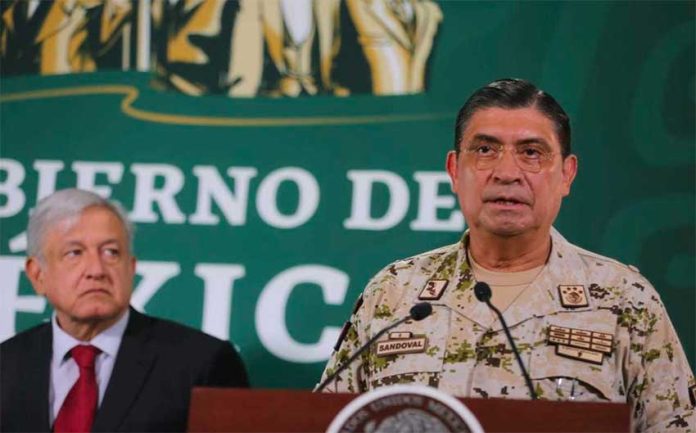
The former military base that was to be put up for sale.

What was slated to become one of the biggest real estate developments in Latin America might well end up as the fourth section of the Chapultepec Forest in the country’s capital.

Valued at US $1 billion and described as the most lucrative land sale in Mexico ever, that sale of the 125-hectare parcel of land in Mexico City was cancelled yesterday by the seller, the federal government.

The government said in January that the land, formerly a military base, was no longer required by the army or any other public institution, and that the monies obtained from its sale would be transferred to the federal treasury.

The land is now in being eyed by Álvaro Obregón borough chief-elect Layda Sansores San Román, who is planning to discuss the property with president-elect Andrés Manuel López Obrador and Mexico City Mayor-elect Claudia Sheinbaum Pardo.

Sansores intends to ask López Obrador to turn over the property to Mexico City to allow it become an additional part of the Chapultepec Forest.

She said she welcomed the cancellation of the sale, which avoided the land being used in a manner “contrary to the common good and at the expense of the environment . . . and the wellbeing of the people of Álvaro Obregón and Mexico City.

The sale of the base had met with opposition from local residents who argued that its development would place further pressure on already stretched infrastructure.

Source: El Financiero (sp)

Officials agree to step up NAFTA talks; August conclusion possible: Peña Nieto

0
Videgaray, Guajardo, Lighthizer and Seade in Washington this week.

President Enrique Peña Nieto is optimistic that an updated North American Free Trade Agreement (NAFTA) could be reached in August after Mexican and United States officials agreed Thursday to step up talks.

Speaking at an industry event in Mexico City yesterday, Peña Nieto said there is “frankly a very promising horizon” with regard to concluding a deal in the short term.

“We are determined to speed up [the negotiations] in order to make progress in a significant way throughout the month of August. It’s not a deadline but we are convinced that we can reach an agreement,” the president said.

Peña Nieto also said that including members of president-elect Andrés Manuel López Obrador’s transition team in the NAFTA renegotiation process created an atmosphere of both calm and confidence both domestically and in the United States and Canada.

Jesús Seade, whom López Obrador has tapped to be his chief trade negotiator, accompanied Economy Secretary Ildefonso Guajardo and Foreign Affairs Secretary Luis Videgaray to Washington D.C. this week for talks with United States Trade Representative Robert Lighthizer.

“. . . Presenting a single negotiating front with the United States and Canada, I believe creates conditions of greater tranquility but above all confidence in the agreements that we will eventually have,” Peña Nieto said.

Guajardo described the talks with Lighthizer and senior White House adviser Jared Kushner as “constructive” and “very positive.”

With regard to the outstanding contentious issues the economy secretary said, “I think we have agreed on the process and the method to start solving from the less complex to the most complex issues.”

Guajardo and Lighthizer agreed Thursday to quicken the pace of talks with the goal of reaching an agreement in principle next month, which will mark one year since the renegotiation process began.

A joint statement issued by the secretariats of economy and foreign affairs yesterday said that “the teams of both countries will continue working during the coming days in preparation for the upcoming ministerial meeting.”

Trilateral talks stalled in the lead-up to the Mexican presidential election and were complicated further by the United States imposing metal tariffs on both Mexico and Canada from June 1.

Both countries responded with their own tit-for-tat measures, which in Mexico’s case included duties on United States pork, apples, potatoes, Kentucky bourbon and some cheeses and steel products, among other goods.

However, the president of Mexico’s influential Business Coordinating Council (CCE) said yesterday that Mexico and the United States agree that if a new NAFTA deal is successfully reached, the tariffs each country has imposed on the other will be withdrawn.

“. . . The tariffs on [Mexican] steel and aluminum could end soon if we reach an agreement. It would be, let’s say, a deal between both countries, in the case of a trilateral agreement being reached,” Juan Pablo Castañón said.

Following a meeting with Guajardo in Washington, he also said that Mexico is seeking an end to the United States auto probe that could lead to new tariffs on Mexican-made vehicles.

Of the 30 NAFTA chapters, Guajardo said Thursday that negotiators had completed nine and 10 others are almost finished.

One key sticking point that still needs to be resolved, however, is the so-called sunset clause that would see the 24-year-old trade treaty automatically expire if the three countries don’t renegotiate an updated deal at five-year intervals.

The United States has been pushing for its inclusion but both Mexico and Canada remain opposed to it.

Asked yesterday whether Canadian Foreign Affairs Secretary Chrystia Freeland will join the talks, Guajardo said: “What I am expecting is that we have to engage with Canada, either two bilaterals, one trilateral, whatever we agree to.”

The economy secretary met with Freeland in Mexico City Wednesday and both insisted that NAFTA remain a three-way pact amid continuing speculation fanned by United States President Donald Trump that the U.S. could seek separate trade deals with its two neighbors.

López Obrador, who will be sworn in as president on December 1, has also said that he wants NAFTA to remain a trilateral pact.

In a letter sent to Trump this month, he called for a swift conclusion to the negotiations while in a return missive, Trump said that he too wanted a quick deal, adding “otherwise I must go a much different route.”

Source: Milenio (sp), El Universal (sp)

Crime wave: 48 assassinated in 8 states in just 36 hours

0
A homicide scene in Guanajuato.

A wave of violence left 48 people dead in eight states in just 36 hours between Thursday and Friday, the newspaper El Universal reported today.

Guanajuato saw the worst of it with 26 homicides across eight municipalities, where another five people suffered gunshot wounds. Three of the fatalities were women.

A man was killed in a cemetery in Santo Tomás Huatzindeo in the municipality of Salvatierra yesterday afternoon, just hours after he was abducted in the nearby town of Maravatío del Encinal.

In Irapuato, the body of a man with his hands tied together was found at around 5:30pm yesterday under a bridge on a main thoroughfare in the south of the city. A criminal organization claimed responsibility for the death in a message that was left with the body.

In the same city, two men were shot and killed at midday outside a mechanic’s workshop in the La Paz housing estate. Investigative police said one of the victims was the owner of the workshop.

Two men aged between 25 and 30 were also killed in the neighborhood of Los Tabachines while inside a vehicle.

Early yesterday morning, the homicide of a man in the San Juan de Retana neighborhood was also reported.

The man was found with bullet wounds in his abdomen while a 25-year-old woman was shot in her legs in the same attack.

In total, eight people were killed in Irapuato, a city known as the strawberry capital of Mexico.

Murders also occurred in the Guanajuato municipalities of Valle de Santiago, Salamanca, Yuriria, Tarimoro, Apaseo el Grande and Purísima del Rincón.

Intentional homicides in the state during the first six months of the year exceeded the total for all of last year, according to the National Public Security System. The numbers soared from 1,084 in 2017 to 1,254 between January and June this year.

In Morelos, where self-defense forces have recently formed in at least nine municipalities, the police chief in Yautepec was shot dead inside his home.

Police found the body of Adrián Barrera but the perpetrators of the crime had fled.

The Jalisco New Generation Cartel (CJNG) has announced publicly that it is going after the “plaza” in the state of Morelos, located to the immediate south of Mexico City.

In Chihuahua, authorities reported that nine men had been killed in separate incidents.

Six of the homicides occurred in Ciudad Juárez and one each in the state capital of Chihuahua and the municipalities of Urique and Valle de Allende.

The victim in Urique was a 17-year-old male who was found in the community of Piedras Verdes with gunshot wounds to his head.

Authorities also said that three people were shot dead in Oaxaca.

In Guerrero, one of Mexico’s most violent states, suspected gang members killed two people and burned two Nissan vans that operated as public transportation on the route between Chilapa and Chilpancingo.

According to a police report, armed men arrived at the transportation base in the state capital at around 7:30pm yesterday where they killed one person and burned a vehicle.

Minutes later, another van was intercepted and burned on a road leading into Chilpancingo and the driver was killed.

Guerrero security authorities also reported that a person was found dead in the municipality of Coyuca de Catalán yesterday morning.

In San Luis Potosí, a 44-year-old Uber driver was found dead yesterday in the municipality of Villa de Reyes after being reported missing Thursday.

Another Uber driver was found dead inside a house in Los Mochis, Sinaloa.

The 18-year-old man had been missing since last Saturday night when he responded to a call at a Salon de Fiestas, or party hall, in the east of the city.

In Quintana Roo, a gun battle in Puerto Juárez — five kilometers northeast of downtown Cancún — between police and armed civilians at around 8:15pm yesterday left at least five people dead including a police officer.

Two other people were wounded in the confrontation.

High levels of violent crime have continued in Mexico this year after the highest murder rate in at least two decades was recorded in 2017.

Homicide figures for the first six months of 2018 were up 15% compared to the same period last year, making the January to June period the most violent of at least the past two decades.

Source: El Universal (sp), Reporte Indigo (sp), Reforma (sp)

All roads lead to La Roma — and AMLO — for hundreds of daily pilgrims

0
Supplicants line up outside AMLO's office in La Roma.

For the suffering, the sad, the desperate and the damned, all roads lead to La Roma.

That’s the Mexico City neighborhood where president-elect Andrés Manuel López Obrador, or AMLO, has set up his transition headquarters and where hundreds of pilgrims now arrive every day to seek an audience with the political veteran — and cures for whatever ails them.

“I brought my CV to see if there are any jobs going.”

“I was unfairly fired.”

“We need water.”

“Lend me 200,000 pesos and I’ll pay you back later.”

“My son was unfairly convicted.”

“My electricity bill is wrong.”

“Our house collapsed in the earthquake.”

Those are just some of the grievances and pleas of the faithful who have arrived in front of the house-cum-office on Chihuahua street since López Obrador’s landslide victory on July 1.

The day after the election, one of the first people to try his luck was Sonora resident José Acosta Rochín, who traveled to Mexico City to ask the president-elect for 400,000 pesos (US $21,500) so that he could pay for an air ambulance to bring his dying brother back to Mexico from Pennsylvania.

More recently, a 21-year-old car washer showed up with a bucket and rag in hand to ask if he could have AMLO’s white Volkswagen Jetta. “I helped in the campaign,” he explained.

Luz María Martínez, a furniture vendor in Morelos, sobbed as she recalled that she had to take out a 200,000-peso (US $10,740) loan to pay a ransom so that her kidnapped husband would be returned.

“. . . They let him go but now I can barely pay the interest . . . I repay 15,000 pesos every two months,” she said.

And so it goes on: person after person each with their own personal plea but a shared hope that AMLO — who is sometimes referred to as the tropical messiah — will intervene and make things right.

Earlier this week, petitioners even set up an altar outside the house at 216 Chihuahua street replete with candles and an image of the Virgin of Guadalupe, providing a neat metaphor for the quasi-religious faith many have in Mexico’s next president.

But the reality is that most of the supplicants will never get a chance to meet personally with AMLO.

“If I receive you all, I won’t work,” the president-elect said as he arrived at the house this week.

But the lines of people still remain.

Representatives from AMLO’s transition team collect the handwritten and typed entreaties from those who have them, assuring them that each case will be looked at. But not all come quite so prepared.

“I need to speak to him personally, it’s all here in my head,” said Ernesto Martínez before he accepted his fate and wrote the next president a note.

Source: Reforma (sp)