Home Blog Page 2144

Officials agree to step up NAFTA talks; August conclusion possible: Peña Nieto

0
Videgaray, Guajardo, Lighthizer and Seade in Washington this week.

President Enrique Peña Nieto is optimistic that an updated North American Free Trade Agreement (NAFTA) could be reached in August after Mexican and United States officials agreed Thursday to step up talks.

Speaking at an industry event in Mexico City yesterday, Peña Nieto said there is “frankly a very promising horizon” with regard to concluding a deal in the short term.

“We are determined to speed up [the negotiations] in order to make progress in a significant way throughout the month of August. It’s not a deadline but we are convinced that we can reach an agreement,” the president said.

Peña Nieto also said that including members of president-elect Andrés Manuel López Obrador’s transition team in the NAFTA renegotiation process created an atmosphere of both calm and confidence both domestically and in the United States and Canada.

Jesús Seade, whom López Obrador has tapped to be his chief trade negotiator, accompanied Economy Secretary Ildefonso Guajardo and Foreign Affairs Secretary Luis Videgaray to Washington D.C. this week for talks with United States Trade Representative Robert Lighthizer.

“. . . Presenting a single negotiating front with the United States and Canada, I believe creates conditions of greater tranquility but above all confidence in the agreements that we will eventually have,” Peña Nieto said.

Guajardo described the talks with Lighthizer and senior White House adviser Jared Kushner as “constructive” and “very positive.”

With regard to the outstanding contentious issues the economy secretary said, “I think we have agreed on the process and the method to start solving from the less complex to the most complex issues.”

Guajardo and Lighthizer agreed Thursday to quicken the pace of talks with the goal of reaching an agreement in principle next month, which will mark one year since the renegotiation process began.

A joint statement issued by the secretariats of economy and foreign affairs yesterday said that “the teams of both countries will continue working during the coming days in preparation for the upcoming ministerial meeting.”

Trilateral talks stalled in the lead-up to the Mexican presidential election and were complicated further by the United States imposing metal tariffs on both Mexico and Canada from June 1.

Both countries responded with their own tit-for-tat measures, which in Mexico’s case included duties on United States pork, apples, potatoes, Kentucky bourbon and some cheeses and steel products, among other goods.

However, the president of Mexico’s influential Business Coordinating Council (CCE) said yesterday that Mexico and the United States agree that if a new NAFTA deal is successfully reached, the tariffs each country has imposed on the other will be withdrawn.

“. . . The tariffs on [Mexican] steel and aluminum could end soon if we reach an agreement. It would be, let’s say, a deal between both countries, in the case of a trilateral agreement being reached,” Juan Pablo Castañón said.

Following a meeting with Guajardo in Washington, he also said that Mexico is seeking an end to the United States auto probe that could lead to new tariffs on Mexican-made vehicles.

Of the 30 NAFTA chapters, Guajardo said Thursday that negotiators had completed nine and 10 others are almost finished.

One key sticking point that still needs to be resolved, however, is the so-called sunset clause that would see the 24-year-old trade treaty automatically expire if the three countries don’t renegotiate an updated deal at five-year intervals.

The United States has been pushing for its inclusion but both Mexico and Canada remain opposed to it.

Asked yesterday whether Canadian Foreign Affairs Secretary Chrystia Freeland will join the talks, Guajardo said: “What I am expecting is that we have to engage with Canada, either two bilaterals, one trilateral, whatever we agree to.”

The economy secretary met with Freeland in Mexico City Wednesday and both insisted that NAFTA remain a three-way pact amid continuing speculation fanned by United States President Donald Trump that the U.S. could seek separate trade deals with its two neighbors.

López Obrador, who will be sworn in as president on December 1, has also said that he wants NAFTA to remain a trilateral pact.

In a letter sent to Trump this month, he called for a swift conclusion to the negotiations while in a return missive, Trump said that he too wanted a quick deal, adding “otherwise I must go a much different route.”

Source: Milenio (sp), El Universal (sp)

Crime wave: 48 assassinated in 8 states in just 36 hours

0
A homicide scene in Guanajuato.

A wave of violence left 48 people dead in eight states in just 36 hours between Thursday and Friday, the newspaper El Universal reported today.

Guanajuato saw the worst of it with 26 homicides across eight municipalities, where another five people suffered gunshot wounds. Three of the fatalities were women.

A man was killed in a cemetery in Santo Tomás Huatzindeo in the municipality of Salvatierra yesterday afternoon, just hours after he was abducted in the nearby town of Maravatío del Encinal.

In Irapuato, the body of a man with his hands tied together was found at around 5:30pm yesterday under a bridge on a main thoroughfare in the south of the city. A criminal organization claimed responsibility for the death in a message that was left with the body.

In the same city, two men were shot and killed at midday outside a mechanic’s workshop in the La Paz housing estate. Investigative police said one of the victims was the owner of the workshop.

Two men aged between 25 and 30 were also killed in the neighborhood of Los Tabachines while inside a vehicle.

Early yesterday morning, the homicide of a man in the San Juan de Retana neighborhood was also reported.

The man was found with bullet wounds in his abdomen while a 25-year-old woman was shot in her legs in the same attack.

In total, eight people were killed in Irapuato, a city known as the strawberry capital of Mexico.

Murders also occurred in the Guanajuato municipalities of Valle de Santiago, Salamanca, Yuriria, Tarimoro, Apaseo el Grande and Purísima del Rincón.

Intentional homicides in the state during the first six months of the year exceeded the total for all of last year, according to the National Public Security System. The numbers soared from 1,084 in 2017 to 1,254 between January and June this year.

In Morelos, where self-defense forces have recently formed in at least nine municipalities, the police chief in Yautepec was shot dead inside his home.

Police found the body of Adrián Barrera but the perpetrators of the crime had fled.

The Jalisco New Generation Cartel (CJNG) has announced publicly that it is going after the “plaza” in the state of Morelos, located to the immediate south of Mexico City.

In Chihuahua, authorities reported that nine men had been killed in separate incidents.

Six of the homicides occurred in Ciudad Juárez and one each in the state capital of Chihuahua and the municipalities of Urique and Valle de Allende.

The victim in Urique was a 17-year-old male who was found in the community of Piedras Verdes with gunshot wounds to his head.

Authorities also said that three people were shot dead in Oaxaca.

In Guerrero, one of Mexico’s most violent states, suspected gang members killed two people and burned two Nissan vans that operated as public transportation on the route between Chilapa and Chilpancingo.

According to a police report, armed men arrived at the transportation base in the state capital at around 7:30pm yesterday where they killed one person and burned a vehicle.

Minutes later, another van was intercepted and burned on a road leading into Chilpancingo and the driver was killed.

Guerrero security authorities also reported that a person was found dead in the municipality of Coyuca de Catalán yesterday morning.

In San Luis Potosí, a 44-year-old Uber driver was found dead yesterday in the municipality of Villa de Reyes after being reported missing Thursday.

Another Uber driver was found dead inside a house in Los Mochis, Sinaloa.

The 18-year-old man had been missing since last Saturday night when he responded to a call at a Salon de Fiestas, or party hall, in the east of the city.

In Quintana Roo, a gun battle in Puerto Juárez — five kilometers northeast of downtown Cancún — between police and armed civilians at around 8:15pm yesterday left at least five people dead including a police officer.

Two other people were wounded in the confrontation.

High levels of violent crime have continued in Mexico this year after the highest murder rate in at least two decades was recorded in 2017.

Homicide figures for the first six months of 2018 were up 15% compared to the same period last year, making the January to June period the most violent of at least the past two decades.

Source: El Universal (sp), Reporte Indigo (sp), Reforma (sp)

All roads lead to La Roma — and AMLO — for hundreds of daily pilgrims

0
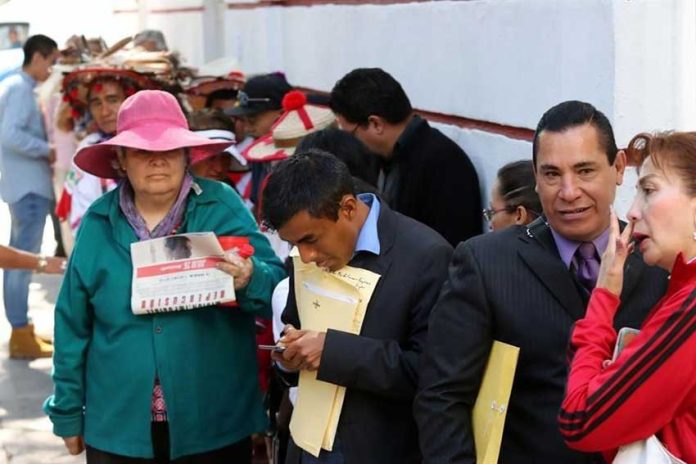
Supplicants line up outside AMLO's office in La Roma.

For the suffering, the sad, the desperate and the damned, all roads lead to La Roma.

That’s the Mexico City neighborhood where president-elect Andrés Manuel López Obrador, or AMLO, has set up his transition headquarters and where hundreds of pilgrims now arrive every day to seek an audience with the political veteran — and cures for whatever ails them.

“I brought my CV to see if there are any jobs going.”

“I was unfairly fired.”

“We need water.”

“Lend me 200,000 pesos and I’ll pay you back later.”

“My son was unfairly convicted.”

“My electricity bill is wrong.”

“Our house collapsed in the earthquake.”

Those are just some of the grievances and pleas of the faithful who have arrived in front of the house-cum-office on Chihuahua street since López Obrador’s landslide victory on July 1.

The day after the election, one of the first people to try his luck was Sonora resident José Acosta Rochín, who traveled to Mexico City to ask the president-elect for 400,000 pesos (US $21,500) so that he could pay for an air ambulance to bring his dying brother back to Mexico from Pennsylvania.

More recently, a 21-year-old car washer showed up with a bucket and rag in hand to ask if he could have AMLO’s white Volkswagen Jetta. “I helped in the campaign,” he explained.

Luz María Martínez, a furniture vendor in Morelos, sobbed as she recalled that she had to take out a 200,000-peso (US $10,740) loan to pay a ransom so that her kidnapped husband would be returned.

“. . . They let him go but now I can barely pay the interest . . . I repay 15,000 pesos every two months,” she said.

And so it goes on: person after person each with their own personal plea but a shared hope that AMLO — who is sometimes referred to as the tropical messiah — will intervene and make things right.

Earlier this week, petitioners even set up an altar outside the house at 216 Chihuahua street replete with candles and an image of the Virgin of Guadalupe, providing a neat metaphor for the quasi-religious faith many have in Mexico’s next president.

But the reality is that most of the supplicants will never get a chance to meet personally with AMLO.

“If I receive you all, I won’t work,” the president-elect said as he arrived at the house this week.

But the lines of people still remain.

Representatives from AMLO’s transition team collect the handwritten and typed entreaties from those who have them, assuring them that each case will be looked at. But not all come quite so prepared.

“I need to speak to him personally, it’s all here in my head,” said Ernesto Martínez before he accepted his fate and wrote the next president a note.

Source: Reforma (sp)

AMLO announces energy spending plans totaling US $9.4 billion

0
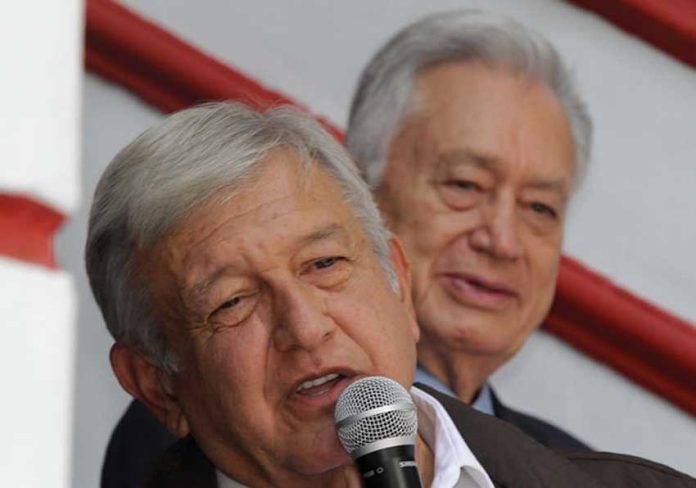
López Obrador announces plans for the energy sector. Behind him is his nominee to head the Federal Electricity Commission, Manuel Bartlett.

A new refinery, upgrades to the existing ones and the elimination of excesses by the petroleum workers’ unions are among the highlights of the new government’s plan to “rescue” the energy sector.

President-elect Andrés Manuel López Obrador announced today that his government will build a new oil refinery in Tabasco with an investment of 160 billion pesos (US $8.6 billion) over three years.

Construction of the facility at Dos Bocas on the coast of the oil-rich Gulf of Mexico will start in early 2019 and is expected to be completed midway through the next president’s six-year term.

López Obrador also said that his administration will invest 49 billion pesos (US $2.6 billion) over two years to revamp the six refineries that are already in operation.

“With this new refinery and the rehabilitation of the six that already exist we’re going to make good on our campaign promise of stopping purchases of gasoline abroad and of lowering fuel prices by the middle of [my] six-year term,” he said.

The president-elect explained that his administration will seek to boost Mexico’s crude oil production from 1.9 million barrels per day (bpd) now to 2.5 million bpd by investing 75 billion pesos (US $4 billion) in oil exploration and drilling during his first year in office.

Mexico has imported an average of 590,000 bpd of gasoline and 232,000 bpd of diesel to date this year, almost exclusively from the United States.

López Obrador also said that his administration will spend about 20 billion pesos (US $1.07 billion) next year to upgrade the power stations operated by the state-owned Federal Electricity Commission (CFE).

“We’re going to start by modernizing hydroelectric plants because we have underutilized infrastructure. We’re going to generate electricity with the dams that currently exist,” he said.

All told, the president-elect said that he expects his administration will spend 175 billion pesos (US $9.4 billion) next year to strengthen Mexico’s energy sector, a process he has earlier described as a rescue.

López Obrador also confirmed that Rocío Nahle, a petrochemical engineer, will be the energy secretary in his administration. She said today the energy sector rescue plan would eradicate excesses, bureaucratic expense and flows of money to unions in the sector.

The government will not be looking to harm workers but nor will it permit further union excesses because the money is needed for energy projects, she said.

Nahle told a press conference that the administration didn’t want to break relations with the unions but instead “reduce the high-level bureaucracy and the superfluous spending.”

López Obrador also announced that Octavio Romero Oropeza will be the new CEO of state oil company Pemex and Manuel Bartlett will head up the CFE.

The former is an agronomist and served in López Obrador’s administration when he was mayor of Mexico City. He is also from López Obrador’s home state of Tabasco.

Bartlett is a former governor of Puebla and served as secretary of the interior under former president Miguel de la Madrid and education secretary under Carlos Salinas de Gortari. He is also a long-term critic of private investment in the energy sector.

The next president will be sworn in on December 1 while the new Congress will first sit on September 1.

Source: El Financiero (sp), Obras Web (sp)

Jalisco’s oldest woman is 118-year-old María Félix of Tlaquepaque

0
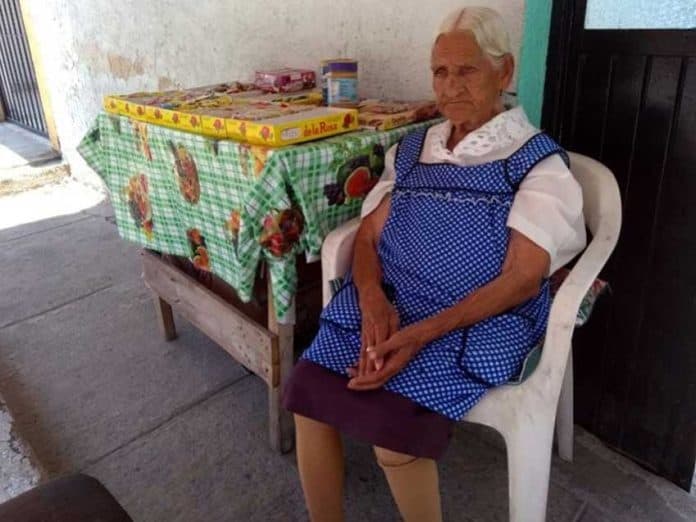
Jalisco's oldest woman sells candy on the sidewalk outside her home.
Félix sells candy on the sidewalk outside her home.

Jalisco’s oldest woman celebrated her birthday last week. She turned 118 on July 20.

María Félix Nava was born at the turn of the 20th century in Zacatecas and her earliest memories are of the 1910 Revolution, which cost the lives of both her parents.

After living alone for some years, a woman named Jesusita took her in after which her godfather found her.

He had spent years looking for Félix and her siblings, but she was the only one he found.

Félix married at the age of 22 and gave birth to 10 children, but only four are still alive today. She lives with two of them in Tlaquepaque, where she has been for almost half a century, earning the esteem of her neighbors and 52 grandchildren, great-grandchildren and great-great-grandchildren, who affectionately call her Mariquita.

Despite her age, Félix is self-employed. She gets up every day at 6:00am, eats breakfast and takes a table out to the sidewalk, where she sells candy. Her modest business gives her a chance to get out and talk with people.

Félix remembers the war of the Revolution with sorrow but believes Mexico is living through its most violent period today.

“. . . I don’t know what’s happening now. Don’t they have compassion, don’t they have a heart?” she asked of those who inflict the violence. “Does the soul not hurt to cut people up like animals?”

The 1910 revolution “was very tough but you know, my son, at night I get sad and cry because my heart warns me that another revolution is coming. God forbid, but I see what’s going to happen; presidents promise water but give only air.”

Source: El Universal (sp)

Federal employees to AMLO: ‘We don’t want to move to Mérida’

0

Employees of the federal Environment Secretariat (Semarnat) have sent a clear message to president-elect Andrés Manuel López Obrador: they don’t want to move to Mérida as part of the incoming government’s decentralization plans.

In a letter directed to both López Obrador and the president of the state workers’ union to which they belong, the employees said they categorically reject the decentralization plan because of the negative impact it would have on Semarnat workers and their families.

Moving the department would in many cases break families up because a Semarnat employee would be obliged to move to Mérida whereas his or her partner may have to move to a different state if they work for another secretariat that is slated to be moved, the union members charged.

López Obrador has also said the Tourism Secretariat will move to Chetumal, Quintana Roo, and the Economy Secretariat to Monterrey, Nuevo León.

The employees said the decision fails to take into account the fact that many workers have mortgages nor does it consider the education situations of workers’ children, meaning that their schooling could be disrupted or cut short.

“[The] measure would also have an impact on the personal dignity of our union members, who indisputably would feel like mere objects susceptible to relocation from one physical space to another . . .” said the letter, published on the website of the Federation of Unions of Workers at the Service of the State (FSTSE) and signed by two high-ranking officials.

In addition, the workers said they have not been consulted by the president-elect’s transition team about the proposed move.

“We have not been informed about the scope of this momentous decentralization project . . . we’ve only heard about it through publications in the media,” the letter said.

The employees also charged that the decision should have been subjected to a more intensive planning process.

“In our opinion, a measure as radical as [this] . . . should have been carefully planned by experts in the field.”

The Semarnat employees questioned whether a move to Mérida was even viable considering the pressure new arrivals would place on existing housing stock and educational, health and transportation infrastructure.

In closing, the letter said Semarnat employees looked forward to solving the problem in “the most convenient and fair way for everyone” and reiterated their “most categorical and complete rejection of the decentralization project.”

Source: Milenio (sp)

Visitors, big waves converge on Acapulco

0
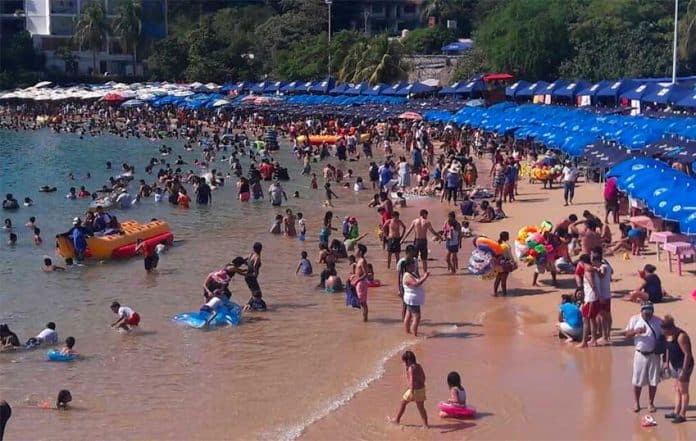
Visitors enjoy an Acapulco beach.

Hordes of tourists have swarmed to Acapulco for summer vacation this week but their arrival coincided with that of a big Pacific swell, or mar de fondo.

Civil Protection authorities were warning beach-goers to beware of the big waves, which have cost the lives of five people in Acapulco so far this summer.

More than 200 lifeguards were placed on duty at the popular destination’s various beaches, where waves began to diminish in size yesterday.

What has not diminished are tourist numbers. Hotel occupancy rates have been well above the 70% mark, say tourism officials, who estimated that more than half a million tourists have poured into the city so far during this vacation period, which began just over two weeks ago.

Hotel occupancy rates reached 84.7% in the Dorada district and 72.5% and 41.6% in the Diamante and Náutica areas respectively.

The state tourism secretary announced yesterday that visitors will have the opportunity to see an aerial acrobatics show next month. The air show will bring four or five planes for an air show over Acapulco bay on August 11, organized by Grupo Altius México, the company that stages the annual urban downhill bicycle race known as Downhill Taxco.

Source: Milenio (sp), Televisa (sp)

Goodbye, Barbie: Mattel to close Mexico plants in cost-cutting measure

0
Barbie waves goodbye
Barbie waves goodbye to Mexico.

California-based toymaker Mattel announced yesterday it will sell off its two manufacturing plants in Mexico after a disappointing sales performance that saw a 14% decline.

The Mattel Mexico plants are located in Escobedo, Nuevo León, and Tijuana, Baja California.

Mattel CEO Ynon Kreiz also announced that the company will lay off more than 2,200 of its global back-office and support employees.

The layoff of 22% of Mattel’s non-manufacturing workforce is intended to preserve the company’s sales-generating and creative capabilities, Kreiz said. The CEO hopes the company can realign resources toward high-performing toys, improving online sales and developing better toy franchises for the future.

Kreiz also stated that Mattel will stop focusing on manufacturing toys and will instead start developing intellectual property.

The layoffs and the sale of the two plants are expected to cut back Mattel’s costs by US $650 million in two years.

The toymaker’s revenue fell 14% during the second quarter to $840.7 million, below the $863.1 million analysts expected.

Mattel said the biggest reason for the decline was the liquidation of Toys R Us.

One company employee in Mexico expressed regret for the decision with a post on Facebook. Mattel “has left us with many memories but above all many friends.”

Source: Reforma (sp), CNN Money (en)

Jalisco cartel announces that it wants the Morelos ‘plaza’

0
Morelos security commissioner Capella.

The Jalisco New Generation Cartel (CJNG) has announced publicly that it is going after the “plaza” in the state of Morelos, posting narco-signs and distributing a video threatening public officials.

In the video circulating on social media the crime gang accuses officials of covering up the extortion of transportation operators in Amilcingo, Huazulco and Temoac, all belonging to the eastern municipality of Temoac.

Holding a high-power rifle, a man identified as Commander Juárez warns that the CJNG is going after “public servant scourges” and anyone who “bothers the working people.”

This morning, state police force took down several signs announcing the gang’s incursion into the state.

A new wave of criminal activity, including extortion, has triggered the formation of self-defense forces in nine municipalities.

Public Security Commissioner Jesús Alberto Capella told a press conference that efforts to counter violence have been redoubled, and offered a guarantee of safety for the public.

Morelos, like several other states, is going through a transition of government following the July 1 elections. Capella said the transition complicates the situation because criminal gangs from other regions hope to establish themselves in certain areas while that process is under way.

He invited newly elected authorities, who take office later this year, to meet with security officials in order to be aware of the challenges and threats and the advances that have been made in fighting crime.

However, in one report, the security commissioner seemed to blame Cuernavaca Mayor and governor-elect Cuauhtémoc Blanco Bravo of causing the arrival of new criminal gangs.

Without naming the soccer player turned politician by name, Capella said his proposals to disband the single-command state police force “created an internal instability” in the force, with the result that officers relaxed their daily activities.

He said the situation encouraged gangs in neighboring states to enter Morelos.

Source: El Universal (sp), Diario de Morelos (sp)

US court orders ban on Mexican seafood imports to protect endangered vaquita

0
Vaquita porpoise: on the brink of extinction.

A United States court has ordered the U.S. government to impose a ban on Mexican seafood imports caught using gillnets in the northern Gulf of California as a measure to protect the vaquita porpoise.

But the ruling is expected to have a significant economic impact on fishing communities in the region.

The U.S. Court of International Trade issued the decision yesterday, denying a motion from the administration of President Donald Trump to dismiss the case, writing: “Evidence shows that vaquita are killed by gillnet fishing and are on the verge of extinction: because the statutory duty to ban fish imports resulting in such excessive marine mammal bycatch is mandatory, the government must comply with it.”

The ruling follows a lawsuit filed in March by three conservation groups — the Natural Resources Defense Council, the Center for Biological Diversity and the Animal Welfare Institute — against the Department of Commerce. The suit argued that under the Marine Mammal Protection Act (MMPA) the U.S. government has a legal obligation to impose a ban on Mexican seafood imports in order to protect the vaquita.

Judge Gary Katzmann agreed, ruling that the “law commands” that “the Secretary of the Treasury shall ban imports of fish and fish products from northern Gulf fisheries that utilize gillnets and incidentally kill vaquita in excess of United States standards.”

Katzmann also wrote “what cannot be disputed is that the vaquita’s plight is desperate, and that even one more bycatch death in the gillnets of fisheries in its range threatens the very existence of the species.”

Giulia Good Stefani, staff attorney with the Natural Resources Defense Council, applauded the court’s decision.

“A ban on gillnet-caught seafood from Mexico’s Gulf of California is the lifeline the vaquita desperately needs,” she said.

“Collectively, our organizations have spent over a decade working to save the vaquita — and never has extinction felt so close — but now, the world’s smallest and most endangered porpoise has what may be its very last chance.”

But a lifeline for the vaquita means something else for those who depend on the commercial fishing industry.

The leader of the Mexican Confederation of Fishery and Aquaculture Cooperatives (Conmecoop) said that he would meet today with the head of the National Aquaculture and Fisheries Commission (Conapesca) to determine a strategy to try to have the ban lifted.

José Jesús Camacho Osuna described the ruling as “very bad news,” explaining that the economic impact on local fishermen would be “very big” and hurt a lot of families. He said it will  even affect seafood products bound for China, such as jellyfish, because they transit through the United States on their way to their final destination.

The communities most affected by the ban will be San Felipe in Baja California and Santa Clara and Puerto Peñasco in Sonora, Camacho said.

In order for the ban to be lifted, Mexico must meet United States fishing standards, which conservationists say would involve improving regulations and enforcement to ensure that vaquitas are not killed in gillnets.

Christopher Wilson, deputy director of the Mexico Institute at the Wilson Center, said the court ruling could further complicate an already strained relationship between Mexico and the United States.

“With a difficult renegotiation of NAFTA pending, a trade skirmish over U.S. steel and aluminum tariffs under way and potential auto tariffs on the horizon, the timing of this import ban is pretty awful in terms of bilateral relations,” he said.

“But with the vaquita population dipping . . . perhaps nearing the single-digits, the timing is clearly much worse for the porpoise.”

Scientists estimate that there are just 15 vaquitas left and that the species could become extinct by 2021.

The illegal fishing of totoaba, whose swim bladders are considered a delicacy in China and yield high prices, has been particularly detrimental to the vaquita marina.

A permanent ban on gillnet fishing went into effect over a year ago in the northern part of the Sea of Cortés but environmental groups charge that authorities haven’t done enough to enforce it.

Representatives from the organizations that filed the lawsuit expressed optimism that the ruling would provide much-needed impetus for the Mexican government to act.

“With vaquitas on the brink of extinction, these economic sanctions are painful but necessary to push Mexican officials to finally protect these little porpoises,” said Sarah Uhlemann, international program director at the Center for Biological Diversity.

“For 20 years, the Mexican government has promised to save the vaquita but failed to take meaningful action. That has to change or we’ll lose these animals forever.”

Susan Millward, director of the Marine Animal Program at the Animal Welfare Institute, echoed the sentiment.

“The Mexican government must now protect the vaquita from gillnets before it is too late and this species disappears forever,” she said.

Source: Milenio (sp), El Independiente (sp), The Hill (en), The Los Angeles Times (en)