Home Blog Page 2165

Mexico moves up seven points in energy efficiency ranking

0
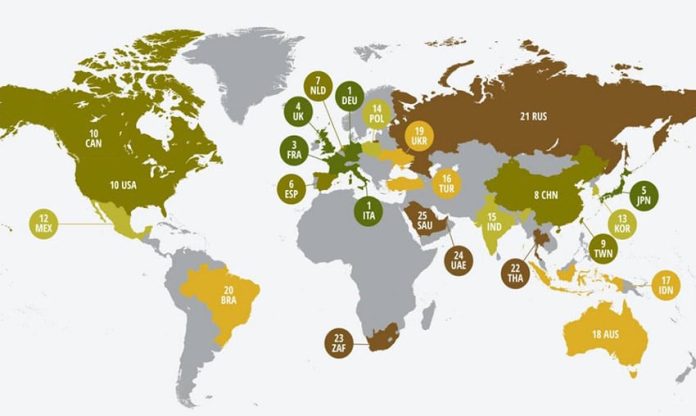
Energy efficiency rankings by country. Dark green is best.

Mexico has moved up on an international energy efficiency ranking of 25 countries.

The American Council for an Energy-Efficient Economy, or ACEEE, ranked Mexico in 12th place on its 2018 International Energy Efficiency Scorecard, up from 19th on the previous index in 2016.

The non-profit organization also reported that Mexico’s gain was the most of any country on the list.

In 2016, Mexico was awarded 37 points but this year obtained 54, ranking just behind its historic trade partners, the United States and Canada.

The implementation of the National Program for the Sustainable Use of Energy by the federal government was commended in the report in a section called National Efforts Best Practices.

The report said that Mexico having closed the gap with Canada and the U.S. suggested that the North American Free Trade Agreement (NAFTA) “provides these countries with an incentive to meet the same product standards and implement similar efficiency programs to ensure that free trade in the region is not impeded.”

Mexico improved most in the industry and national efforts categories, noted the report, adding that it had recently enacted mandates for periodic energy audits and on-site energy managers in large industrial facilities.

The document said Mexico was one of several developing countries that have continued to make steady progress in their scores and ranks over the years.

One area of opportunity for Mexico and other countries, the report said, is in the transportation sector. France ranked the highest in that category with a score of jus 17.5, while most countries, Mexico included, earned fewer than 10 points.

The Scorecard explained that many countries’ transportation systems focus heavily on roads and personal vehicles rather than on more energy-efficient and sustainable mobility options like public transit.

The report stated that Mexico has many opportunities to enhance its national efforts to continue advancing in the rankings. The country could benefit from an increase in energy efficiency programs and research and development expenditures.

“Moreover, Mexico can consider taking advantage of the tax code as a powerful tool to motivate investment in energy efficiency technologies,” said the report.

The index examines the efficiency policies and performance of 25 of the world’s top energy-consuming countries. It used 36 metrics to evaluate each country’s national commitment to saving energy as well as its efficiency policies and performance in the buildings, industry and transportation sectors.

In this, the fourth edition of the report, Germany tied with Italy for top spot with a score of 75.5 out of 100. The average score obtained by the 25 countries was 51 points, the same as in 2016.

The report concluded that “all the countries we evaluated have clear opportunities to save more energy. Efficiency will also be key to meeting international climate commitments. Nations can learn from one another by emulating the best policies, practices, and performance featured in the Scorecard.”

Source: El Economista (sp)

Jalisco seeks 4,000 units of blood through donations this year

0
A volunteer gives blood in Jalisco.

The Jalisco Heath Secretariat is attempting to collect more than 4,000 units of blood through its year-long blood drive.

The blood donated by volunteers will help treat more than 12,000 patients as a single unit of blood can benefit up to three people, said the director of the state center for blood transfusion (CETS).

As the first half of the year draws to an end the goal is on track for being achieved. María Guadalupe Becerra Leyva explained that so far they have reached 60% of the total.

The blood drive has been promoted by the government and several businesses but Becerra believes that voluntary donors are behind the success of the blood donation campaign. She called the donors “true anonymous heroes.”

She said most have been young people, and that more men donate than women.

“It’s not that women don’t [donate]. It almost always has to do with our condition, we’re menstruating, or pregnant, or breastfeeding [so] we have low hemoglobin blood levels . . . they don’t have enough hemoglobin levels to donate safely,” Becerra said.

Blood donations can be made in Guadalajara at the blood banks located at the IMSS Medical Center, at the Civilian Hospitals and directly at the CETS offices, located next to the Western General Hospital (Hospital General de Occidente), in Zoquipan.

Source: Milenio (sp)

Houses that were built for hurricane victims are being destroyed in Guerrero

0
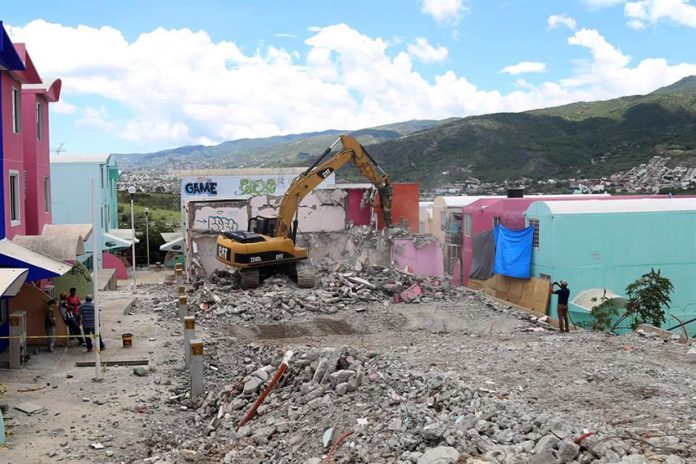
An excavator demolishes one of the houses built for hurricane victims.

Thirty-two houses that were built for victims of twin 2013 Hurricanes Ingrid and Manuel are being demolished in Guerrero this week.

The homes, located in a residential estate on the outskirts of the state capital Chilpancingo, were only inhabitable for a single week, according to the newspaper Reforma, due to a range of problems.

They included a lack of basic services and structural problems such as cracks in the homes’ walls, floors and roofs.

In 2016, an expert report completed by a group of engineers and Civil Protection officials determined that the 32 houses were no longer fit to live in and ruled that they must be demolished.

A geological fault line that lies beneath the ground where the houses stand makes them especially susceptible to collapse.

In a report published last December, the newspaper Milenio described the concrete slabs that the 32 homes were built on as being like “ice rinks.”

Construction company Casaflex was awarded four contracts worth a total of 145.8 million pesos to build homes in the Nuevo Mirador estate that were paid out of a 20-billion-peso (US $1 billion at today’s exchange rate) federal reconstruction program called the New Guerrero Plan.

But beyond the 32 homes slated to be demolished, poor construction work has left many other Casaflex-built homes in similar predicaments with wide rifts and cracks in walls that place them in danger of collapse.

“We’re not animals, we’re humans, but here they put us in houses that are very bad,” Esperanza Remigio, who remains a resident of a house in the estate, told Reforma.

“You have to see what they gave us; houses with cracks, without water service, there’s no market, no health center, no schools,” another resident said.

When residents took possession of the homes in 2014, officials from the federal Secretariat of Agrarian Development and Urban Planning (Sedatu) forced them to sign waiver agreements that established that the department could not be held responsible for any defects or future damage in the new homes.

Before their construction, President Enrique Peña Nieto and officials in his administration pledged that the houses would be high-quality and provide an adequate standard of living for their occupants. But it wasn’t long before residents realized that wasn’t the case.

“They gave us hovels, they promised us a well-built home and all the services but we got none of that and we don’t even have a title deed,” Facunda García said.

Alma Jiménez Arias, head of the Sedatu Guerrero office, said that due to the construction irregularities, complaints against the responsible companies have been filed with the federal Attorney General’s office.

She charged that the bulk of responsibility lies with Casaflex but added that the complaint extends to Sedatu officials and if they are found guilty of wrongdoing, they must be punished.

Jiménez also said that the 32 homes destined to be demolished had never been assigned to any families.

In August last year, the Secretariat of Public Administration disqualified the former head of Sedatu in Guerrero, Héctor Vicario, from holding public office for a period of 10 years due to irregularities committed while he held the position.

Disgruntled residents blame him, Sedatu and President Peña Nieto and his administration more widely for the problems they face.

Hurricanes Ingrid and Manuel struck Guerrero within a 24-hour period in September 2013, bringing torrential rains and strong winds that affected more than 16,000 homes and damaged some beyond repair.

Source: Reforma (sp)

Petroleum thief’s brother, second in command arrested in Veracruz

0
Saúl de los Santos, brother of 'El Bukanans.'

The brother and right-hand man of the prominent Puebla petroleum thief known by his nickname “El Bukanans” has been arrested in Veracruz.

Saúl de los Santos de Jesús is suspected of a July 2017 attack on marines in Vicente Guerrero, Puebla, where four gangsters and a marine were killed. At the time, the Secretariat of the Navy said de los Santos was one of the dead. He is also a suspect in the kidnapping of three anti-kidnapping agents in Atzitzintla, Puebla, in March last year.

His brother is Roberto de los Santos de Jesús, leader of the Sangre Nueva Zeta gang, which controls illegal pipeline tapping and fuel theft in the Red Triangle zone of Puebla, and has also been tied to freight train and truck theft, kidnapping and extortion in an area that encompasses parts of the states of Puebla and Veracruz.

Last month, the government of Veracruz raised the reward for any information leading directly to the arrest of Roberto de los Santos to 5 million pesos (just over US $250,000).

Source: El Universal (sp), El Popular (sp)

Probe begins into 17 cases of embezzlement involving 3 billion pesos

0
The federal auditor presented a report to Congress yesterday.
The federal auditor presented the first report for 2017 to Congress yesterday.

The federal Attorney General’s office (PGR) is initiating investigations into 17 cases of alleged embezzlement involving more than 3 billion pesos in stolen funds after receiving criminal complaints from the Federal Auditor’s Office (ASF).

The ASF filed the complaints after detecting an illicit government contracting scheme that siphoned public money to shell and illegal companies through public universities.

The scheme known as la estafa maestra (the master fraud) first came to public attention last September when a joint investigation by digital newspaper Animal Político and the organization Mexicans Against Corruption and Impunity (MCCI) was published.

The investigation revealed details of the scheme’s modus operandi, named 11 federal agencies that allegedly participated in the swindle and charged that the Secretariat of Social Development (Sedesol), the development bank Banobras and state oil company Pemex were the worst offenders.

Presenting the first installment of the ASF 2017 public accounts report to the lower house of Congress yesterday, chief auditor David Colmenares revealed that 17 complaints had been filed and said that he was committed to ensuring that the PGR follows through with its investigations.

They are currently in the integration stage, which means that the PGR is directing the activities of investigative police and experts in order to conduct a preliminary investigation.

In total, the ASF detected the diversion of 3.037 billion pesos (US $152 million at today’s exchange rate), while the Animal Político / MCCI investigation said the final destination of over 3.4 billion pesos was unknown.

Colmenares told Congress members that the ASF will file more corruption-related criminal complaints “in the future” in order to ensure that “those who committed irregularities are held accountable.”

He also said that as a result of public accounts audits between 2013 and 2016, irregularities totaling 1.088 billion pesos (US $54.6 million at today’s exchange rate) had been detected and that that 72 people were allegedly responsible.

Of that number, 63 are either current of former Sedesol officials or worked at the Autonomous University of México state or the Autonomous University of the state of Morelos, Colmenares said.

The chief auditor also told Congress that the ASF will review the use of more than 14 billion pesos (US $702 million) that were allocated to nine states for reconstruction after last September’s earthquakes as well as a further 6.9 billion pesos (US $346 million) that were allotted for repair and recovery efforts following other natural disasters.

Source: Milenio (sp)

Vaquita protection measure could cost thousands of jobs: fishing industry

0
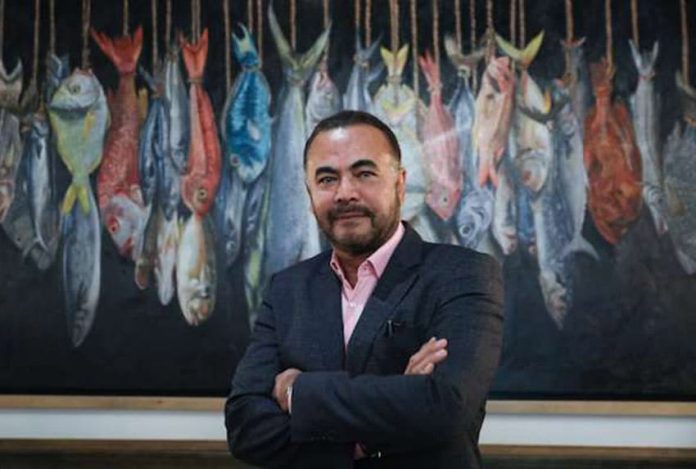
Becerra: warns of losses should fishing ban proceed.

As many as 820,000 jobs could be lost if a fishing ban goes into force in the Gulf of California to protect the critically endangered vaquita marina porpoise, the president of a fishing group warned this week.

Humberto Becerra Batista, head of the National Fishing Industry Chamber (Canainpesca), told the newspaper El Universal that the 820,000-figure relates to direct and indirect jobs supported by the fishing industry in the upper Gulf of California.

His ominous prediction comes in response to an initiative that environmental and civil society organizations have presented to authorities that advocates for a total ban on fishing in the Gulf of California and for the area to be protected as a natural reserve.

A permanent ban on gillnet fishing went into effect on June 30 last year as a measure to protect the species, of which only an estimated 30 remain, because they often become entangled in the tightly-woven nets and die.

Closed seasons for certain species have also been implemented and small vessels are banned between 9:00pm and 5:00am.

But if a total fishing ban were enforced, annual economic losses of up to 24 billion pesos (US $1.2 billion) would follow, Becerra warned.

He also defended the legal fishing industry, claiming it isn’t to blame for the dwindling number of the endemic porpoises, charging instead that groups of people who illegally traffic totoaba are responsible.

Gillnets are used to catch the fish, whose swim bladders are considered a delicacy in China and fetch high prices on the black market.

“. . . There are no resources to combat illegal fishing and Semarnat [the Secretariat of the Environment] doesn’t have the capacity to patrol the protected areas. They blame us for the extinction of the vaquita marina, but they’re putting the country’s food security at risk,” Becerra said.

The Gulf of California yields 900,000 tonnes of seafood annually, representing 60% of national production.

Between 2015 and 2017, the federal government invested more than 2 billion pesos (US $100 million at today’s exchange rate) to implement programs and measures aimed at conserving vaquita numbers but illegal fishing has continued.

Semarnat and the federal Agriculture Secretariat (Sagarpa) also bolstered the strategy to protect the porpoise in February by increasing patrols aimed at stamping out illegal fishing and the use of gillnets, while additional funds were also provided to fishermen to develop less harmful nets.

Nevertheless, four vaquitas have been found dead this year and they showed signs of having been caught up in prohibited nets.

A director of the conservation organization Defenders of Wildlife charged that federal authorities such as the National Aquaculture and Fisheries Commission (Conapesca) haven’t done enough to save the vaquita marina.

“Authorities have been incapable of stopping illegal fishing in the upper Gulf of California [and] . . . Conapesca hasn’t promoted new, less harmful [fishing] methods,” Juan Carlos Cantú said.

Source: El Universal (sp), El Economista (sp)

Travel alerts, insecurity among factors blamed for sharp decline in US tourism

0
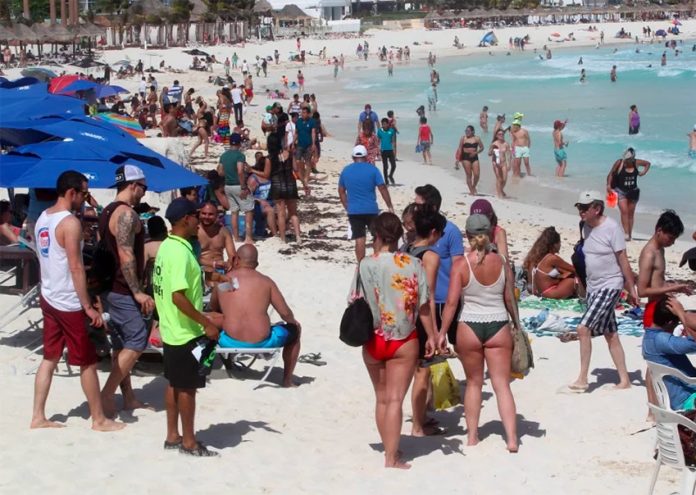
Tourists enjoy the beach in Cancún.

Travel to Mexico by United States citizens declined sharply in April, a result of factors such as U.S. travel alerts and deteriorating security, according to two tourism industry experts.

Data from the immigration unit of the Interior Secretariat (Segob) shows that 845,000 United States visitors arrived in Mexico by plane in April, 6.8% less than the 906,000 who flew into the country in the same month last year.

More concerning for Mexico, however, is that it was the first time that visitor numbers from the United States have gone backwards for a single month from one year to the next since October 2014.

In addition, it was the biggest monthly year-on-year decline since July 2011, when U.S. tourist numbers fell by 6.9% compared to the same month of the previous year.

Overall, international tourism has been trending upwards in recent years, with a record 39.3 million foreign visitors coming to Mexico last year.

One reason behind the decline in U.S. tourist numbers in April was something that Mexico had no control over: Holy Week fell in March this year.

Francisco Madrid, director of the faculty of tourism and gastronomy at Anáhuac University, highlighted that factor but also said that tourism growth among United States visitors had slowed during the entire first four months of the year.

The deceleration between January and April is related to advisories issued by the United States Department of State, Madrid told the newspaper El Universal.

Armando Bojórquez, president of the travel agency franchise network Viajes Bojórquez, told El Universal that he didn’t believe that Holy Week falling in March had impacted too much on the April downturn because U.S. tourists don’t tend to travel as much during vacation periods as those from other countries.

United States travel alerts, news of violent crime and insecurity in Mexico and statements by U.S. President Donald Trump had a bigger impact on the reduction of tourists in April, he charged, adding that the downturn is worrying.

A travel alert issued last August cited increased criminal activity in Baja California, Baja California Sur, Chiapas, Colima, Guerrero, Quintana Roo and Veracruz, while a new warning in January coincided with the introduction of a four-tier alert system and advised U.S. travelers not to travel to five states: Colima, Guerrero, Michoacán, Sinaloa and Tamaulipas.

However, the same alert eased restrictions on tourism destinations including Cancún and Los Cabos, which was seized upon by the federal Tourism Secretariat.

According to Tourism Secretary Enrique de la Madrid, the weakening of the peso compared to the US dollar could help stimulate greater arrivals from the United States. The US dollar is now trading at close to 20 pesos.

Visitors from Mexico’s northern neighbor have long made up six out of every 10 international tourists to Mexico but de la Madrid has set a goal of reaching a point in the future when no more than half of all foreign tourists come from the United States.

Increasing tourism promotion in other markets such as the rest of Latin America, Europe and Asia will be key.

De la Madrid said in February that Mexico could hit 50 million international visitors annually by 2021 and earlier this month he said that the country is now the sixth most visited in the world. The upsurge in violent crime had not had an impact on visitor numbers, he said.

Source: El Universal (sp)

Teachers’ union takes possession of art collection bought by ex-boss

0
Former teachers' union boss Gordillo.

The SNTE teachers’ union has recovered La Maestra’s long-lost treasure, an art collection with a value of as much as 3 billion pesos (US $150 million).

La Maestra is the nickname of Elba Esther Gordillo, leader of the the union between 1989 and 2013 when she had total control over the largest teachers’ union in the Americas.

It was during the last year of her reign that she ordered the multi-billion-peso purchase of several works of art that would adorn the walls of her Ciudad del Conocimiento (City of Knowledge) project.

Along with giving the union a new central office, the Ciudad was to have a museum, a modern library, open air auditoriums and gardens, and was to be equipped with sustainable water and power systems.

But Gordillo was arrested in February 2013 on charges of embezzlement and organized crime. Also that year, she was included on the list of the 10 most corrupt Mexicans published by Forbes magazine.

As the official investigation into Gordillo’s activities progressed, the Attorney General’s office (PGR) discovered a warehouse in the Santa Fe district of Mexico City in 2014 in which Gordillo kept 15 boxes. Inside, federal agents found 16 paintings and a sculpture.

The SNTE subsequently presented documentation supporting its claim of ownership of the works of art, which Gordillo had purchased using dues collected from teachers.

The PGR formally returned the pieces to the union yesterday. Eight were done by famed Mexican muralist Diego Rivera and artists Francisco Toledo, Gabriel Orozco and Pedro Coronel are also represented.

The teachers’ union plans to exhibit the pieces permanently and free of charge in some of its cultural centers.

SNTE secretary general Alfonso Cepeda Salas estimated that the value of the 17 recovered works of art could be as high as 3 billion pesos.

Source: Plano Informativo (sp), El Universal (sp)

Challenge for new administration is to preserve stability: Coparmex

0
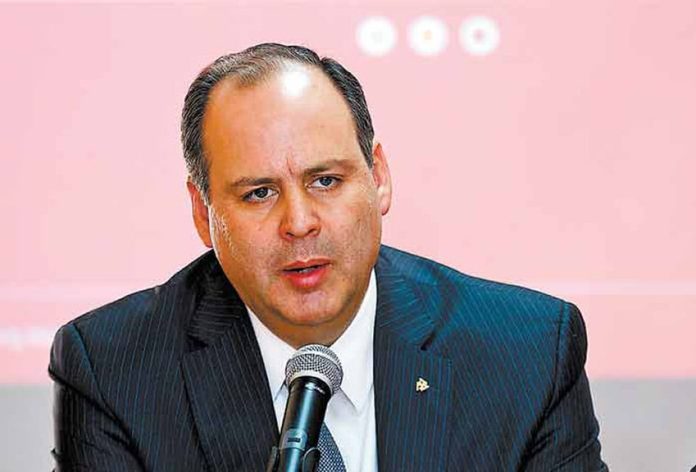
De Hoyos of Coparmex: urges stability.

The main challenge for Mexico’s next government is to preserve economic stability during the transition period and in its first days in office, a prominent business leader said yesterday.

Gustavo de Hoyos Walther, president of the Mexican Employers Federation (Coparmex), made the assertion after saying that anything could happen in the post-election period “even though it seems to us that there are conditions for an orderly and stable transition.”

Interviewed after the presentation of a security and justice blueprint prepared by the non-governmental organization México SOS, the business leader said that if the next administration makes bad decisions or doesn’t carefully choose its path towards the changes it wants to make, there could be devastating consequences.

“Bad signs [from the incoming government] could set us back on what we’ve made progress on over [a period of] years, that’s why we call on all the candidates to act responsibly. It’s understandable that any government will adopt public policies in line with its partisan inspiration but the changes have to be planned gradually so as not to upset the markets and so that they don’t create instability,” de Hoyos said.

He added that despite the difficult and uncertain situation that the country is currently experiencing, foreign investment has recently increased.

“I have information that in the past weeks there have been very significant capital flows into Mexico; that’s a very good sign. In the past two or three months, it is estimated that US $6 billion has come in and we hope that [foreign investment] can get even stronger,” de Hoyos said.

Global macro-economist Komal Sri-Kumar goes even further than de Hoyos by saying that the outcome of the election Sunday could have global market implications.

In an opinion piece published today by Bloomberg, the analyst wrote that “Mexico’s history of turbulence during presidential transitions as well as the peso’s standing as one of the most-traded emerging-market currencies should put investors on notice.”

Sri-Kumar cited Mexico’s 1982 debt crisis and capital flight during the transition period following the 1994 election that ended with a massive devaluation of the peso as examples of the “turbulence.”

The likelihood of Andrés Manuel López Obrador becoming Mexico’s next president and winning a congressional majority heightens the risk posed by this year’s election, Sri-Kumar said, because it would represent the first time in Mexico’s modern history that a “populist candidate” has been elected.

He described the candidate widely known as AMLO as being “far from the political mainstream” and highlighted clashes he has had with private-sector executives who oppose his election, some of whom López Obrador dubbed a “greedy minority.”

However, during the campaign period, AMLO has attempted to shed any perceptions that he is anti-business and earlier this month the powerful Mexican Business Council (CMN) said it will work with whoever wins the presidential election.

But Sri-Kumar said “the risk for investors comes from the uncertainty over whether AMLO truly wishes to work with businesses to boost private sector investment” or whether he “has merely softened his edges in recent weeks in order to get elected.”

Fluctuation in the value of the peso next week will likely reveal the initial market reaction to whoever wins Sunday, the economist said, adding that concerns about a López Obrador presidency had prompted capital outflows over the past year which along with other factors such as NAFTA uncertainty had contributed to a weakening of the currency.

The president of California-based Sri-Kumar Global Strategies said there are three developments that investors should monitor in order to decide if Mexico’s next government will be favorable to the country’s financial markets.

First, if López Obrador wins and then seeks to reconcile and cooperate with private sector groups such as the CMN, Sri-Kumar said, the peso could be expected to gain in value.

However, if the leftist political veteran wins and then suggests limiting private investment in the energy sector — as he has previously proposed — that would be a “major negative,” Sri-Kumar wrote.

Second, if AMLO moves to wind back energy reforms, foreign direct investment flows would be adversely affected, the analyst said, which would “remove an important underpinning for investors to achieve attractive returns on their portfolio investments.”

Third, Sri-Kumar charged that investors will judge Mexico’s next government according to how willing it is to find common ground with the United States on issues such as NAFTA.

The economist said that López Obrador is expected to be a tougher negotiator with the United States government on the trilateral trade deal, which is still shrouded in uncertainty, but added that “a decision by Mexico to simply walk away . . . would be negative for both Mexican and U.S. equities.

Source: Milenio (sp), Bloomberg (en)

Election ‘dry law’ means at least one dry day in most states

0
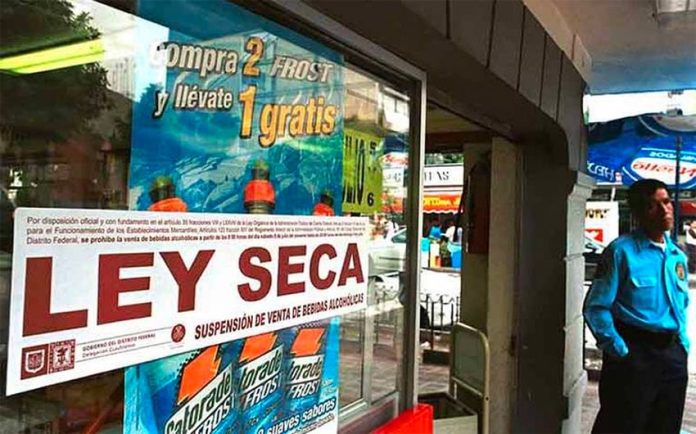
A sign warns of the coming dry law.
A store sign warns of the coming dry law. (File photo)

Keeping the peace on election day is the purpose of a law prohibiting the sale of alcoholic beverages, and most states have chosen to implement it.

The federally-mandated ley seca, or dry law, as it is known, allows for a prohibition of up to 72 hours, but this year no one will have to go for more than 59 hours without a drink (should they neglect to stock up beforehand).

The states with the shortest alcohol-free period — 24 hours starting July 1 at 12:00am — are Aguascalientes, Coahuila, Mexico City, Michoacán, Morelos, Nuevo León, Quintana Roo, Sonora and Veracruz.

Those with somewhat longer prohibitions are Guanajuato, 26 hours beginning tomorrow night at 10:00pm; Guerrero, 30 hours from 6:00pm on tomorrow; Chiapas, 38 hours, also at 6:00pm Saturday; Sinaloa, 39 hours from 6:00pm on tomorrow; and Chihuahua, 46 hours starting at 9:00am tomorrow.

Most states will go with a punishing 48-hour ley seca, starting tomorrow at 12:00am. They are Campeche, Colima, Durango, Hidalgo, México, Nayarit, Oaxaca, Puebla, San Luis Potosí, Tamaulipas, Tlaxcala and Zacatecas.

Three states take an even dimmer view of election boozing. In Tabasco the law will apply for 49 hours starting bright and early tomorrow at 6:30am, in Baja California Sur for 57 hours starting tonight at midnight and in Yucatán, which tops the list at 59, the law also takes effect tonight at midnight.

Those who can drink and vote freely are the citizens of Baja California, Jalisco and Querétaro, where there will be no ley seca.

There is, however, some relief in some states and and in some municipalities that can adopt their own regulations.

Some states allow for the sale of alcoholic beverages along with meals, while others tolerate their sale in tourist areas or in city centers during daylight hours.

Restaurant and bar owners are rarely pleased with the dry law, and voice their opposition every time it is imposed. A business leader in Toluca, state of México, observed this week that there was no dry law for the elections three years ago, and nothing happened.

Source: El Sol de México (sp)