Home Blog Page 2172

Travel alerts, insecurity among factors blamed for sharp decline in US tourism

0
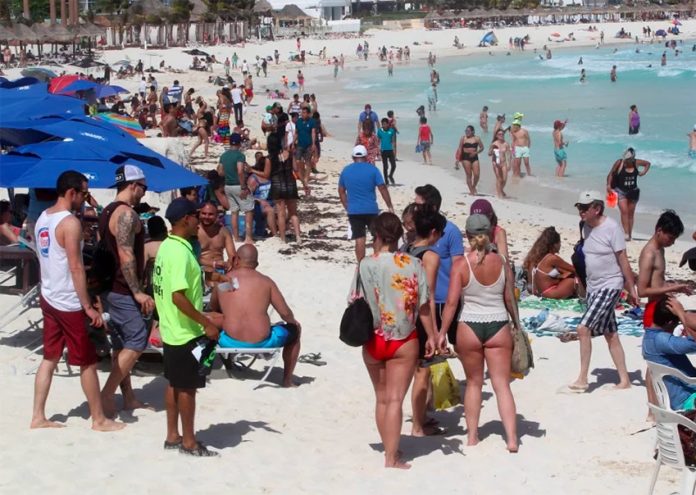
Tourists enjoy the beach in Cancún.

Travel to Mexico by United States citizens declined sharply in April, a result of factors such as U.S. travel alerts and deteriorating security, according to two tourism industry experts.

Data from the immigration unit of the Interior Secretariat (Segob) shows that 845,000 United States visitors arrived in Mexico by plane in April, 6.8% less than the 906,000 who flew into the country in the same month last year.

More concerning for Mexico, however, is that it was the first time that visitor numbers from the United States have gone backwards for a single month from one year to the next since October 2014.

In addition, it was the biggest monthly year-on-year decline since July 2011, when U.S. tourist numbers fell by 6.9% compared to the same month of the previous year.

Overall, international tourism has been trending upwards in recent years, with a record 39.3 million foreign visitors coming to Mexico last year.

One reason behind the decline in U.S. tourist numbers in April was something that Mexico had no control over: Holy Week fell in March this year.

Francisco Madrid, director of the faculty of tourism and gastronomy at Anáhuac University, highlighted that factor but also said that tourism growth among United States visitors had slowed during the entire first four months of the year.

The deceleration between January and April is related to advisories issued by the United States Department of State, Madrid told the newspaper El Universal.

Armando Bojórquez, president of the travel agency franchise network Viajes Bojórquez, told El Universal that he didn’t believe that Holy Week falling in March had impacted too much on the April downturn because U.S. tourists don’t tend to travel as much during vacation periods as those from other countries.

United States travel alerts, news of violent crime and insecurity in Mexico and statements by U.S. President Donald Trump had a bigger impact on the reduction of tourists in April, he charged, adding that the downturn is worrying.

A travel alert issued last August cited increased criminal activity in Baja California, Baja California Sur, Chiapas, Colima, Guerrero, Quintana Roo and Veracruz, while a new warning in January coincided with the introduction of a four-tier alert system and advised U.S. travelers not to travel to five states: Colima, Guerrero, Michoacán, Sinaloa and Tamaulipas.

However, the same alert eased restrictions on tourism destinations including Cancún and Los Cabos, which was seized upon by the federal Tourism Secretariat.

According to Tourism Secretary Enrique de la Madrid, the weakening of the peso compared to the US dollar could help stimulate greater arrivals from the United States. The US dollar is now trading at close to 20 pesos.

Visitors from Mexico’s northern neighbor have long made up six out of every 10 international tourists to Mexico but de la Madrid has set a goal of reaching a point in the future when no more than half of all foreign tourists come from the United States.

Increasing tourism promotion in other markets such as the rest of Latin America, Europe and Asia will be key.

De la Madrid said in February that Mexico could hit 50 million international visitors annually by 2021 and earlier this month he said that the country is now the sixth most visited in the world. The upsurge in violent crime had not had an impact on visitor numbers, he said.

Source: El Universal (sp)
Teachers’ union takes possession of art collection bought by ex-boss

0
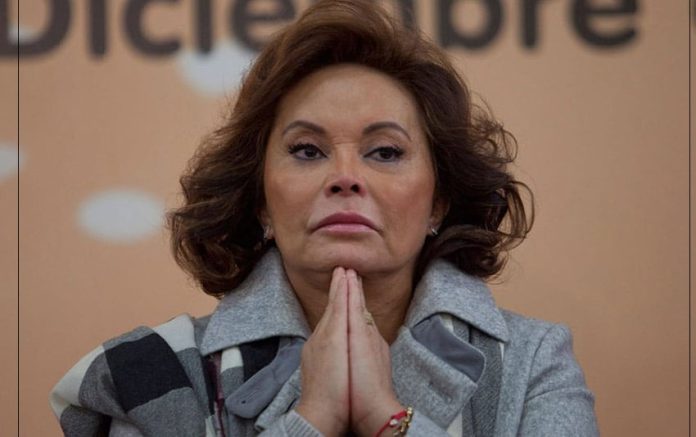
Former teachers' union boss Gordillo.

The SNTE teachers’ union has recovered La Maestra’s long-lost treasure, an art collection with a value of as much as 3 billion pesos (US $150 million).

La Maestra is the nickname of Elba Esther Gordillo, leader of the the union between 1989 and 2013 when she had total control over the largest teachers’ union in the Americas.

It was during the last year of her reign that she ordered the multi-billion-peso purchase of several works of art that would adorn the walls of her Ciudad del Conocimiento (City of Knowledge) project.

Along with giving the union a new central office, the Ciudad was to have a museum, a modern library, open air auditoriums and gardens, and was to be equipped with sustainable water and power systems.

But Gordillo was arrested in February 2013 on charges of embezzlement and organized crime. Also that year, she was included on the list of the 10 most corrupt Mexicans published by Forbes magazine.

As the official investigation into Gordillo’s activities progressed, the Attorney General’s office (PGR) discovered a warehouse in the Santa Fe district of Mexico City in 2014 in which Gordillo kept 15 boxes. Inside, federal agents found 16 paintings and a sculpture.

The SNTE subsequently presented documentation supporting its claim of ownership of the works of art, which Gordillo had purchased using dues collected from teachers.

The PGR formally returned the pieces to the union yesterday. Eight were done by famed Mexican muralist Diego Rivera and artists Francisco Toledo, Gabriel Orozco and Pedro Coronel are also represented.

The teachers’ union plans to exhibit the pieces permanently and free of charge in some of its cultural centers.

SNTE secretary general Alfonso Cepeda Salas estimated that the value of the 17 recovered works of art could be as high as 3 billion pesos.

Source: Plano Informativo (sp), El Universal (sp)

Challenge for new administration is to preserve stability: Coparmex

0
De Hoyos of Coparmex: urges stability.

The main challenge for Mexico’s next government is to preserve economic stability during the transition period and in its first days in office, a prominent business leader said yesterday.

Gustavo de Hoyos Walther, president of the Mexican Employers Federation (Coparmex), made the assertion after saying that anything could happen in the post-election period “even though it seems to us that there are conditions for an orderly and stable transition.”

Interviewed after the presentation of a security and justice blueprint prepared by the non-governmental organization México SOS, the business leader said that if the next administration makes bad decisions or doesn’t carefully choose its path towards the changes it wants to make, there could be devastating consequences.

“Bad signs [from the incoming government] could set us back on what we’ve made progress on over [a period of] years, that’s why we call on all the candidates to act responsibly. It’s understandable that any government will adopt public policies in line with its partisan inspiration but the changes have to be planned gradually so as not to upset the markets and so that they don’t create instability,” de Hoyos said.

He added that despite the difficult and uncertain situation that the country is currently experiencing, foreign investment has recently increased.

“I have information that in the past weeks there have been very significant capital flows into Mexico; that’s a very good sign. In the past two or three months, it is estimated that US $6 billion has come in and we hope that [foreign investment] can get even stronger,” de Hoyos said.

Global macro-economist Komal Sri-Kumar goes even further than de Hoyos by saying that the outcome of the election Sunday could have global market implications.

In an opinion piece published today by Bloomberg, the analyst wrote that “Mexico’s history of turbulence during presidential transitions as well as the peso’s standing as one of the most-traded emerging-market currencies should put investors on notice.”

Sri-Kumar cited Mexico’s 1982 debt crisis and capital flight during the transition period following the 1994 election that ended with a massive devaluation of the peso as examples of the “turbulence.”

The likelihood of Andrés Manuel López Obrador becoming Mexico’s next president and winning a congressional majority heightens the risk posed by this year’s election, Sri-Kumar said, because it would represent the first time in Mexico’s modern history that a “populist candidate” has been elected.

He described the candidate widely known as AMLO as being “far from the political mainstream” and highlighted clashes he has had with private-sector executives who oppose his election, some of whom López Obrador dubbed a “greedy minority.”

However, during the campaign period, AMLO has attempted to shed any perceptions that he is anti-business and earlier this month the powerful Mexican Business Council (CMN) said it will work with whoever wins the presidential election.

But Sri-Kumar said “the risk for investors comes from the uncertainty over whether AMLO truly wishes to work with businesses to boost private sector investment” or whether he “has merely softened his edges in recent weeks in order to get elected.”

Fluctuation in the value of the peso next week will likely reveal the initial market reaction to whoever wins Sunday, the economist said, adding that concerns about a López Obrador presidency had prompted capital outflows over the past year which along with other factors such as NAFTA uncertainty had contributed to a weakening of the currency.

The president of California-based Sri-Kumar Global Strategies said there are three developments that investors should monitor in order to decide if Mexico’s next government will be favorable to the country’s financial markets.

First, if López Obrador wins and then seeks to reconcile and cooperate with private sector groups such as the CMN, Sri-Kumar said, the peso could be expected to gain in value.

However, if the leftist political veteran wins and then suggests limiting private investment in the energy sector — as he has previously proposed — that would be a “major negative,” Sri-Kumar wrote.

Second, if AMLO moves to wind back energy reforms, foreign direct investment flows would be adversely affected, the analyst said, which would “remove an important underpinning for investors to achieve attractive returns on their portfolio investments.”

Third, Sri-Kumar charged that investors will judge Mexico’s next government according to how willing it is to find common ground with the United States on issues such as NAFTA.

The economist said that López Obrador is expected to be a tougher negotiator with the United States government on the trilateral trade deal, which is still shrouded in uncertainty, but added that “a decision by Mexico to simply walk away . . . would be negative for both Mexican and U.S. equities.

Source: Milenio (sp), Bloomberg (en)

Election ‘dry law’ means at least one dry day in most states

0
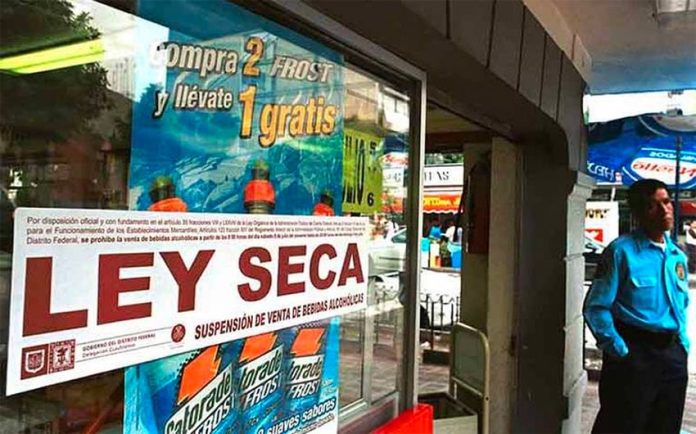
A sign warns of the coming dry law.
A store sign warns of the coming dry law. (File photo)

Keeping the peace on election day is the purpose of a law prohibiting the sale of alcoholic beverages, and most states have chosen to implement it.

The federally-mandated ley seca, or dry law, as it is known, allows for a prohibition of up to 72 hours, but this year no one will have to go for more than 59 hours without a drink (should they neglect to stock up beforehand).

The states with the shortest alcohol-free period — 24 hours starting July 1 at 12:00am — are Aguascalientes, Coahuila, Mexico City, Michoacán, Morelos, Nuevo León, Quintana Roo, Sonora and Veracruz.

Those with somewhat longer prohibitions are Guanajuato, 26 hours beginning tomorrow night at 10:00pm; Guerrero, 30 hours from 6:00pm on tomorrow; Chiapas, 38 hours, also at 6:00pm Saturday; Sinaloa, 39 hours from 6:00pm on tomorrow; and Chihuahua, 46 hours starting at 9:00am tomorrow.

Most states will go with a punishing 48-hour ley seca, starting tomorrow at 12:00am. They are Campeche, Colima, Durango, Hidalgo, México, Nayarit, Oaxaca, Puebla, San Luis Potosí, Tamaulipas, Tlaxcala and Zacatecas.

Three states take an even dimmer view of election boozing. In Tabasco the law will apply for 49 hours starting bright and early tomorrow at 6:30am, in Baja California Sur for 57 hours starting tonight at midnight and in Yucatán, which tops the list at 59, the law also takes effect tonight at midnight.

Those who can drink and vote freely are the citizens of Baja California, Jalisco and Querétaro, where there will be no ley seca.

There is, however, some relief in some states and and in some municipalities that can adopt their own regulations.

Some states allow for the sale of alcoholic beverages along with meals, while others tolerate their sale in tourist areas or in city centers during daylight hours.

Restaurant and bar owners are rarely pleased with the dry law, and voice their opposition every time it is imposed. A business leader in Toluca, state of México, observed this week that there was no dry law for the elections three years ago, and nothing happened.

Source: El Sol de México (sp)

Truck, bus drivers, take a rest, orders Transportation Secretariat

0
New rules call for rest stops.

Drivers of cargo trucks and buses will have some new rules to follow after the Transportation Secretariat (SCT) implements measures to reduce the number of traffic accidents.

All truck and bus drivers will be required to rest for 30 minutes after driving for five hours.

Bus drivers on routes that are five to seven hours long can omit the half-hour stop only if they rest for four continuous hours after.

If a route is longer than nine hours, there should be a second driver.

Cargo truck operators will be permitted to drive for no more than 14 continuous hours, followed by eight continuous hours of rest. Also, the maximum a driver can be on the road in any 24-hour period should not exceed 14 hours.

Drivers will be required to keep a record of their driving hours and present it to authorities whenever required. Printed and electronic media, along with other technological devices, can be used to aid in record-keeping.

About 16,000 people were killed in traffic accidents in 2015, according to federal health authorities. However, the federal statistics agency, Inegi, says there were only 4,559 fatalities in traffic accidents in 2016.

Meanwhile, the National Public Security System says 11,000 people die annually in traffic accidents.

Source: Milenio (sp)

132 political murders since September compared to just nine six years ago

0
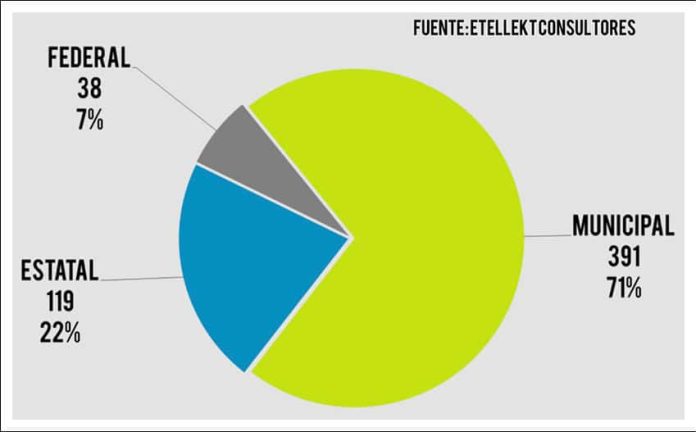
Political aggression by level of government during the nine-month electoral period
Political aggression by level of government during the nine-month electoral period. etellekt

There have been 132 candidates and politicians murdered since the electoral process began last September, compared to just nine during the 2011-12 election period, says the latest report on political violence in Mexico.

The numbers were revealed this week by the risk analysis firm Etellekt, which has tallied 48 murders of candidates, up from just one six years ago.

Over half of all political violence in the nine-month electoral period leading up to Sunday’s elections occurred in just five states.

There were 548 acts of aggression against politicians, candidates and their families between September 8, 2017 and June 26, with 51% of the recorded cases occurring in the states of Guerrero, Oaxaca, Puebla, México state and Veracruz.

Six Pacific coast states — Guerrero, Michoacán, Oaxaca, Jalisco, Colima and Sinaloa — accounted for 64% of candidate murders.

There were also 181 threats or acts of intimidation against politicians, 63 physical assaults, 51 attacks on politicians’ relatives, 47 attempted homicides with firearms, 36 violent assaults, 19 cases of gunshot wounds and 19 kidnappings of politicians, the report said.

All of Mexico’s 32 states are represented in the statistics although before the beginning of June, only 12 states had recorded acts of violence against politicians, showing that the political violence spread as polling day approached.

The violence occurred in 346 municipalities, or 14% of all municipalities in the country.

The incidence of violence spiked considerably this month, with 104 acts of aggression (18% of the total) including 17 homicides recorded in the two-week period between June 10 and June 23.

In total, 12 states recorded increases in their rates of acts of aggression against politicians this month compared to the preceding eight months.

Puebla reported the highest single number of acts of aggression against politicians during the entire electoral process period, with 77 incidents, followed by Guerrero with 60, Oaxaca with 52, México state with 46 and Veracruz with 44.

Michoacán, Mexico City, Quintana Roo, Chiapas and Jalisco were the next five most violent states for politicians with the number of reported acts of aggression ranging between 34 and 15.

The safest place for politicians has been Aguascalientes where there was just one aggressive act, and Nayarit, Colima, Campeche and Baja California were also relatively peaceful.

Of the 132 homicides, Oaxaca and Guerrero shared the undesirable title of being Mexico’s most murderous state for politicians, with both recording 26. Puebla, where 13 politicians were slain between September and June, was third-highest.

Two-thirds of the homicides were committed by groups of armed individuals, while victims were tortured before they were killed in 14% of cases.

In terms of which parties the targets of political violence belonged to, there were two clear standouts and together they accounted for just over half of all acts of aggression during the electoral period.

Those representing the ruling Institutional Revolutionary Party (PRI) were victims in 150 cases while those representing Morena — the party formed and led by presidential frontrunner Andrés Manuel López Obrador — suffered 130 acts of aggression.

Politicians representing the center-right National Action Party (PAN) were targeted in 57 cases while those belonging to the left-of-center Democratic Revolutionary Party (PRD) were victims in 56 cases.

Politicians for the Ecological Green Party of Mexico (PVEM) and the Citizens’ Movement party (MC) were targeted in 32 and 25 cases respectively while 21 independents were also victims of acts of aggression.

Politicians representing the PRI also accounted for the highest number of homicide victims with 45, followed by the PRD with 20; Morena with 17; and the PAN with 14.

Exactly one-quarter — or 12 from a total of 48 — of all slain candidates were destined to appear on ballots as PRI candidates, while 10 PRD and seven Morena candidates were killed.

Statistics show that municipal-level politicians were by far the most vulnerable to violence, accounting for 391 cases or 71% of the 548 acts of aggression recorded.

They were also almost four times more likely to be homicide victims than their state-level counterparts, with a total of 105 murder cases recorded, or 79% of the total.

There were 119 attacks on state politicians, including 26 homicides, while federal politicians were targeted in 38 incidents.

One federal politician was murdered during the official electoral period.

Homicides of pre-candidates, candidates, militant party members, former and current mayors, councilors, political activists, party leaders, former candidates and former members of council and Congress are all represented in the 132 political murders recorded.

Etellekt compiled its statistics from publicly available government, academic and civil society sources as well as media reports.

Mexico News Daily

Mexico scores big win against US in World Cup basketball

0
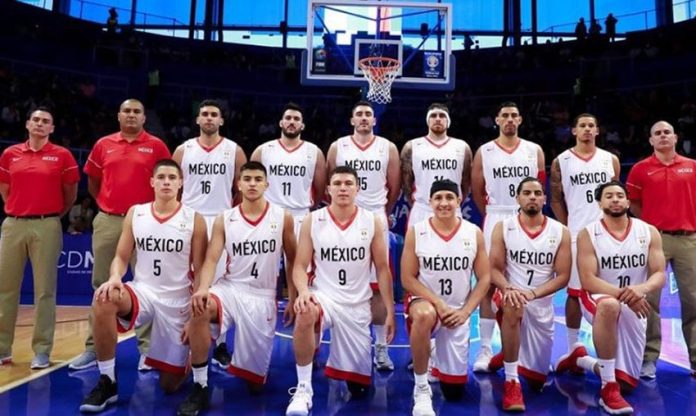
Mexico's national basketball team.

Mexico scored a big upset last night in a qualifying game for the 2019 basketball World Cup by beating the United States 78-70 in Mexico City.

It was only the second time the U.S. has lost to Mexico in 30 games; the other defeat was in 2011.

The last time the teams met, in November, the U.S. won by 36 points. But as ESPN noted, the Mexican team is a different one.

Players who were still playing in various professional leagues last fall are now on the roster.

U.S. coach Jeff Van Gundy had warned his team that the game would be a challenge.

“We can’t underestimate how hard it is going to be to play on the road, at altitude, and against a team desperate to qualify for the FIBA World Cup,” Van Gundy said before the game. “We have to make sure we match that type of intensity and passion that we know they’ll bring.”

After the game, he conceded that Mexico dominated from the start “and that’s on me. We were not ready to compete at the level Mexico did. Give them all the credit, they played a great, great game.”

The teams played before a full house — 5,000 fans — at Juan de la Barrera stadium. Mexican officials said the game sold out in just 45 minutes.

The International Basketball Federation World Cup takes place next year in China.

Source: Infobae (sp), ESPN (en)

3 political assassinations in Oaxaca, Guerrero, San Luis Potosí

0
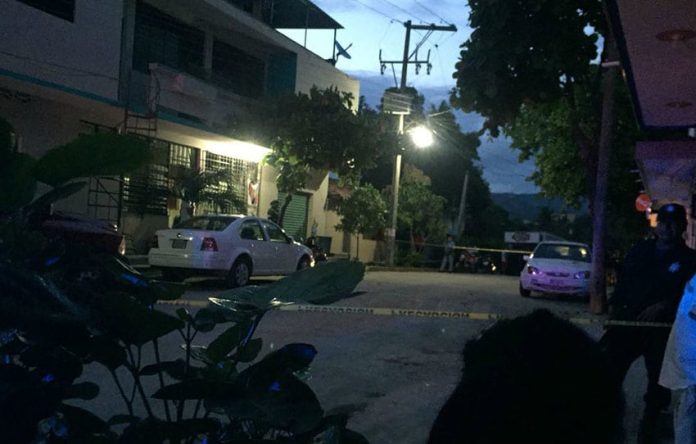
Scene of yesterday's assassination of a party official in Pinotepa Nacional, Oaxaca.

An election official in Oaxaca, a party official in Guerrero and a campaign worker in San Luis Potosí were assassinated in the last two days.

A Oaxaca employee of the National Electoral Institute (INE) was gunned down and killed yesterday evening outside his home in Pinotepa Nacional.

Armed civilians fired several times at Joaquín Andrés Bernal, 52, according to early reports.

The murder came on the same day that two other electoral personnel in the Coast region city resigned their posts.

The president of the district council and its executive secretary both quit due to insecurity. Death threats had been made against them and their families.

In Guerrero, Jorge Luis Vargas of the Democratic Revolution Party was killed in gunfire at the campaign headquarters of the candidate for mayor of Chilapa.

Another incident occurred yesterday afternoon on the highway between Chilapa and Hueycantenango when six armed civilians intercepted a convoy accompanying the Institutional Revolutionary Party candidate for mayor of José Joaquín de Herrera.

Two municipal police officers were wounded.

In San Luis Potosí, a campaign worker for the candidate for mayor of Vanegas was murdered Wednesday night outside his home. Mateo Puente, 47, was working for the For Mexico in Front coalition candidate, Bertha Amaya.

Source: Milenio (sp), Excélsior (sp)

Graves discovered in southern Mexico City are 2,700 years old

0
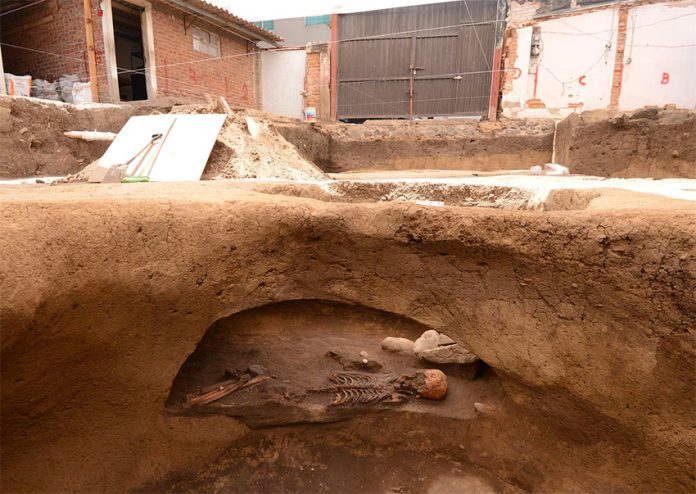
A skeleton found inside one of the graves.

Experts from the National Institute of Anthropology and History (INAH) have discovered 26 ancient graves dating back 2,700 years at a site in Mexico City.

Located in the south of the capital and adjoining a modern-day cemetery, the site measures 360 square meters and archaeologists believe that it might have been used by women for activities related to the care of infants.

During excavations over the last four months, the INAH team has found the graves at depths between 1.2 and 3.3 meters below street level. About 20 of them are in a perfect state of conservation.

“Until now, we have detected four stages of settlement; four historical periods linked to the start of the 20th century, the Porfiriato [the period of more than three decades when former president Porfirio Díaz was in power], Mexico’s independence and the pre-Hispanic period,” said Antonio Balcorta Yépez, an INAH archaeologist working on the project.

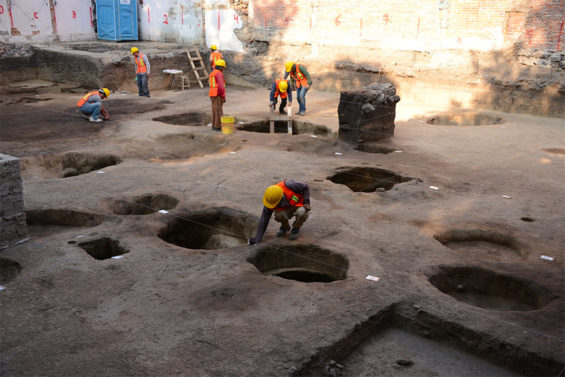
Graves discovered in southern Mexico City.
Ancient graves discovered in southern Mexico City.

Of the 26 graves found, 11 are in the form of a truncated cone, while the archaeologists have also found vestiges of walls from pre-Hispanic structures.

“We’ve made a series of discoveries that have revolutionized the knowledge we had about graves in the pre-classic period. The context suggests to us that we are at a village where they carried out specialized activities. The height [of the site and] its geographical and strategic position indicates to us that the people [who lived on] this hill may have had greater control over certain resources compared to the village of Copilco,” Balcorta said.

Truncated cone graves were not only used for funeral purposes but also to store grains, artifacts and waste materials, he explained.

However, there is also evidence that indicates that at least two of the graves may have been used by women for everyday activities related to caring for their children, such as giving an herbal steam bath to a newborn baby.

That theory is supported by the discovery of more than 130 figurines in the graves, most of which represent pregnant women, while a smaller number are of infants. The ceramic pieces feature red, yellow and black colorings on their different body parts.

The INAH team has extracted samples from different parts of the graves to carry out chemical and pollen analyses aimed at confirming or rejecting the perinatal care hypothesis.

The archaeologists have also made discoveries from more recent times including remnants of ammunition used in the Mexican revolution and parts of adobe bricks and other building materials that formed part of a house that stood on the site at the end of the 19th century.

Because it is 2,296 meters above sea level, it is believed that the site was not affected by lava flows following the eruption of the Xitle Volcano between 245 and 315 AD and for that reason it has remained in well-conserved condition.

Source: Milenio (sp)

Presidential election results available between 10 and 11:30pm Sunday

0
Thousands turned out last night for AMLO's campaign finale. It was dubbed AMLOFest.
Thousands turned out last night for AMLO's campaign finale, dubbed AMLOFest.

Results of the so-called quick count for the presidential election will be made public between 10:00 and 11:30pm Sunday, the president of the National Electoral Institute (INE) said today.

Lorenzo Córdova told broadcaster Milenio Television that whether there is “a wide margin or a very narrow one” between the four presidential candidates, he will appear on national television between those times to announce the tally of the conteo rápido, or quick count.

Asked whether the trend shown in the count — which is based on a sample of votes collected from 5% of all polling stations across the country — would be “scientifically irreversible,” Córdova responded “absolutely.”

The INE president said the quick count will provide information about voter turnout and give a range for the percentage of the vote that each candidate obtained.

“Candidate A will win between this and that percentage [of the vote], Candidate B [will win] between this and that percentage . . .” Córdova explained.

He said responsibility for the quick count falls to a technical committee made up of nine of Mexico’s most esteemed mathematicians and statisticians.

Four of the numbers gurus are academics at the National Autonomous University of México (UNAM), three come from the Autonomous Technical Institute of Mexico (ITAM) and two are from the Metropolitan Autonomous University (UAM), Córdova said.

All have previous experience in conducting quick counts with “a high degree of precision” and “have never been wrong,” he added.

After polls close on Sunday evening, Córdova said, Mexico will enter into a “very delicate moment in the political life of the country” and therefore it is important that the “information vacuum” is “filled with official information from the INE” rather than speculation and hearsay.

He also called on citizens to turn out and vote en masse on Sunday in order to send a clear message that they are not intimidated by political violence. Almost 50 candidates have been killed since the electoral process officially began last September.

The official campaign period concluded at 12:00am today, meaning that an advertising blackout is now in force and thousands of candidates around the country — including the four presidential hopefuls — can no longer lobby the electorate for their votes.

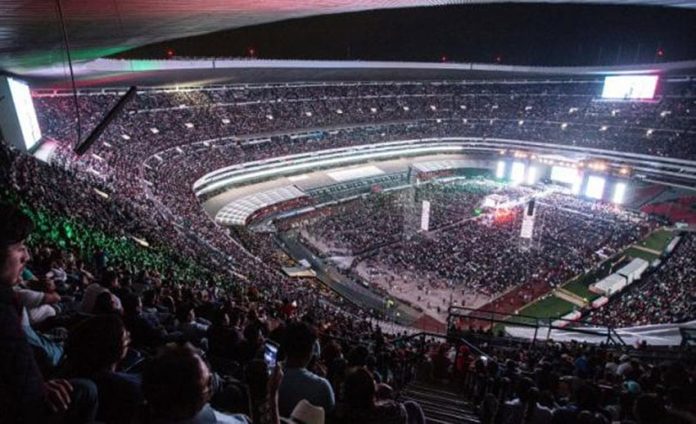
Leading presidential candidate Andrés Manuel López Obrador officially closed his campaign last night with a massive rally at the country’s largest sports stadium, the Estadio Azteca in southern Mexico City.

The enthusiastic crowd received the candidate with a rapturous chant of “presidente! presidente!” as he appeared on stage to make his final public pre-election address.

Ricardo Anaya, who has consistently polled in second place, held his final campaign event in León, Guanajuato, with thousands of supporters of the three-party right-left coalition he heads.

Anaya once again declared that the For Mexico in Front coalition is the only alliance that can stop López Obrador from winning the presidency and called on the electorate to cast a voto útil or strategic vote in his favor.

Independent Jaime “El Bronco” Rodríguez, who took leave as governor of Nuevo León to contest the election and has shocked the public at times with proposals such as chopping off thieves’ hands, finished up his bid for the presidency with a live virtual event on Facebook.

Preparations for Sunday’s elections, the biggest in Mexico’s history, have been hindered this week with the theft of ballots in Oaxaca, Tabasco and Veracruz.

Polls will open across the country at 8:00am Sunday, with millions of voters casting ballots for thousands of positions at municipal, state and federal levels.

Source: Milenio (sp), Forbes (sp), El País (sp), El Sol de México (sp)