Home Blog Page 2177

Mexico, US, Canada win joint bid to host World Cup 2026

0
Mexican soccer fans are gearing up for the big event.

Mexico, the United States and Canada will jointly host the 2026 World Cup, it was announced today by FIFA, soccer’s international governing body.

The three North American countries’ joint bid — known as United 2026 — beat Morocco’s by a margin of 69 votes, 134 to 65.

The result means that Mexico will become the first country to host three World Cups after previously staging the 1970 and 1986 editions of the tournament.

But in 2026, Mexico and Canada will play second fiddle to the United States, hosting just 10 games each while their neighbor will take the lion’s share of the matches, hosting 60 including the final.

The 23rd World Cup will be the first time that 48 countries take part in the planet’s most watched sporting event, with the teams initially divided into 16 groups of three. It will also be the first time that three different countries jointly host the tournament.

The matches will be held at 16 venues across the three countries. Mexico City, Guadalajara and Monterrey are among 23 cities vying to host them.

The United 2026 bid plan called for each of the three countries to host one match each on the first day of the tournament with the “main” opening march to be held either in Mexico City or Los Angeles.

That means the capital’s iconic stadium, Estadio Azteca, is almost certain to feature on day one and become the only arena in the world to host matches in three different world cups.

The North American bid received a four out of five-rating compared to 2.7 for Morocco but another factor that likely helped to sway the more than 200 national football federations that were eligible to vote was that it pledged to generate a profit of US $11 billion for FIFA, more than double the US $5 billion Morocco said it could generate.

The president of the Mexican Football Federation (FMF), Decio de María, said that hosting the 2026 event would be “a great privilege and honor” while President Enrique Peña Nieto described news of the successful bid as “magnificent” and congratulated the FMF for the achievement.

“. . . FIFA’s decision is an acknowledgement to the three countries and a vote of confidence in Mexico’s organizational capabilities, the quality of infrastructure and the services Mexico offers . . .” Peña Nieto said.

While the tournament is still eight years away, football fans around the world don’t have long to wait until this year’s edition of the tournament gets under way in Russian.

The host nation will go up against Saudi Arabia in the opening encounter in Moscow tomorrow.

Mexico is grouped with Germany, Sweden and South Korea in the opening round and will need to finish either first or second to proceed to the knockout stages.

The opening match for the team nicknamed El Tri because of its tricolored uniform will be against defending champions Germany at 10:00am Sunday in the Russian capital.

Mexico has made it out of the group stage at each of the past six World Cups only to exit the tournament in the round of 16, the first knockout stage.

The last time El Tri made it through to the elusive “quinto partido” or fifth match in a World Cup was at home in 1986 when it lost to West Germany in a penalty shootout.

FIFA has estimated that 45,000 Mexicans will travel to Russia for the tournament.
Source: Milenio (sp), Cancha (sp), ESPN (en)

Remains of missing miners found in Chihuahua

0
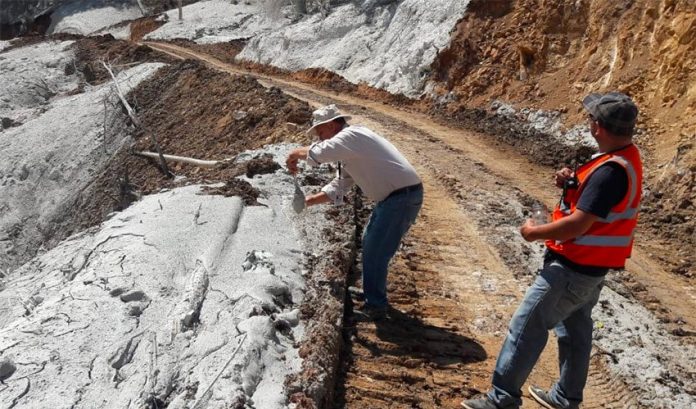
Environmental inspectors at the site of the Chihuahua mine spill.

The search continues for five miners who disappeared after a dam burst over a week ago at a mine in Urique, Chihuahua, although some remains have been found.

The search for the four men and a woman is being conducted by more than 150 people coordinated by the state Civil Protection office.

Several body parts have been found along a 10-kilometer stretch in which the contents of the mineral tailings dam spilled on June 4 at the Cieneguita gold and silver mine operated by Río Tinto, sweeping away seven miners and machinery.

The state Attorney General’s office said DNA analysis is under way to identify the remains.

The bodies of two other miners were recovered last week.

The environmental protection agency, Profepa, said yesterday the spill contained no heavy metals and the contents were not dangerous.

Inspectors have determined that 249,000 cubic meters of mineral tailings and 190,000 cubic meters of construction materials that formed the collapsed dam were released by the spill.

Source: Reforma (sp)

Caught in crossfire: student, 14, killed by stray bullet

0
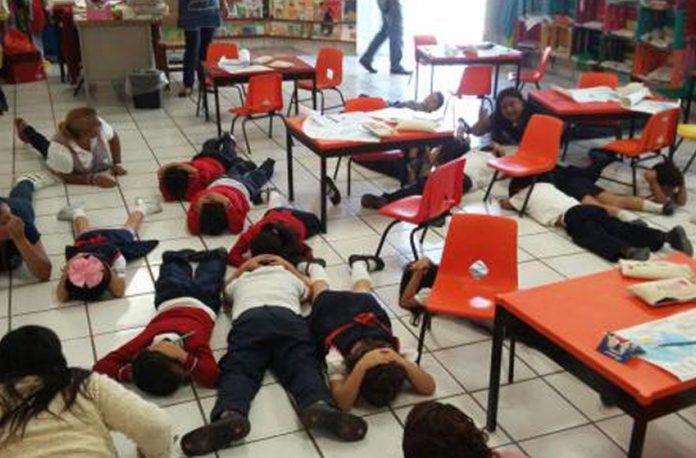
Gunfire drill at a school in Tamaulipas.

A 14-year-old student in Reynosa, Tamaulipas, who was set to graduate from secondary school was killed Monday while at school, the victim of a stray bullet.

The students were gathered outside during the late afternoon but when gunshots were heard nearby they ran for their classrooms. Jesús Antonio didn’t make it; he was struck in the back and died in his girlfriend’s arms.

Tamaulipas officials said the shooting occurred at about the same time that a state police patrol vehicle was attacked by gunmen aboard two SUVs. A chase ensued in the streets of the Cumbres neighborhood in which the attackers fired more shots before fleeing.

The federal Secretariat of Education (SEP) expressed its regret over the incident and offered to reinforce security measures at the school and provide medical and psychological counseling.

Roadblocks, car chases and gunfire are common in the city, where many reports describe the violence as unstoppable.

Education authorities have taken steps to prevent injury by organizing gunfire drills in many schools in the state. Many began doing so after five students were wounded in a direct attack on a school by armed civilians in Ciudad Victoria in April.

The students were gathered outside the main entrance to the preparatory school when the civilians opened fire.

Source: El Universal (sp)

Debate No. 3: few answers or proposals amid threats and charges

0
Candidates Anaya, López Obrador, Meade and Rodríguez at last night's debate.

Threats and accusations dominated last night’s third and final presidential debate in Mérida, Yucatán, in which candidates offered few detailed policy proposals and concrete answers.

Second-place candidate Ricardo Anaya used at least three of his speaking opportunities to probe Andrés Manuel López Obrador about his alleged relationship with a businessman who Anaya charged was awarded no-bid contracts worth more than 170 million pesos (US $8.2 million at today’s exchange rate) during his term as mayor of Mexico City from 2000 to 2005.

“Andrés Manuel, you’ve turned into what you criticized so much. Like those of the PRI [Institutional Revolutionary Party], you now have your favorite contractors,” he said.

After López Obrador denied the accusation, Anaya held up a placard directing viewers to a website where he said they could see evidence of his claims. But the website was down during the debate and officials from his campaign later claimed that it had likely suffered a cyber-attack.

Anaya also accused the campaign frontrunner of having made a pact of impunity with President Enrique Peña Nieto, repeating a claim that both he and his campaign boss have made in recent days.

“I haven’t seen him in six years,” López Obrador responded before accusing his adversary of having met with the president himself.

However, Anaya said that if he becomes president he will ensure that a corruption investigation into Peña Nieto goes ahead and charged that his adherence to that position was the catalyst for the money laundering accusations leveled against him.

“I’ve been the target of a brutal campaign of attacks, lies and slurs because I dared to say that when I am president of Mexico there will be an autonomous Attorney General’s office to investigate President Enrique Peña Nieto,” Anaya said.

Early in the debate, ruling party candidate José Antonio Meade highlighted the probe into the money laundering scheme that Anaya allegedly benefited from, saying that he is the only candidate under investigation for any wrongdoing.

Just 15 minutes before the debate started, a new video was released which supposedly provides additional evidence of the candidate’s involvement in the scheme.

In turn, Anaya hit back at Meade, charging that he has evidence in his possession which links him to the corruption scandal involving the Brazilian construction company Odebrecht and asserting that he too would face justice alongside Peña Nieto.

But the former finance secretary deflected the attack on to López Obrador by calling into question links that one of his cabinet picks allegedly has to the Brazilian firm, which has been embroiled in scandals in several Latin American countries.

“On the subject of Odebrecht, the question shouldn’t be for me, Ricardo. It should be for Andrés Manuel because Odebrecht’s partner in Mexico is the family of [Javier] Jiménez Espriú, who Andrés Manuel put forward as his secretary of communications and transportation,” Meade said.

He also attacked López Obrador’s economic record when he was Mexico City mayor, charging that the number of jobs created during his administration was much lower than that of his predecessor and successor.

Meade also held up a mock-up of a DVD cover with the title The Great Depression: Mexico 2018-2024, which featured a photo of the third-time candidate.

“It’s a movie that you’re not going to see because Andrés Manuel is going to lose again,” Meade said.

López Obrador brushed off most of the repeated attacks on him but used one of his allocated rebuttals to urge his main rivals to compose themselves, while also highlighting his commanding lead in the polls.

“What fault do I have that you [Anaya and Meade] are tied down at the bottom [of the polls] and you think that here, in the debate, you’re going to make up the 30 points that I lead by. Calm down!”

Independent candidate Jaime “El Bronco” Rodríguez Calderón, meanwhile, added some of his trademark humor amid the clashes.

“I have fun with you [the other candidates]. Now [Anaya] give him [López Obrador] a kiss. Mexico needs the unity of everyone . . .” he said.

The candidates did, at times, focus on the debate’s central topics: economic growth, poverty, health, education and technology.

On the first issue, López Obrador said that he would attempt to maintain the North American Free Trade Agreement (NAFTA) but added that a termination of the treaty “cannot be fatal for Mexicans [because] our country has a lot of natural resources, a lot of wealth.”

However, he also said he wanted to focus on strengthening Mexico’s domestic market and argued that that “Mexico can produce what it consumes.”

Anaya said that under a government he leads “everyone that earns less than 10,000 pesos per month [US $485] will not pay taxes.” He also said he will move to introduce a universal basic income.

Meade claimed that Mexico’s gross domestic product (GDP) could be increased if salary discrepancies between men and women are closed, while Rodríguez charged that savings could be made by shrinking the size of government.

He also said that “there are a lot of lazy people in this country who are receiving government aid.”

The moderators repeatedly pushed the candidates to detail exactly where they would get the resources needed to fund their promises but their answers were light on specific detail.

López Obrador insisted that the money would come from combating corruption, charging that 500 billion pesos (US $24.2 billion) are lost annually to the scourge. Another 300 billion pesos would come from an austerity plan, he said.

Meade only said that the money for his proposals would come from tax efficiency, while Anaya cited “less expenditure and more investment.”

El Bronco said that savings would come from getting rid of all the lazy people in the government.

Mexicans will go to the polls on July 1 to elect not just a new president but also to replace the federal Congress and to fill thousands of municipal and state-level positions.

Opinion polls show López Obrador with a large lead over the other candidates for president while Spanish newspaper El País said last week that there is a 92% probability that he will become Mexico’s next leader.

Source: Milenio (sp), El Financiero (sp)

Hurricane Bud downgraded; tropical storm watch for southern Baja

0
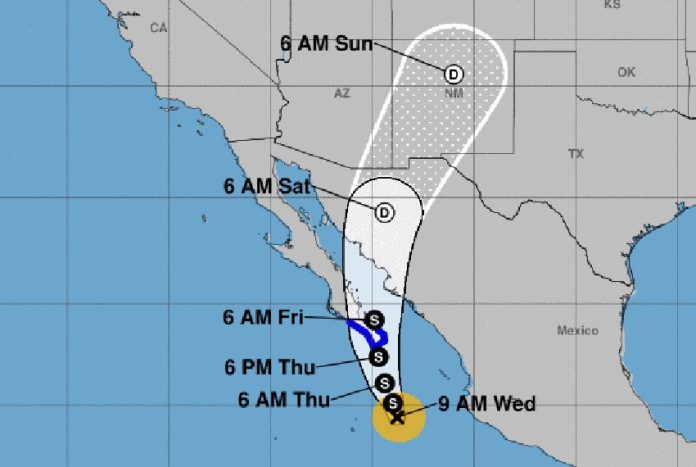
Tropical storm Bud's forecast track.

A tropical storm watch is in effect for southern Baja California Sur, including Cabo San Lucas and La Paz, after Hurricane Bud weakened early this morning.

Mexican weather officials are predicting wind gusts of up to 50-70 kilometers per hour and waves two to three meters high in Baja California Sur, Sinaloa, Colima, Jalisco and Nayarit.

The national Civil Protection office warned that rainfall accumulations could be as much as 400 millimeters by the weekend in some areas.

Officials in Guerrero say Hurricane Bud caused havoc in five municipalities, leaving buildings damaged and affecting more than 120 families. Damage was also reported in Oaxaca.

The United States National Hurricane Center said at 10:00am that Bud was situated about 405 kilometers south-southeast of Cabo San Lucas and moving slowly toward the north-northwest.

Maximum sustained winds were 100 kilometers per hour.

The storm is forecast to reach southern Baja California Sur late Thursday or Thursday night.

Source: Milenio (sp)

Drug lord who waged bloody war for cartel control gets 49 years

0
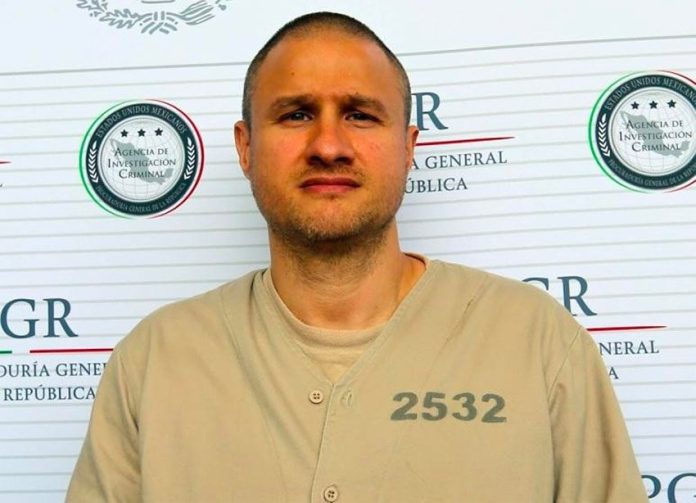
La Barbie after his arrest in Mexico.

A United States citizen who prosecutors say became a powerful member of a Mexican drug cartel was sentenced yesterday by a federal judge in Atlanta, Georgia, to almost five decades in jail.

Texas-born Édgar Valdez Villareal, known as “La Barbie” because of his light eyes and fair skin, was condemned to 49 years and one month in prison on drug trafficking and money laundering charges.

The 44-year-old Laredo native was also ordered to forfeit US $192 million, which prosecutors said is a conservative estimate of the value of cocaine he imported into the United States.

After starting his criminal career selling marijuana while still playing football for his high school team in the U.S. border city, prosecutors said, Valdez became a member of the Beltrán-Leyva cartel and rose through the ranks at a time when its leaders had links with Joaquín “El Chapo” Guzmán and his Sinaloa Cartel.

With the proceeds of his illicit dealings, prosecutor Elizabeth Hathaway said, Valdez bought luxury properties, including a ranch with a zoo which housed a lion.

She also contended that Valdez cultivated a media image designed to impress people and intimidate his rivals.

At yesterday’s hearing, one of La Barbie’s six sisters and his brother pleaded with the judge for leniency while other members of his family, including his parents, looked on in a crowded courtroom.

Carla Valdez, who works as a prosecutor in Texas, told presiding judge William Duffey that her brother was a good person despite straying from an upbringing in which she and all her siblings were taught strong values and morals by their hardworking parents.

“Why are you a prosecutor and why is your brother a seriously evil criminal?” the judge asked her, according to a report published yesterday by the Associated Press.

Carla Valdez responded by saying that was a question her family asked every day.

Her brother was notorious for using ruthless violence to defeat his rivals and secure control of his lucrative smuggling routes into the United States.

After marines killed Arturo Beltrán Leyva — one of five brothers who headed the cartel — in 2009, Valdez and Héctor Beltrán Leyva engaged in a bloody war for control that left dismembered and decapitated bodies in the streets and hanging from bridges in cities such as Cuernavaca, Morelos and Acapulco, Guerrero.

In August 2010, Federal Police arrested Valdez and four of his associates at a holiday home in the state of México and just over five years later — in September 2015 — he was extradited to the United States along with 12 other drug traffickers.

At the time of his arrest, former president Felipe Calderón described La Barbie as “one of the most-wanted criminals in Mexico and abroad.”

In January 2016, Valdez pleaded guilty to charges of conspiring to import and distribute cocaine and conspiring to launder money. After shipping cocaine into the United States by the truckload, he would send millions of dollars in cash back over the border, prosecutors said.

Asking the judge to consider imposing a prison term at the lenient end of the sentencing guidelines, Valdez’s lawyer Buddy Parker said yesterday that his client had cooperated with law enforcement in the United States.

But Duffy remained unconvinced and noted that while he was collaborating with United States authorities Valdez had continued to engage in criminal activities by arranging regular shipments of cocaine into the U.S.

Hathaway asked for a 55-year sentence, arguing that a severe penalty was needed to send a message to other traffickers.

Valdez himself echoed a similar sentiment, saying that he wanted his life to serve as an example to young people about the perils of becoming involved in drugs. He also told the judge he accepted responsibility for his crimes and apologized to his family.

“I’m not a bad person. I am a good person who has made bad decisions,” Valdez said.

But Duffey said he hadn’t detected any real sense of remorse from the guilty party for flooding the United States with drugs and described Valdez’s action as despicable and a betrayal of his family and country.

“You haven’t earned the right to live in an American community,” he said.

Source: Associated Press (en), Milenio (sp)

Rarámuri runner places third in Spanish ultramarathon

0
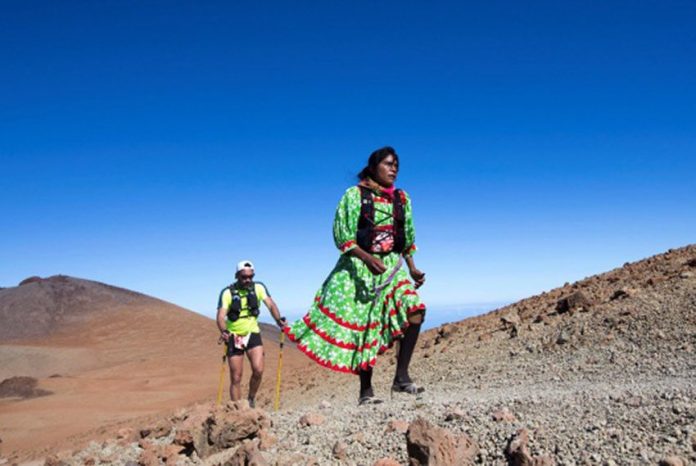
Ramírez runs in Saturday's Tenerife ultramarathon.

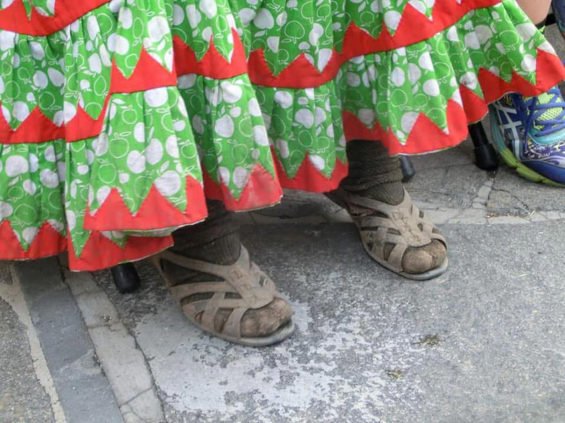
Wearing her traditional long dress and a pair of sandals, there was no mistaking one of the runners in Saturday’s Cajamar Tenerife Bluetrail ultramarathon.

It could only be one of the famous Rarámuri runners from northern Mexico.

Lorena Ramírez won third place in the annual 102-kilometer marathon on the Spanish island of Tenerife, competing in the seniors’ category, ages 18 to 39. She finished the course in 20 hours, 11 minutes and 37 seconds.

It is the second highest such race in Europe, with part of the course reaching 3,500 meters, and this year attracted 2,400 runners from 38 countries.

Ramírez, 23, was accompanied in Spain by fellow runners, her brother Mario and sister Juana, all of whom grew up running in the mountains of the Tarahumara Sierra in Chihuahua.

Lorena Ramírez had already made a name for herself with other wins, along with the fact that she became the first Rarámuri woman to compete at Tenerife when she entered last year.

No running shoes for Lorena Ramírez.
No running shoes for Lorena Ramírez. tenerife bluetrail

She was invited to attend after she won the females’ 50-kilometer category of the Ultra Trail Cerro Rojo last year in Puebla.

In that race, as in the Tenerife Bluetrail, she wore traditional dress including basic sandals made from recycled tires.

A Puebla website noted: she ran “without a hydration vest, without running shoes, without Lycra and compression socks, without any of those gadgets used by the runners of today.”

Source: Verne (sp)

Parents seek halt to teachers’ strike through rights commission

0
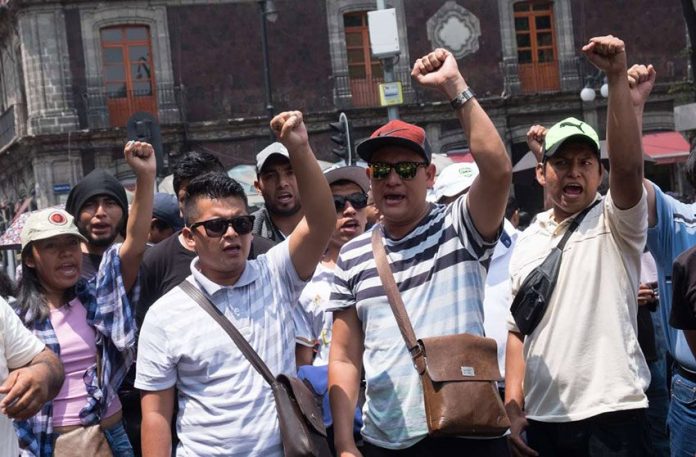
Usually it's angry teachers protesting in Oaxaca, but these are angry parents.

An organization of Oaxaca parents has demanded that the National Human Rights Commission (CNDH) intervene in a teachers’ strike that has left thousands of students without classes for more than two weeks.

The State Council for Social Participation in Education (Cepse) charged that situation in the state is critical, citing incidents in schools in the Coast region where parents have resorted to threatening teachers with machetes and shotguns to convince them to teach rather than strike.

The parents told a press conference that the dissident CNTE teachers’ union and its Oaxaca local, Section 22, have consistently violated the human rights of their children, affecting an alleged 53,969 by leaving them without classes.

They want the CNDH to guarantee the right to an education for the children of Oaxaca.

Despite there being mechanisms to punish teachers’ absenteeism, Cepse member Alfonso Soriano Lozano said no teachers have been laid off in Oaxaca. He believes there isn’t the political will to put a stop to Section 22’s recurrent strikes.

Cepse president Luisa García Cruz asked of the presidential candidates to avoid negotiating with the rights of the children and to recover an authority stance in their dealing with the union.

“The interests of the children have to be placed above anything else,” she said.

The teachers withdrew many of the blockades that created traffic chaos in the city of Oaxaca last week, but they continue to block access to the airport and the first-class bus terminal.

Source: Milenio (sp)

More water problems in CDMX; thousands affected by leak

0
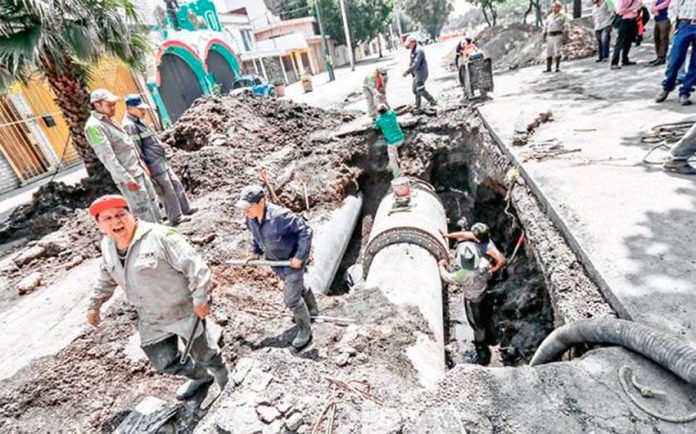
Workers repair the leak that has affected thousands of households in Iztapalapa.

There are more water problems in Mexico City but this time it’s not the weather that’s to blame but a serious leak.

About 120 neighborhoods in Iztapalapa, Mexico’s City’s most populous borough, have had limited or no water service since Saturday, the director of the capital’s water system said yesterday.

Ramón Aguirre Díaz of Sacmex explained that the shortfall in is due to a leak in a pipe from the Tulyehualco aqueduct and not related to the scarcity of water caused mainly by recent high temperatures in Mexico City, which left close to one million people without running water.

He said Sacmex personnel have been working as quickly as possible to repair the break, which measures 36 inches in diameter, and that water was expected to begin to flow again this morning.

In an interview with the newspaper El Sol de México, Aguirre added that due to the need to truck water into Iztapalapa in recent days moderate water restrictions were applied in other parts of the city, specifically the boroughs of Benito Juárez and Cuauhtémoc.

However, he ruled out any possibility of imposing stricter restrictions, explaining that the “objective is for everyone to have water in the capital.”

Another Sacmex official who oversees projects in the south of the city said the agency’s anti-leaks squad is constantly working to ensure that seepages are promptly plugged and water supply is maintained.

Given the number of people affected by the current water outage — 40% of Iztapalapa’s neighborhoods —Sigifredo Ambriz Mujica said repairing the leak was given priority over other jobs.

He explained that a repair team made up of 15 workers have been soldering and tightening the juncture of two pipes in the borough of Tlalpan. They are located 12 kilometers from Iztapalapa but directly supply the eastern borough.

Ambriz said the problem was caused by the age of the asbestos pipes and that new steel ones will soon replace them.

Water supply problems in Iztapalapa, where almost two million people live, are not new and many homes in the sprawling borough have long relied on infrequent water deliveries because they are not connected to the city’s network.

There are some initiatives, however, which aim to improve supply to the most populous part of one of the world’s most populous cities.

A rainwater harvesting project arrived last year that provided a solution — at least in the rainy season — for 1,900 families in 59 Iztapalapa neighborhoods and there are also plans to build an innovative water treatment complex in the borough.

Source: El Sol de México (sp)

First Coca-Cola now Pepsi: firm shuts down in Guerrero region

0
Neither Pepsi nor Coca-Cola have a presence anymore in Guerrero's Tierra Caliente.

Insecurity in the Tierra Caliente region of Guerrero has triggered the departure of another beverage company.

PepsiCo closed its distribution center last week in Ciudad Altamirano, two and a half months after Coca-Cola did the same, and for the same reasons: violence, extortion and a lack of security for employees.

Pepsi gathered refrigerators it had distributed throughout the nine municipalities that make up the region and laid off at least 70 workers.

The facility had been running for more than three decades.

Officials from the state Secretariat of Economy traveled to the northern Guerrero city yesterday, but the distribution center had already closed.

They said operations had been terminated on Friday and that not even signage had been left behind.

The bottler released a statement last night to announce that the closure, which it described as temporary, was due to the absence of the conditions necessary for it to continue distributing its products to the market.

According to workers, extortion demands and threats of aggression began several months ago by organized crime, whose intention was to control the sale of the company’s products. They said in spite of government efforts to reenforce vigilance and security, impunity and violence still prevail in Ciudad Altamirano.

A company executive told the newspaper Bajo Palabra that all three levels of government were aware of the insecurity “and never did anything.” One was a senior federal official who “knew what was happening.”

A state head of Coparmex, the Mexican Employers’ Federation, blamed government inaction for the closure. “We are very concerned, and we are against what is happening, but the federal government is not acting,” Joel Moreno Temelo charged.

He said the departure of Coca-Cola and Pepsi was a severe blow for the local economy.

The state government said today it was communicating with both companies to determine why they left and what they needed in order to return. Economic Development Secretary Álvaro Burgos Barrera said the Guerrero Coordination Group, a security agency, was addressing security in the region and designing strategies to confront the violence.

The Tierra Caliente region is the stage of a violent turf war between at least four criminal gangs, the Familia Michoacana, the Caballeros Templarios, the Tequileros and the Guerreros Unidos.

Source: El Universal (sp), Bajo Palabra (sp), El Financiero (sp)