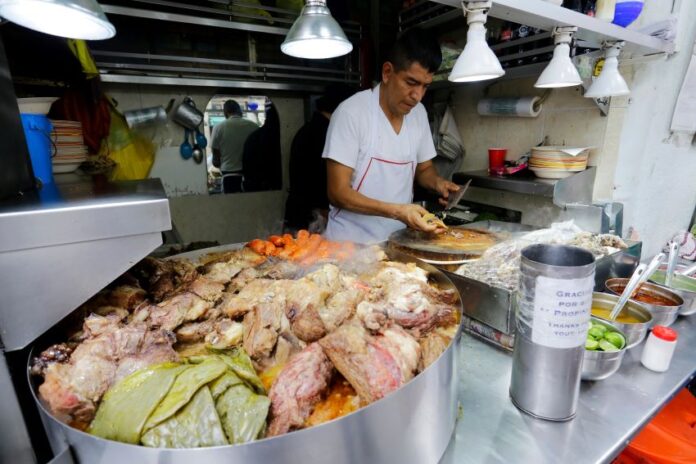
Mexico City's wide variety of food offerings, from steaming street tacos to high restaurants has won the city yet another culinary recognition. (Shutterstock)
Once again, Mexico City has won international recognition after National Geographic Traveller included the capital city among its top food destinations for 2025.
“Mexico has long been a destination for foodies,” Nat Geo said in its list of the eight best food travel destinations for this year. It also noted that the Michelin Guide 2024 is yet another reason to travel there this year.
Nat Geo highlighted El Califa de León, Mexico’s only taquería to have been awarded a Michelin star. This tiny and unpretentious taquería in the San Rafael neighborhood of Mexico City, has been around since 1968. According to the Michelin Guide, the signature beef-filet taco is “exceptional.”
The magazine gave a special mention to restaurants featured in the 50 World’s Best Restaurant list, including Pujol, Quintonil and Rosetta; “all of which are commended for their modern and inventive takes on Mexican cuisine,” Nat Geo said.
It’s not the first time Nat Geo has celebrated Mexico City’s variety of foods and dishes, the availability of which shifts constantly throughout the day. Tacos de guisado (with stew) are typically seen at breakfast and lunchtime as is barbacoa (slow-roasted meat). Carnitas (slow-cooked pork), or mixiote (pit-barbecued meat) are generally enjoyed at midday, while street-style tacos are mainly served at night.
And let’s not forget the ubiquitous tortillas, which can be enjoyed at every meal.
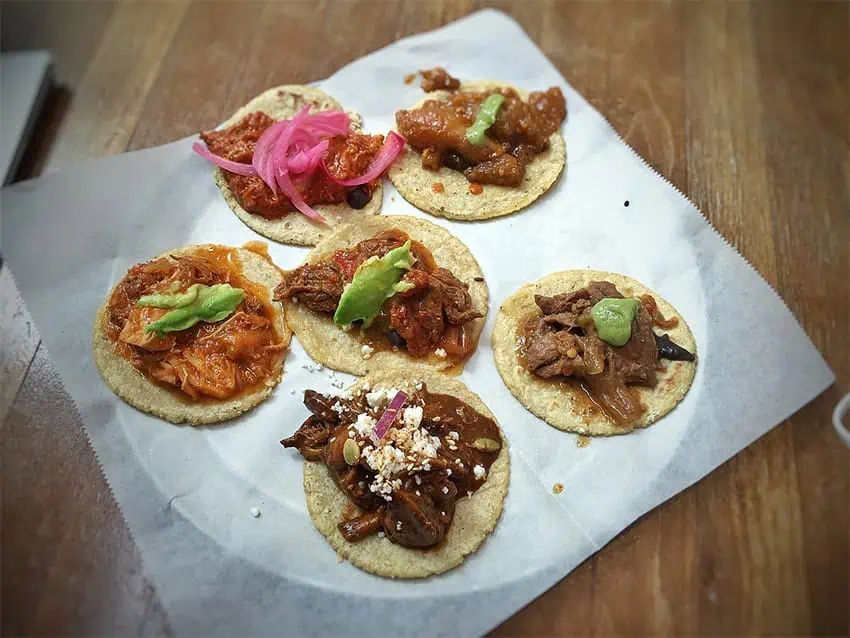
Mexico City is known for delicious and varied tacos de guisado, which feature a range of stewed fillings. (T. Tseng CC BY 2.0)
Nat Geo also praised the cheap prices and fast service of food stalls at markets and cocinas económicas (low-cost diners), which offer everything from freshly made tortillas to juices or fresh brews, seafood, desserts and garnachas, which are fried tortillas with refried beans and a variety of garnishes.
Finally, it featured Mexico City’s cantinas, which are the equivalent of a pub in the U.K. There will often be karaoke, live music and even mariachi bands. While cantinas mostly serve drinks, some surprise their guests with free appetizers. Other cantinas have a proper menu with traditional dishes like pancita (tripe soup), birria (meat stew), caldo de camarón (shrimp soup) and more.
“You can spend the day eating, drinking and singing,” Nat Geo said.
In addition to Mexico City, Nat Geo featured Sicily, Italy; Cumbria, U.K; Alabama, U.S; Cape Town, South Africa; Busan, South Korea; Croatia; and Catalonia, Spain.
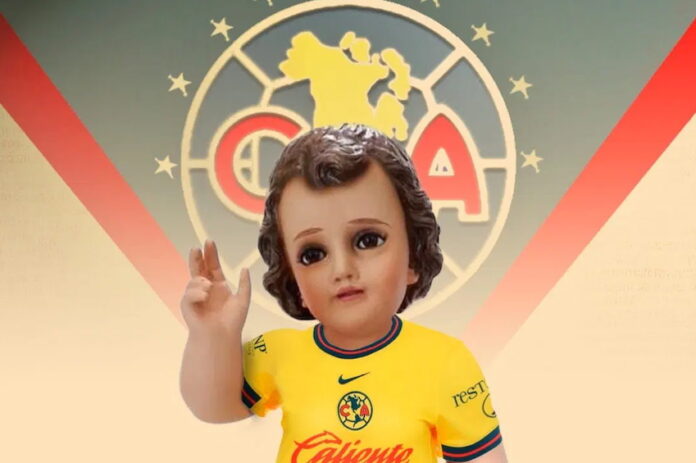
Fans of soccer team Club Ámerica have been asked to stop dressing statues of the baby Jesus with club colors. (Metropolitano Aguascalientes/Facebook)
Can you picture the Baby Jesus dressed in your favorite club’s jersey? Well, one Mexico City market has made this a reality.
According to merchants at the Historic Center’s Corredor del Niño Dios — known for it’s range of costumes for statues of Jesus — the most requested piece of clothing to dress up the Baby Jesus on Candlemas Day (Feb. 2) is Mexico City’s Club América “Tricampeón” football kit.
Mexico City’s Club Ámerica have recently sealed their third consecutive national title. (Mireya Novo/Cuartoscuro)
The capital’s Club América, also dubbed “Las Águilas,” is the club with the largest fan base in Mexico. The team recently won their third consecutive national championship title in the Liga Mx.
“We’re going to dress [the Baby Jesus] with the uniform of the three-time champion America. That’s what people are asking for, América,” the owner of Creaciones Guadalupe told newspaper Excelsior.
But the Archbishop of Tulancingo, Hidalgo, Oscar Roberto Dominguez Couttolenc, called on parishioners to be respectful of the image of the Baby Jesus and not to dress him as a soccer fan or a superhero.
“If you support America or Cruz Azul, that’s one thing,” the Archbishop said. “Don’t dress them as Batman or other superheroes. Let’s be respectful… Just dress [the figure] as Baby Jesus.”
Sorry DC fans, Batman is also a no-go. (Pinterest)
Prices for Baby Jesus’ costumes vary, ranging from 80 pesos (US $4) to more artisanal pieces that cost around 2,000 pesos (US $100).
Vendors at the Historic Center told the newspaper Excelsior that dressing up the Baby Jesus on Candlemas Day is a Catholic tradition as old as Mexico’s love for football. The tradition of dressing up the Baby Jesus dates back to the 18th and 19th centuries when nuns often dressed many religious figures in garments they had woven themselves. Over time, this practice was passed on to parishioners, who continue the tradition by dressing the figurines today.
Candlemas is a holiday that celebrates the purification of the Virgin Mary after giving birth — following Jewish traditions of the time — and the presentation of Jesus in the Temple of Jerusalem. This celebration is still alive in much of Latin America and Spain.
In Mexico, observants dress up a Baby Jesus figure to take it to the temple in remembrance of the presentation day. There are no references in the Bible as to whether the Baby Jesus was a fan of Club Ámerica, however.
Staying power is an elusive quality when it comes to pop music, perhaps more than any other profession — but how do Mexican female pop stars known for high-energy shows complete with athletic dancing and lung-draining choruses still sell out an auditorium thirty years after hitting the scene? One-hit wonders need not apply.
There you are, the expat at your new Mexican friend’s house, enjoying drinks and conversation. You have just impressed your hosts by mentioning Luis Miguel and Juan Gabriel. Now it is time to take it to a whole new level and blow their minds with your knowledge of Mexico’s female pop idols. These first three will serve you well.
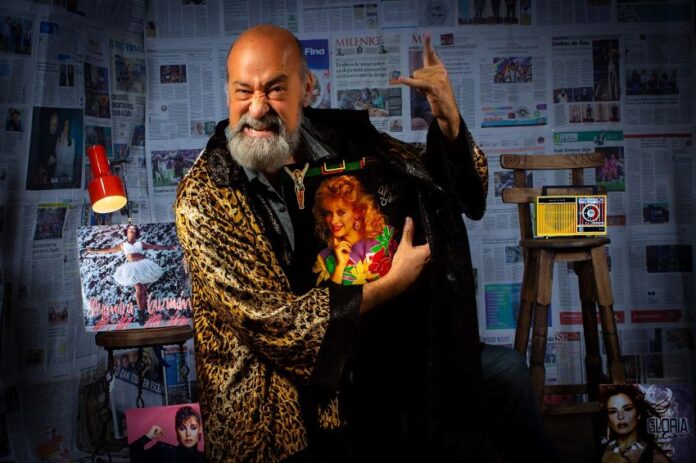
Gloria Trevi, Alejandra Guzmán and Yuri. (DanielMedinaMx/Pinkuribe/Joelwolfox / Wikimedia Commons)
Alejandra Guzmán
Undoubtedly, upon seeing this name, some will instantly shout, “Alejandra Guzmán is not pop! She’s rock!” This correct response is, “Who cares?” It is a bit like someone saying, “That’s not deep dish! It’s Neapolitan!”
Guzmán was somewhat destined for greatness as her parents, famous actress Silvia Pinal and pioneering rocker Enrique Guzman, booked her on their own TV show when she was two months old. The rest is, as they say, history.
Guzmán indeed has a bit more edge than many Mexican pop stars. While she can certainly hit the high notes that send cellphone flashlights waving right to left in a concert hall, she effortlessly switches from a breathy melody to a tiger-like growl, and that’s when you need to watch out.
Consider the song “Mírala Míralo” off her 1993 album “Libre.” The raspy quality of her singing adds plenty of danger. The song “Diablo” has her at her most dangerous. Regardless of the costume she might wear, one always speculates that somewhere underneath, there is probably a weapon.
Alejandra Guzmán - Como Ladrones (En Vivo)
Alternatively, the bossa-infused “Enternamente Bella” shows a tender side while still retaining that smoky, sensual voice. “Lado Oscuro” is a song that conjures an image of a woman at the bar in a dusty saloon who knows, despite her explanation, that others will never experience pain the way she has.
Gritty, guttural and badass. Alejandra Guzman is the perfect introduction to the great women of Mexican music.
Nickname: Reina del Rock Comparable Idol: Pat Benatar
Yuri
Headbands and leg warmers. If that doesn’t tell you the era Yuridia Valenzuela Canseco is from, then you have no right to sing along to “Mickey” or “I Want Candy” ever again. The difference between Toni Basel, Bow Wow Wow and Yuri is that the latter can still sell out 10,000 seats, as she will most likely do this Feb. 5 at Auditorio National in Mexico City.
Yuri - Detrás de Mi Ventana (Primera Fila) (En Vivo)
Born in Veracruz in 1964, Yuri started as a typical teeny bopper with an expected career of about an hour after the first hit, soon to be discarded. Yet, by 2025, she has more than proved herself as an artist willing to grow and mature.
For the bubblegum intro, take into consideration “Maldita Primavera,” “Dame un Beso” or “Déjala.” And it is impossible not to hear the influence of Paula Abdul on “Sabes lo que pasa.”
If you really want to sit in the feathered-hair epoch, listen to “Tú iluminas mi vida.” Yes, that’s a Spanish version of “You Light up My Life” by Debbie Boone. But one can’t have a career solely based on sugar-coated songs and aerobic exercise outfits. To her credit, Yuri has recognized this.
Like many artists with decades-long careers, Yuri does much less dancing and lets her voice speak for itself. A song like “Acompáñame” could have been written in the 1940s in its classic simplicity, while “Ay, Amor” could have been written for an 80s metal hair band.
She is in good company with artists who are still going strong in the over-60 club, like Tracy Chapman, Tommy Lee and Lenny Kravitz. At 61, Yuri still has years of stage presence left.
Nickname: “La Madonna Mexicana” Comparable Idol: Well… Madonna
Gloria Trevi
With massive staging, multiple costume changes, and a battalion of dancers, Gloria Trevi is the definition of a superstar with super hair.
Gloria Trevi - Todos Me Miran (En Vivo Desde La Arena Ciudad De México)
Born in 1968 in Monterrey, Nuevo León, she was soaking in hard rock such as Led Zeppelin and Deep Purple by the time she hit high school. Add to that ballet lessons, and it’s no wonder she would eventually command a stage with cemented swagger.
Her 1989 debut album,“¿Qué Hago Aqui?” was an instant chart success with songs like “Cosas de la Vida,” “Besame Aquí” and a quintessential 80s-sounding cover of the Stones with “Satisfecha.” The production is right in line with the sound of Huey Lewis and Dexys Midnight Runners, but hey, it was the ‘80s.
While she had many studio hits, it’s widely agreed that her most important album is the live one, “Gloria En Vivo.” This is quite unusual, as live albums are rarely favorites in an artist’s catalog. Sure, there is “Frampton Comes Alive” and Nirvana’s “Unplugged,” but most live albums are a celebration of a hit record. Ms. Trevi is part of a very exclusive club.
One could claim that Gloria Trevi is just as rock and roll as Alejandra Guzmán. Yet with her staging, special effects, and choreography, a Gloria Trevi show has everything one could want.
Nickname: “La Atrevida” Comparable Idol: Cher
Who else?
We could certainly add more to the list, like Ana Barbara, Ana Gabriel, Paulina Rubio and more, but you’ll have to check them out for yourself.
How did we do? Leave your suggestions in the comments section and expand all our playlists.
Jimmy Monack is a teacher, photographer and award-winning writer. He profiles interesting people all around the world as well as writing about and photographing rock concerts. He lives in Mexico City.www.jimmymonack.com
U.S. commerce secretary nominee Howard Lutnick said Wednesday that "as far as I know, they [Mexico and Canada] are acting swiftly" to stem the flow of fentanyl into the United States. Mexico's President Sheinbaum has maintained that she doesn't think the 25% tariff on Mexico will happen. (Mario Jasso/Cuartoscuro)
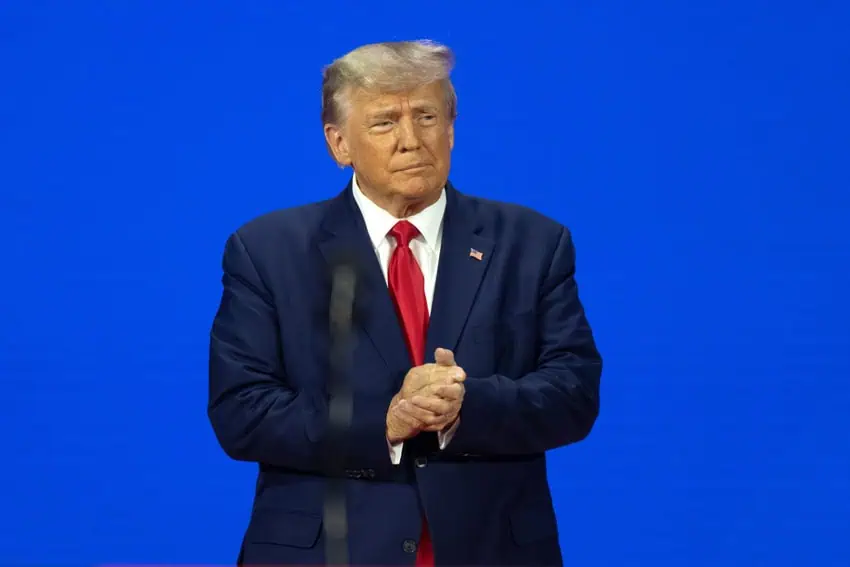
The Mexican government, the Mexican export sector and the Mexican people got some good news Wednesday about Donald Trump’s tariff threats.
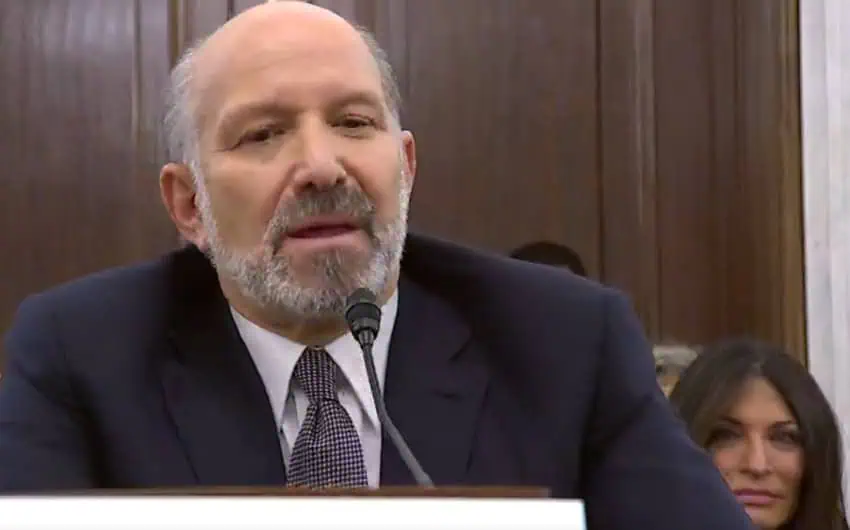
Howard Lutnick, United States President Donald Trump’s nominee for commerce secretary, said that Mexico and Canada can avoid blanket 25% tariffs on their exports — as Trump has pledged to impose — if they act quickly to stop the flow of fentanyl to the U.S.
Howard Lutnick is Donald Trump’s nominee for U.S. commerce secretary. (Screenshot/U.S. Senate)
“This is a separate tariff to create action from Mexico and action from Canada and as far as I know, they are acting swiftly, and if they execute it, there will be no tariff. And if they don’t, there will be,” Lutnick said at his U.S. Senate confirmation hearing.
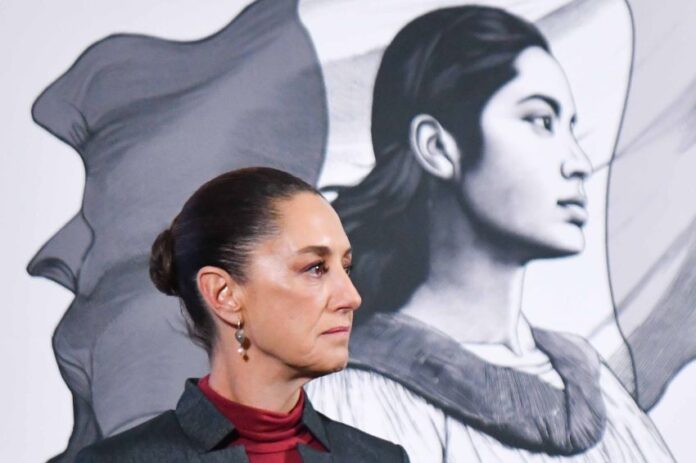
President Claudia Sheinbaum has said on repeated occasions that she expects to reach an agreement with the United States government to avert Trump’s proposed 25% tariff.
While Trump’s circle has put out conflicting messages this week about the inevitability of Trump’s 25% tariff on Mexico, President Sheinbaum told reporters Wednesday she’s convinced it won’t happen. (Ron Sachs/Consolidated News via Shutterstock) Credit: Ron Sachs – CNP
Confident that Trump’s tariff threat won’t eventuate
A reporter noted that White House Press Secretary Karoline Leavitt said Tuesday that Trump still intended to impose a 25% tariff on Mexican and Canadian exports to the United States this Saturday.
“The truth is we don’t think it’s going to happen,” Sheinbaum said.
“And if it does happen we have our plan … that I’ll reveal in due course,” she said. “But we don’t think it will happen.”
Sheinbaum said in November that Mexico would impose a retaliatory tariff on U.S. exports if Trump acted on his threat, but more recently she has focused on avoiding the commencement of a trade war.
She said Wednesday that her government is now engaged in dialogue with the Trump administration before stressing, once again, that she doesn’t believe the proposed 25% tariff will eventuate.
A letter to Google over Gulf of Mexico name change
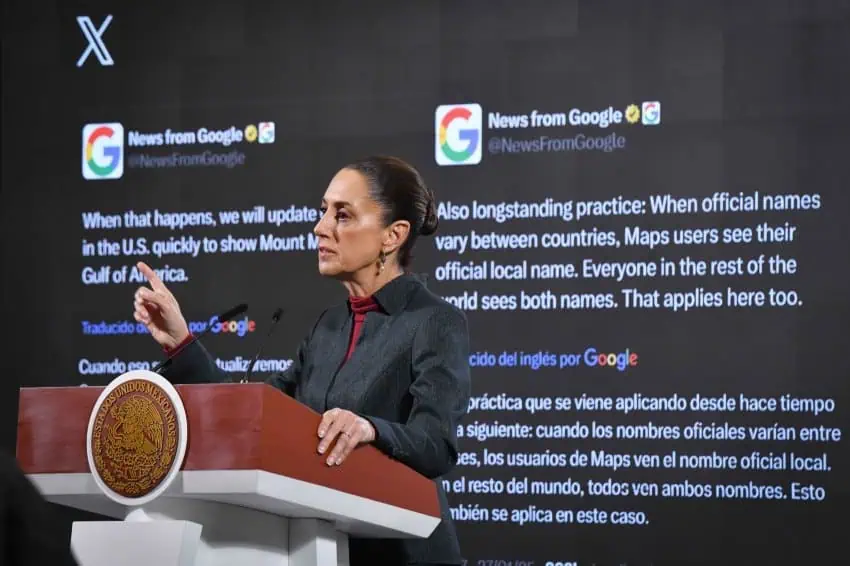
Sheinbaum said that the government would send a letter to Google after the tech company announced it would change the name of the Gulf of Mexico to “Gulf of America” in Google Maps in the United States following President Donald Trump’s executive order renaming the body of water.
“If you remember, Trump’s decree has to do with the continental shelf, which is different to the Gulf as a whole,” she said.
“So we’re sending a letter to Google,” Sheinbaum said, explaining that one of its aims would be to ensure that the company is aware of “this international division.”
Sheinbaum told reporters Wednesday that Mexico’s government will petition Google Maps to use the name “Mexican America” in certain searches. (Mario Jasso/Cuartoscuro)
“… Tomorrow, we’ll show you the letter that we’re going to send today,” she said.
“… To change the name of an international sea it’s not a country that changes it, it’s an international organization,” the president added, referring to the International Hydrographic Organization.
“… And, by the way, we’re going to ask [Google] for Mexican America to appear [on Google Maps], for the map of Mexican America to appear when one types in Mexican America,” Sheinbaum said.
Esteban Moctezuma to remain as Mexican ambassador to US
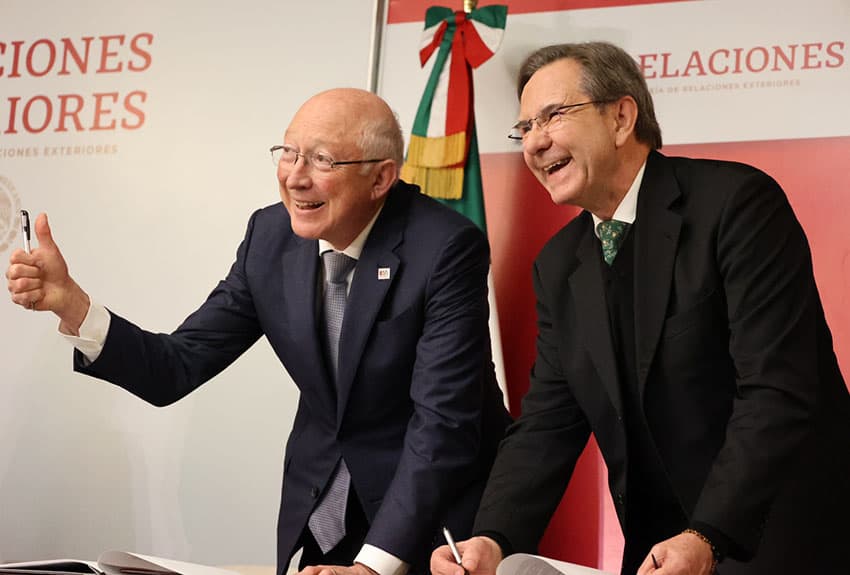
Sheinbaum confirmed that Ambassador Esteban Moctezuma — federal education minister during the first two years of the 2018-24 government led by ex-president Andrés Manuel López Obrador — will remain as Mexico’s top diplomat in the United States “for the time being.”
Mexico Ambassador to the U.S. Esteban Moctezuma, right, with former U.S. Ambassador to Mexico Ken Salazar, left, at the North American Leaders’ Conference in 2023. (Photo: @USAmbMex/Twitter)
“All the ambassadors are always under review. … We’re going to look at whether there will be a change or not,” she said.
Moctezuma, who became ambassador in early 2021, said in a video message on Tuesday that his “responsibility” and “conviction” is to “stand up for Mexico,” and “especially our people” during the second Trump administration.
“… I am a soldier for Mexico and we’re living in times that call for unity in order to defend our people and our national interests,” he said.
By Mexico News Daily chief staff writer Peter Davies (peter.davies@mexiconewsdaily.com)
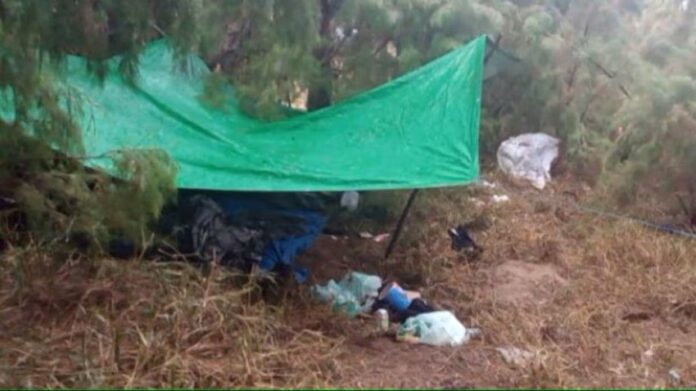
A lean-to at a supposed "narco encampment" discovered by Mexican authorities Tuesday on Isla de los Castores, an uninhabited island in the Rio Grande in Tamaulipas. (Government of Mexico)
Federal and Tamaulipas security authorities discovered on Tuesday a so-called “narco-camp” on an island in the Rio Grande from which suspected cartel gunmen allegedly engaged in a confrontation with United States border patrol agents in Texas on Monday.
Soldiers, Federal Attorney General’s Office (FGR) agents and state police located the camp on a small island called Isla Los Castores near the town of Los Guerra, Tamaulipas, according to media reports.
Tamaulipas state law enforcement, along with the Mexican military were involved in the raid on Isla Los Castores Tuesday. (Government of Mexico)
They reportedly seized weapons, ammunition, radios and tactical gear from the narcocampamento, where sleeping pads and kitchen utensils were also found.
The discovery came a day after U.S. border patrol agents patrolling in Fronton, Starr County, Texas, “received gunfire from cartel members in Mexico,” according to Chris Olivarez, spokesperson with the Texas Department of Public Safety (DPS).
In a post to X, Olivarez included footage of the alleged cartel gunmen on an island.
“DPS Drone Operators captured the gunmen fleeing Mexico due to military presence, & seeking refuge on an island between the US & Mexico. The State of Texas will continue to monitor the area closely & use every resource available to prevent transnational threats to our law enforcement partners & the homeland,” he said.
Fox News reported that “U.S. Border Patrol agents exchanged gunfire with suspected cartel members near the U.S.-Mexican border on Monday.”
“… A group of illegal aliens was attempting to cross the Rio Grande while bullets were fired but did not make it across,” Fox News said. “Neither the Border Patrol agents nor the suspected cartel members were hit.”
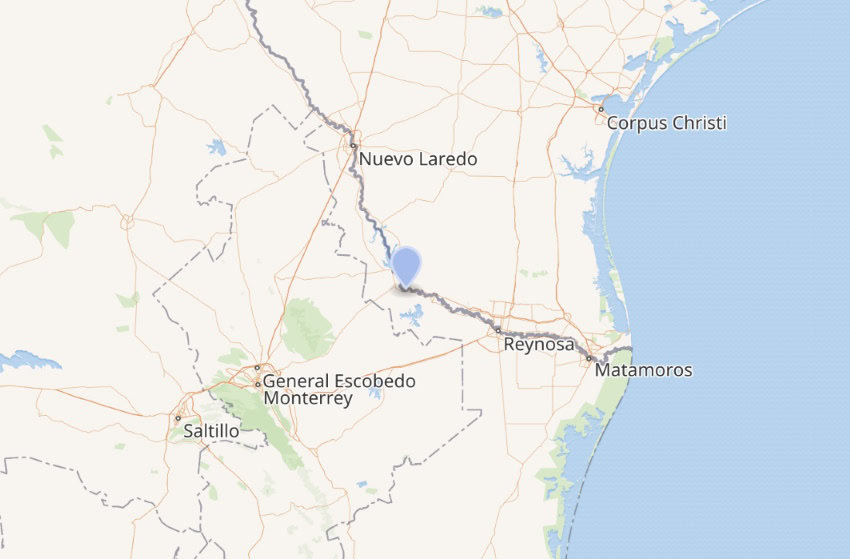
Fronton Island (marked by the blue pin) is an uninhabited island also in the Rio Grande River, in Starr County, Texas. It is located near Isla las Castores. Texas authorities have been patrolling Fronton Island since at least 2023, after clearing out evidence of occupation, allegedly by cartels smuggling migrants across the Rio Grande into the U.S. (Wikimedia Commons)
“… The area where the gunfire exchange took place is near Fronton Island, also unofficially known as ‘Cartel Island’ due to the criminal activity there,” the news outlet said.
At her Tuesday morning press conference, President Claudia Sheinbaum cast doubt on the accuracy of media reports, saying that the government had received “a note” about the alleged incident from a Mexican Consulate in the United States that didn’t “precisely” match “the information that appeared in the media.”
Attorney General Alejandro Gertz Manero said that the FGR was investigating. No arrests have been reported in connection with the apparent confrontation with U.S. border patrol agents.
The new United States government is bolstering security along the 3,145-kilometer-long U.S.-Mexico border as it seeks to stem the flow of migrants and narcotics into the U.S.
Texas Governor Greg Abbott said on X on Wednesday that he had issued five executive orders “directing Texas state agencies to partner with the Trump Administration.”
Those orders included “directing state agencies to assist federal immigration officers to investigate, arrest, detain, and deport illegal immigrants in Texas” and “directing the Texas Military Department to assist the United States Northern Command in repelling the invasion, securing the southern border, and neutralizing foreign enemies infiltrating Texas.”
Mexico's consumer protection agency Profeco said that it is currently reviewing demands for refunds from consumers who paid to watch the controversial film "Emilia Pérez" at Cinépolis theaters. (Canva)
Mexico’s Federal Consumer Protection Agency (Profeco) is investigating complaints from consumers seeking a refund from the Mexican movie theater chain Cinépolis after watching the film “Emilia Pérez.”
Since last Thursday, the agency has received many complaints on social media from consumers demanding the money spent on their movie tickets back, the head of Profeco Iván Escalante said during President Claudia Sheinbaum’s Monday morning press conference.
#BoletínDePrensa Derivado del reclamo de algunas personas consumidoras a través de redes sociales por el incumplimiento de la “Garantía Cinépolis”, la Profeco entabló pláticas con Cinépolis para precisar los términos y condiciones de dicha garantía, conforme a lo estipulado en la… pic.twitter.com/sXHaaAdC1U
Several moviegoers criticized the cinema for allegedly not honoring its “‘Cinépolis Guarantee,” which promises to reimburse the cost of your ticket if you are dissatisfied with the film.
“We contacted [Cinépolis] immediately,” said Escalante. “What they’re telling us is that it was a guarantee that they ran as a campaign to recommend certain films, but that in reality, since [the campaign] had been around for a long time and had not created any major problems, they left the guarantee in place, but had not trained their staff on how to [administer reimbursements].”
Emilia Pérez, directed by French filmmaker Jacques Audiard, had 10 nominations and four wins at the Golden Globes on Jan. 5 in Los Angeles. It has since broken the record for the most Oscar nominations earned by a non-English language film, with 13.
However, many Mexicans have responded negatively to the film, which portrays the leader of a cartel as a redeemed figure. They criticize the director for a perceived lack of cultural awareness about the disappearance of hundreds of thousands of people in Mexico as a result of cartel activity.
Despite sweeping the Golden Globes, “Emilia Pérez” has deeply offended a large segment of Mexico’s population. (Netflix)
“The impunity enjoyed by those responsible for over 300,000 dead and 121,000 missing isn’t material for a comedy,” added Meléndez.
At its Mexican premiere on Jan. 15, the French filmmaker responded to the criticism. “The drama of the missing is something that shocks me deeply,” Audiard said. “It’s a tragedy that’s largely invisible outside of Mexico, and my goal was to generate dialogue, not offense.”
Profeco said that it is currently reviewing demands for refunds from consumers who paid to watch “Emilia Perez” at Cinépolis theaters.
The agency has recommended that Cinépolis “recommend” rather than “guarantee” films under its policy, to avoid customer disappointment.
Starting in June, Philadelphia will have a daily nonstop flight to Mexico City departing at 10:02 a.m. (Actionvance Guy/Unsplash)
Starting June 5, Aeroméxico and Delta Airlines will connect Mexico City’s Benito Juárez International Airport (AICM) and Philadelphia International Airport (PHL) with a non-stop flight for the first time in five years.
The route will operate daily year-round on a Boeing 737 aircraft.
“Prior to this announcement, anyone needing to travel to Mexico City had to start their journey at another airport or have a layover along the way,” CEO of PHL Atif Saeed said in a press release.
In a statement, Aeroméxico said Philadelphia is the largest market in the United States without direct flights to Mexico. In addition to Philadelphia, Aeroméxico also recently added nonstop routes to Boston, Newark and Washington D.C.
According to PHL, regional demand for flights to Mexico is on the rise. Airport officials told the news site Philly Voice that there has been a 50% increase in air traffic from Philadelphia to destinations in Mexico since the start of the COVID-19 pandemic in 2020. Since 2014, air traffic from Philadelphia to Mexico has increased by 8.3% annually.
The partner airlines also announced a direct flight between San Luis Potosí International Airport (SLP) in the Bajío region and Hartsfield-Jackson Atlanta International Airport in Georgia (ATL). This route will operate daily on an Embraer 190 aircraft.
ATL is Delta’s headquarters and the world’s largest air travel hub. It serves more than 150 U.S. cities and more than 65 international destinations, with over 900 daily flights and more than 81 million annual passengers.
Aeroméxico said the two new routes to the eastern U.S. will be operated under its transborder joint venture with Delta, which has served more than 50 million customers since it took effect eight years ago.
The Mexican airline said that its joint venture with U.S.-based Delta “celebrated significant growth in 2024, introducing 28 new scheduled and seasonal routes,” adding that “the expansion in 2025 will continue this trajectory.”
At a meeting with representatives of 70 companies on Tuesday, Interior Minister Rosa Icela Rodríguez recognized the cooperation of the business community in response to an "appeal to goodwill." (Rosa Icela Rodríguez/X)
Mexico’s private sector has stated its commitment to offering 50,000 jobs to Mexicans deported from the United States — 15,000 more jobs than originally proposed — following U.S. President Donald Trump’s promise of a “mass deportation” of migrants illegally residing in the U.S.
At a meeting with representatives of 70 companies on Tuesday, Interior Minister Rosa Icela Rodríguez recognized the cooperation of the business community in response to an “appeal to goodwill.”
Companies affiliated with Mexico’s Business Coordinating Council (CCE), headed by Francisco Cervantes Díaz (center), initially committed to offering around 35,000 jobs to Mexicans deported from the United States. (Rosa Icela Rodríguez/X)
Rodríguez explained that the private sector-supported hiring program will allow returning migrants to reintegrate into the labor market through the Labor Inclusion Program for Repatriated People, an initiative of the Business Coordinating Council (CCE).
“If at least one in every 20 establishments employed one new person, we could hire 50,000 people. That is equivalent to hiring a quarter of all repatriations that occured in 2024,” said Roberto Campa, head of corporate affairs at Femsa (the parent company of Oxxo), at the meeting.
According to a presentation given by President Sheinbaum on Tuesday, Mexico received 181,202 Mexican deportees in 2024.
President of the CCE Francisco Cervantes Díaz said that the private sector must make their “greatest effort” to capitalize on the work experiences that repatriated Mexicans have had in various industries like manufacturing, agriculture and other sectors.
Available jobs will be advertised in collaboration with the employment agency ManPower, the Labor and Social Welfare Ministry (STPS) and the National Employment System (SNE). Listings will be published on the SNE website starting Feb. 3, Díaz explained. After Feb. 10, they will update the list of vacancies every Monday.
Francisco Cervantes, president of the CCE, said that the private sector must make their “greatest effort” to capitalize on the work experiences that repatriated Mexicans have had in the United States. (Rosa Icela Rodríguez/X)
Campa noted that this program is exclusively for Mexican citizens.
For the program to succeed, Díaz added that they need the support of the federal government, the STPS and local governments.
Alejandro Malagón Barragán, President of the Confederation of Industrial Chambers (Concamin), said that sectors with job postings include housing, construction, processed food and beverages and restaurants.
Some of the businessmen who attended the meeting included Julio Carranza Bolívar, president of the Association of Mexican Banks (ABM), Juan José Sierra Álvarez, president of the Employers’ Confederation of Mexico (Coparmex) and Juan Pablo Molina, vice president of Labor Welfare of the National Agricultural Council (CNA), among others.
President Claudia Sheinbaum’s government recently launched a “comprehensive program” for Mexicans deported during the second Trump administration.
The program — called “México te abraza,” or “Mexico embraces you” — provides welfare support for deportees, registration with the Mexican Social Security Institute (IMSS) and economic aid so that returning migrants “can return to their places of origin,” Sheinbaum said.
The Swiss company has operated in Mexico for 94 years. (Richard Juilliart/Shutterstock)
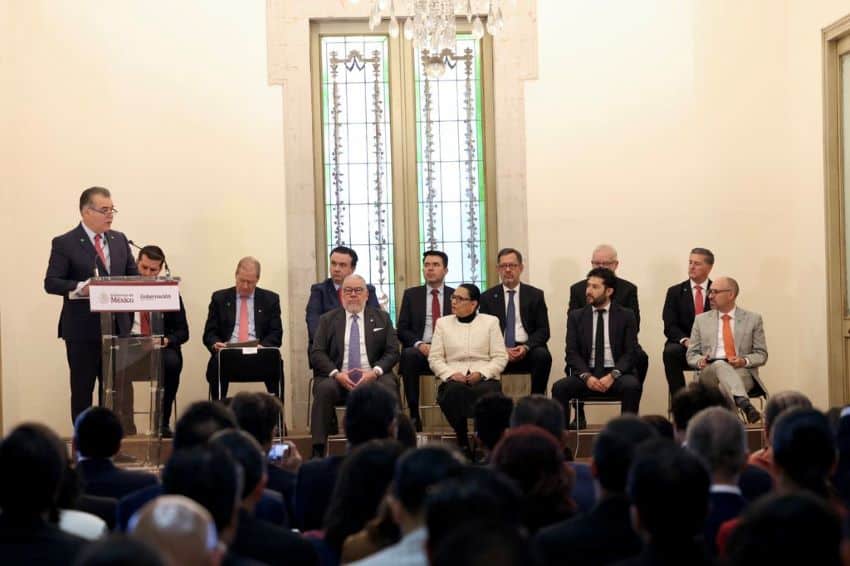
Nestlé will invest US $1 billion in Mexico over the next three years to expand its production operations, announced President Claudia Sheinbaum after meeting with the Swiss group at the National Palace on Tuesday.
“More good news for Mexico: we met with Nestlé executives at the National Palace, who announced a new investment of one billion dollars. We appreciate the trust placed in our country,” Sheinbaum wrote on the X social media site on Tuesday.
Anuncio de inversión de Nestlé en México
President Claudia Sheinbaum announced Nestle’s planned Mexico investment Tuesday after meeting with Nestlé executives earlier that day.
Nestlé plans to increase the capacity of the production lines at its Veracruz, Guanajuato, Querétaro and México state facilities, as well as develop a new distribution center to establish Mexico as an export hub.
“I think it is a great opportunity to reinforce confidence in Mexico, confidence in its government and the great opportunities that Mexico offers the world,” Nestlé Mexico’s CEO Fausto Costa stated in a video posted on Sheinbaum’s social media.
Nestle’s plan to expand capacity in Mexico forms part of President Sheinbaum’s Plan México investment strategy, announced on Jan. 13. The president described the plan as a long-term “vision for equitable and sustainable development” that promotes economic growth while prioritizing “well-being for our people.”
Nestlé has operated in Mexico for 94 years and currently employs over 13,000 directly and 500,000 indirectly. Women make up a reported 45.6% of its Mexican workforce.
“Nestlé México has established itself as the fourth most important market for Nestlé worldwide, in addition to being the second market in which the company invests the most,” Nestlé’s CEO for the Americas Zone Steve Presley said. “This is a testament to the commitment and confidence we have in this country.”
In addition to the US $1 billion investment, Nestlé expects to spend over $2 billion on agricultural products in Mexico between 2025 and 2027, which the company said will support farmers and contribute to Mexico’s socioeconomic growth.
Mike Shinoda and crew are planning a triumphant return to form in Guadalajara next month — amongst other great events. (Linkin Park)
As the excitement of the new year gradually fades away and we enter the second month of 2025 — that was fast! — Guadalajara has a lineup of events to keep things exciting this February. From concerts by international artists to sporting events and an art festival on the Chapala Riviera, residents and visitors can expect plenty of options.
Here are the best events in the Jalisco capital next month.
Guadalajara Contemporary Art Weekend
(Gobierno de Jalisco)
If you like contemporary art, don’t miss the Guadalajara Art Weekend. For three days, this festival will bring together galleries, artists, designers and architects interested in design and contemporary art. Participating galleries include Tiro al Blanco, Palma Project Room, Sala Silenciosa and House of Gaga, among others.
The festival serves as a platform that supports local innovative voices and ideas. It is endorsed by the magazines Architectural Digest, Vogue Mexico and Vogue Latin America, in collaboration with the local Ministry of Culture.
Dates: Jan. 30 to Feb. 2 Location: Various sites. For the full program, click here. Tickets: Free entry.
Linkin Park concert
(Ticketmaster)
Rock legends Linkin Park will perform live in Guadalajara as part of their From Zero World Tour, which also includes stops in Mexico City and Monterrey.
The popular rock band, who first rose to fame in the early 2000s, are returning from a long hiatus following the death of vocalist Chester Bennington in 2017. The band’s new world tour will introduce fans to its new (and controversial) vocalist, Emily Armstrong.
Dates: Feb. 3
Location: Stadium 3 de Marzo, Av. Patria. Zapopan. Tickets:Here.
Outdoor food and wine festival in one of Guadalajara’s hottest streets
(Festival Andante/Instagram)
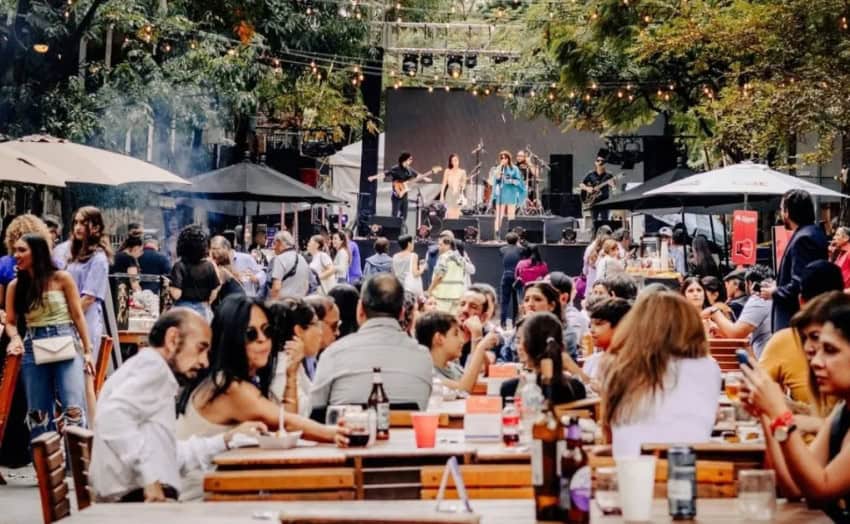
For one day, the cobbled Calle São Paulo will transform into a pedestrian walkway for the Andante Festival, a culinary event for the whole family. The street, lined with some of the city’s most popular restaurants, will boast pop-up stalls from local eateries offering a variety of wines and food.
Expect live music performances, displays of performing arts and an open-air market.
Dates: Feb. 22 Location: Calle São Paulo, Col. Providencia Tickets: Free entry.
Chivas Femienil and Atlas Femenil
(Chivas Femenil/Facebook)
If you enjoy women’s soccer, you’ll have the opportunity to watch the city’s two leading teams compete in Guadalajara this month.
Chivas Femenil will face off against Atlético San Luis on Feb. 6, followed by a match against Toluca on Feb. 13. Meanwhile, Atlas Femenil will face off Necaxa on Feb. 11.
Dates: Feb. 6, 11 and 13 Location: Estadio Akron (Chivas vs. San Luis) and Estadio Jalisco (Atlas vs. Necaxa) Tickets: Available at the Chivas Femenil and Atlas Femenil websites
Homeshake at C3 Stage
(Instagram)
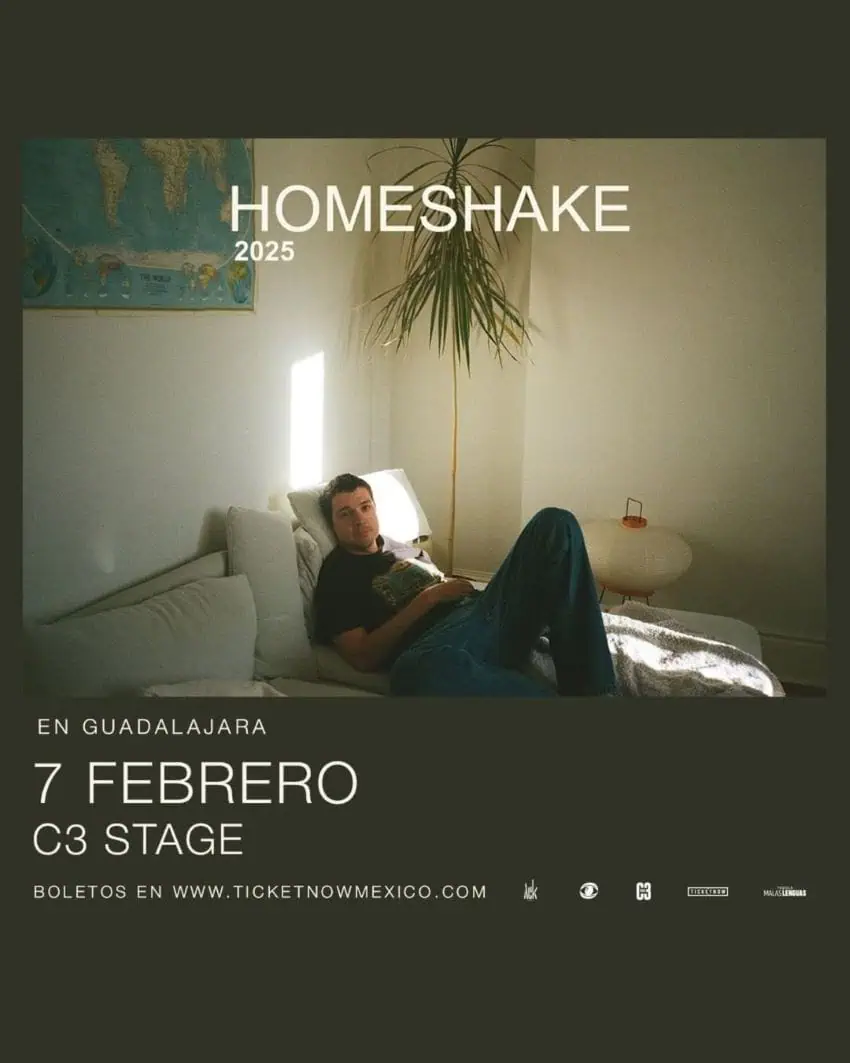
After the resounding success of his first visit to Guadalajara in 2022, Canadian Peter Sagar, better known as Homeshake, returns for another live performance. The Montreal-based artist creates laid-back and minimalist R&B pop music. Homeshake is known for pairing falsetto vocals with synth-heavy pop arrangements that show the influence of smooth R&B from the 80s.
Dates: Feb. 7 Location: C3 Stage, Ave. Ignacio L Vallarta 1488, Col. Americana Tickets:630 pesos
Ultimate Tennis Showdown (UTS)
(UTS Guadalajara)
Created by Serena Williams’ trainer Patrick Mouratoglou, UTS Guadalajara will gather some of the best tennis players in the world to compete for a US $1.4 million prize.
This tournament introduces an innovative format designed to make the matches more dynamic with interactions between players and fans. Guadalajara is the tournament’s first stop in its Latin American tour. Expect to see players like Nick Kyrgios, ranked 13 in the world, and sixth placed Casper Ruud.
Dates: Feb. 14 to 16 Location: Centro Panamericano de Tenis de Zapopan, Av. Ecónomos, La Estancia. Zapopan. Tickets: Tickets start at 4185 pesos
Half Marathon Guadalajara Electrolit
(Comude Guadalajara)
Runners in Guadalajara rejoice! The city’s anticipated half marathon is back for another edition. Endorsed by World Athletics, the Mexican Federation of Athletics Associations (FMAA) and the Association of International Marathons and Distance Races, this race carries the World Athletics Label distinction. Its 2024 edition saw over 20,000 participants.
The 21-kilometer route will offer a sightseeing route through the main streets of Guadalajara, such as Vallarta Avenue, Niños Héroes and Mariano Otero.
Dates: Feb. 23 Location: Departing from the La Minerva roundabout on Av. Vallarta. Registration:539 pesos
28 artists and 16 local art studios will showcase their work for two days in the lakeside town of Ajijic, Chapala. Art walkers will have the opportunity to meet artists and discover their work in different locations across Ajijic, including art galleries, restaurants and hotels.
Dates: Feb. 7 and 8.
Location: Various venues. Click here for the full directory.
Tickets: Sold at each site
DJ Fiesta Night
(Eventbrite)
Since 2019, the Fiesta Vibes collective has organized events around the world creating musical rhythms inspired in different cultures. Now, Fiesta Vibes collective is bringing Guadalajara a music festival where Detroit rhythms meet Latin American sounds. The guest DJs will play genres like Latin house, Afro house, dembow, baile funk, guaracha and more.
Gabriela Solis is a Mexican lawyer turned full-time writer. She was born and raised in Guadalajara and covers business, culture, lifestyle and travel for Mexico News Daily. You can follow her lifestyle blog Dunas y Palmeras.