Home Blog Page 952

In Mexico struggling with learning Spanish? Try being a baby for a while

0
baby with parents
Children's native language acquisition begins with a long period of listening and observing their parents' speak. Second language learners can profit from their example. PeopleImages/IStock

The first year I was in Mexico, I took Spanish classes at the School for Foreign Students at the Universidad Veracruzana. My classmates were mostly college students like me, and they came from all over the world.

The European students always made me feel a little bit jealous. As I struggled through verb conjugations and new vocabulary, they’d say things like, “Oh, I just keep getting Spanish confused with Italian!”

When it comes to those of us from (north-er) North America, we’ve really only got the one language, unless you happen to be French Canadian. And when your native language is the lingua franca of the day, it means that not much effort is made to take advantage of kids’ spongey brains language-wise. What for, we think? You already speak the language that everyone else in the world must adapt to.

This means, of course, that most of us learn second languages as adults, when it’s decidedly harder. Learning a language as a child happens naturally, and as long as we are around the language and are forced to use it, we’ll learn it.

So unlike, say, the Danish, who learn English and perhaps a few other languages as children, we English speakers are both privileged in that most people attempt to speak our language and at a disadvantage because for the most part, we get to adulthood not knowing how to learn another language; the experience simply hasn’t been necessary.

Even so, we all know the joke: “What do you call someone who speaks two languages? Bilingual. What do you call someone who speaks one language? American.”

While this is fair, I can’t help but feel a little offended. I mean, all emotions aside, we’ve got one giant ocean on one side of us, one giant ocean on the other side of us, and a world full of people who already speak our language. What do you expect?

If you’re reading this article, chances are you’re interested in either learning Spanish or continuing to learn Spanish. Maybe you’re already fluent! (If that’s the case, feel free to add on in the comments to what I’ve written.)

As someone who went through the humiliating yet very rewarding experience of learning Spanish as an adult, I’ve got some general tips. Read on if you need some encouragement!

  1. Just listen for a while. Think about how we all learn our first languages: we don’t even attempt to start saying anything coherent until we’re at least a year old, and I personally know plenty of four-year-olds that can still only barely be understood. So give yourself a break, and remember that it’s okay to just sit there and absorb the sounds around you without worrying about what they mean. Try to do so as often as possible. Pay attention to the sounds people make when they’re speaking, the tone of their voices in certain situations, the cadence of their speech. It’s also a nice way to calm down your anxiety about not understanding: “It’s alright, I’m just a baby.”
  2. Listen to music and watch TV and movies in Spanish. This is an even more stress-free way to simply listen, as there’s no expectation that you’ll need to answer the other people. Keeping subtitles on might help as well. There are plenty of phrases, words, and common exclamations that I know today because I read English subtitles while they were said on TV and thought, “Oh, so that’s how you say that!” It’s also a great way to get yourself out of the habit of trying to translate something from English, because it widens your repertoire naturally, introducing aspects of the language without first passing through your native language filter.
  3. Now that I’m on my third tip, it occurs to me that most of these are still about listening. No matter! Again, so much of learning is simply paying attention. What do people say when they greet each other and when they leave? What do they say when they want to get someone’s attention? What do they say when they’re surprised, and what are the filler words and phrases they say without thinking (”ahorita,” anyone?)? Learning these will get you far on your quest of speaking like a native.
  4. Don’t get too hung up about your accent. We all have accents; even “native speakers” have regional accents. I won’t lie: the English-speaker’s accent in Spanish is not very sexy. It’s not like a French accent in English or even a German accent in English. But you know what? That’s okay. And the more you listen to others, the more you’ll be able to imitate them. Learning to roll your r’s, for example, is a big step and really does come with practice.
  5. Some further tips on pronunciation: remember that all the letters in Spanish are pronounced (for the most part) individually and that they are pronounced the same way every time, in every word. So an “o” will always sound the same, as will a “g”, as will a “u”… you get the idea. In English we’re able to be a bit lazy with our vowels in that we let our mouths keep moving once we’ve started saying them (think about how we say the letter “a” for example: “aee.”) In Spanish, the vowels don’t move around as the milliseconds go by, and making sure you don’t let them will do wonders for your accent. Nail the vowels – they are all sounds we also have in English – and you’re golden. Consonants are mostly the same, though the “d” is a bit more forceful in Spanish – almost halfway to a “th” sound — and the “b” and “v” are pronounced so similarly (each one about halfway between the two) that even when Mexicans spell out a word aloud for someone else, they will usually say B-grande to mean “B” or B-chica or V-chica to mean “V” so that the person writing down the word can be sure which they intend. (There is some conflict among Mexicans about which to use. Some will insist that the chica version is said with a “B” and others say it’s with a “V,” but they both sound the same when said aloud, so…)

So remember, be like a baby: listen closely and don’t stress. And even if your Spanish remains subpar for life – hey, not everyone’s got a knack for languages – remember that at least in Mexico, you’re surrounded by tolerant and friendly people who will do their best to communicate.

Sarah DeVries is a writer and translator based in Xalapa, Veracruz. She can be reached through her website, sdevrieswritingandtranslating.com
Durango: a primer for tourists and the more adventurous

0
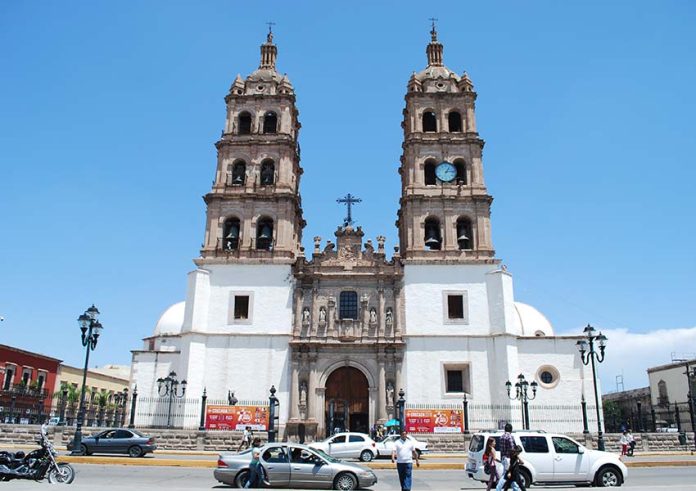
Cathedral Basilica of Durango
The Cathedral Basilica of Durango in Durango city. Its baroque design can be considered the architectural style’s “last stand” in northwestern Mexico.

Jumping at the chance to escape to somewhere I knew nothing about, I accepted a temporary teaching gig at the American School in the city of Durango some years ago.

I really liked the city and climate, but life called me back to Mexico City. However, I left with a standing invitation from noted artist and ceramicist, Trinidad (Trino) Núñez, to stay if/when I returned, and perhaps to his surprise, I recently took him up on it. His extra bedroom plus my car, I hoped, would allow me to see more of the state than I could during my previous visit.

Let’s say “mission accomplished” – somewhat.

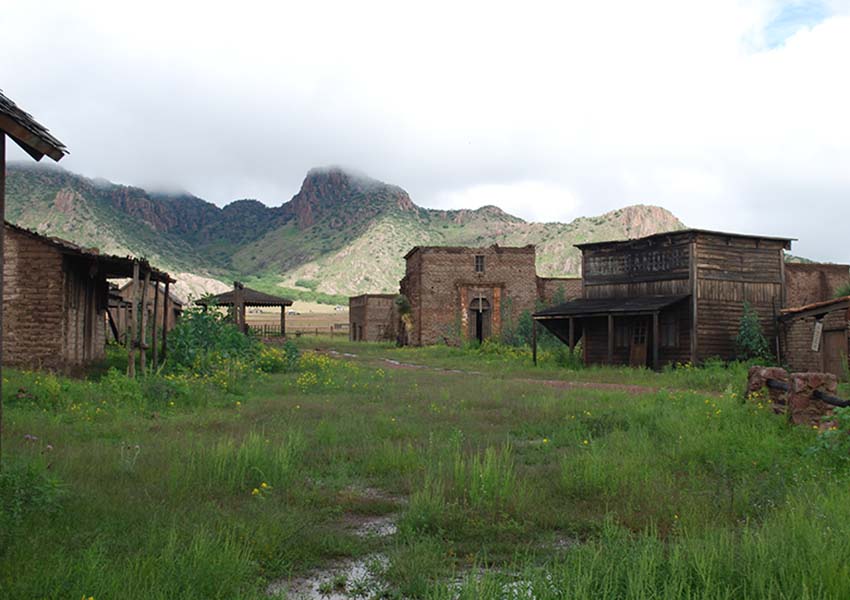
Durango has so much going for it as a destination – an environment much like the southwest U.S. that has been used in Hollywood films, a capital with colonial buildings, two important suspension bridges and Tepehuan indigenous and Mennonite communities.

John Wayne's La Joya Ranch in Durango, Mexico
The La Joya ranch, located 44 kilometers outside Durango city, once belonged to John Wayne, who shot several films here. The site is still occasionally used as a movie location.

Durango city is only three or so hours from Mazatlán by car along one of the most scenic roads in Mexico.

The historic center remains quite charming, contrasting with much of northern Mexico because of its Baroque architecture. The buildings serve as a reminder that the Spanish got this far northwest fairly quickly. It is also famous for scorpions and movie sets from old westerns shot from the 1950s to the 1970s.

I really wanted to take advantage of being able to traverse the wide spaces between towns and other attractions that only a vehicle can afford. Not finding a whole lot of information online, I just figured I could drive up highways and pull over at interesting sites.

But I learned that motoring in Durango has its own peculiar quirks, to say the least.

My first drive took me up Highway 23, which extends north/northwest and dead ends at Guanaceví in the mountains. I was treated to fantastic scenery on all sides, although there were precious few places where I could pull over safely and take pictures.

The towns of Nuevo Ideal and Santiago Papasquairo were larger and more modern than I expected, clearly regional economic centers. You have to go to the northern end, to Santa Catarina Tepehuanes and Guanaceví, to see the kinds of pueblos you might expect in an isolated valley. Or you need to get off the highway.

That’s easier said than done, as Durango state is pickup truck territory.

Off the main roads, there are many small and large attractions such as Lake Santiaguillo, Charco Azul, petroglyphs and small towns with interesting churches, but many of these are on dirt roads. The rainy season creates mud that my city-slicker car is no match for, and rains can carve out gullies overnight prohibitive to any vehicle.

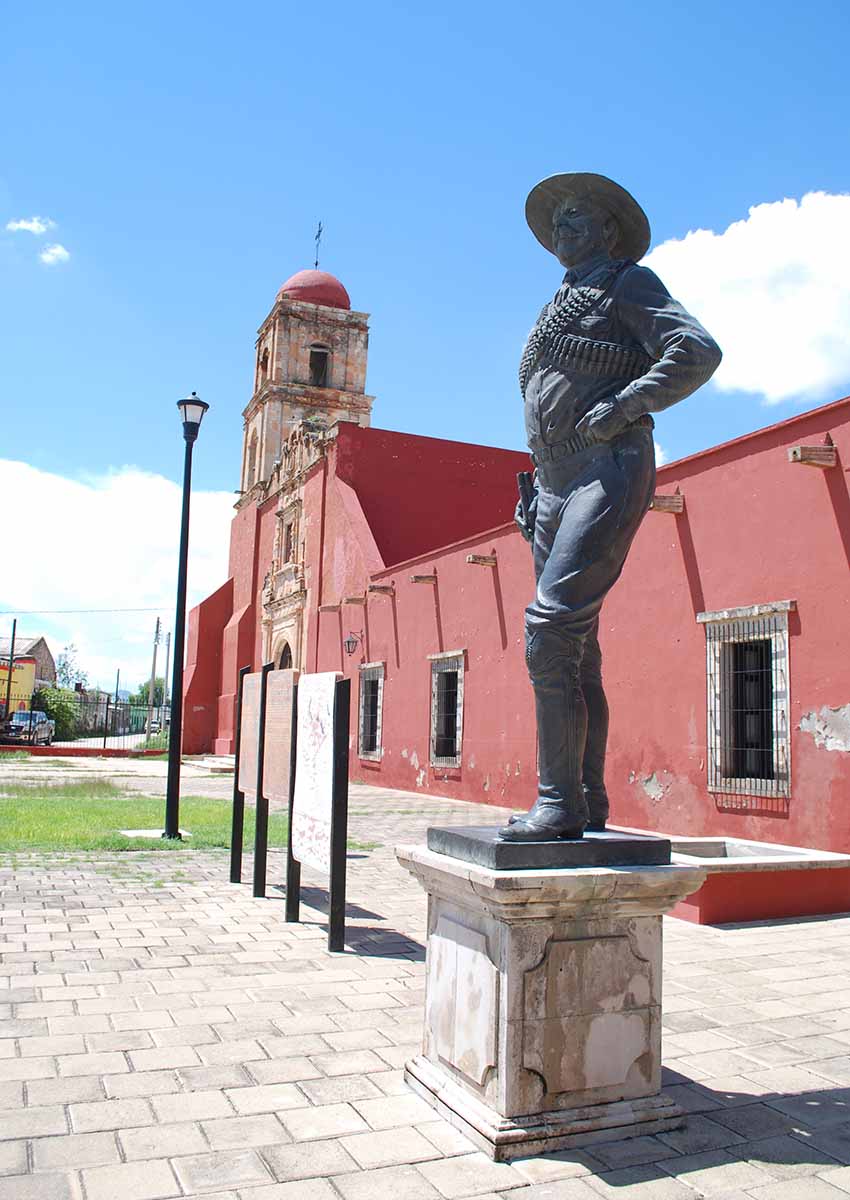
Canutillo hacienda in northern Durango
The Canutillo hacienda in northern Durango was revolutionary Pancho Villa’s home for the last three years of his life. The surrounding Ocampo municipality hopes to develop this museum and the area for tourism.

If you browse through México Desconocido’s travel guide to the state (available in English), you might be surprised to find that over half of it is dedicated to the capital and most of the rest to its two Pueblos Mágicos — Nombre de Dios and Mapimí. Everything else barely gets a mention.

Starting from that first drive, why this is the case became understandable to me, if still terribly disappointing.

The problems I faced on Highway 23 are found elsewhere: dirt roads in drier areas should be better, but they aren’t because of a lack of grading and other maintenance. And highways present their own challenges: even the libre (non-toll) highways have long stretches where you can easily get up to more than 140 kilometers per hour without realizing it as you drive good pavement in a straight line in the middle of nowhere.

But watch out when you get anywhere near a town.

State authorities do not maintain highways in towns, and neither do the municipalities. I swear there were areas with potholes big enough to swallow my car. Even on the most important highways — such as the expensive toll road to Mazatlán, with the state’s engineering pride the Baluarte bridge — potholes are not unknown.

Fallen rock is not uncommon either, preventing the driver from zipping along, appreciating fully the wonderful scenery passing by. One eye always has to be on the immediate road ahead. The other issue is the severe lack of tourist information, online and off.

Even for the state’s two Pueblos Mágicos, signage is rare and often useless. Paper guides are still the best source of info. There are Turimexico web pages touting various routes for mezcal, the Mennonites, etc., but there are no maps, not even a list of the mezcal producers (vinatas) in Nombre de Dios. The state tourism ministry does have a website promoting things to do in Durango, but it’s a really an introduction to the state’s offerings, light on detailed information, and it’s only available in Spanish.

Some information online is misleading: yes, there is an entrance to the famous Zone of Silence desert area, off the highways between Ciudad Jiménez and Mapimí, but the welcome center is 11 kilometers inland over, yup, car-prohibitive dirt roads. And to visit, you have to make an appointment for a tour with the Ejido La Flor, a communally owned area, which will arrange transportation.

The north of the state, the heart of Pancho Villa territory, is completely virgin touristically. Despite a seemingly-infinite number of hectares of nature, right now I can recommend only one place, Mexiquillo, for general ecotourism because it is easy to access from the Mazatlan highway and recently developed sufficient lodging facilities of various types to allow a range of people to visit.

Durango’s tourism deputy minister Elvira Silverio agrees that much work needs to be done so that, in her words, “…when I say ‘Durango,’ everyone knows what I am talking about.”

If your aim is to say you have been to the state, your best bets are still the capital, the Pueblos Mágicos and Mexiquillo. Anywhere else should be for the more determined traveler who has flexibility, a truck or sport utility vehicle and the money to fill a gas tank.

Leigh Thelmadatter arrived in Mexico 18 years ago and fell in love with the land and the culture in particular its handcrafts and art. She is the author of Mexican Cartonería: Paper, Paste and Fiesta (Schiffer 2019). Her culture column appears regularly on Mexico News Daily.

Senate considers bill to double paid vacation days for Mexican workers

0
The base for annual paid vacation days could go from six to 12 if the proposal passes.

Annual vacation time for Mexican workers could soon double thanks to a proposal to be considered by senators next week.

Paid leave for employees who have completed one year of service would increase from six days to 12 under a proposal put forward by Citizens Movement party Senator Patricia Mercado.

Workers would get an extra two days of vacation time for each additional year of service they complete during their first five years of employment. After that period, employees would have to work for another five years to qualify for an additional two days paid leave.

Mercado presented her proposal to the Senate’s Labor and Social Welfare committee, whose members are set to debate and vote on it next Tuesday. If approved, the so-called “decent vacations” proposal would progress to the Senate for consideration by all 128 senators.

Similar proposals have been introduced to Congress in the past but haven’t been approved. It remains to be seen whether Mercado’s bill will attract sufficient support to become law.

The current vacation time offered to employees who have completed one year of service is significantly less than that recommended by the International Labour Organization (ILO), a United Nations agency.

Established in 1970, the ILO’s “Holidays with Pay Convention” states that “every person to whom this Convention applies shall be entitled to an annual paid holiday” of at least “three working weeks for one year of service.”

The standard working week in Mexico is six days, so Mexican workers would be entitled to 18 days of paid leave per year.

Mexico, however, has not ratified the ILO convention, and annual vacation time here is significantly less than that offered by employers in many other countries.

Jorge Sales, a labor lawyer, suggested that increasing paid vacations was too big a burden for employers to assume. The government wouldn’t cover any of the additional costs incurred by employers, he told the newspaper Reforma.

With reports from Reforma and El Economista 

Law enforcement operation deployed in Zihuatanejo to address insecurity

0
Oxxo closed in Zihuatanejo extortion fears.
Oxxos in Ixtapa-Zihuatanejo have been closed for days due to fears of extortion by organized crime, already a standing problem with other businesses in the resort area.

Authorities have arrested eight suspected extortioners in Zihuatanejo, Guerrero, where threats by criminals forced the closure of at least 20 Oxxo convenience stores this week.

Guerrero police collaborated with federal and municipal authorities on an operation that resulted in the alleged criminals being taken into custody.

“They’re extorting Oxxo stores,” said state Security Minister Evelio Méndez Gómez, referring to the eight people who were detained.

Extortion threats shut down at least 20 Oxxo stores in Zihuatanejo and the nearby resort town of Ixtapa, the news website Animal Político reported Wednesday. Some have remained closed for days. An additional three Oxxos closed in the neighboring municipality of Petatlán.

The closures came after an armed man entered a Zihuatanejo Oxxo last Sunday and demanded money, Animal Político said.

The employees reportedly told the man that they couldn’t give him the money he was asking for because it was in a safe they couldn’t access. The armed individual subsequently shot and wounded one of the workers, Animal Político said.

Extortion has become a recurring problem in Zihuatanejo, a coastal city and municipality that is one of Guerrero’s top tourism destinations.

Building supplies outlets, tortilla shops, hotels and beer stores are among the businesses that have been affected this year. Taxis and public transit vans suspended service earlier this year due to violence against drivers and threats made by organized crime.

At his regular news conference on Thursday, President López Obrador said he was unaware of the Oxxo closures in Zihuatanejo but acknowledged that extortion is a problem across Mexico.

“It is the crime that has increased the most. I would say that we’ve managed to reduce the majority of crimes, but one that is still outstanding is extortion,” he said.

The president highlighted that thousands of soldiers, marines and National Guard (GN) members are helping to combat insecurity in Guerrero, and noted that his administration is building new barracks for the GN, which is now part of the army.

“We’re going to get to 500 [barracks] across the country, we now have 120,000 National Guard members and we’re going to get to 150,000,” López Obrador said.

“… When the Federal Police operated there were no barracks. At [the force’s] best time there were 40,000 members … but no barracks. If they were sent to Zihuatanejo because there was a lot of extortion, they had to camp or live in a hotel, [it was] a regrettable situation,” he said.

With reports from El Financiero, Animal Político and El Sol de Acapulco 

The mystery of Piedras Bola — how did these giant rocks form?

0
Piedras de bola stones in Jalisco, Mexico
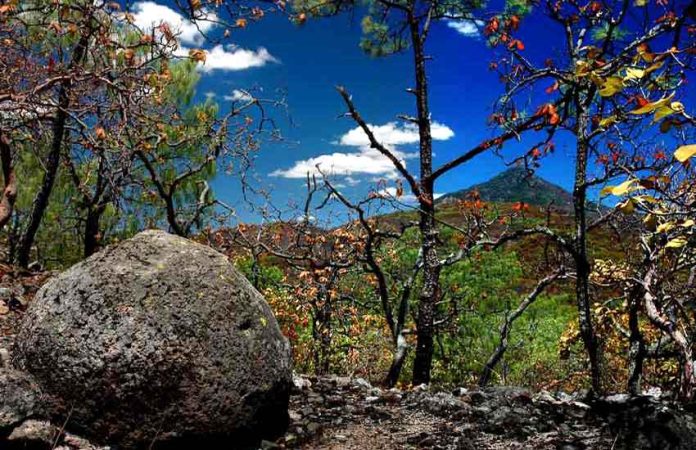
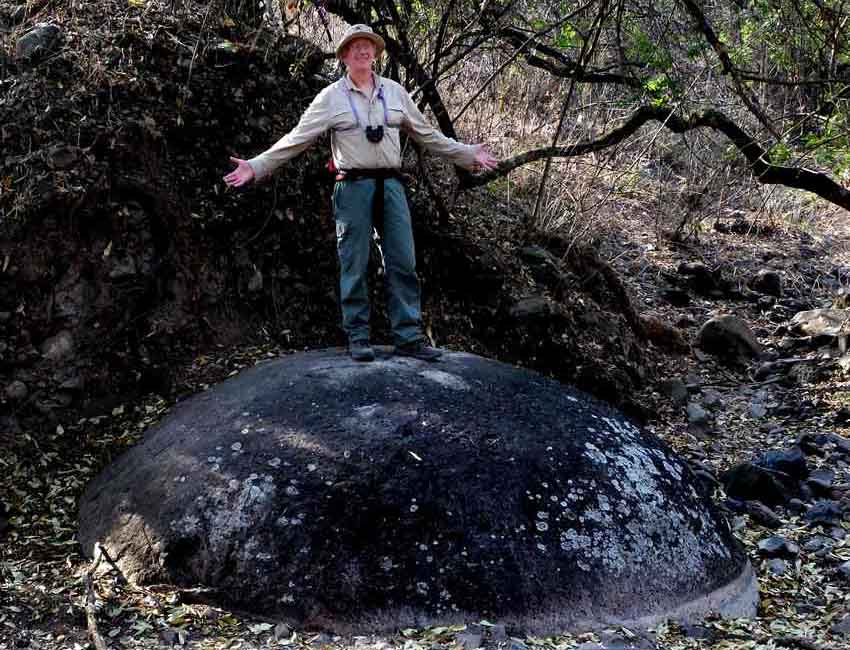
These giant stone balls are found in and around the Cerro de Ameca, 65 kilometers west of Guadalajara. Geologists have offered various theories as to how Mother Nature made them.

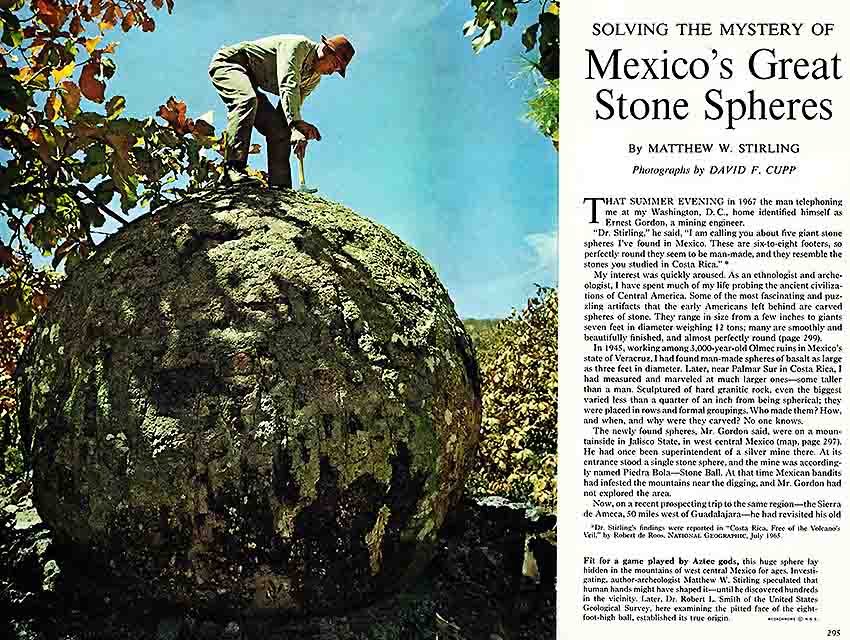
The Piedras Bola Silver Mine, located in Jalisco’s Sierra de Ameca, is named after a giant stone ball lying just outside its entrance. In 1967, the former superintendent of the mine, Ernest Gordon, was shown five more huge stone balls in the hills above the mine, prompting him to place a telephone call to archaeologist Matthew Stirling in Washington, D.C.

Stirling — a pioneer who headed the Smithsonian’s Bureau of American Ethnology for several years and is known for his discoveries about the Olmec civilization and for being an early advocate of the idea that they predated the Maya — had published reports of granite balls he had found in Costa Rica, sculpted by human hands centuries ago.

The balls that Gordon had found in Mexico appeared to resemble the ones studied by Stirling. “These are six to eight footers,” Gordon told Stirling, “so perfectly rounded, they seem to be manmade.”

In December of 1967, Gordon led him to the site on top of the mountain where the balls sat, 65 kilometers west of Guadalajara, in Ahualulco, Jalisco. Today, it’s a nature reserve and park.

1969 National Geographic article on the Piedras Bola rocks in Jalisco
This 1969 National Geographic feature on the Piedras Bola happened because famed archaeologist Matthew Stirling convinced the magazine it was of interest. On top of the ball: U.S. geologist Robert L. Smith. National Geographic

“Such great numbers surely indicated natural formation,” wrote Stirling in an article in the August 1969 issue of National Geographic.

For the article, Nat Geo asked USGS geologist Robert L Smith to explain just how Mother Nature had formed all those nearly perfect spheres. The word of a scientist was definitely needed since the best that local legend could come up with was that these hills had once been inhabited by giants and the Piedras Bola had been their canicas (marbles).

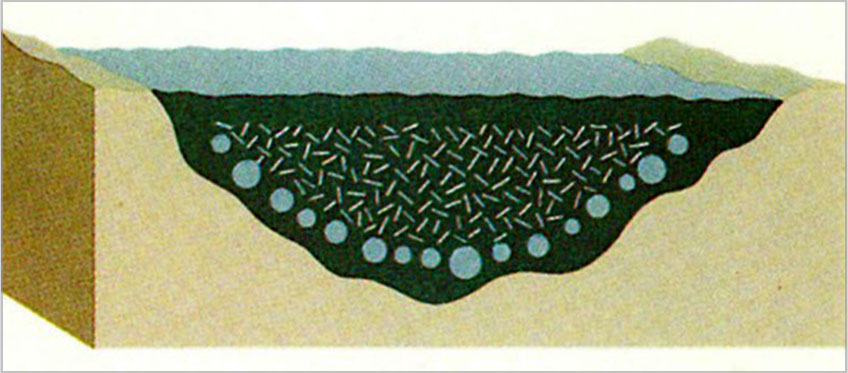
Smith told the magazine that a pyroclastic flow of hot volcanic ash had blanketed the area long ago. Deep below the surface, the volcanic tuff began to crystallize “in the nuclei of single glass particles,” forming small balls that slowly grew larger with time, resulting in the stone balls in the hills above Ahualulco.

In 2007, the University of Guadalajara (UdG) published a 266-page book on the Piedras Bola and their surroundings. Here we find another analysis of the origin of the giant stone balls.

National Geographic Illustration of Piedras Bola rocks in Jalisco, Mexico
Image from the National Georgraphic article illustrating the theory that University of Guadalajara scientists would also ascribe to in 2007: that numerous of these round rocks should also lie hidden underground. National Geographic

The UdG team suggested that lava bombs and incandescent blocks were falling into the pyroclastic flow. As the flow passed through narrow valleys, they created turbulence, causing these intrusive lava lumps and blocks to rotate and become coated with layer after layer of hot tuff — snowballing into spheres of various sizes.

The Nat Geo and UdG theories were the only credible explanations I had heard of up until a few days ago when I headed for the Piedras Bola with a group of ornithologists.

I had last seen the site in 2013 when my goal was to measure the largest of the megaspherulites (i.e., the stone balls) for myself.

Now, nine years later, I wanted to revisit the Piedras Bola because I had heard rumors that the nature reserve had been abandoned by local authorities and was falling into ruin.

Natural round ball rock formations in Jalisco Mexico
This formation, called The Skull, helped geologist Chris Lloyd understand how these rocks were formed.

Riding in a sturdy Tacoma with four-wheel drive, we turned off the Ahualulco-Ameca highway onto the 6-kilometer dirt road leading there. We passed the now dysfunctional ziplines and hanging bridge, into which officials had poured a great deal of money, which critics say could have been used to build a better-quality access road.

Unfortunately, the road they did build deteriorates badly after three-quarters of the way, and you now need four-wheel drive to make it all the way to the top. The rough state of the road is matched by the deplorable state of the facilities which had been built to welcome visitors.

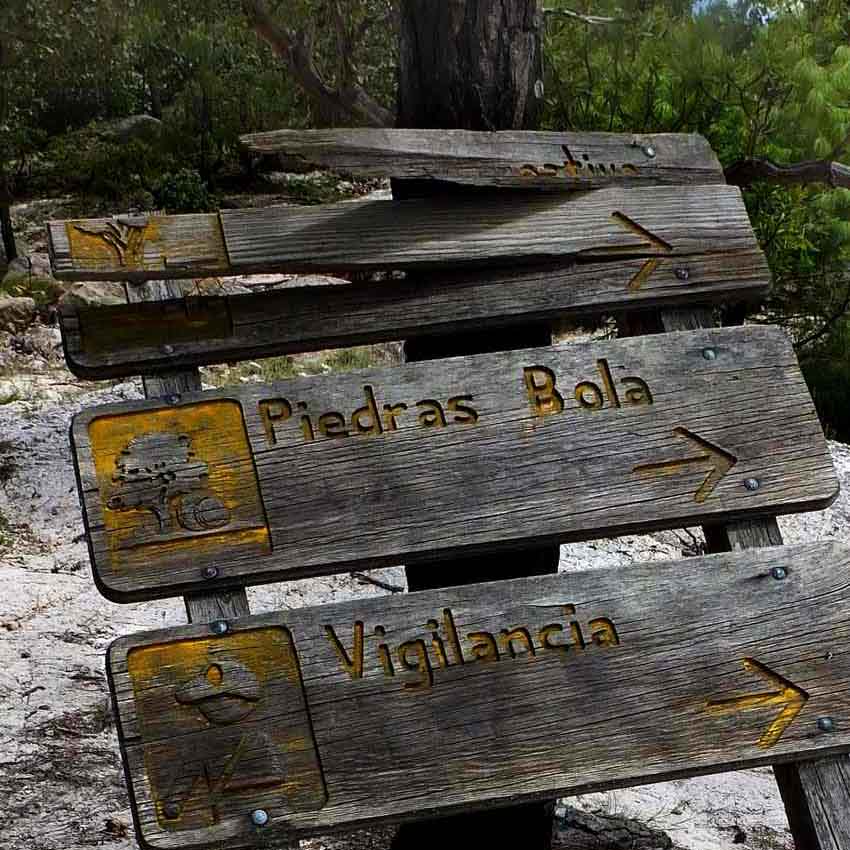
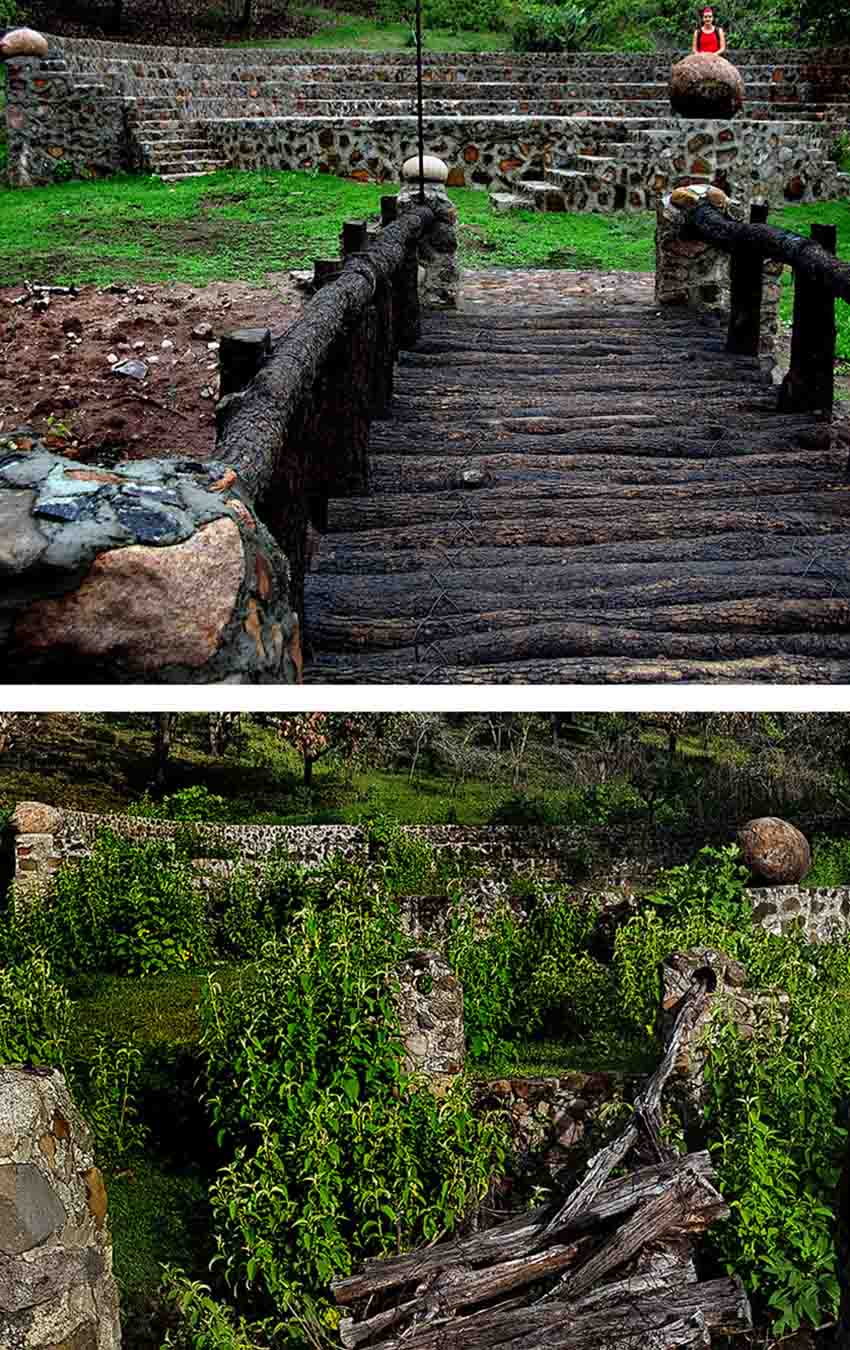
The outdoor theater for visitors that was built there is now overgrown with weeds. All the wooden bridges have fallen to pieces. Signs meant to orient visitors are now just about unreadable.

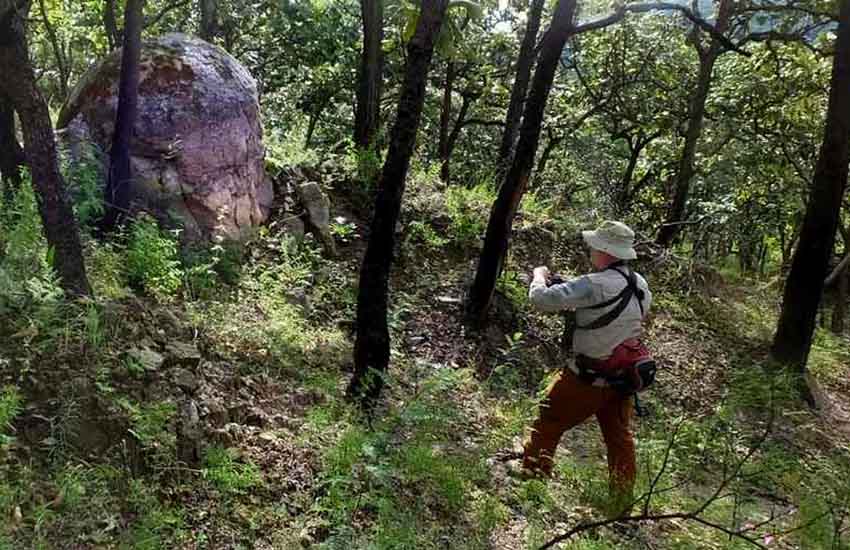
As we hiked up the trail to the Piedras, the organizer of this trip, Canadian geologist Chris Lloyd, mentioned that in his examination of the stone balls, he had never seen any evidence to back up the two theories of their origin which I have mentioned above.

Piedras Bola nature reserve in Jalisco
Jalisco’s Culture Ministry spent over 10 million pesos at the Piedras Bola site, making it into a nature reserve with activities like zip-lining, Today, it has become a ghost park.

“Let’s take a look at some of the balls which have split open,” he suggested.

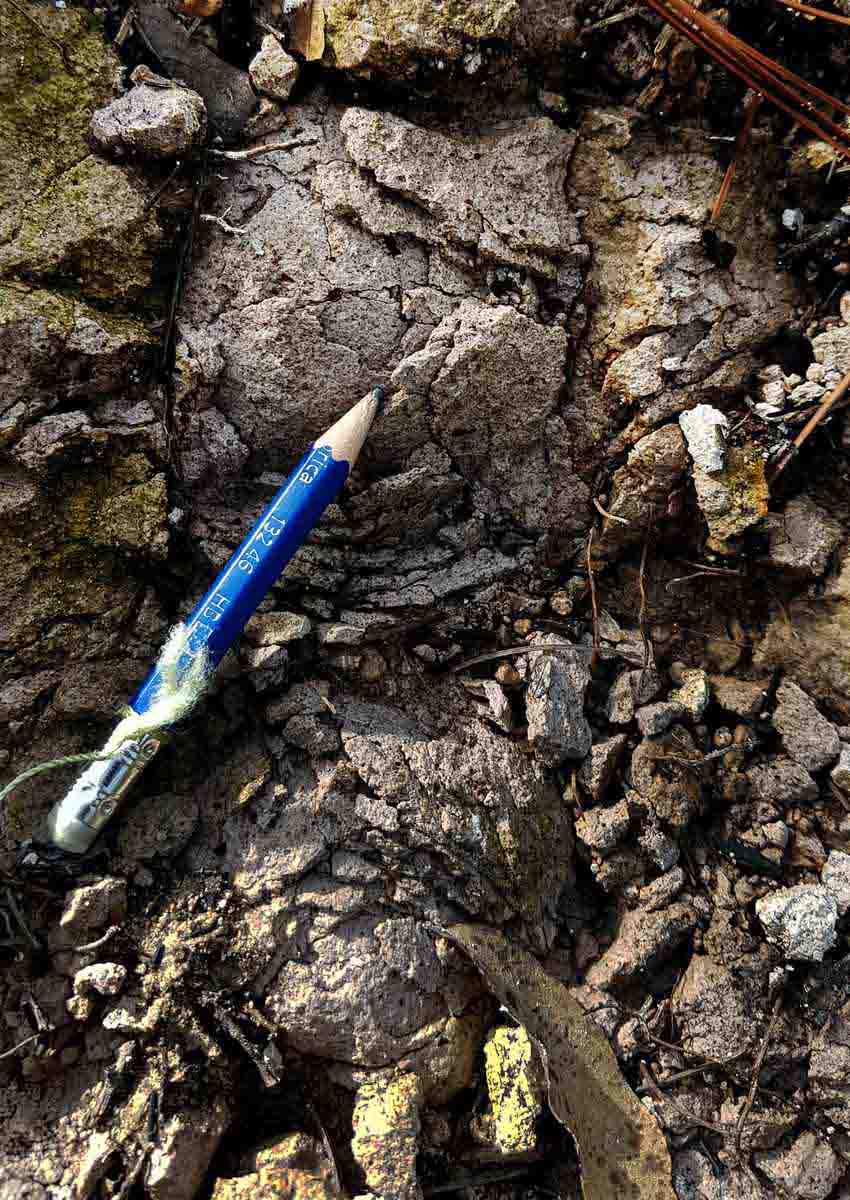
We only needed to walk 200 meters to find an example. The composition of the balls on the inside was completely homogeneous.

If the UdG theory was correct, we should have found a foreign object inside the ball. And if the National Geographic explanation was accurate, there should have been evidence of a crystal structure, such as a repeating pattern or radiating lines. But we could see nothing of the sort in any part of the balls.

We wandered up the hillside, which is strewn with these huge balls, until we came to a rock formation popularly known as La Calavera, The Skull, which is taller than it is wide. It is naturally connected to the bedrock and is not an independent unit like the balls all around it.

Piedras Bola nature reserve in Jalisco, Mexico
The Piedras Bola outdoor theater as it looked in 2009 (top) and how it looks today.

“This,” said Lloyd,” is showing us what’s really going on here. Look at the onion-skin weathering on the top.”

Yes, we could easily see that thin layers of rock were spalling off the top of The Skull (La Calavera).

What we were looking at, it seems, was a Piedra Bola In the making. Maybe in another thousand years or so it will weather to a nice round shape and, now disconnected from the bedrock, will roll down the hill to join the other members of the family.

Having reflected on La Calavera, we began to notice many other examples of rock protrusions that had weathered into nicely rounded curves. They were, in fact, partial balls.

Natural round ball rock formations in Jalisco Mexico
Onion-skin erosion also forms balls on a small scale in the Ameca hills of Jalisco.

I suddenly realized that all the previous theories about these rocks had assumed that — apart from the stone balls lying on the surface — there were hundreds more of them underground, just waiting to be liberated.

If erosion is what creates the spheres,  it means there is solid rock under the surface, here at the top of the hill, not hundreds of balls waiting to be liberated. It would indicate that all of the balls, those up here and those that later rolled down the hillside, were formed long, long after the pyroclastic flow had solidified and they got their round shape through a simple process of weathering.

A little while later, on the trail, Lloyd pointed to the ground. We could see that the rock beneath our feet was broken up into squares and some of these squares exhibited the same onion-skin weathering we had seen on the big balls, but here it was happening on a very small scale. Smaller versions of balls were forming right there on the trail!

The mystery of the stone balls having been clarified (in our eyes), we walked 500 meters northwest, beyond The Skull, to the area known as Las Torrecillas (The Little Towers).

Piedras Bola nature reserve in Jalisco, Mexico
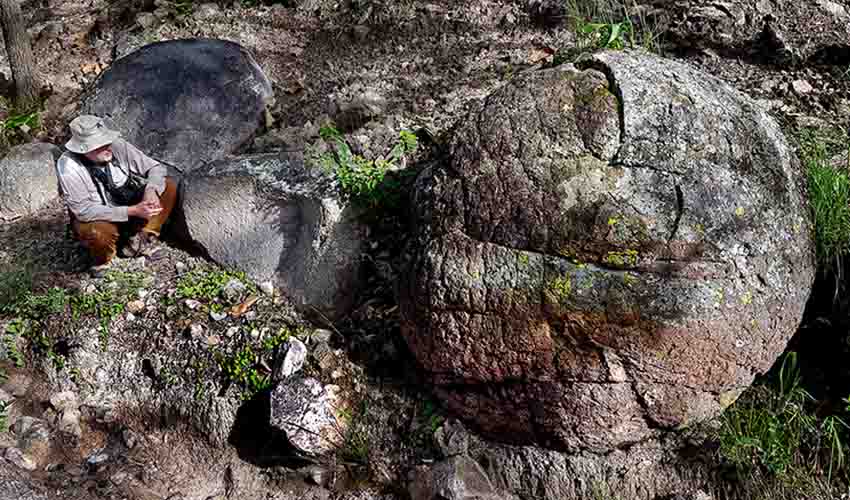
Geologist Chris Lloyd on “the biggest Piedra Bola,” one of the “partial balls” that are also found here. Below the surface, however, the formations are not spherical but plain solid rock.

If you think the Piedras Bola are curious, here you can see a phenomenon even curiouser: stone balls perched on top of natural columns about 4 meters tall. The columns are composed of relatively soft material that was eroded away by rainfall — except directly underneath the ball.

Over the years, the number of torrecillas has been reduced, and today there is only one good example left. If you want to see it, better plan a trip quite soon because the ball on top of what I’m calling The Last Tower seems to be held up there only by spit and a prayer.

Yes, if you want to visit the Piedras Bola and work out your own theory of how they were formed, do it now while The Last Tower is still standing and the road is still driveable. It’s well worth the effort.

After finding yourself a four-wheel drive vehicle, check out my Wikiloc route to the Piedras Bola. Driving time is about two hours, whether from Guadalajara or Lake Chapala.

The writer has lived near Guadalajara, Jalisco, since 1985. His most recent book is Outdoors in Western Mexico, Volume Three. More of his writing can be found on his blog.


Piedras Bola nature reserve in Jalisco
Pondering the Piedras Bola’s origins. Key to understanding how they were made, says Lloyd, are the broken stones, which show no signs of a crystal structure or an embedded object inside, as was previously theorized.

AIFA adds second international airline with flight to Dominican Republic

0
Dominican ambassador María Isabel Castillo Báez and other officials celebrate Arajet's new route at AIFA.
Dominican ambassador María Isabel Castillo Báez and other officials celebrate Arajet's first flight to AIFA on Thursday. Twitter @maisacastillob

Low-cost Dominican airline Arajet is now offering direct flights between Santo Domingo and the Felipe Ángeles International Airport (AIFA) north of Mexico City.

The first flight from the Dominican Republic capital touched down at AIFA on Thursday. Arajet, the second international airline to use the new airport after Venezuela’s Conviasa, will fly three times weekly between Santo Domingo and AIFA, located about 50 kilometers north of central Mexico City in México state. One-way flights cost less than US $200.

Arajet will commence flights from Santo Domingo to two other Mexican cities – Cancún and Monterrey – next Friday. It will fly to Cancún three times per week and twice weekly to Monterrey.

Federal Tourism Minister Miguel Torruco and the Dominican Republic’s ambassador in Mexico, María Isabel Castillo Báez, were at AIFA on Thursday to welcome Arajet’s maiden flight to Mexico. Torruco said that the new flights between Mexico and the Dominican Republic will benefit the tourism sectors of both countries.

“Through connectivity we boost tourism activity by facilitating the movement of tourists,” he said.

For his part, Arajet CEO Victor Pacheco Mendez said there was “skepticism” about the decision to fly between Santo Domingo and AIFA. But “of the 18 routes Arajet has, [flights to] Felipe Ángeles are the bestseller,”  he said.

The Dominican Republic is not currently a major source country for tourists, with just over 12,000 Dominicans flying into Mexico in the first seven months of 2022.

Two other airlines will soon start flying internationally to and from AIFA, which was built by the army and opened in March.

The next international airline to open at AIFA will be Panama's Copa Airlines, which will begin to offer a route to Panama City on Monday.
The next international airline to open at AIFA will be Panama’s Copa Airlines, which will begin to offer a route to Panama City on Monday. Alan Wilson CC BY-SA 2.0

Panama’s Copa Airlines will start twice-weekly flights from Panama City on Monday, while Mexico’s VivaAerobús is slated to begin flights to Havana, Cuba, later this year. VivaAerobús, Volaris and Aeroméxico already offer domestic flights from AIFA to several destinations around the country, with each airline having recently added new routes.

AIFA general director Isidoro Pastor told a press conference Thursday that Mexican airlines are interested in commencing flights to the United States from the new airport, but are currently unable to do so because U.S. aviation authorities downgraded Mexico’s aviation safety rating to Category 2 last year.

The airport chief predicted that 1 million passengers will have used AIFA by the time it celebrates its first anniversary next March. Almost 300,000 people have boarded or disembarked flights at AIFA in the six months since it opened, and that figure is expected to double by the end of the year.

Pastor said the new airport is expected to become profitable in late 2023 or early 2024 as flight and passenger numbers continue to grow.

With reports from Aristegui Noticias, La Jornada, El Financiero and Expansión

Sotol: will Mexican moonshine conquer the US?

0
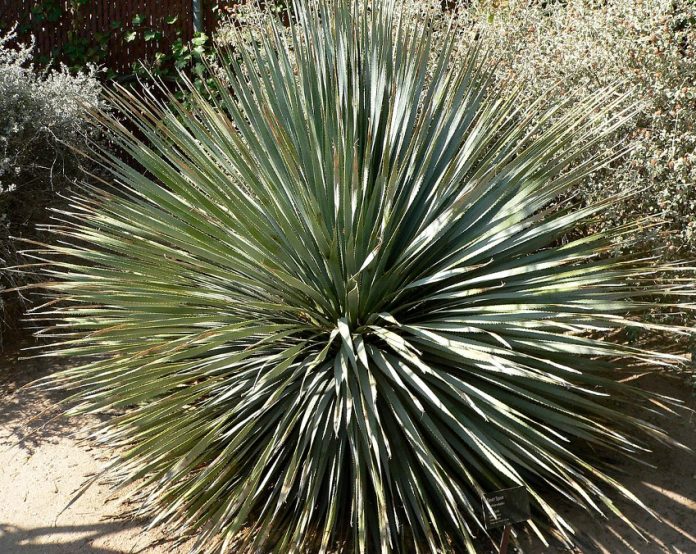
Sotol Plant
The sotol or "desert spoon" plant

Step aside, tequila and mezcal. There’s a new – but actually very old – drink in town.

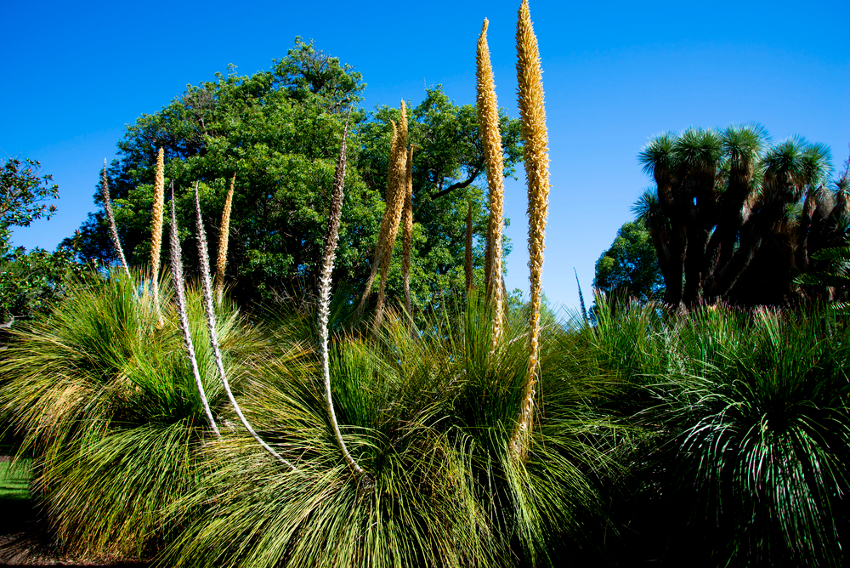
Sotol is a spirit made from the sotol plant (dasilyrion wheeleri), which grows in the deserts of northern Mexico as well as the southern US states of Texas, New Mexico, and Arizona.

The sotol plant is a close relative of the agave, and the beverage distilled from it has been gaining in popularity over the past several years on both sides of the border. Some industry experts claim the drink’s popularity will eventually surpass that of mezcal and tequila.

“Commercially speaking, it’s where mezcal was 10 years ago,” Ricardo Pico, Vice President of the Certifying Council of Sotol told BBC World. Notable for its clear pour, herbal, smooth taste, and easy drinkability, sotol has gained many new fans over the past several years. It can be consumed straight, but also makes a good base for cocktails.

Sotol plants
Mature sotol plants Deposit Photos

The “heart” of the plant, which grows on the end of a long stem in its center, is traditionally roasted in an earthen oven, then pressed to remove the sap before being fermented. While sotol can be aged to bring out more complex flavors, it is not always part of the process.

There is archaeological evidence in both present-day Mexico and Texas of the cultural importance of the sotol plant that goes back 7,000 years. More recently, the Rarámuri tribe of Chihuahua, Mexico, are believed to have made a beer-like beverage using the plant starting approximately 800 years ago. When the Spanish began colonizing the region in the 16th century, they introduced the distillation process, making sotol what it is today.

Sotol was first mass-produced in Mexico in the 1930s, when it developed a similar reputation as moonshine north of the border. The Mexican government outlawed its production in 1944, not lifting the ban until 1994, after the signing of the North American Free Trade Agreement (NAFTA).

In 2002, the Mexican government granted the beverage a designation of denomination of origin (DO), meaning that only sotol produced in the states of Durango, Chihuahua, and Coahuila can rightly be labeled as sotol (similar examples are champagne and scotch). The DO designation is recognized by the World Intellectual Property Organization.

However, when the new US-Mexico-Canada Agreement (USMCA) came into effect in 2020, sotol did not receive the denomination of origin protection enjoyed by tequila and mezcal; in fact, it was removed last minute out of fear that it would hurt producers in Texas.

As the beverage gets more attention, the debate about spirits made from local varieties of sotol plants in Texas and whether they should be labeled and marketed as sotol has heated up.

Texas producers maintain that because the plant grows “in their backyard” and they are using the same or similar techniques to produce it, then they should be allowed to continue to do so while maintaining the drink’s name.

A few vocal Mexican producers and activists believe that Mexico’s DO should be respected, for cultural reasons and economic ones. But Mexican sotoleros like Jacobo Jacquez of Sotol Don Celso see increased visibility of the beverage as a boon to both sides of the border.

Jacquez, who collaborates with Texas sotol producer Marfa Spirit Co., told Texas Monthly, sotol is “a heritage that we share.”

With reports from My San Antonio

Pop sensation Dua Lipa performs for 65,000 in Mexico City, ‘one of my fave cities in the world’

0
Dua Lipa in concert for her current tour, Future Nostalgia.
Dua Lipa in concert for her current tour, Future Nostalgia. Flickr / Raph_PH / CC BY 2.0

British pop star Dua Lipa has declared that Mexico City is one of her favorite cities on the planet after performing in the capital’s Foro Sol venue on Wednesday night.

“QUÉ LOCURA!!! [What craziness!] Living on a cloud!” the 27-year-old singer-songwriter wrote on Twitter above a short clip of her concert at the open-air arena. “Our biggest show on our Future Nostalgia Tour!!! 65k people in Mexico City ~ one of my fave cities in the world. Thank you for the warmest welcome. Feeling very, very grateful for this journey.”

Lipa, one of the world’s most influential pop stars with 87 million followers on Instagram, will perform in Monterrey on Friday night, her second and final concert of her tour of Mexico. It’s her second trip here after performing at the 2017 Corona Capital music festival in Mexico City.

Lipa’s Mexico City concert was a crowd-pleaser, with the London native singing all her hits, including “Love Again” and “Break My Heart” from her 2020 release Future Nostalgia. She endeared herself even more to her excited fans by speaking in Spanish between songs.

The artist made good use of her time in Mexico City, visiting local tourist attractions and some of the capital’s top restaurants.

Photos posted to her Instagram account show her at Casa Luis Barragán – the former residence of noted architect Luis Barragán, as well as at the Nido de Quetzalcóatl – an architectural project that features a structure in the form of the feathered serpent of ancient Mexica mythology. She also visited the Frida Kahlo museum in the Coyoacán neighborhood.

Lipa dined at Máximo Bistrot, recently ranked the 89th best restaurant in the world, and Contramar, which is known for its fresh seafood dishes. Both restaurants are in Mexico City’s hip Roma neighborhood. The songstress gave the tick of approval to one of the tacos she tried, posting a photo of it to her Instagram stories with the simple and to-the-point caption of “yep.”

Another image posted to Lipa’s Instagram page showed that she also chowed down on takeout tacos from Taquería Orinoco, a popular restaurant for the quintessential Mexican food with several locations in the capital. She also went clubbing in the Zona Rosa, a nightlife district popular with Mexico City’s gay community, and even experienced an earthquake as Thursday morning’s 6.9 magnitude quake in the state of Michoacán was felt in Mexico City just hours after her concert finished.

The cultural and culinary offerings the pop sensation experienced in the capital apparently energized her for her concert in Monterrey.

“Loved every moment on tour this month,” tweeted Lipa, who was in South America before coming to Mexico. “Last show tonight in LatAm ~ Monterrey, Mexico! Vamonossssssss.”

With reports from Proceso, El Financiero and Glamour

Foreign Minister Ebrard to UN General Assembly: “It is time to act” in Russia-Ukraine war

0
Foreign Minister Marcelo Ebrard speaks at the U.N. General Assembly.
Foreign Minister Marcelo Ebrard speaks at the U.N. General Assembly. Facebook / SRE

Foreign Affairs Minister Marcelo Ebrard has presented Mexico’s proposal to end the Russia-Ukraine war to the United Nations.

Addressing the U.N. Security Council in New York on Thursday, Ebrard said that President López Obrador’s proposal to create a “committee for dialogue and peace in Ukraine” was aimed at “strengthening the mediation efforts” of U.N. Secretary-General António Guterres.

The committee – which would conduct “direct talks” with President Volodymyr Zelenskyy of Ukraine and President Vladimir Putin of Russia, according to López Obrador – should include “heads of state and government,” the foreign minister said.

He repeated López Obrador’s proposal for Prime Minister Narendra Modi of India and Pope Francis to participate in the proposed peace talks.

“The objective would be very clear – to generate new mechanisms for dialogue and create complementary spaces for mediation that promote trust, reduce tension and open the way to lasting peace,” Ebrard said.

He said Mexico hoped that the creation of the proposed committee would go ahead with the support of the United Nations’ member states. “As Secretary-General [Guterres] has said, it’s time to act, to make a commitment to peace,” Ebrard said.

He also spoke about Mexico’s peace proposal in an address to the United Nations General Assembly on Thursday. In that address Ebrard asserted that the Security Council – of which Mexico is currently a non-permanent member – “has been unable to fulfill the mandate conferred to it by the United Nations Charter” because it was unable to prevent the war in Ukraine and hasn’t been able to stop it since it began.

It has failed to initiate “any diplomatic process that seeks a solution [to the conflict] through dialogue and negotiation,” the foreign minister said.

President Volodymyr Zelenskyy of Ukraine, left, and President Vladimir Putin of Russia, right.
Mexico’s proposal included direct talks between President Volodymyr Zelenskyy of Ukraine and President Vladimir Putin of Russia, with mediation by other world leaders. CC BY 4.0

Mexico’s peace proposal – first outlined by López Obrador during an Independence Day address last Friday – was rejected by Mykhailo Podolyak, an advisor to President Zelenskyy, last Saturday. He took particular umbrage at the president’s call for a five-year “truce” in the Russia-Ukraine war and all other conflicts.

“’Peacemakers’ who use war as a topic for their own PR are causing only surprise. @lopezobrador_, is your plan to keep millions under occupation, increase the number of mass burials and give Russia time to renew reserves before the next offensive? Then your ‘plan’ is a [Russian] plan,” Podolyak wrote on Twitter. 

Ebrard on Thursday acknowledged that both Ukraine and Russia have been critical of Mexico’s proposal, but defended the government’s decision to present it. “It’s not enough to [only] condemn [the war],” he told reporters.

The foreign minister had the opportunity to personally explain Mexico’s plan to the the foreign ministers of both warring countries in New York, meeting with Dmytro Kuleba of Ukraine Thursday and Sergei Lavrov of Russia Friday.

“I shared President López Obrador’s proposal in favor of peace as well as our ideas about the future of the Security Council,” he wrote on Twitter after the latter meeting.

Lavrov on Thursday defended Russia’s military operations in Ukraine during an address to the Security Council and described Ukraine as “a Nazi-style totalitarian state where standards of international humanitarian law are trampled underfoot with impunity.”

Russia appears to be planning for a long war in Ukraine given that President Vladimir Putin this week announced a “partial mobilization” of military reservists that could see an additional 300,000 Russian troops deployed for active service.

Mexico’s peace proposal appears doomed to remain just that – a proposal – with Putin, Zelenskyy, Modi, Guterres and Pope extremely unlikely to be seen around the same table, despite López Obrador’s apparent best intentions.

With reports from El Universal and AP 

Reviving the cultivation of ‘green gold’: Mexican scientists create modified henequen agave

0
Yucatan Scientific Research Center in Merida growing GMO henequen
The Mérida-based Yucatán Scientific Research Center developed the genetically improved plant, which matures much faster. It has given its henequen variety to some 100 growers across Yucatán. Photos: Conacyt

Farmers in Yucatán are reaping the rewards of a project that used genetic engineering to create a fast-growing and more productive henequen plant, a species of agave that can be processed to make textiles and a distilled spirit.

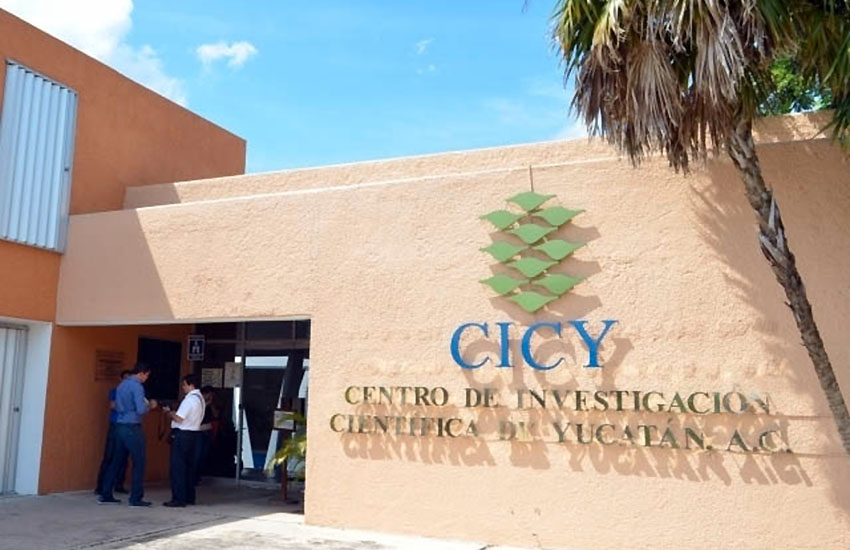
Scientists from the Mérida-based Yucatán Scientific Research Center (CICY) developed the improved plant, which has been dubbed “elite henequen.”

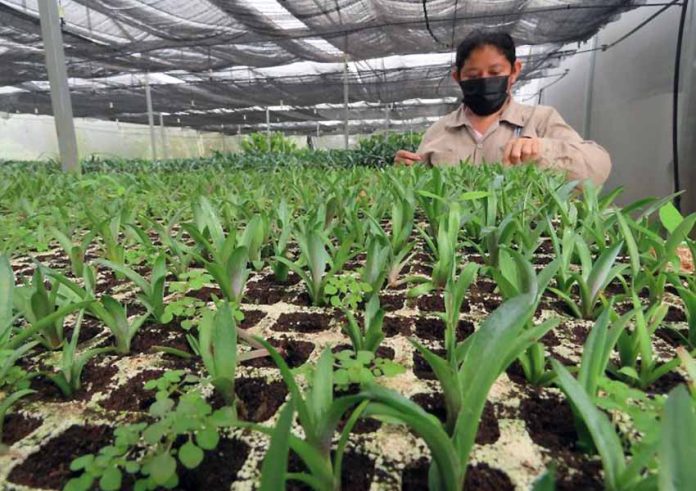
According to a report by the news agency EFE, the scientists visited henequen (Agave fourcroydes) plantations years ago and selected the most robust, resistant and leafiest plants. They removed the plants, took them to CICY labs and used in vitro genetic engineering processes to create “elite henequen” from them.

Since 2017, CICY has distributed more than 700,000 of the “elite henequen” plants to some 100 growers across Yucatán.

Yucatan Scientific Research Center in Merida
Researchers developed the genetically improved plant, which matures in nearly half the time of unmodified henequen.

“Now we’re seeing the results,” Javier García, director of technological management at CICY told the news agency EFE. “The producers recognize that the elite species grows more quickly, with more and longer leaves [yielding] a greater content of fiber,” García said.

According to García, the genetically enhanced plants grow to maturity in just three years, whereas an unmodified henequen plant takes five or six years to reach a point at which its leaves can be used to extract fiber, from which textiles can be made.

Bernardino Martín Chan, president of a Yucatán farmers association and manager of a plant where henequen is processed, gave a similarly glowing assessment of the “elite henequen.”

“CICY’s new henequen plants do grow quickly and they’re bigger,” he said. “If they distributed them across the whole state, we would once again have the splendor of yesteryear because the best henequen in the world is from Yucatán.”

genetically modified henequen plant
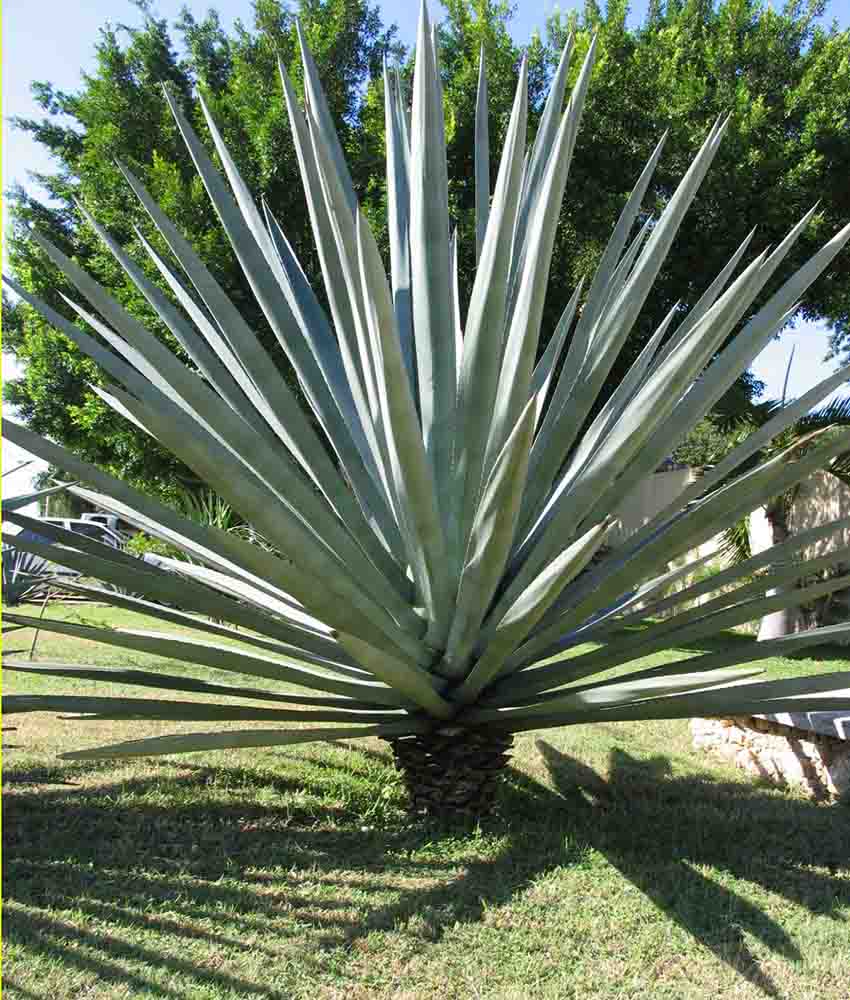
One of the center’s mature henequen plants.

Chan was referring to henequen’s historic reputation as Yucatán’s “green gold” because of the prosperity its production and exportation brought to the state during the late 19th and early 20th centuries. The plant was grown on large henequen haciendas, and some estate owners used their wealth to build opulent homes in Mérida, such as those located on the state capital’s emblematic boulevard, Paseo de Montejo.

Yucatán’s henequen industry declined as the 20th century progressed, partially due to the development of synthetic fibers.  But it could now be on the verge of a renaissance thanks to the development of the “elite henequen.”

“Our mission is to promote the cultivation of henequen in the state,” García said before waxing lyrical about the “undeniable quality” of the genetically modified plant. He also said that CICY is working “hand in hand” with producers.

García added that the cultivation of the modified species will “rescue” henequen processing plants in Yucatán because they will have more plants to process. He noted that henequen can be used to produce a variety of products, including licor de henequén, a spirit similar to tequila.

Yucatan Scientific Research Center in Merida
The center says it would like to put its “elite henequen” — created from robust specimens taken years ago from plantations — in the hands of more growers in Yucatán.

“We’re no longer in the previous centuries when only rope and sacks were made [with henequen],” he said. “Now we’re looking to other kinds of products like … rugs, carpets, handicrafts, clothing accessories and an alcoholic beverage.”

He also talked up henequen’s environmental credentials — it doesn’t require much water. The market is increasingly demanding products made with natural raw materials to avoid contaminating the planet, García said.

Chan, the farmers association president, said that the federal government should partner with CICY to distribute “elite henequen” free of charge to growers across all 106 of Yucatán’s municipalities. “It can be achieved with the Sowing Life program,” he said, referring to the government’s reforestation and employment program in which saplings of fruit and timber-yielding trees are distributed to landowners.

With reports from EFE