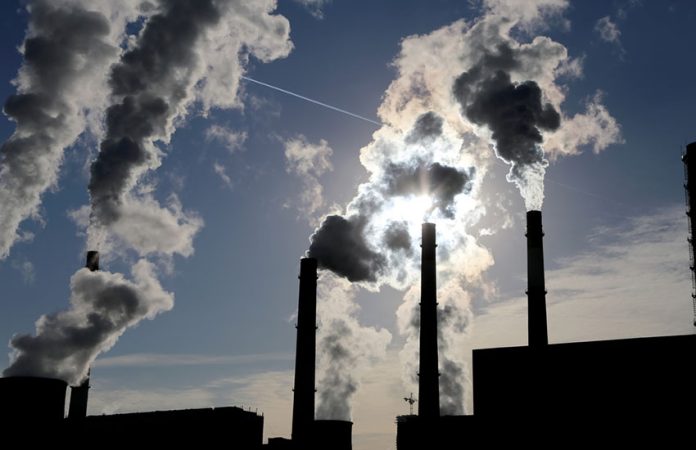
The Federal Electricity Commission's use of coal to generate power increased significantly in the first seven months of the year. deposit photos
The Federal Electricity Commission’s use of coal to generate power increased significantly in the first seven months of the year, while its use of two key renewable sources slightly declined, according to the National Energy Control Center (Cenace).
Data presented by Cenace chief Ricardo Mota Palomino at an energy conference in Veracruz showed that the state-owned utility produced 9,248 gigawatt hours (GWh) of electricity with coal between January and July, a 54.7% increase compared to the same period of 2021.
The CFE uses coal to generate power at three plants, two in Coahuila – where many coal mines are located – and one in Guerrero.
Data presented by Mota showed that the commission’s use of both solar and wind to generate energy fell marginally between January and July. Generation with solar totaled 10,100 GWh, down 3% compared to the first seven months of 2021, while generation with wind was 12,504 GWh, a 0.1% decline.
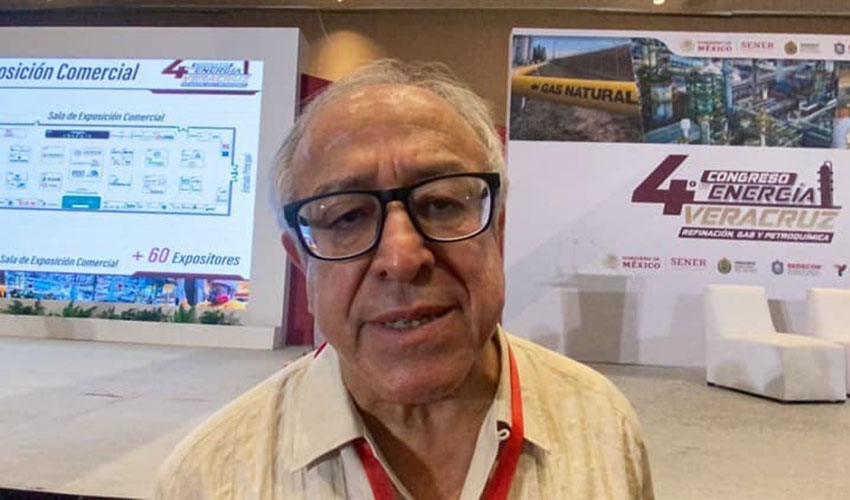
Cenace Chief Ricardo Mota Palomino shared the CFE data at the Veracruz Energy Conference.
While the GWh totals for both solar and wind are higher than that for coal, the CFE depends much more heavily on other non-renewable sources such as gas and fuel oil. Non-renewables were used to generate almost two-thirds of CFE’s electricity last year, while the largest renewable source was hydro, contributing to 26% of the company’s total output.
Carlos Flores, an energy expert, told the newspaper Reforma that the government should be doing more to substitute non-renewable contaminating sources with renewable ones.
“The president repeats over and over again that the hydroelectric plants will be the solution for the [energy] transition when that’s not the case,” he said, insinuating that greater investment in wind and solar is needed.
“They say that [the use of] coal will come down, but … it hasn’t declined [yet], it’s the complete opposite,” Flores said.
President López Obrador, an energy nationalist intent on bolstering the CFE and state oil company Pemex at the expense of the private sector, has been loathe to move away from fossil fuels, although he has conceded that an eventual transition to clean energy is inevitable.
You can enjoy a natural hot shower at Rancho Avila’s, fed by natural mineral water tumbling from a tall stream.
Here’s another wonderful place that makes you feel like you’ve arrived in the middle of nowhere when you are actually a mere 45 minutes from the crowded streets of a big city.
As you head out of Guadalajara on Avenida Alcalde, the noise and congestion suddenly end, and you find yourself driving straight down into the maw of El Cañon de Oblatos, probably the most spectacular of the deep canyons surrounding Mexico’s second-largest city.
Just before you reach the canyon floor — and slightly before reaching the banks of the Santiago River— you turn off to the quiet village of Ixcatán. Now you’re on cobblestone for six kilometers, until you reach a bridge crossing Río Soledad, a.k.a. The River of Solitude.
From this point downstream, the river passes through what could be called a miniature version of Yellowstone Park. It’s truly miniature, covering a stretch of only 500 meters, but within that small space, lies a steaming wonderland.
These small, picturesque pools lie a few minutes’ walk downstream from Rancho Avila’s.
Thirty years ago, I heard rumors that there were geysers along the Soledad River and when I first laid eyes on them, I was truly amazed.
There they were, side-by-side, two geysers spraying hot water high into the air, with loud hissing, but what really grabbed my attention was the fact that each geyser was spouting out of a kind of cone perhaps a meter and a half high, somewhat shaped like a stovepipe. These cones looked very thin and fragile, and they were gaudily colored: bright reds and golds mixed with a brilliant white, all the colors melted together as if Antonio Gaudí himself had sculpted them.
This was one of the loveliest sights I have ever seen, but those cones were all too fragile. The next time I paid La Soledad a visit, they were gone.
Local people told me the sad story: “Some kids came along, saw the geysers and climbed up to the top of the cliff behind them. From there they threw stones to see which of them would be the first to knock down the cones.”
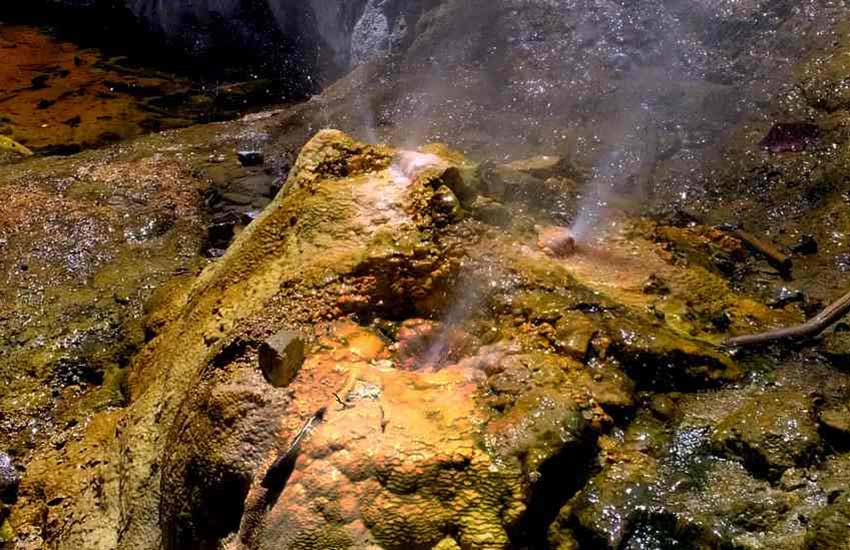
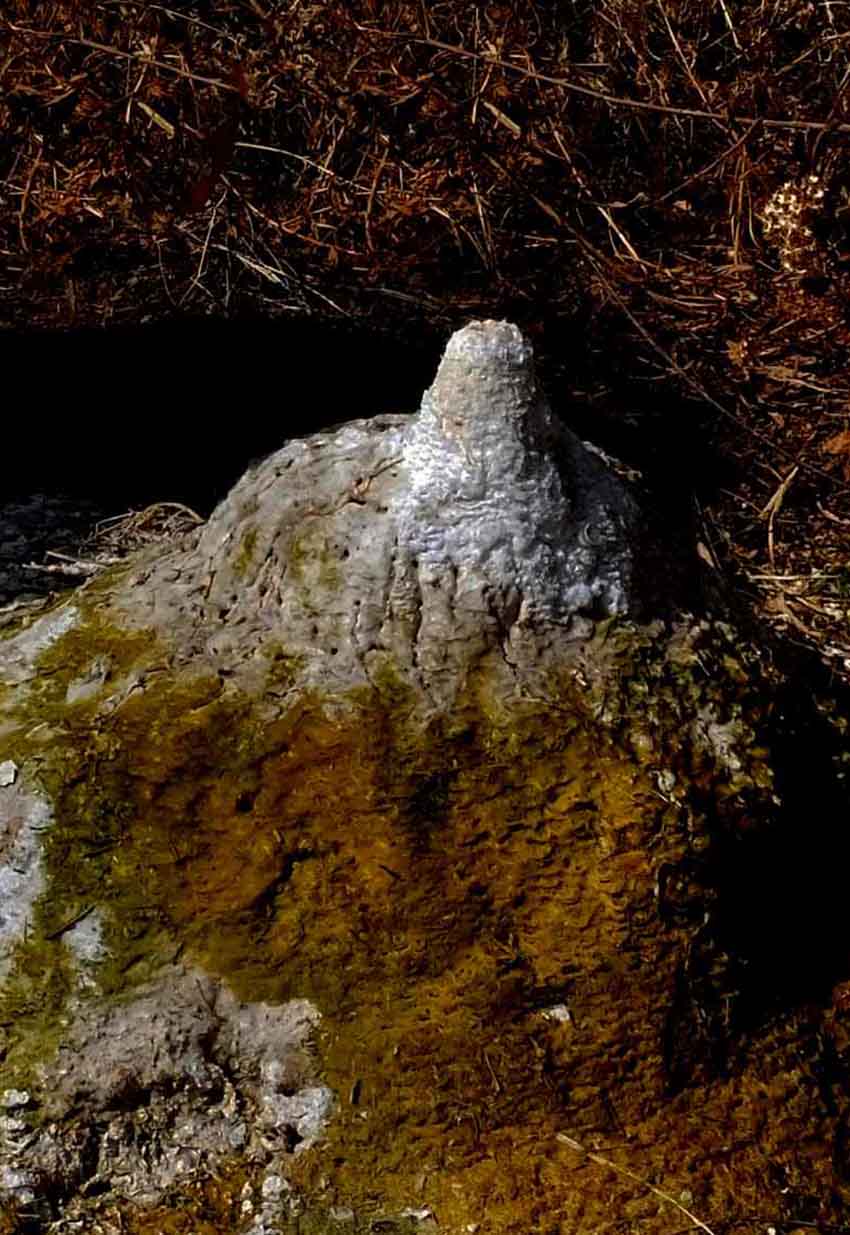
Curious gypsum formations produced by the thermal activity.
In a matter of minutes, the kids were able to destroy two of Mother Nature’s masterpieces that had been built up over who knows how long a period of time.
Although the geysers stole the show, the base of the cliff behind them was hissing and steaming with great vigor and you could have spent hours looking at what was going on in each vent and fissure, where all hell seemed to be trying to break through, creating bizarre mineral formations in the process.
Supercharged with minerals, the boiling hot water bubbling out of this mini-Yellowstone flowed down the hillside, displaying a melange of colors, to two small round pools built by the owners of this land — and more delightful hot tubs you are unlikely to find anywhere.
To our surprise, we discovered another set of big, noisy geysers 500 meters downstream, creating a huge cloud of hot vapor right at the river’s edge.
The rustic pool at Rancho Avila’s features deliciously warm water. Franky Alvarez
All of these wonders I have described are located on private land. Over the years, the owners have made valiant attempts to turn their steamy wonderland into an attraction that others might enjoy, but none of those projects ever bore fruit. Today, this thermal area — perhaps the most picturesque in the state of Jalisco — is off limits to the general public.
But if these descriptions have given you a yen for immersing yourself in a delightful pool of hot mineral water, don’t despair: the River of Solitude will not fail you!
A short distance upstream from the bridge (remember the bridge?) there are other thermal delights — not quite so flamboyant as those geysers, mind you — but these are open to the public.
Cross the bridge and head west for just over a kilometer and you will be at the entrance to a balneario (water park) called Rancho Avila’s.
The lowest set of geysers are located only 494 meters west of the Santiago River.
An English speaker might wonder what the apostrophe is doing at the end of “Avila.” Well, just consider this a would-be appendage of classiness inspired by such well-known establishments as Chili’s and Macy’s: a sort of Chez Avila, Mexico style.
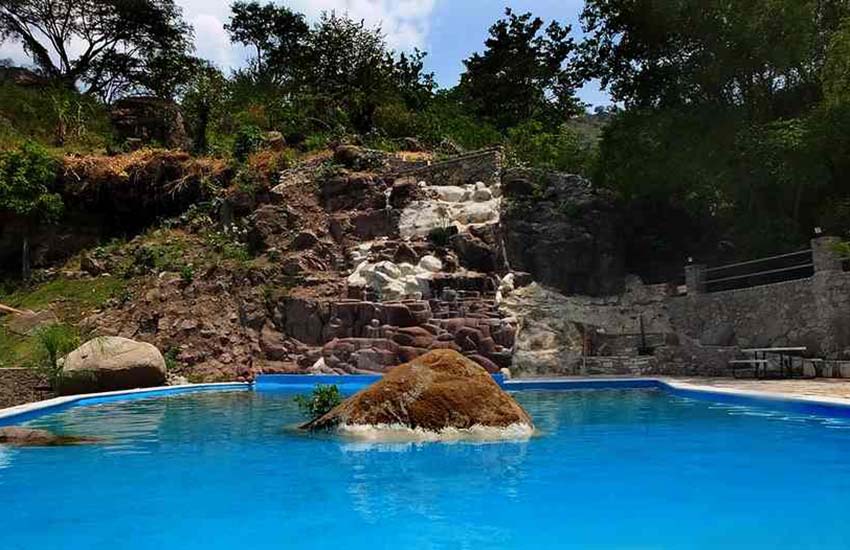
Drive 300 meters into Rancho Avila’s and you will come to a parking lot next to a big roofed dining area with nearby restrooms and changing booths. As for bathing options, the owners have taken full advantage of the many hot and cold springs all along this stretch of the Soledad River. Here you can choose between a spiffy modern pool with its own mini-island or a rustic swimming hole.
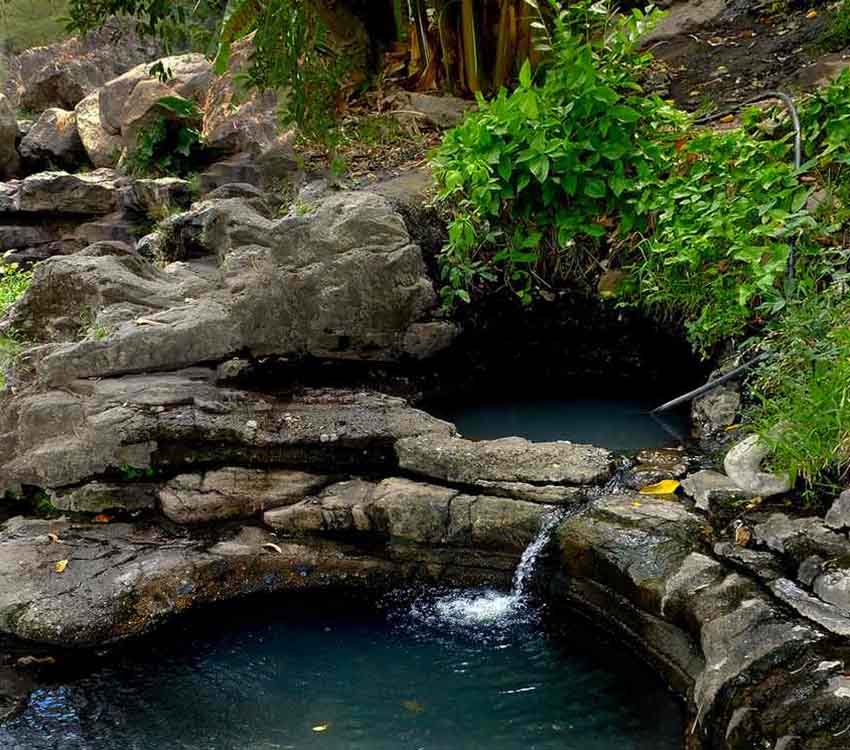
I would take the rustic swimming hole any day. It’s bordered by a picturesque canyon wall covered with ferns and gnarly tree roots and it’s filled with deliciously warm water which comes from a tall stream of hot water tumbling into the pool.
Once you are standing under this delightful hot shower created by Mother Nature, you won’t be able to step away!
This cold-water swimming pool at Rancho Avila’s comes with its own rocky island.
Almost all the visitors to this balneario spend their time frolicking in one of the pools, but if you are a bit adventurous, just follow the river downstream a bit. This involves jumping from rock to rock for a while but leads you to a truly magical place with small, interconnected, natural pools, two of them fed by streams of water pouring down from the cliffside.
Yes, here are two more natural showers and if you find them, you will probably have them all to yourself: clean, crystal-clear water, deliciously warm, but not hot … ahhh, pure bliss!
Rancho Avila’s is open from Wednesdays to Sundays. Admission is 80 pesos for adults, 50 for kids. They don’t allow camping, but they do have a cabin that sleeps eight for 2,000 pesos (about US $100) a night. Whoever rents the cabin automatically gets the whole water park to themselves — and you will especially appreciate the hot pool at night!
For more info, you can call Gaby at 331 022 5837 (WhatsApp). To get to the place, ask Google Maps to take you to “Balneario Rancho Avila s” — spelled with a mysterious space instead of that classy apostrophe. Driving time from the north end of Guadalajara is about an hour. Double that if you’re coming from the Lake Chapala area.
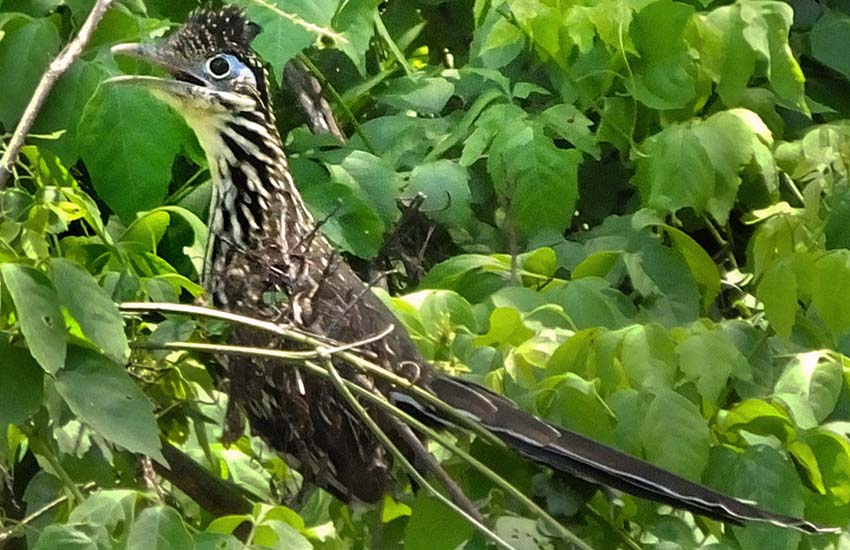
A roadrunner visiting the geysers of Rió de la Soledad.
The writer has lived near Guadalajara, Jalisco, since 1985. His most recent book is Outdoors in Western Mexico, Volume Three. More of his writing can be found on his blog.
Inside the cabin at Rancho Avila’s.
The highest geyser along the Soledad River now produces only hot air.
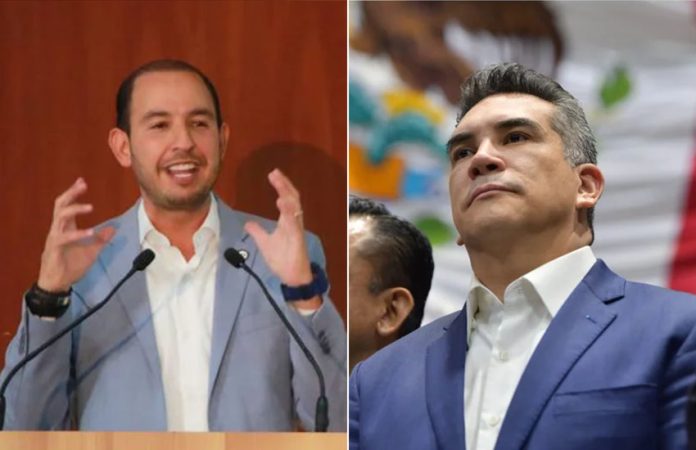
PAN leader Marko Cortés (left) and PRI leader Alejandro Moreno (right) fell out last fall over the PRI's support for a constitutional bill allowing the military continuing performing domestic security functions, but their differences appear to have been smoothed over. Twitter
The three-party Va por México coalition appears set to break up unless the Institutional Revolutionary Party (PRI) dumps its current leader and its senators vote down a controversial constitutional bill.
The leaders of the National Action Party (PAN) and Democratic Revolution Party (PRD) said Thursday that the alliance might continue but their relationship with PRI president Alejandro Moreno is over. It is difficult to see how the opposition coalition can survive if Moreno – a former Campeche governor who faces corruption charges in that state – remains at the helm of the PRI.
The trouble stems from the PRI’s support of a constitutional bill that, if passed by Congress, would allow the use of the military for public security tasks until 2028. With the support of the PRI, the ruling Morena party and its allies, the bill passed the lower house of Congress on Wednesday and will be considered by the Senate next week.
PAN national president Marko Cortés said Thursday that the party he leads will no longer have a relationship with Moreno, who is also a federal deputy, because it has lost confidence in him.
“He didn’t keep his word and agreements were breached,” he said at an event in Durango at which that state’s new governor was sworn in.
Cortés said last week that the bill put forward by a PRI deputy was “absolutely contradictory” to Va por México’s commitment to not support modifications to the constitution or the militarization of the country.
He said Thursday that the PAN will wait and see what happens in the Senate – where PRI senators look set to vote against the bill – before making a decision about the future of Va por México.
“We hope they’re consistent with what they’ve said until now [and the PRI senators] will vote against [the bill],” Cortés said.
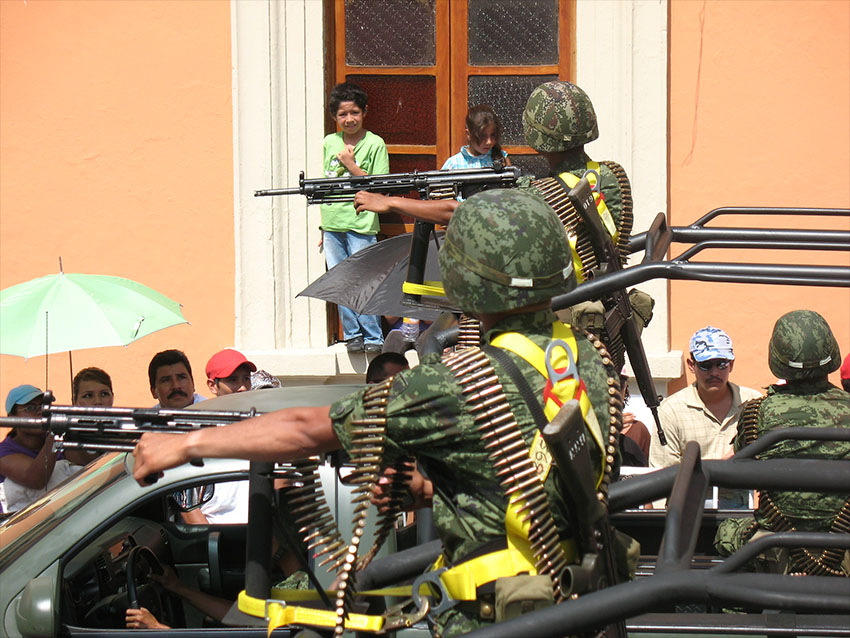
PAN and PRD legislators are concerned about the continued involvement of the military in domestic affairs. Pictured: a military parade in 2010, during the Calderón administration. Christian Frausto Bernal CC BY-SA 2.0
After the vote, members of the PAN national council will meet to decide whether the party will remain allied with the PRI.
PRD president Jesús Zambrano, who was also in Durango for the swearing in of a governor endorsed by the Va por México coalition, said that Moreno – widely known as “Alito” – couldn’t be trusted anymore. He said that his party would reassess the coalition to decide whether it can continue in its current form.
The PAN and PRD said in a joint statement Wednesday that the reform passed by the Chamber of Deputies seeks to extend the “failed security and militarization strategy” beyond the term of the current government.
The “autocratic government” is placing “our democratic system” and “respect for human rights” at “grave risk,” the parties said, adding that the country is “on the verge of a dictatorship.”
“… The national leadership of the PRI and the majority of PRI deputies have broken their word and the signed agreements, and they’ve turned their backs on the citizens who voted for them at the 2021 elections precisely so they would prevent these kinds of anti-democratic reforms that are contrary to freedom and human rights,” the statement said.
The PAN and PRD said they would wait for the legislative process in the Senate to conclude before deciding the “immediate future” of their alliance with the PRI.
While the PRI was in “obvious complicity with Morena” in the lower house, according to the PAN/PRD statement, PRI senators will vote against the constitutional bill, said Miguel Ángel Osorio Chong, the party’s leader in the upper house.
Without the PRI’s support in the Senate, the bill won’t pass as the two-thirds majority required to make a constitutional change won’t be reached.
Osorio Chong, interior minister in the previous federal government, said last week that PRI senators don’t agree with the proposal to continue to use the military for public security tasks until 2028.
“It goes against what we’ve been proposing in recent years,” he said. “[The armed forces] were [already] given enough time,” the senator said, referring to their authorization to carry out public security tasks until 2024.
Militarization is currently a hot button issue in Mexico as the federal government seeks to extend and augment the role the military plays in public life. The National Guard has now been placed under the control of the army, and President López Obrador has assigned a range of non-traditional tasks, including infrastructure construction and management of the nation’s ports and customs, to the military.
He said earlier this week that the ongoing presence of the armed forces on the nation’s streets is essential to guarantee peace, but many human rights organizations oppose the militarization of public security, pointing out that Mexican soldiers and marines have committed or allegedly committed a range of human rights violations, including extrajudicial killings.
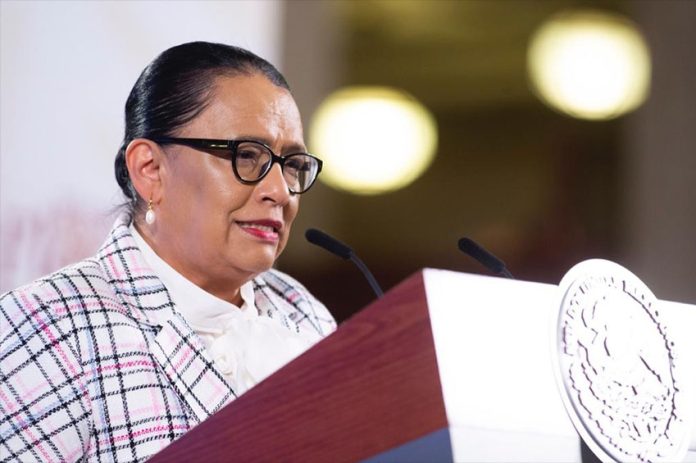
Security Minister Rosa Icela Rodríguez announces the release of prisoners, on Thursday. (Presidencia de la República)
Its timing probably had little to do with Mexican Independence Day, but nevertheless it was announced on Thursday that 2,685 people who had been held in penitentiaries around the country have been granted their freedom and independence under the nation’s Amnesty and Early Release Law.
Some of them had been waiting for years to be tried, and others had experienced violations of their rights of due process.
The announcement came during President López Obrador’s daily press conference, with Minister of Public Security and Citizen Protection Rosa Icela Rodríguez providing the details.
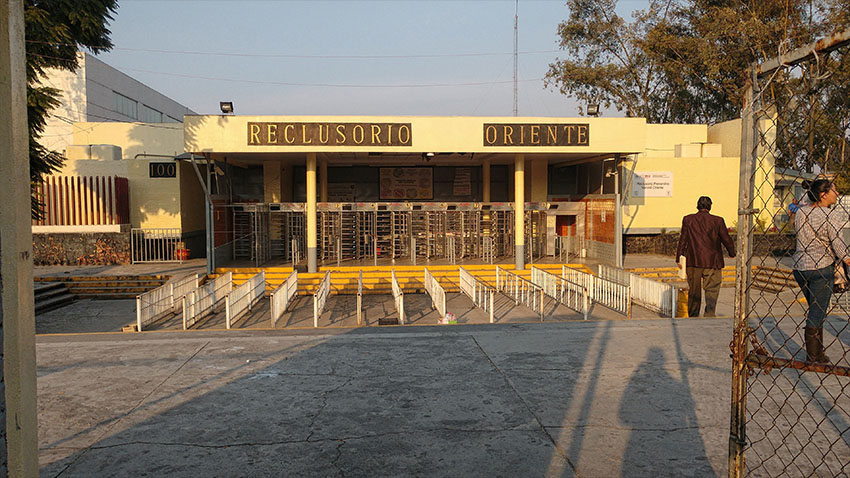
The Reclusorio Oriente, a prison in Mexico City. CC BY-SA 4.0
The figures provided to the media indicated that those receiving early release included 123 women, 120 older adults, 208 people with chronic-degenerative diseases, 51 Indigenous people and 15 foreigners — plus another 2,032 people “who met the requirements for early release” (such as having a work plan, not having any other charges or warrants, or not being repeat offenders).
An additional 136 people were released through the amnesty portion of the law: “66 of them in poverty, 42 women, 21 Indigenous, two with permanent disabilities, four victims of intimidation and one victim of discrimination,” Rodríguez said.
Mexico’s law covering amnesty and early release went into effect in April 2020 under the direction of López Obrador, who has pushed a strategy against crime that attacks the roots of the problem, such as poverty, corruption and impunity (though his critics consider that measures such as amnesty for prisoners are an attempt to gain electoral support).
“It is, as you have said, Mr. President, an act of justice for those who have not committed serious crimes, or crimes related to violence, humble people who could not afford a lawyer, have a translator or have faced all kinds of adversities,” said Rodríguez, a former journalist and close ally of AMLO — and the country’s first female security minister, the person in charge of coordinating the fight against drug cartels and other criminals.
According to Rodríguez, 92,590 people around the country are in pre-trial detention, which has been a hot topic in recent weeks. AMLO has been a vocal proponent of the use of mandatory pre-trial detention, which policy analyst critics fault for the rising numbers of incarcerated people awaiting trial in Mexico.
In August, Supreme Court Justice Luis María Aguilar Morales proposed eliminating mandatory pre-trial detention from the Constitution, in favor of letting individual judges make that decision. But with the Supreme Court poised to vote on the issue, some judges went public with their intention of voting against Aguilar’s idea, so last week he withdrew the proposal.
A day after the announcement about the prisoner release, Rodríguez helped open Friday’s Independence Day military parade in Mexico City by giving a speech at the capital’s zócalo. “Mexico is not destined for war. It is destined for peace,” she exclaimed.
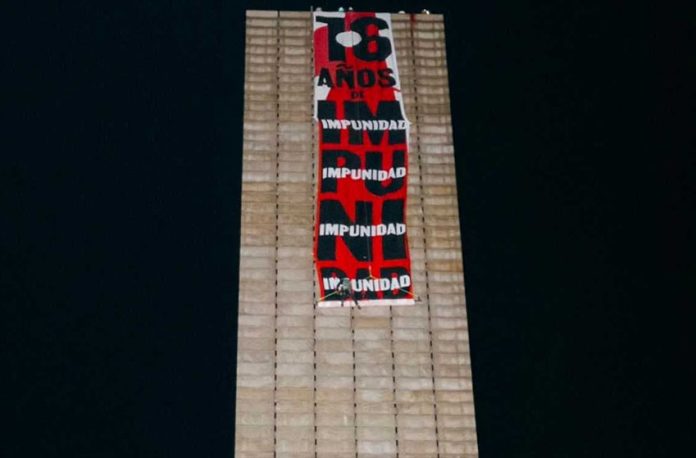
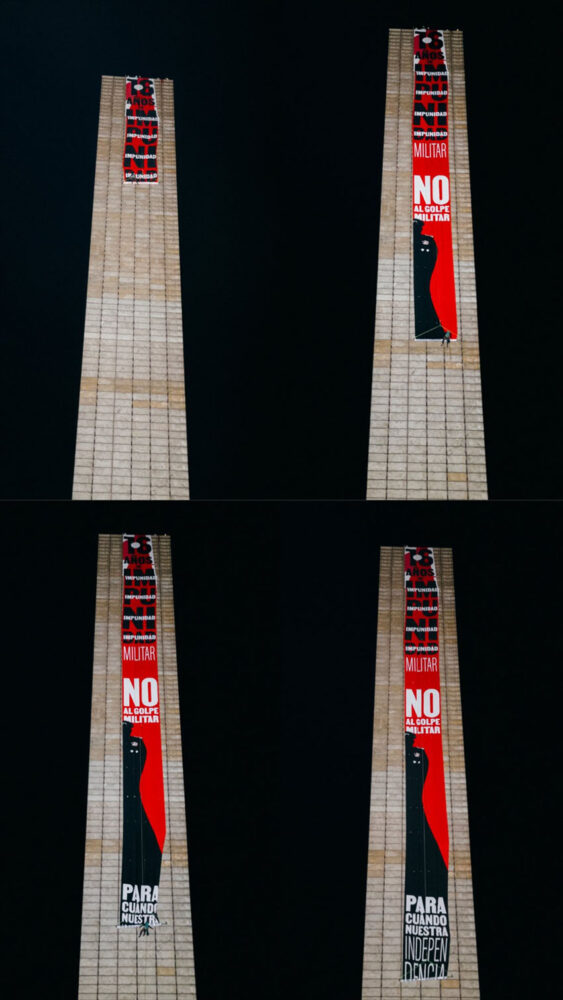
A member of the search collective Hasta Encontrarte unfurls the banner on Mexico City's Estela de Luz monument. Screenshot
A massive banner denouncing impunity and increasing militarization was unfurled on a towering Mexico City monument in the early hours of Friday.
Two female members of a Guanajuato-based collective dedicated to searching for missing persons unrolled the banner from the top of the Estela de Luz (Stele of Light) monument after climbing up the 104-meter high structure, located outside one of the entrances to the Chapultepec Park.
The Hasta Encontrarte collective (Until We Find You) said in a Twitter post that the unfurling of the “monumental” banner was completed at 2:30 a.m.
“Our gratitude to those who outdid themselves for 20 hours to leave a mark of dignity on the #EstelaDeLuz,” the collective said.
The climbers worked throughout the night to scale the more than 100-meter tower and unfurl the banner, as seen in this series of photos. Twitter @HEncontrarte
It noted that its members were on the structure – which is known colloquially as the “monument to corruption”– while President López Obrador was delivering the “Cry of Independence” and before Friday’s military parade.
From top to bottom the banner reads: “16 years of military impunity. No to the military coup. When will we get independence from the army? The military pact is also patriarchal. The National Guard in the National Defense Ministry = more militarization.”
The “16 years of military impunity” references the length of time the armed forces have been carrying out public security tasks in Mexico. Former president Felipe Calderón deployed the military to combat the country’s notorious cartels shortly after he took office in December 2006.
Since then, soldiers and marines have committed or allegedly committed a range of human rights violations, including extrajudicial killings, while carrying out public security tasks. There have been some arrests, but impunity remains a generalized problem in Mexico.
Most of Mexico’s more than 100,000 missing persons disappeared after Calderón launched the militarized war on drug cartels, a strategy largely perpetuated by former president Enrique Peña Nieto and President López Obrador.
Hasta Encontrarte’s reference to the National Guard recognizes its incorporation into the army, a move criticized by the United Nations and human rights groups such as Amnesty International.
Civil Protection authorities and the Red Cross were unable to suspend the collective’s peaceful protest. Their personnel, according to reports, made their way to the Estela de Luz monument and tried to convince the two Hasta Encontrarte members to come down. However, the women ignored the request and continued with their efforts to unfurl the entirety of the lengthy – and heavy – banner.
Hasta Encontrarte said in another Twitter post that the banner is four meters wide, 100 meters long and weighs 80 kilograms.
Viviana Mendoza, integrante del colectivo @HEncontrarte, del estado de Guanajuato, pide no se mal entienda que se está rescatando a alguien. Explica que quienes escalaron la Estela de Luz están capacitadas para eso.
Viviana Mendoza speaks to reporters to assure the public that the climbers were trained, safe and did not need or want to be rescued.
Collective member Viviana Mendoza sought to allay safety concerns, telling reporters Thursday night that the two women unfurling the banner “are completely trained to climb to that height.”
“… They have appropriate clothing [for the cold]. We’re in constant communication [with them], … they say they are perfectly fine,” she added.
“… We believe that missing persons and victims of homicide also deserve to be remembered during this Cry of Independence. … Violence isn’t combated with the armed forces, it’s combated with public [policy] improvements and intelligence.”
The unfurling of the banner isn’t the first eye-catching protest carried out by Hasta Encontrarte. It was one of three search collectives that created and “exhumed” mock graves outside the National Palace last December. The aim of that protest was to put the missing persons issue squarely in the sight of President López Obrador and pressure his government to act.
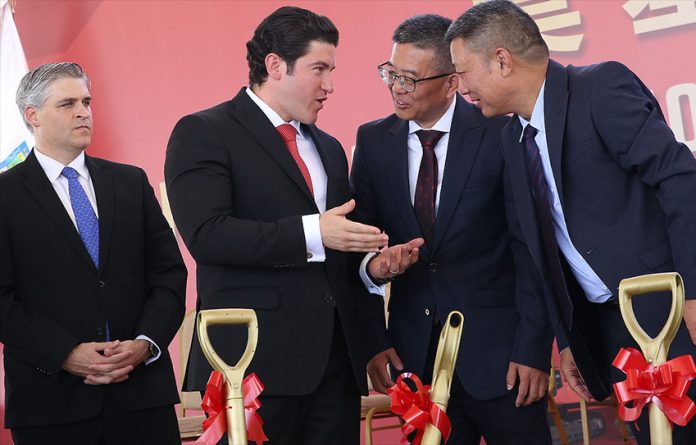
Nuevo León Governor Samuel García met on Tuesday with executives of the Lingong Machinery Group, which plans to open a boom lift plant in the northern state. Nuevo León state government
Chinese investment in Mexico continues to grow as more and more companies from the world’s most populous nation seek to take advantage of the country’s proximity to the United States and its free trade agreement with its northern neighbor.
Jalisco Governor Enrique Alfaro announced Monday that Solarever Group, a Chinese solar panel manufacturer, would invest US $1 billion over the next four years in an electric vehicle battery plant in the state, while Nuevo León Governor Samuel García met on Tuesday with executives of the Lingong Machinery Group (LGMG), which is investing $140 million in a boom lift plant in the northern border state.
Not to be outdone, Guanajuato’s Sustainable Economic Development Minister Ramón Alfaro Gómez said Wednesday that a Chinese company, which he didn’t name, was building a plant in León where products for the corporate and housing sectors would be manufactured.
This week’s announcements are indicative of the increased interest in Mexico among Chinese companies that export to the United States, the world’s largest economy. Investment from China (including Hong Kong) reached a record high of almost $500 million last year, according to the Economy Ministry, up from just under $300 million in 2020 and just over $200 million in 2019.
Solarever Group’s display at the Mexico City Green Expo 2022 in early September. Facebook / Solarever
The investment from the world’s second largest economy looks set to increase further as an increasing number of Chinese firms relocate to take advantage of tariff-free trade with the U.S. and Mexico’s proximity to their main export market.
“If you want to do good business with America, you must have something close to the market,” Simon Huang, Mexico manager for Chinese furniture company Kuka Home, told the Bloomberg news agency.
That company and and nine other Chinese firms including an auto parts maker and a garden equipment manufacturer have plants in the 850-hectare Hofusan Industrial Park, which opened on the northern outskirts of Monterrey, Nuevo León, in 2016. According to the Hofusan website, the industrial park is “the first Chinese industrial park in North America” and an “investment platform for global clients to explore the North American market.”
A Bloomberg report published this week under the headline “Chinese manufacturers get around U.S. tariffs with some help from Mexico” said that “Hofusan has become a haven for Chinese manufacturers looking to sidestep U.S. tariffs and shorten supply chains that have been strained to a breaking point during the pandemic.”
Hofusan officials say that the number of Chinese companies with operations in the park is expected to increase from 10 to 35 in the space of just two years. César Santos, a real estate lawyer whose family owned the land on which the industrial park was built, told Bloomberg there’s already “more than $1 billion in investments here.”
In his conversation with Bloomberg, Huang explained one of the key benefits of setting up shop in Mexico. Due to the USMCA, the free trade agreement between the United States, Mexico and Canada, a chair made by Kuka Home in Nuevo León can be shipped to the U.S. duty-free whereas one made in China is subject to a 25% tariff, he said.
Bloomberg noted that materials and labor generally cost more in Mexico than China, but “the gap has been shrinking over the years, with wages in China growing at a more rapid clip.”
David Martínez Garza, who’s supervising the construction of a new $80 million furniture factory at the Hofusan park, said that higher operational costs are offset by lower costs for delivery to the U.S., which for obvious reasons is much quicker from Mexico than from China.
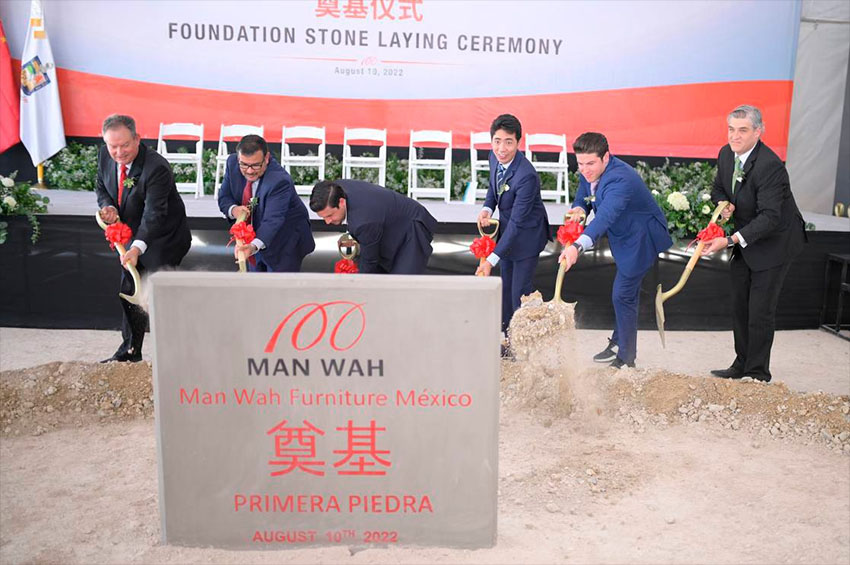
ManWah México celebrates the start of construction on their new facility in Nuevo León’s Hofusan Industrial Park, in August. Facebook / Hofusan Industrial Park
Bloomberg said that the Holley Group, a Hangzhou-based company that is a part owner of the park, is looking for sites to build two or three additional industrial parks in Mexico. Other Chinese companies are doing the same thing.
Nuevo León is one state particularly intent on attracting Chinese investment. State Economy Minister Iván Rivas told Bloomberg that Nuevo León is building two “superhighways” to Mexico’s border with the U.S., including one to serve Hofusan. The state also offers tax incentives to companies that meet certain requirements.
“I can tell you that now between 15% to 20% of investment is from China. Before it wasn’t even 5%,” Rivas said.
Among the benefits of the investment for Mexico is job growth, with Chinese companies hiring locals to fill most positions.
LGMG executives said Tuesday that their plant in the Nuevo León municipality of Marín will employ 1,400 people, while Governor Alfaro said that Solarever’s battery plant in the Jalisco municipality of Zacoalco de Torres will create 3,000 new jobs.
During the meeting with executives of the former company, Rivas said that Mexico’s proximity to the United States “gives us a great competitive advantage,” while Gómez, the Guanajuato economic development minister, said that logistics and the trade pact with the United States and Canada makes Mexico an attractive destination for Chinese investment.
“These are the main reasons why [Chinese companies] are turning to Mexico,” Gómez said, adding that there has been a “significant increase” in Chinese-funded projects in Guanajuato, which is part of the Bajío region, an industrial hub.
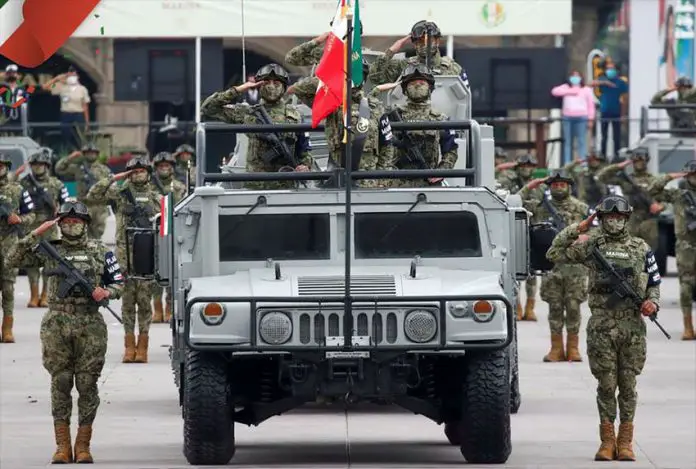
Marines salute at the 2020 military parade. Gob. de México
The National Guard is set to lead Friday’s Independence Day military parade in Mexico City, and will be formally placed under the control of the army at a ceremony in the capital’s central square, or zócalo.
Soldiers, marines and Air Force personnel will also participate, but the parade – scheduled for 11 a.m. Central Time – will be dedicated to the three-year old security force created by the current federal government.
“The parade will be dedicated to the National Guard, but public servants responsible for public security will also participate,” President López Obrador said earlier this week.
The plan for the parade includes more than 7,000 members of the National Guard marching through the streets of Mexico City accompanied by smaller numbers of personnel from the military forces, with over 100 military aircraft will flying overhead. The parade has been held annually since 1935, when Lázaro Cárdenas was president.
A poster advertising the Independence Day military parade. Twitter @SEDENAmx
This year’s edition – which celebrates the 212th anniversary of the start of the Mexican War of Independence – comes a week after the Senate passed a bill authorizing the Ministry of National Defense to take administrative and operational control of the National Guard, which is currently part of the civilian Security Ministry.
Security Minister Rosa Icela Rodríguez will officially confer responsibility for the security force to the army during a ceremony in the zócalo.
Among the other officials who will speak are National Defense Minister Luis Cresencio Sandoval, Navy Minister Rafael Ojeda Durán and President López Obrador, who on Thursday night delivered the “Cry of Independence” – El Grito – from the National Palace, wishing long life to Mexico, independence heroes and a long list of ideals including freedom, equality and peace, and death to corruption, classism and racism.
One proud member of the military set to participate in today’s march is Dalia Vanessa Morales Mendoza, a military police officer in the Mexican army who will lead a contingent of 51 women. Although she has been in the army for over 14 years, she has only ever marched in her home town of Querétaro city.
Morales told the newspaper La Jornada that she and other military policewomen trained at an army base in Mexico City for 1 1/2 months to prepare for the parade.
“Before this we didn’t know each other but we lived together for 1 1/2 months, rehearsing several hours a day,” she said early Friday after sleeping just five hours.
“Today we’ll march together,” she told her comrades as they prepared to leave their barracks. “It’s a special day for all of us. We’re going to demonstrate our training, discipline and morale, and the spirit of our group.”
Mexico’s reputation as a slacker on climate change policy is well-deserved. Less accurate is the assumption that the United States has been a cheerleader for the cause.
In truth, the two neighbors have, until recently, followed similarly sluggish paths for most of this century.
Both have skin in the game: Mexico is Latin America’s leading carbon emitter from energy use; the U.S. trails only China for the same dubious honor worldwide. Mexico is especially vulnerable to climate-caused crises, placed as it is between two rising oceans. U.S. residents from coast to coast got an uncomfortable preview last week of climate change as they sweltered under Fahrenheit temperatures higher than their average bowling scores.
Both countries are model global citizens on paper. Mexico has joined the United States at most of the major climate change conferences — and has even hosted one, COP-16 in 2010 — and it signed on to the Paris Accords in 2015, pledging to do its share in reducing carbon emissions.
Mexico passed its own climate change legislation in the waning days of the Felipe Calderón administration (2006–2012), committing itself to generating 35% of its electricity from renewable sources by 2024 and cutting total emissions in half by 2050. That’s in addition to putting a full stop to deforestation by 2030 and phasing out coal by that same year.
Yet, Mexico is not on track to achieve these goals. Pledges and documents don’t slow global warming without action.
A research group called Climate Action Tracker grades the 32 top carbon-emitting countries on their progress toward meeting internationally agreed upon goals in three categories. In July, the group gave Mexico grades from “insufficient” to “critically insufficient” — not the kind of report card you want to take home to your parents.
The two countries’ paths forked last month with the passage of bold legislation in the United States that is designed to speed up the transition away from fossil fuels. Of course, legislation does not equal action on the ground, but in this case, it has started motivating investors by reducing the risk they take by going all in on alternative energy and by promising consumers a break on electric car costs.
A side benefit may be the removal of the adjective “inconsistent” (many prefer “hypocritical”) from descriptions of the U.S.’ green diplomacy, i.e., urging other countries to take steps to reduce fossil fuel use that the U.S. hasn’t taken itself. Indeed, the subject came up this week when U.S. Secretary of State Antony Blinken invited Mexico to take advantage of the new legislation’s investor support clauses to manufacture the special semiconductors required for electric vehicles.
However, if you think Mexico’s ready to hop on the electric train, you haven’t been paying attention. Here, wind and solar are mere distractions from the real energy sources – gas, oil and coal. The current policy is to increase fossil fuel use, not eliminate it.
Why is that? Why is Mexico doubling down on an energy policy that is demonstrably harmful for Mexicans, especially those living in poverty?
Such questions usually lead to the tired name-calling war between AMLO-phobes and AMLO-philes. The former tend to blame President López Obrador for all the nation’s ills and see no reasons for the energy policy decisions, just ignorance, if not outright malice. The AMLO-philes see the opposition as traitors, out to sabotage his “Fourth Transformation” of the country, and do not need to hear the president’s reasons.
They’re both wrong. AMLO has his reasons for championing fossil fuels and shying away from renewable energy, and while you may disagree with them, they are important to understand.
Let’s look at them, one by one:
Mexico is in austerity mode. The new U.S. initiative is a spending bill. It encourages clean energy through subsidies, tax breaks and favorable loan conditions. The current Mexican administration is not in the mood to spend big on anything, save for a train through the jungle and an oil refinery near the shore.
Short-term economic jolts would be likely. For example, nothing riles up the masses more than a hike in gasoline prices. During a transition to renewables, such hikes are inevitable. On the other hand, expanding the fossil fuel industry can keep gasoline prices down.
Financing renewables clashes with the prevailing ideology. López Obrador ran for president (three times) opposing private investment in most Mexican resources. In office, he has given priority to the state-run enterprises — Pemex for oil and the Federal Electricity Commission (CFE) for electricity. One might think that government control over the energy sector would make it easier to impose policies to reduce carbon emissions, but it doesn’t work that way. Only private capital has the means to invest in renewables and the patience to wait for the returns. As long as AMLO is president, they probably won’t get the chance.
Mexico’s president is an oil guy from an oil state. Oil is in his DNA, and it’s no coincidence that one of his administration’s major projects is an oil refinery located in his home state (in Dos Bocas, Tabasco). This industry has lifted many poor Tabascans out of poverty. Why not the rest of the nation?
Oil is a powerful nationalist symbol. Since the petroleum industry was confiscated from foreign exploiters in 1938, oil has taken on an almost mythical quality in the populace’s hearts and minds. If it sounds ridiculous to let that kind of abstraction influence energy policy during a pending climate crisis, that’s because it is. But don’t underestimate the power of myth in politics.
Pressure from civil society is weak. Action won’t come without the masses demanding it; so far, they haven’t. Sadly, past attempts at large alternative energy developments have carried on the regrettable Mexican tradition of ignoring the rights — if not the very existence — of poor and indigenous communities living on the project sites, turning potential supporters into opponents.
Noting the reasons above won’t save the planet, but it does help provide context for the government’s intransigence; so might noting the few bright spots — for example, the nearly-complete solar power facility in Sonora, which the administration itself likes to brag about.
The president himself has even said recently that he recognized that a transition to clean energy is inevitable. But of course he added that Mexico is not ready for that transition, thus paraphrasing St. Augustine’s famous plea: “O lord, grant me chastity and continence . . . but not yet.”
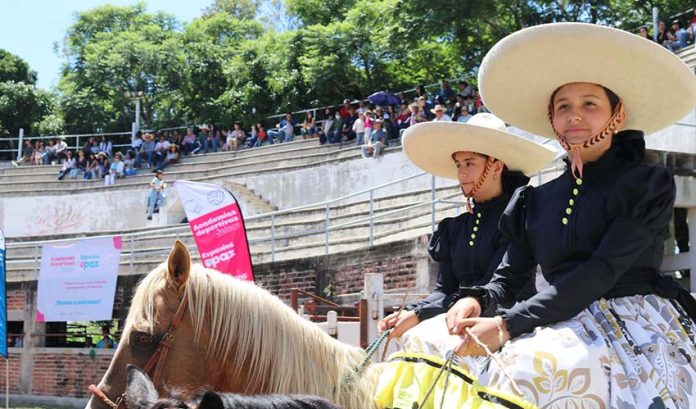
Students of escaramuza often start as young as 13. Jalisco government
Charrería, a popular rodeo-like pastime in Mexico that evolved from competitions between ranch hands, is generally dominated by men, but women and girls have a place in the sport — and now they have their own school.
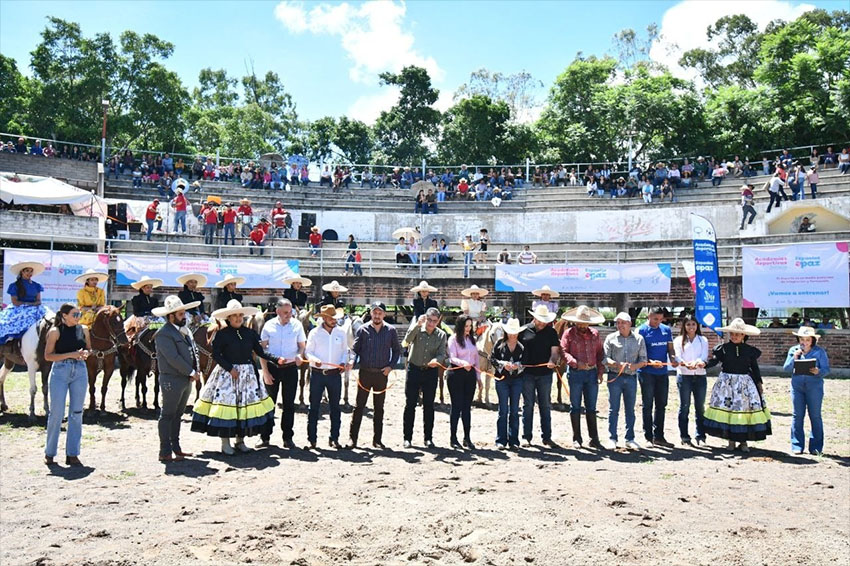
In late August, the Escaramuzas Sports Academy was inaugurated in San Martín de Hidalgo, a small town in Jalisco that has perhaps the strongest charrería tradition in the country. The first classes began earlier this month, a couple of weeks before National Charro Day on September 14.
“It fills me with pride to share that … we [have] inaugurated the first sports academy in the state of Jalisco dedicated to the preparation of escaramuzas,” San Martín de Hidalgo Mayor Moisés Rodríguez Camacho wrote on Facebook. “Participants will be able to acquire tools that will help them in their holistic development.”
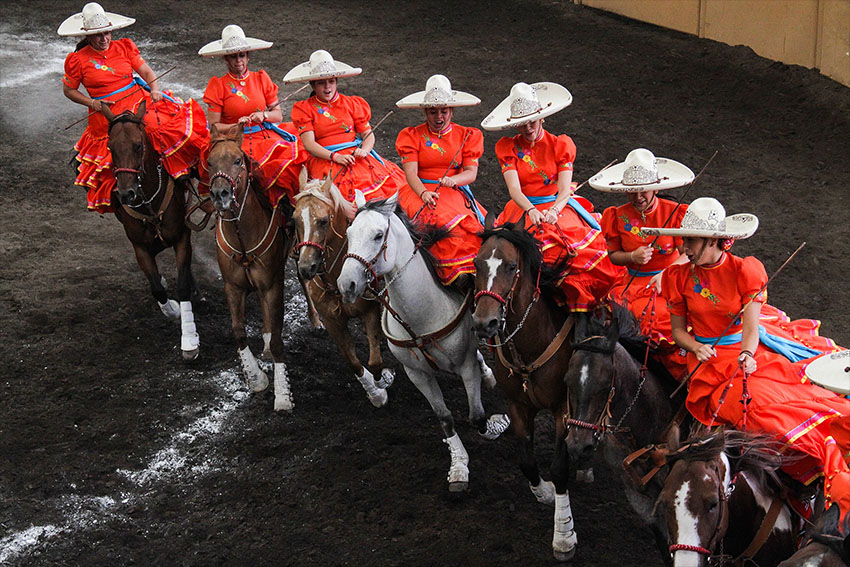
Escaramuza (which translates literally as “skirmish”) is a branch of charrería (the term for the sport in general) practiced only by women. An escaramuza is the term given to a team of six, eight or 12 women who ride together in formation. An individual woman in the sport is called a charra, while a man is a charro).
San Martín de Hidalgo officials and Sports Academy leaders cut a ribbon at the opening ceremony. Facebook / Code Jalisco
A escaramuza does 12 exercises, some of which include difficult turns or closely crossing in front of one another at high speeds. Riding sidesaddle, the daring women also perform difficult, artistic tricks with their horses.
Women’s role in the sport is said to have originated in the 1950s in the Jaliscan Highlands, specifically Tepatitlán de Morelos, which is about 150 kilometers from the new school. The beautiful clothing that they wear is an Adelita-styled china poblana outfit that originated from the state of Puebla, where the sport is also practiced.
Because of the skills mentioned above, training for an escaramuza is intense, as the women must be able to control their horses with great dexterity and ride in sync with their teammates. That’s where the new school, which is based at the Lienzo Charro Municipal in San Martín de Hidalgo, comes in. Initial training for the girls and teens will consist of lessons that occur two or three times per week.
The first session reportedly had eight students, but the early goals are to have at least a dozen girls between the ages of 10 and 15 participating every week. And it sounds like the training won’t be easy.
Escaramuza charra is the only branch of charrería specificly for women. CC BY-SA 4.0
“The more dangerous an exercise is, the greater the concentration must be to avoid a fall or a collision between the animals,” said Stefany Celina López, an escaramuza athlete and the mother of one of the girls in the program (the sport is often a tradition among multiple generations in a family). “Coordination is the most important thing to be able to control the horses.”
At the inauguration ceremony, Ana Lucía Camacho Sevilla highlighted the value of charrería in the preservation of Mexican culture and the people’s love for Mexico and horses.
“The fact that we work to train our children and young people in these sports spaces helps us a lot to build community and rebuild the social fabric,” added Camacho, the secretary of agriculture and rural development in Jalisco.
The ceremony featured a cavalcade, the presentation of escaramuzas, an exhibition of rope tricks performed by children and a show of dancing horses.
Charrería’s origins date back to the beginning of the 20th century, when it was practiced in the haciendas and ranches of Jalisco as an entertainment activity between the farmers and their workers. Featuring lavish costumes, mariachi music, lots of flair and more demonstrations of skill (leaping from one horse to another, for example) than competition-heavy U.S.-style rodeos or professional bull-riding events, it spread to other parts of the country and even to cities. UNESCO granted it Intangible Cultural Heritage status in 2018.
Sara Guerrero Zárate, 13, is one of the school’s most advanced students. She has been attending competitions since she was very young.
“It caught my attention more because of the horses than because of the sport,” she said. “But when you start practicing it, you develop a huge love for it [and you want to attend] every training session. Other sports are nice, but I like being with my horse better; plus you represent [the culture of] Mexico.”
Verónica Álvarez, also 13, said the escaramuza becomes a second family.
“Some exercises are scary, but it is part of it to feel the adrenaline…” she said. “I ride my horse and forget about everything.”
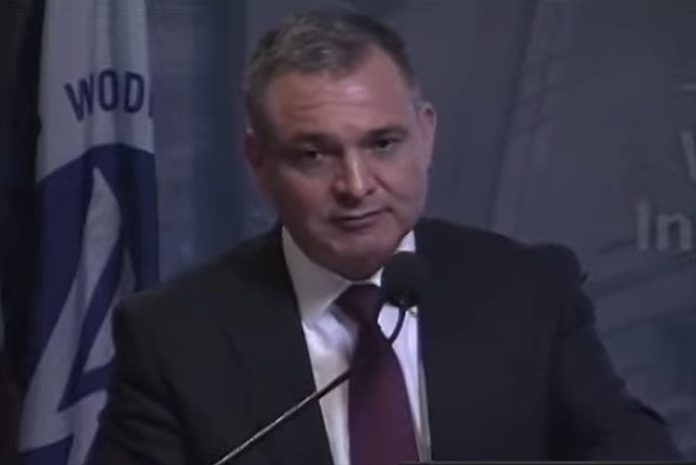
Genaro García Luna shortly before his arrest. YouTube screenshot
The federal government has doubled down on an attempt to recover assets in the United States owned by Genaro García Luna, a former federal security minister accused of colluding with the Sinaloa Cartel.
García, security minister in the 2006-12 government led by former president Felipe Calderón and a high-ranking security official before that, was arrested in Dallas, Texas, in 2019 on charges he allowed the Sinaloa Cartel to operate in exchange for multimillion-dollar bribes. He is currently in a New York jail awaiting trial.
Lawyers acting on behalf of Mexico’s Financial Intelligence Unit (UIF), part of the federal Finance Ministry (SHCP), filed a civil claim in the United States in 2020 that sought to recover US $250 million in assets that García Luna alleged acquired in the U.S. with proceeds of criminal activities.
Now, the SHCP has reasserted the UIF’s authority to file the claim after that right was challenged by lawyers for the former security minister, according to a report by the news website Animal Político.
The SHCP submitted two official letters to the Eleventh Judicial Circuit Court of Florida endorsing the UIF’s 2020 claim, Animal Político said. The news website, which reviewed the letters, said that SHCP legal adviser Félix Arturo Medina Padilla and UIF chief Pablo Gómez “ratified the legality of the claim brought by the UIF.”
They argued that the UIF has the legal authority, even in foreign countries, to file lawsuits that allow the Mexican state to “recover resources that are intentionally hidden and out of the direct reach of Mexican authorities,” according to the Animal Político report.
One of the letters stressed that the UIF has “full legal authority” to represent the SHCP and Mexico in the attempt to recover García Luna’s allegedly ill-gotten assets in the United States.
As a result of the SHCP’s “ratification” of the existing civil claim, Judge Alan Fine allowed it to proceed, Animal Político reported adding that the case is in the evidence gathering stage.
While García Luna will go on trial in the United States, there is also a case against him in Mexico for money laundering, organized crime and illicit enrichment via drug trafficking and corruption. Declarations of assets filed by Genaro García Luna with the Ministry of Public Administration between 2002 and 2008 show that his wealth increased significantly in the period.
Although the federal Attorney General’s Office began investigating him in 2020, the charges the ex-official faces are yet to be tested in court.
García Luna’s U.S. trial was scheduled to begin in October but his legal team succeeded in having it postponed until early 2023.
The former security minister has maintained his innocence, but U.S. prosecutors allege he received tens of millions of dollars from the Sinaloa Cartel and used some of that money to buy favorable coverage from the media. He allegedly provided a range of information to the cartel, including details about government security operations against it, which helped it to operate with impunity.