One story has it that chiles en nogada was invented by the nuns of the Santa Monica convent in Puebla. DepositPhotos
Mexico celebrates Independence Day with fireworks, speeches, and flags, but most importantly food. Several dishes are iconic during the Independence Day season, so much so that they are often considered to be national culinary treasures, patriotic in their own right. Two of those iconic dishes are pozole and chiles en nogada.
Both dishes have interesting histories behind them, but chiles en nogada has a particular connection to the holiday. Two stories are told of its creation. The first legend is that nuns from Puebla’s Santa Monica convent decided to make a special dish to honor military hero Agustín de Iturbide and his Trigarante army after Iturbide signed the Cordoba Agreements, which led to Mexico’s independence from Spain. Using ingredients that were in season, in particular, the fresh walnuts in this part of the country, the nuns steamed, peeled, and cleaned poblano peppers. They stuffed the peppers with a mixture of ground meat, herbs, spices, seasonal fruits like apples, and nuts. Then the peppers were breaded and fried and covered in a creamy walnut and cheese sauce. Once sprinkled with ruby red pomegranate seeds and parsley, the final product had all the colors of the red, white and green Trigarante flag.
The dish’s other founding legend is that the girlfriends of three returning soldiers wanted to make their beaus a special dish for their return that would again, include the colors of the Trigarante flag. So the three women prayed to the Virgin of the Rosary and Saint Paschal Baylón for inspiration and chiles en nogada was the result.
Pozole dates back to a more ancient time in Mexico’s history. Some historians believe that this famous national dish — with dozens of varieties across the nation — was a specialty among the Mexica people, served to rulers like Moctezuma for special occasions. Spanish historian Bernardino de Sahagún recorded that this special stew was originally served with human flesh, the right thigh to be exact, and if he is to be believed, it was likely a ritual meant to absorb the power of the warrior king’s enemies. Nuño Beltrán de Guzmán, a Spanish conquistador also reported being served a similar dish with human flesh in it when he arrived in the city of Tonalá, Jalisco.
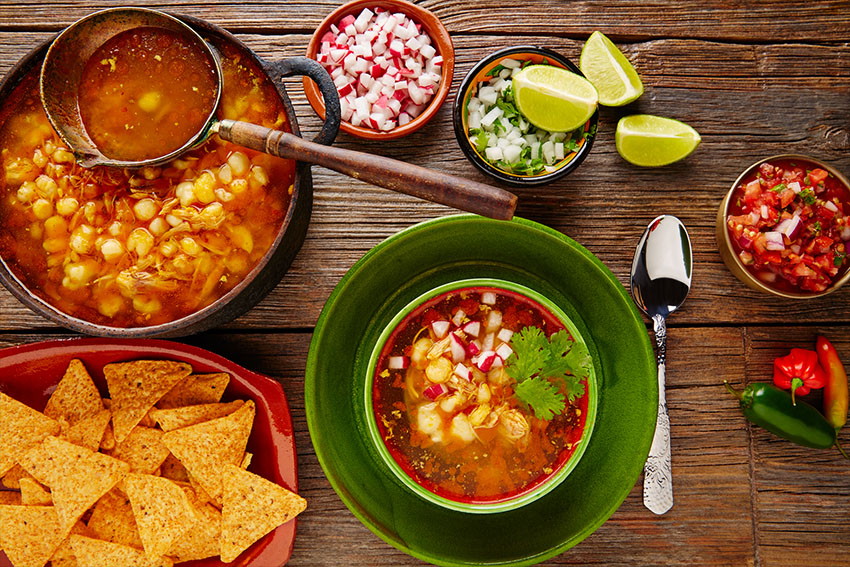
There are many ways to prepare pozole, an ancient hominy-based soup. DepositPhotos
Over the years the dish has evolved into regional versions whose base can be ground pumpkin seed paste (pepián), pasilla or guajillo chile paste, and ground corn paste. All versions generally include hominy (nixtamal), shredded pork or chicken, as well as garlic and onion. The toppings added to pozole are endless — crunchy pork crackling, sliced radishes, cilantro, and lime jut to name a few. Both dishes are an integral part of the patriotic festivities and can be found gracing the tables of home cooks and high-end restaurants across Mexico throughout the month of September.
AMLO's El Grito enactments in 2020 and 2021 were subdued affairs during the COVID-19 pandemic, but this year's Independence Day celebration promises to be a crowdpleaser.
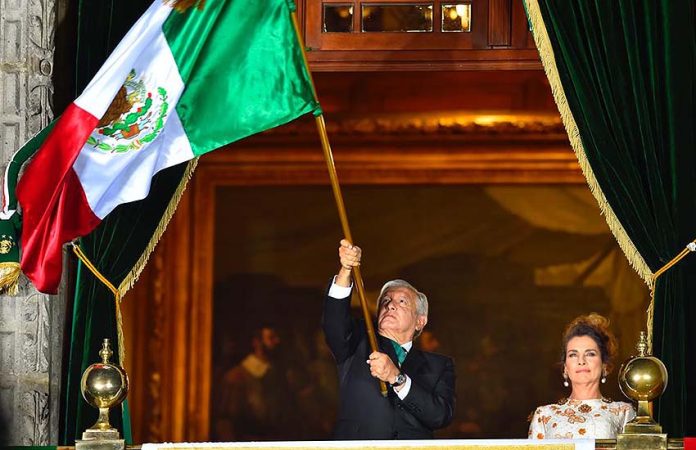
President López Obrador will deliver the “Cry of Independence” – El Grito – from the National Palace Thursday night, a patriotic ritual engaged in by the nation’s president, as well as political office holders all over the country, every year on the night of September 15 in anticipation of Mexico’s Independence Day on September 16.
For the first time in three years, a crowd of patriots will be on hand in Mexico City’s central square, or zócalo, to echo his “¡Viva México!” exclamations.
El Grito ceremonies in the capital were subdued affairs in 2020 and 2021 due to the pandemic, but patriotic boisterousness will return to the zócalo this year with the worst of the COVID crisis behind us.
Prior to AMLO’s appearance on the presidential balcony of the National Palace at 11 p.m., the Mexican-U.S. norteño band Los Tigres del Norte will warm up the large expected crowd with its repertoire of well-known songs such as “La Puerta Negra” and “Jefe de Jefes.” The Grammy award-winning group is also scheduled to keep the party going with an encore performance after the president has wished “long life” to Mexico and independence heroes such as Miguel Hidalgo and José Morelos.
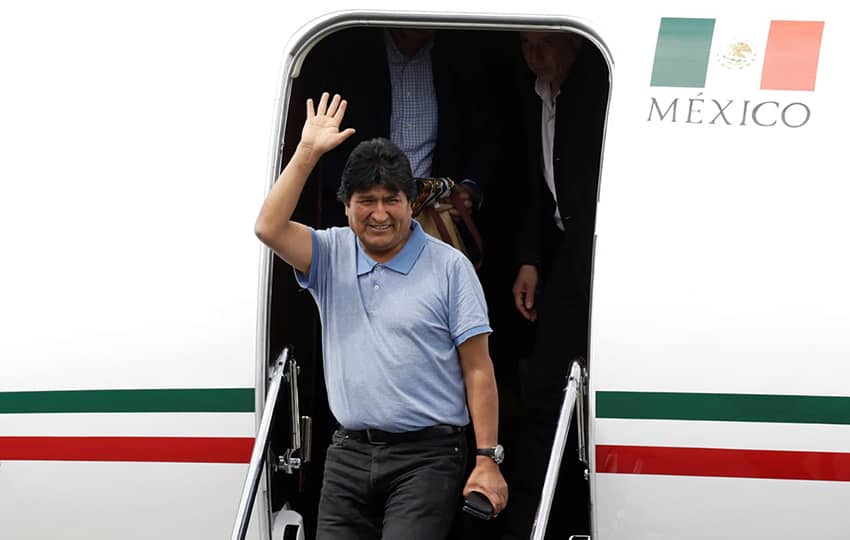
Bolivia’s former president Evo Morales arrives in Mexico City as a special guest at Thursday night’s Independence Day celebrations. Evo Morales/Twitter
Before Los Tigres take to the stage for their first set, revelers will be able to watch the National Lottery’s Gran Sorteo Especial (Special Grand Prize Draw), which is scheduled for 8 p.m.
Beachfront lots in Sinaloa and large cash prizes are up for grabs in the raffle, whose proceeds will fund water infrastructure projects in the northern state.
The main event of the night, however, is undoubtedly El Grito, the fourth to be delivered by López Obrador, who took office in December 2018. Similar ceremonies will be held in city and town squares across the country, where governors and mayors will pay homage to those who fought for independence from Spain in the 1810–1821 Mexican War of Independence.
The Grito delivered by modern-day presidents is in itself a homage to a speech given in 1810 by Catholic priest Miguel Hidalgo in the town of Dolores, Guanajuato.
In Hidalgo’s speech – known as El Grito de Dolores (The Cry of Dolores) – the clergyman urged mestizos and indigenous peoples to rise up and “free themselves” from the “hated Spaniards” under the banner of the Virgin of Guadalupe, who was already a Catholic symbol of Mexico.
As López Obrador channels the “father of the country” in Thursday’s final hour, millions of Mexicans – in the Mexico City zócalo or on television at home, in restaurants and bars and elsewhere – will watch on with pride, despite the many problems the country faces, and join with him in exclaiming “¡Viva México! ”
Many foreigners will undoubtedly be watching as well, including the president’s guests of honor, among whom are former Uruguayan president José Mujica, former Bolivian president Evo Morales, Martin Luther King III, Aleida Guevara – daughter of Argentine-Cuban revolutionary Ernesto “Che” Guevara — family members of Wikileaks founder Julian Assange and family members of Mexican-American labor leader and civil rights activist César Chávez.
Thursday night’s festivities will precede a military parade in Mexico City on Friday – Mexico’s Independence Day.
Los Tigres Del Norte - La Puerta Negra (En Directo Desde Los Angeles MTV Unplugged)
Wondering what Los Tigres del Norte sound like? Here they are performing their song “La Puerta Negra (The Black Door).”
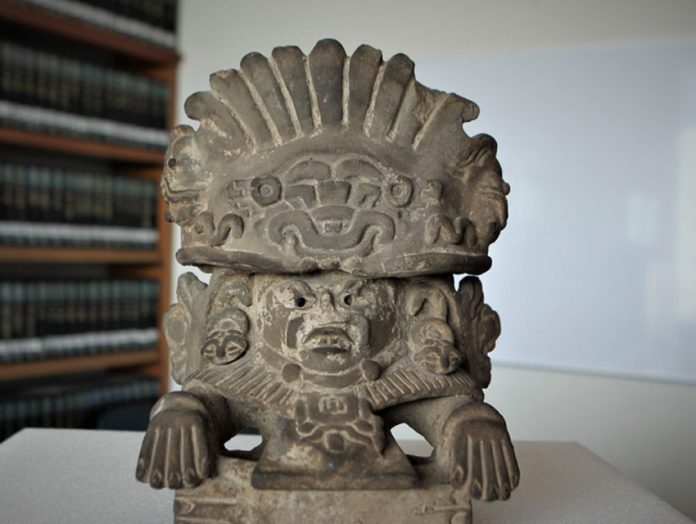
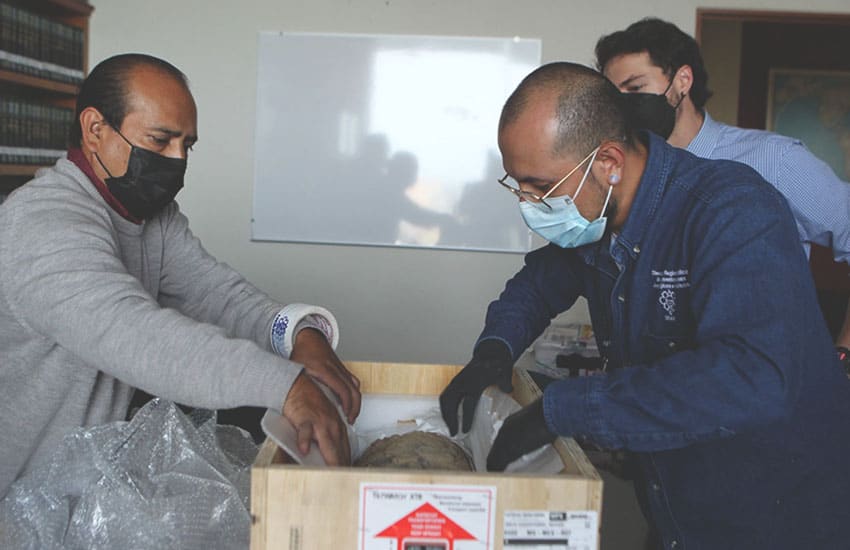
One of the items returned to Mexico. For the past three years, citizens around the world have returned nearly 9,000 Mexican items like these through the #MiPatrimonioNoSeVende campaign. INAH
Mexico’s efforts to recover thousands of pieces of art and archaeological artifacts from beyond its borders scored another victory this week.
On Wednesday, it was announced that more than 50 items have been repatriated — most notably an urn of Zapotec origin that was made between A.D. 600 and A.D. 900 and a column fragment taken from a palace in the Santa Rosa Xtampak archaeological site in Campeche.
The items in this recent batch were given to Mexico voluntarily by citizens of Austria, Canada, Sweden and the United States. They were handed over to Mexican embassies and consulates abroad as part of #MiPatrimonioNoSeVende (“my heritage is not for sale”) campaign, an effort to recover historical items that were stolen from Mexico or somehow ended up in foreign lands.
So far, nearly 9,000 pieces have been recovered over the past three years, according to the Ministry of Foreign Affairs — although experts warn that there is a lack of infrastructure to house, restore, preserve and display the items.
The items have been sent to the National Institute of Archaeology and History for safekeeping. INAH
The collected works have been taken in by the National Institute of Anthropology and History (INAH). In a statement, INAH said the purpose of the campaign is twofold: “the recovery of [Mexico’s] cultural heritage illegally stolen from the country,” and raising awareness that these often valuable items are out there and should not be sold or put up for auction.
“Each object tells us a story that helps us understand our identity as a nation,” INAH said in the statement. The newly returned items are pieces “belonging to different cultures from different periods of the pre-Hispanic era.”
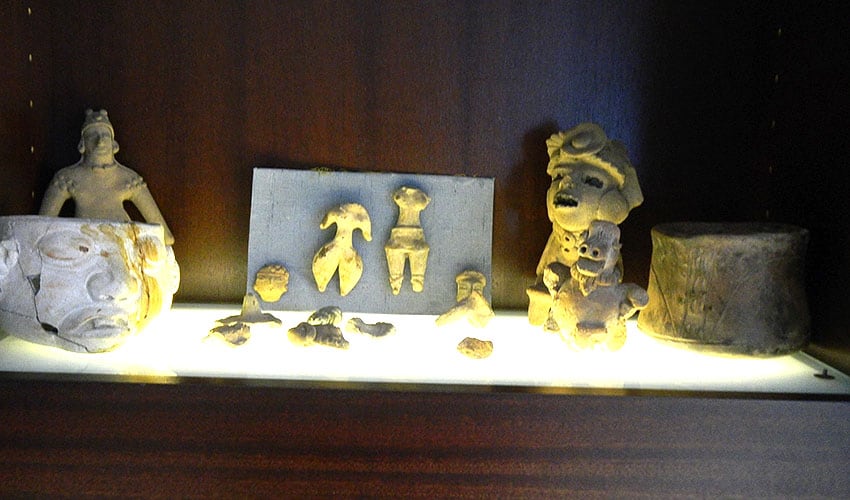
The program has met with success, such as last year when the Mexican Embassy in Germany received 34 pieces such as bowls, pottery vessels and an anthropomorphic mask from the Olmec culture. Also last year, a French family returned four pre-Hispanic artifacts, including a pipe, vessel and figurines that might have been more than 2,000 years old, to the Mexican Embassy in Paris.
However, despite Mexico’s efforts, some of the country’s heritage items have been sold at private auctions.
Some examples of items returned as a result of the #MiPatrimonioNoSeVende campaign. These pre-Hispanic artifacts were returned voluntarily in June 2021 by German citizens. Mexican government
Last year, for example, an auction at Christie’s in Paris sold some 50 Mexican pieces for US $1.8 million, including a Mayan hacha or ax (a Mayan ballgame accoutrement) that sold for US $839,396. Also last year, a Maya stone effigy sold for US $352,800 in an auction at Sotheby’s in New York that brought US $657,500 for two dozen artifacts from states such as Veracruz, Colima, Jalisco and Zacatecas.
According to Mexico’s Ministries of Foreign Affairs and Culture, the campaign to repatriate artifacts during the administration of President López Obrador has dwarfed the results of the previous administration of Enrique Peña Nieto, which brought back 1,300 pieces between 2012 and 2018. The current government claims 8,970 objects have been recovered in the past three years.
“We must applaud the initiative to recover our archaeological heritage abroad,” said Jesús Sánchez, an INAH archaeologist for 42 years. “However, it’s not just about getting the pieces back. Our work centers have very small warehouses [that are] in poor condition, and the museums are saturated. There are thousands and thousands of archaeological pieces that are stored in warehouses, simply because there is no way to study them, classify them and later display them.”
Indeed, only a fraction of the recovered pieces are on display. Some of the 2,500 objects recovered from Spain are on exhibit in the Templo Mayor Museum in Mexico City, but most others remain in warehouses, perhaps never to be seen by the public.
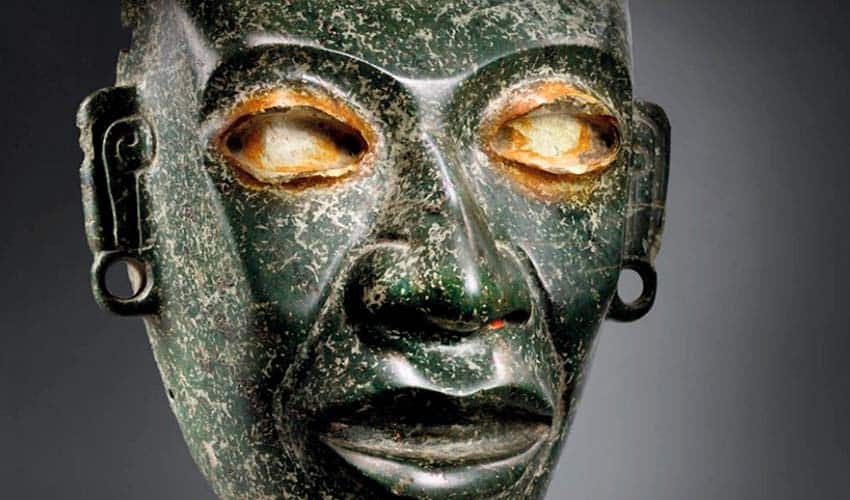
This mask, which Christie’s auction house said came from the Mexican pre-Hispanic site of Teotihuacán, sold in February 2021 for US $437,000. Christie’s Paris
The legal adviser of the Ministry of Foreign Affairs, Alejandro Celorio, explained that officials are trying to “stagger” the arrival of objects in the country while they are guarded in embassies or consulates abroad. “There are going to be many pieces and more returns,” Celorio said. “Perhaps we are victims of our own success.”
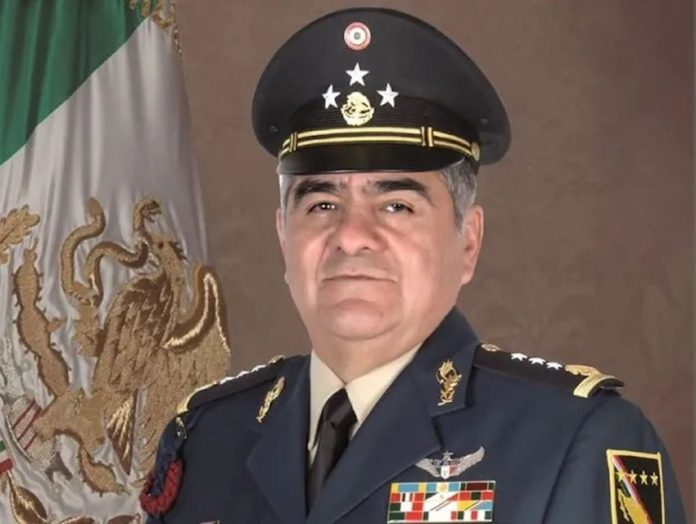
Retired general José Rodríguez Pérez commanded the 27th infantry battalion in Iguala in 2014 when 43 Ayotzinapa Rural Teachers College students disappeared. Sedena
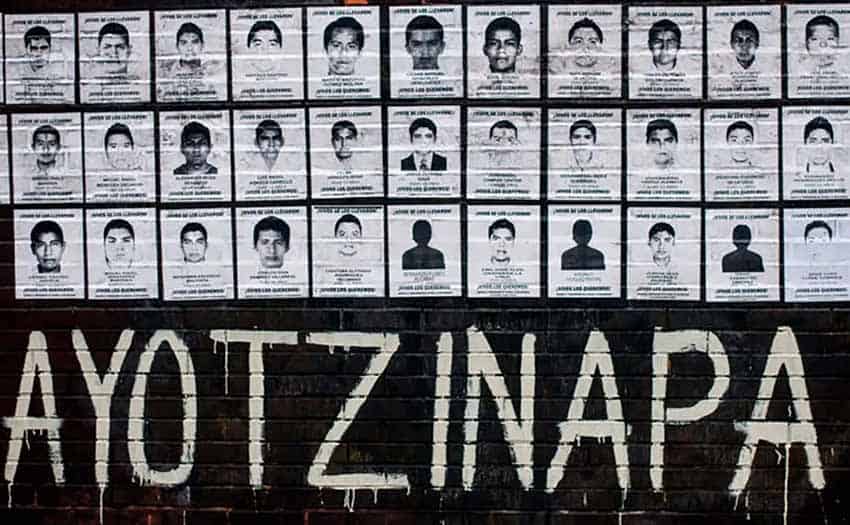
A retired army general accused of ordering the murder of six of the 43 students who disappeared in Guerrero in 2014 has been arrested, the federal government confirmed Thursday.
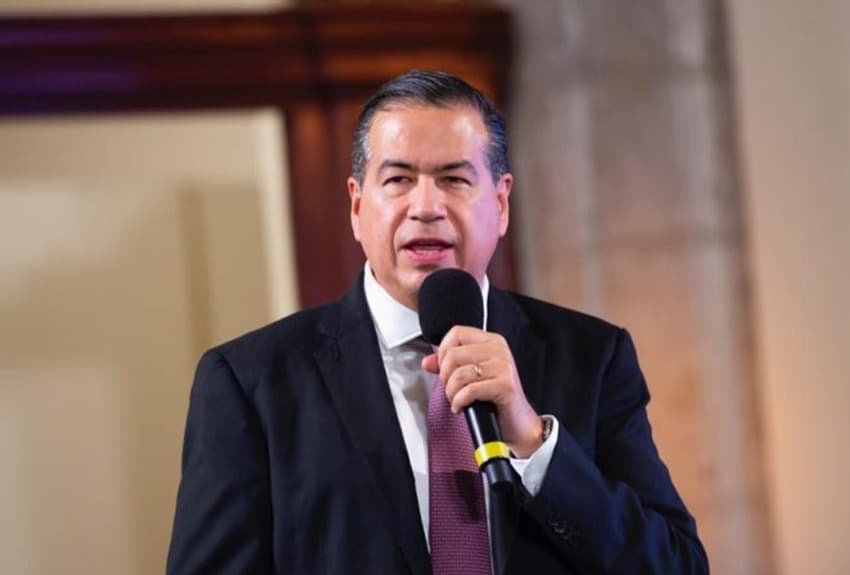
Deputy Security Minister Ricardo Mejía said that José Rodríguez Pérez, a then-colonel who commanded the 27th infantry battalion at the time of the Ayotzinapa Rural Teachers College students’ disappearance in Iguala on September 26, 2014, was detained.
Several reports said that Rodríguez turned himself in to authorities in Mexico City on Wednesday and was subsequently transferred to a military prison. His arrest comes almost three weeks after Deputy Interior Minister Alejandro Encinas said there was evidence that six of the 43 students were held in an Iguala warehouse for several days before the army commander ordered their murders.
Mejía said that two other army personnel had also been arrested in connection with the Ayotzinapa case. Arrest warrants for 20 military commanders and soldiers were issued by a federal judge last month.
Deputy Security Minister Ricardo Mejía confirmed that Pérez had turned himself in to Mexico City authorities on Wednesday. Presidencia
Rodríguez’s detention comes almost a month after former attorney general Jesús Murillo Karam was arrested in connection with the students’ disappearance and presumed murder. Accused of forced disappearance, torture and obstruction of justice, Murillo was a key architect of the previous government’s so-called “historic truth” in the Ayotzinapa case.
Presented by Murillo in January 2015, the allegedly fabricated version of events posits that the students, traveling on a bus they commandeered to go to a protest in Mexico City, were intercepted by corrupt municipal police who handed them over to members of the Guerreros Unidos crime gang. According to this version, the gangsters, mistaking the students for rival criminals, then allegedly killed them, burned their bodies in a dump in the municipality of Cocula and disposed of their remains in a nearby river.
The current government has rejected the “historic truth,” and a recent Ayotzinapa truth commission report implicated the army in what Encinas described as a “crime of the state.”
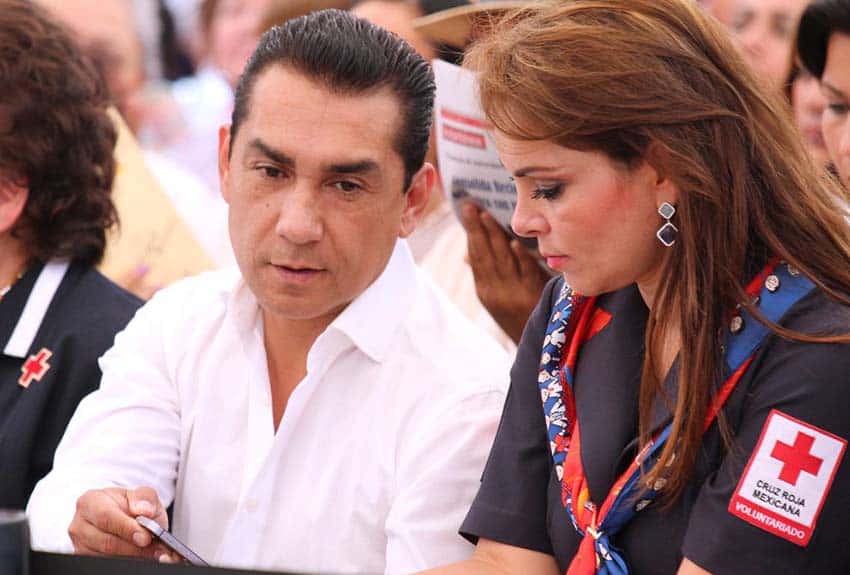
The most prominent early arrests in the case were those of former Iguala Mayor José Luis Abarca and his wife María de los Ángeles Pineda, who were accused of masterminding the abduction of the students and being complicit with the Guerreros Unidos. Abarca and Pineda – once known as the Imperial Couple of Iguala – have been in prison since their arrest in late 2014, but the former has now been absolved of involvement in the Ayotzinapa case.
In related news, a federal judge has absolved the former mayor of Iguala, José Luis Abarca, left, of involvement in the Ayotzinapa case. Abarca and his wife, María de los Ángeles Pineda, right, have been in jail since 2014.
Samuel Ventura Ramos, a Tamaulipas-based federal judge, cleared the former mayor of kidnapping and organized crime charges related to the disappearance of the 43 students, ruling that there was a lack of evidence to proceed against him. He also absolved 19 other people linked to the students’ disappearance.
Despite the ruling, Abarca is not expected to leave jail anytime soon as he faces other criminal charges, including allegations he was involved in the murder of two Iguala activists in 2013.
Encinas responded to the ex-mayor’s acquittal on Twitter, saying that the federal Attorney General’s Office (FGR) has “sufficient evidence” to appeal “this unfortunate act of impunity.”
The deputy interior minister described Abarca as “one of the main players in the disappearance of the young men” and noted that Ventura previously acquitted 77 suspects in the Ayotzinapa case. Encinas said in 2019 that the same judge’s acquittal of 21 municipal police officers detained in connection with the students’ disappearance was a sign of the “wretchedness and rot” of Mexico’s justice system.
Pérez’s arrest follows a recent Ayotzinapa truth commission report that implicated the army in the disappearance of the students. Deputy Interior Minister Alejandro Encinas called the students’ kidnapping “a crime of the state.”
Mejía confirmed Thursday that the FGR would challenge Abarca’s acquittal and updated Ventura’s tally of Ayotzinapa-related absolutions, saying that he has now exonerated 98 people.
He added that the government would file a complaint against the judge with the Federal Judiciary Council, an organization led by Supreme Court Chief Justice Arturo Zaldívar that oversees the nation’s courts and judges.
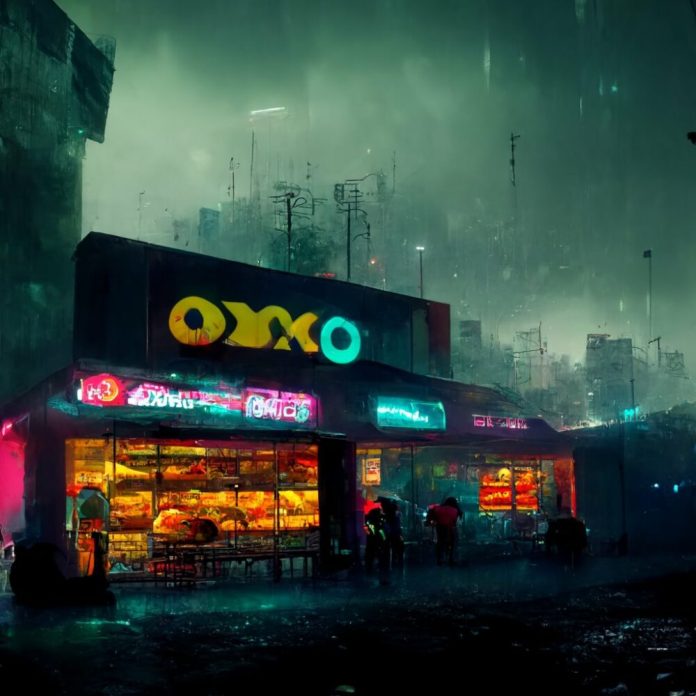
One of the AI-created images of CDMX in 2049, from a Twitter user
“Postcards” from a futuristic Mexico City have gone viral after a Twitter user @lapetitemachine posted what he said were images of the country’s capital in the year 2049, as created by Artificial Intelligence or AI.
The images show what appears to be a dark, dystopian future for the city, with dilapidated structures, rainy streets, a flood of neon light, and graffiti on subway cars and buildings.
And it looks like OXXO isn’t going anywhere — the store’s logo appeared prominently in three of the images. The most disturbing picture perhaps, because of its too-close-to-home probability was of a polluted skyline over the capital, with a hazy red sun glimpsed through the contaminated clouds.
Thousands of Twitter users “liked” and retweeted the images, posting some fatalistic but also tongue-in-cheek reactions:
“Me coming home from my 12-hour cyberwork shift in the acid rain, where a hologram of Dr. Simi detects my presence and starts talking to me about [the pharmacy’s] cheapest prices (their prices 300% higher than 20 years before),” said one follower of the post.
le pedí a una IA que imaginara a la CDMX del año 2049 y este fue el resultado: pic.twitter.com/uLoWxnJQJp
Another described the aesthetic as “dystopian OXXO/cyber-punk”.
Users explained how, to create these kinds of images, an AI would “read” thousands of images of the city until it detected patterns — like the combination of OXXO + CDMX — that were then incorporated into an algorithmic “vision” of the future.
Not all predictions of future urban life are so apocalyptic: AI is also being used by scientists to create positive, sustainable, and technologically advanced models for future cities in hopes that as the world continues to urbanize, cities will find ways to cope and thrive among the world’s many challenges.
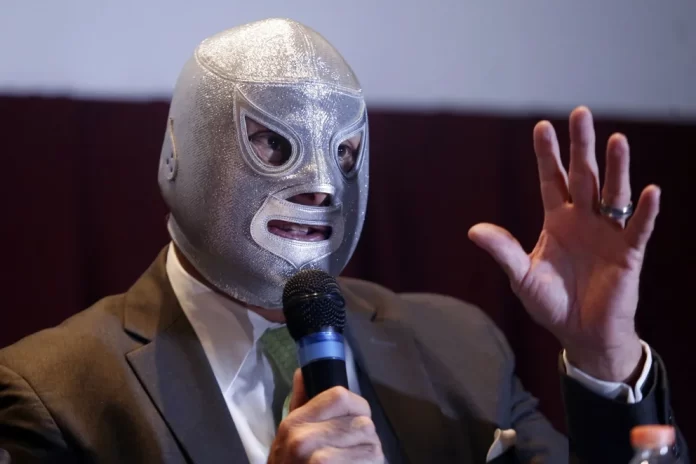
El Hijo del Santo is the son of the late Lucha Libre legend El Santo. El Hijo is says goodbye to the sport this week, exactly 40 years after his father did.
Forty years ago this week Mexico’s most famous Lucha Libre star retired from the ring, and now his son, El Hijo del Santo, will do the same — but not without one final fight.
El Santo (real name Rodolfo Guzmán) is far and away the most popular Lucha Libre fighter ever to have wrestled in Mexico and one of the country’s most recognizable pop culture personalities in general.
Known for his fierce protection of his identity, El Santo is said to have only removed the silver mask that covered his entire face and head twice in public. Once in one of his 50+ Hollywood films, when he revealed his face to a love interest (even then using a body double), and another just a few days before he died from a massive heart attack at age 66 in 1984, this time revealing a partial part of his face.
El Santo was a typical rudo or bad guy for most of his career in the ring, but beloved by the public despite his evil ways. He retired on September 12th, 1982 after a bloody battle between he and his accomplices, wrestlers Huracán Ramírez, El Solitario, and Gori Guerrero, and the much younger foursome Perro Aguayo, El Texano, Signo, and Negro Navarro.
El Hijo del Santo’s father, El Santo — the original wearer of the silver mask — was a beloved legend in Lucha Libre even though he played a bad guy. Marrovi/Creative Commons
Months after his retirement his son, aptly named El Hijo del Santo (Son of Santo) entered the ring for the first time. In January, El Hijo del Santo announced he will also be retiring from the ring. Jorge Ernesto Guzmán Rodríguez (El Hijo de Santo’s real name), has also become a famous masked face in Mexican wrestling, fighting for both the AAA and the Worldwide Lucha Libre Council (CMLL) as a free agent.
Another generation continued when Hijo del Santo’s own son, Santo Jr., stepped into the ring in 2016. Father and son fought a match together, seen here in one of Santo Jr.’s first events. Screen capture
For the past two years, El Hijo says he has been mentally preparing to retire from the ring, and recently it was announced that he is willing to perform once more for CMLL in a fight that will cost the council 160,000 pesos or around 8,000 USD for 15 minutes. El Hijo can also be found on the website Cameo these days where fans can pay for a personalized message, hello or Happy Birthday, for anywhere between 45 and 80 dollars.
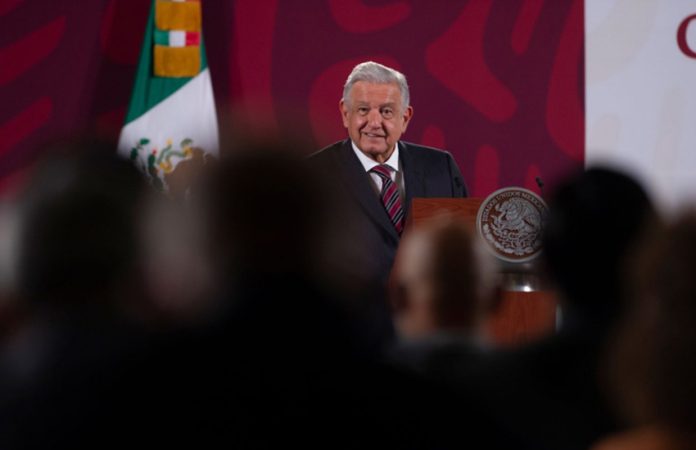
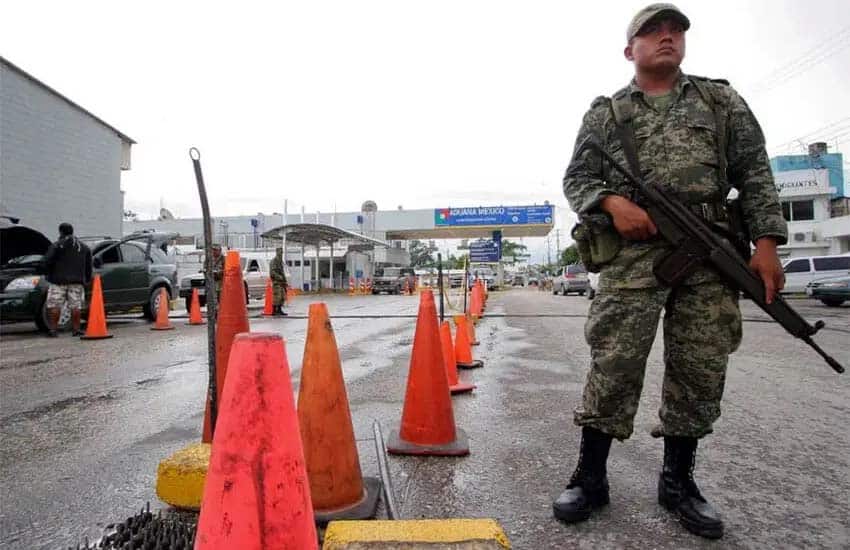
At his press conference Wednesday, the president emphasized the need for the National Guard to be under the control of the army.
The ongoing presence of the armed forces on the nation’s streets is essential to guarantee peace, President López Obrador said on Wednesday as lawmakers in the lower house of Congress prepared to vote on a constitutional bill that would allow the use of the military for public security tasks until 2028.
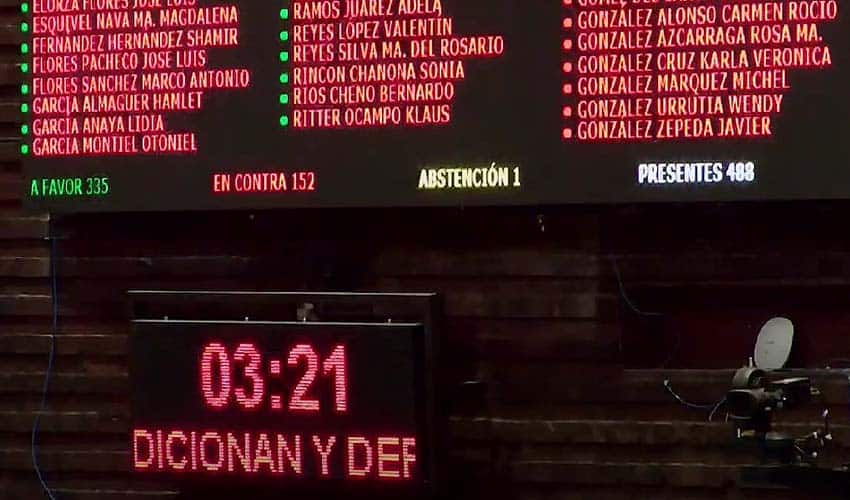
In a late-afternoon vote, the Chamber of Deputies passed the bill with 335 votes in favor coming from members of the Institutional Revolutionary Party, Morena, the Labor Party (PT) and the Green Party. The opposition only managed 152 votes against the bill, which came from members of the National Action Party, the Democratic Revolution Party, the Citizen Movement Party, as well as two opposition votes from PRI deputies. The bill will now progress to the Senate.
However, the bill was slightly amended before it came to a vote, after Labor Party Deputy Reginaldo Sandoval requested that the military be used for civilian security tasks only until 2028, not 2029, as had been proposed.
López Obrador, who said last week that he had changed his mind about the need to use the military for public security, had told his regular news conference Wednesday morning that the majority of lawmakers were acting “responsibly” with regard to their consideration of the PRI’s proposal.
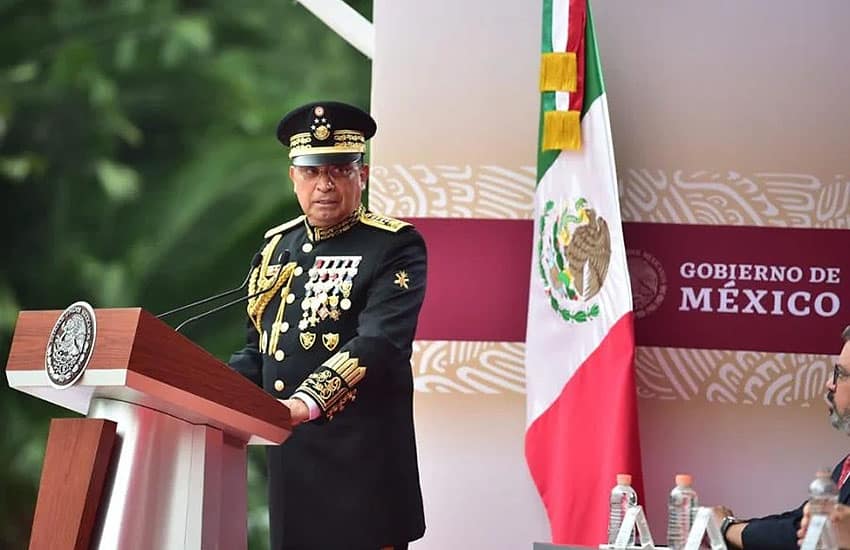
National Defense Minister Luis Cresencio Sandoval defended the integrity of the armed forces at a military event on Tuesday. Presidencia
“I congratulate [the lawmakers who support the bill] … because it’s about guaranteeing peace and tranquility in the country,” he said.
The president said that the government needs more time to “consolidate” the National Guard, the three-year-old security force that superseded the Federal Police. He emphasized the need for the National Guard to be under the control of the army – the Senate passed a bill to that end last Friday – to combat corruption, including collusion with criminal groups, a crime of which former security minister and Federal Police chief Genaro García Luna is accused.
“What we want is to professionalize, institutionalize and moralize the National Guard, which will [eventually] be the most important institution for guaranteeing public security,” he said.
López Obrador railed against National Action Party (PAN) lawmakers opposed to the bill presented by the PRI, using a range of pejoratives including “corrupt,” “irrational” and “hypocritical” to describe them.
“They’re admirers of fascists, supporters of heavy-handedness, practitioners of repression, torture, massacres and serious human rights violations, and now they want to appear as defenders of freedom and human rights,” he said.
The objective of the bill, he reiterated, is “to use the army, navy and National Guard [for public security tasks] so that we can live in peace, so that the main human right – the right to life – is guaranteed.”
Extending the government’s authorization to use the armed forces for public security is “not just a duty” for lawmakers but also a “great joy,” López Obrador claimed.
Mexican and international nongovernmental organizations have long warned of the risks of using the armed forces for public security tasks, noting that soldiers and marines have committed or allegedly committed a range of human rights violations, including extrajudicial killings, while carrying them out.
In a late-afternoon Wednesday vote, the Chamber of Deputies approved constitutional reforms to allow use of the military for civilian security until 2028, with a vote of 335-152. Screen capture
The Washington Office on Latin America (WOLA) said in a 2021 analysis that the results of the militarized war on crime, launched by former president Felipe Calderón almost 15 years ago, have been “catastrophic.”
The analysis pointed out that Mexico had recorded some 350,000 homicides since Calderón deployed the armed forces to combat organized crime in December 2006 and noted that López Obrador has failed to demilitarize public security despite his criticism of the militarized model before he became president and his pledge to take the armed forces off the streets.
“On the contrary, he has deepened various aspects of the militarized model,” wrote Stephanie Brewer, WOLA’s director for Mexico.
Homicide numbers reached their highest level ever in López Obrador’s first full year in office – 2019 – and have only decreased marginally since then. Despite a 9.1% decline in murders in the first half of 2022, the president’s six-year term is on track to be the most violent in recent decades.
While many organizations are concerned about the ongoing – and enhanced – militarization of Mexico, the National Human Rights Commission (CNDH) said Tuesday it wouldn’t file any legal challenge against Congress’ approval of the reform that puts the National Guard under military control.
The commission said it understood the situation that justified the change and asserted that the security force wouldn’t be stripped of its civilian nature despite being commanded by the army in both an administrative and operational sense.
“Given the situation of violence that afflicts the country, this National Commission believes the intervention of the National Defense Ministry [in the administration and operation of the National Guard] … is acceptable from a human rights point of view,” the CNDH said in a statement.
Although López Obrador has assigned a range of additional non-traditional tasks to the military, including infrastructure construction and the administration of customs and ports, the rights commission charged that militarization has decreased rather than increased during the current term of government.
President López Obrador has already assigned a range of nontraditional tasks to the military, including infrastructure construction and the administration of customs and ports.
“What we’re living through today is a new process of transformation,” added the CNDH, which is led by Rosario Piedra Ibarra, an ally of the president.
López Obrador, who frequently stresses that his government is very different than those that preceded it, has claimed that federal authorities, including the military, no longer violate human rights. That assertion has been rejected by human rights experts and activists, including the international nongovernmental organization Human Rights Watch, which said earlier this year that a wide range of human rights violations have continued since the president took office.
For his part, National Defense Minister Luis Cresencio Sandoval defended the integrity of the armed forces at a military event on Tuesday, saying that under the current leadership, they always act in accordance with the law and for the good of the country.
The original version of the story has been updated to reflect the vote of the federal Chamber of Deputies on Wednesday.
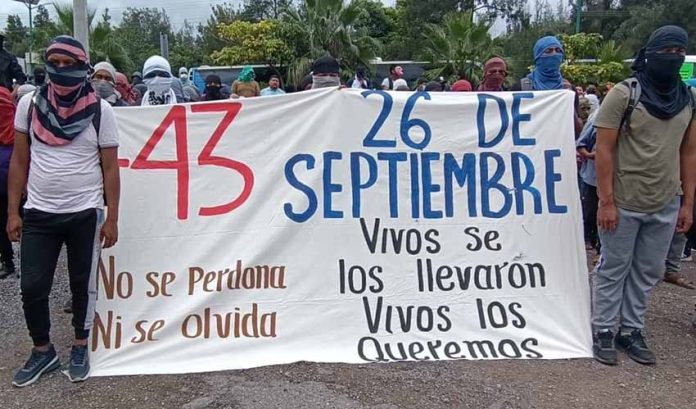
The attack followed this peaceful protest by students from the Ayotzinapa teachers' college and family members of the 43 students missing since 2014. Voices in Movement
An army base in Chilpancingo, Guerrero, was attacked Tuesday by students from a teachers’ college formerly attended by 43 young men who were abducted and presumably killed in 2014.
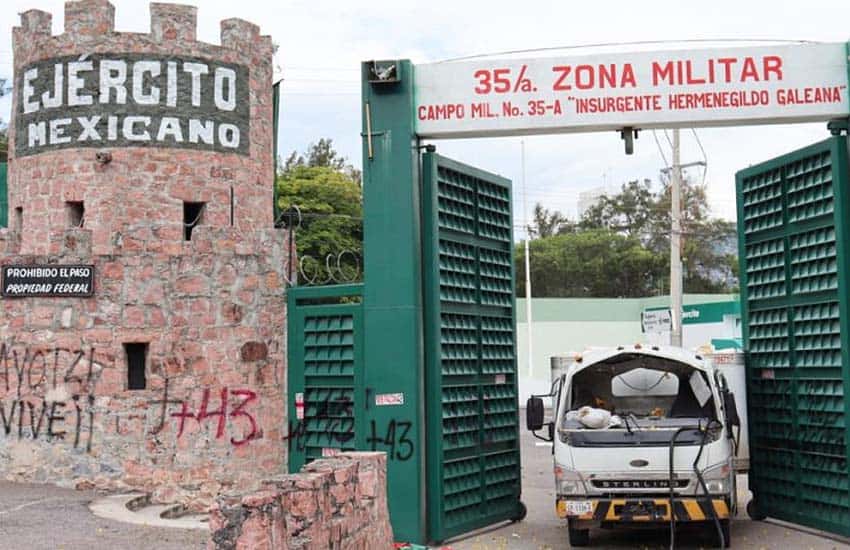
Students from the Ayotzinapa Rural Teachers College threw stones, firecrackers and Molotov cocktails at and into the military base and pushed a driverless delivery truck into its main gate, forcing it open. They subsequently attempted to set the truck on fire but were unsuccessful.
The students also graffitied the base’s exterior walls with messages asserting that September 26 – the day on which the 43 Ayotzinapa students disappeared almost eight years ago – will not be forgotten and that Mexico’s army was responsible for the crime.
A retired army general is among 20 military commanders and soldiers wanted in connection with the abduction and presumed murder of the students, who disappeared in the city of Iguala after buses on which they were traveling were intercepted by municipal police. The mystery of what happened to those 43 students after that point has never been resolved to many Mexicans’ satisfaction despite the previous federal government’s issuing an official “historical truth” in 2015 of what supposedly happened to the Ayotzinapa 43, as they are frequently known.
The students left graffiti about the Ayotzinapa case on the base. An army general and soldiers are among 85 arrest warrants issued in the case last month.
Tuesday’s attack followed a protest outside the military facility, during which hundreds of students and parents of the Ayotzinapa 43 called for justice. Soldiers didn’t interrupt the protest, nor did they respond to the subsequent attack.
The federal Attorney General’s Office said on August 19 – the day former attorney general Jesús Murillo Karam was arrested in connection with the students’ disappearance – that a federal judge had issued a total of 83 arrest warrants for army personnel, police, government officials and members of the Guerreros Unidos crime gang, but the protesters complained that the warrants haven’t been executed.
Blanca Nava, the mother of one of the missing students, told the newspaper La Jornada that not one of the 83 suspects has been arrested.
Several events commemorating the 43 students will be held in the days leading up to the eighth anniversary of what Deputy Interior Minister Alejandro Encinas described last month as a “state crime.”
A march will be held in Mexico City on September 26, eight years to the day after the abduction of the students, a crime that triggered mass protests calling for the resignation of Enrique Peña Nieto, who was president from 2012 to 2018.
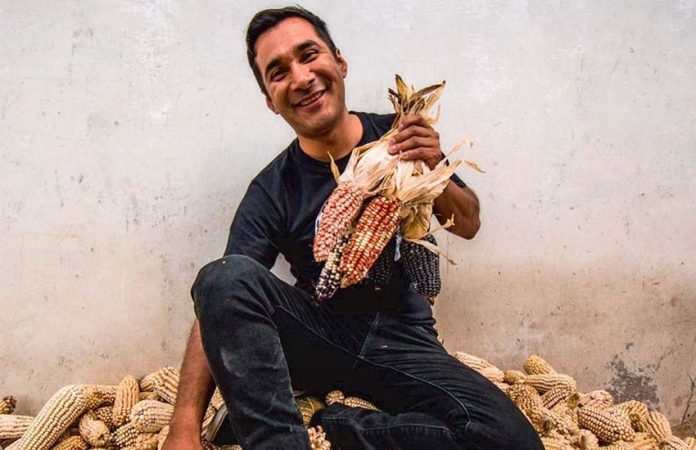
Tlaxcala native Irad Santa Cruz went to Spain to learn to be a pastry chef. He came back with a mission to discover the cuisine of his birthplace. Irad Santa Cruz
Mexican chef Irad Santa Cruz dreamed of making pastries in Spain, but when he got to culinary school in Valencia, his classmates tested him with some questions he wasn’t expecting about where he came from.
What’s special about regional cuisine from Tlaxcala, they asked? What are its most abundant ingredients?
He had to admit to them, and himself, that he didn’t know the answers.
“Discussing Tlaxcala is tough because if locals barely know anything about it, other Mexicans don’t even know where Tlaxcala is!” Santa Cruz says of his home state.
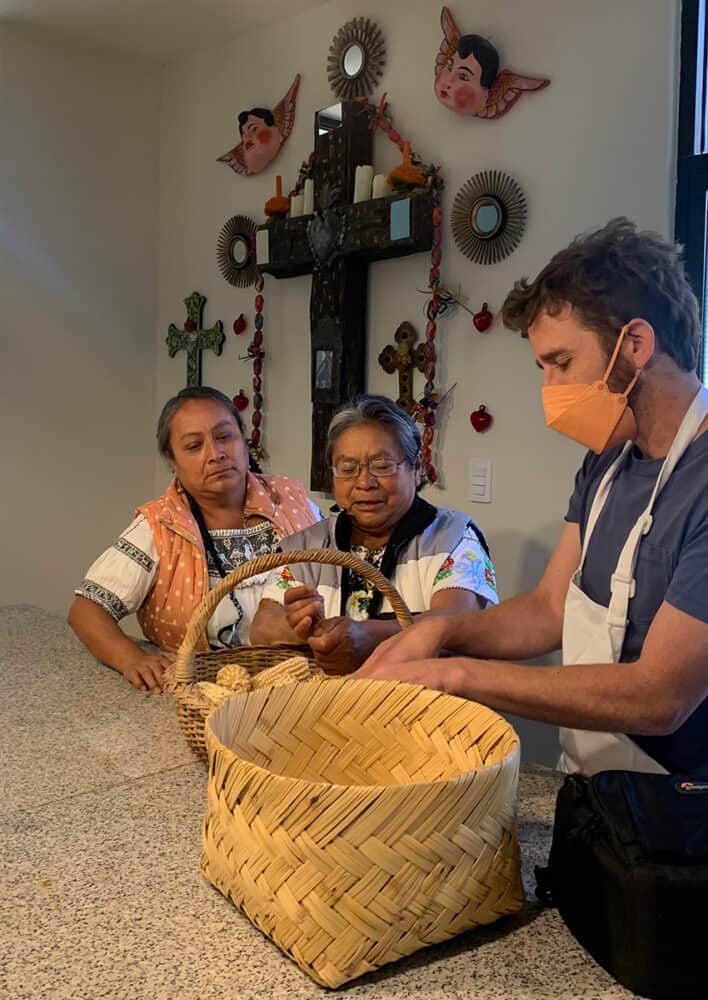
The center collects traditional recipes from older women in Tlaxcala, who are living repositories of the state’s cuisine.
He decided to return home to discover the cuisine of his birthplace. That process, which began in the kitchen with his childhood nanny and mother, ended up connecting him to traditional cooks across the region.
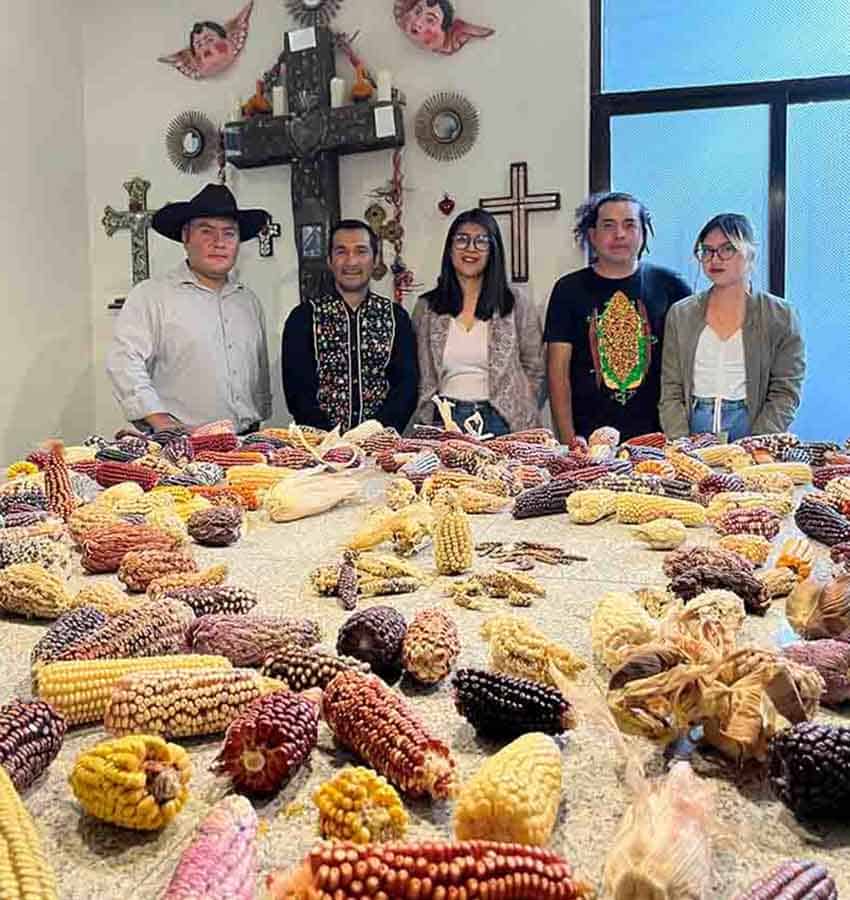
As he was introduced from señora to señora, he asked them for traditional recipes and gave them pastry-making classes in exchange. He met sisters Silvia and Ángela, who had over 125 varieties of heritage corn growing on their land. He hunted maguey worms and Chicatana ants with local insect experts and wild mushrooms with fungi connoisseurs. And he recorded it all down in slim notebook after slim notebook.
“I met with some traditional cooks … and they said to me, ‘Ah, we make this dish with this specific ingredient, but we don’t have that ingredient anymore.’ I realized that cuisine isn’t just food, cuisine is also ingredients,” Santa Cruz said. “It’s also utensils, people, physical spaces, tips, secrets, techniques. Food is the final product or the goal, but everything around cuisine is various actors and factors. …. if there’s no ingredients, there’s no cuisine.”
“I said to myself, ‘I have to go back to nature and get to know the ingredients.’ And I started to research,” he said.
Along the way, the Centro de Investigación de la Cocina Tlaxcalteca (Tlaxcala Cuisine Research Center) in Tlaxcala city was born.
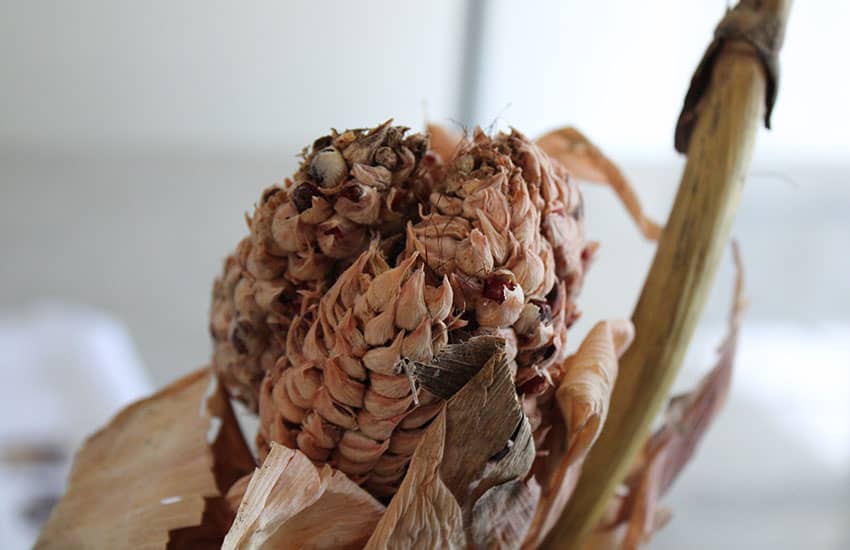
It’s a mix of a cultural center, a cooking school and an archive, where Santa Cruz and his fellow foodie Edgar have a freezer full of local wild mushroom varieties, jars of alcohol-encased edible bugs and ears of corn the likes of which you have never seen, no matter how many trips to Mexican markets you’ve taken: blue corn that’s almost black with pink husks; “Veins of Christ” corn in creamy yellow-white with magenta stripes; “garlic” corn that has each kernel wrapped in its own tiny husk.
Each addition to the collection is the result of a network of relationships Santa Cruz has been building over the last 12 years with local farmers.
“We go to the places and see firsthand what the collection of these ingredients is like. We like to go to the site and connect with the pure essence of the place to get to know how it is, to experience the entire context,” said Santa Cruz. “Because sometimes products just arrive at our tables, and we never know all the labor and work behind them.”
A striking “garlic” corn variety; each kernel has its own husk.
This August, the center officially opened its doors to the public, offering culinary and learning experiences to showcase the area’s vast biodiversity and its ancestral knowledge. Scattered around the main room is local, handmade pottery, an artistic homage to the tortilla hanging on the wall and photos of Santa Cruz with various Catholic popes on their tours through Mexico.
There are also several massive binders of regional recipes painstakingly collected that Santa Cruz will bring out proudly if asked.
“One of the señoras would simply say, ‘Like this, like a handful,‘” he recounts about recipe collecting. “They were almost like empirical recipes that were given to me, and I would just write them down. I realized that you couldn’t replicate something like that because your handful isn’t the same as my handful.
“So I invited the cooks here to my kitchen, and we started to do something we call ‘to testify.’ That means from what they taught me, I would make the dish, and the person who gave me the recipe would approve or reject [the final product].”
For a chef who once dreamed of making European-style confections, Santa Cruz has sunk deeply and wholeheartedly back into his roots. Part of his mission now is finding ways to connect big-city chefs with small-town farmers for the mutual benefit of both. In fact, that’s how I met him.
I was given his name by Elena Reygadas, one of Mexico’s most well-known chefs and owner of the award-winning Rosetta restaurant in the Roma Norte neighborhood of Mexico City. The day I met her, she waxed poetic about a particular collector of honeypot ants that Santa Cruz had introduced her to the last time the insects were in season.
She told me that I had to connect with him.
Santa Cruz is a go-between, a “conductor,” he insists, preferring the term to what he feels is the more pejorative “intermediary” because he takes no cut from the business dealings between farmers and chefs.
Instead, like a culinary Cupid, he is hoping that his work will highlight the ingredients of his home state in dining rooms across the country.
One of the center’s projects is to preserve the biodiversity used in Tlaxcalan cooking. Santa Cruz discovered while collecting recipes that some ingredients were no longer available.
“My concern is only that they meet each other and that the farmer knows that they have something of special value in an industry that needs them and that the industry has the economic wherewithal to pay that farmer a fair price,” Santa Cruz said. “If the price is fair, the farmers won’t quit farming, and the chef will be able to say, ‘I have the very best product.’”
Opening the research center to the wider public is sure to expand the network he has already created, and when he finds a sponsor for the printing of his recipe book, he’s sure it will crack Tlaxcala cuisine open to the wider world.
Even so, he said, he’s not anywhere close to done.
“I have only been to about a third of the state, not even half,” he explained. “It’s been 15 years and we haven’t even gotten to half of the smallest state in Mexico! We want Mexicans and the world to know about [what’s here], to feel it, to know that it’s true, that it exists, that it’s alive, that it’s current and that if we don’t take care of it, this heritage is going to disappear.”
To visit the Centro de Investigación de la Cocina Tlaxcalteca and find out how to take classes there, contact them on Instagram or Facebook or via email at centro.cocinatlaxcalteca@gmail.com.
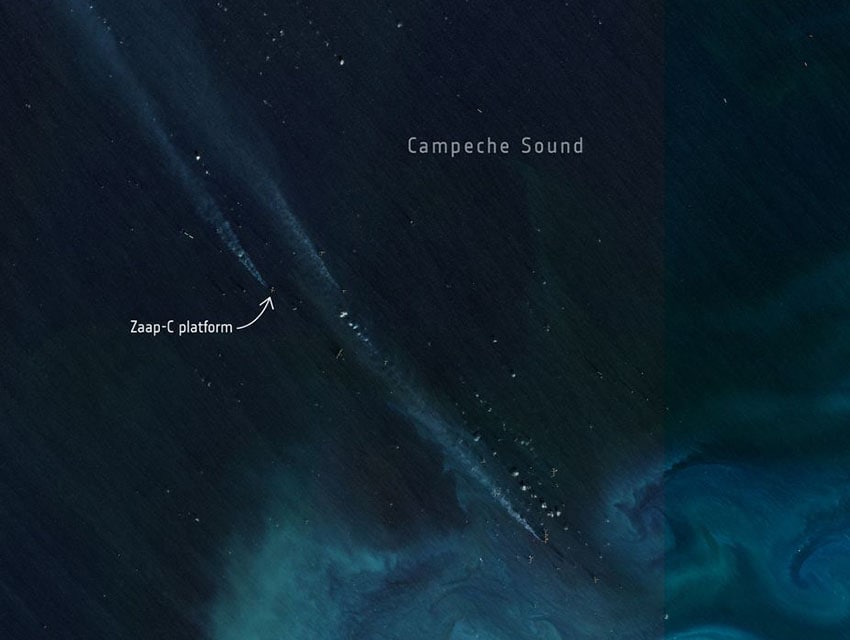
A team of European scientists published a paper earlier this year that details an “ultra-emission event” at Pemex’s Zaap-C platform detected using data from European Space Agency satellites.
Pemex responded last Wednesday, saying that a government-commission study confirmed there “there were no large emissions of methane” at the platform.
The state oil company said in a statement that last December’s emissions had a 22% concentration of methane, while the remainder was made up of nitrogen and other gases “that don’t affect the environment.”
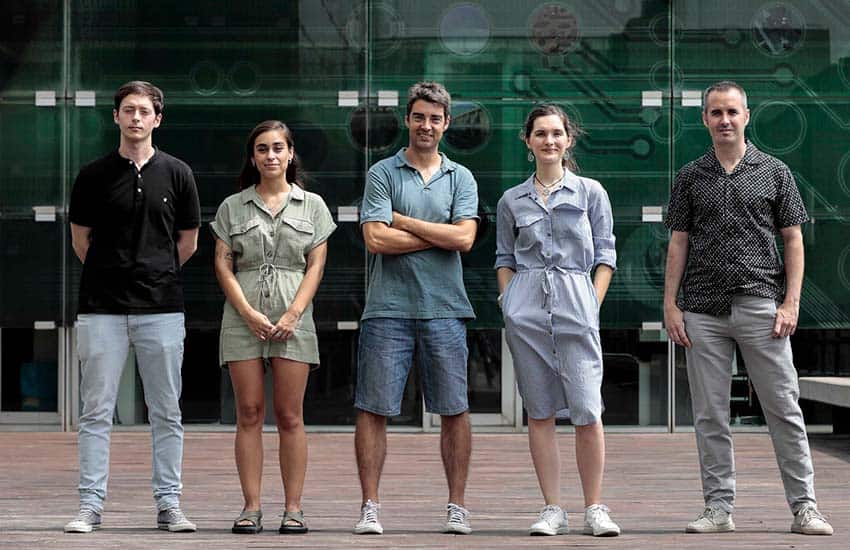
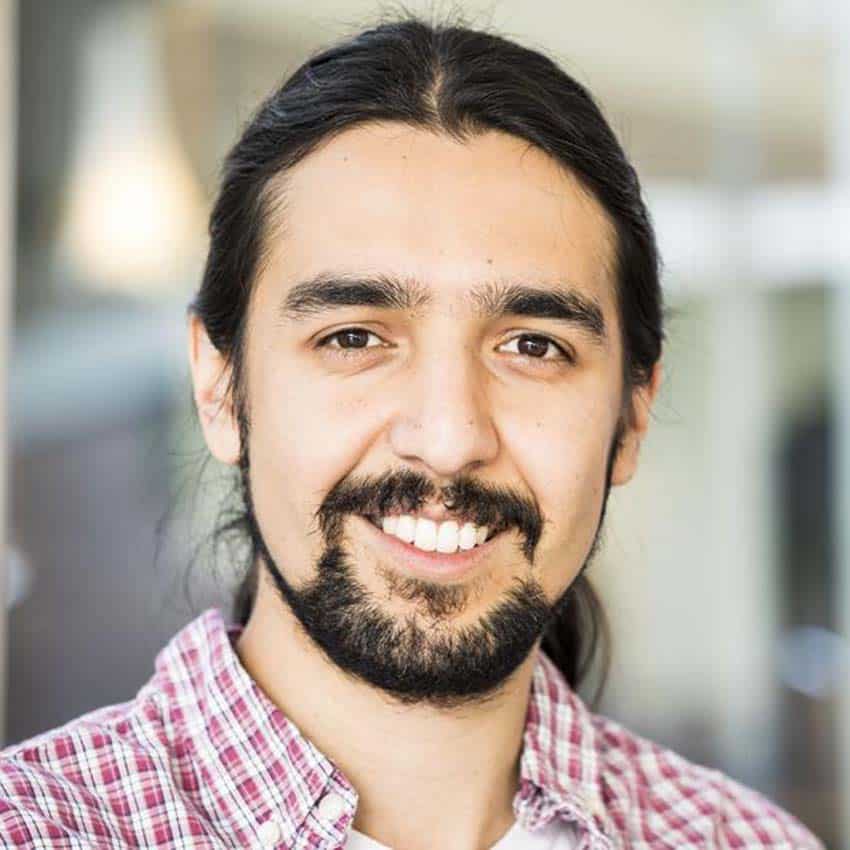
Members of the Land and Atmospheric Remote Sensing research team at the Polytechnic University of Valencia. Luis Guanter, center; Itziar Irakulis-Loitxate, second from right. UPV
Only 2,224 tonnes of methane – 5% of the amount cited by the scientists – was emitted, Pemex said.
Two of the four scientists who used the satellite data to detect methane plumes from the Pemex platform asserted that they definitely didn’t mistake nitrogen for methane.
Itziar Irakulis-Loitxate and Luis Guanter of Spain’s Polytechnic University of Valencia said in a statement sent to the news agency Reuters that nitrogen is not visible to the sensors they used to detect the methane leak. “There is no way of mistaking one for the other,” they said. “The startling emissions we reported were 100% methane, plain and simple.”
Methane, the main constituent of natural gas, is much more harmful to the environment than carbon dioxide and is considered a major contributor to global warming. Irakulis-Loitxate and Guanter told Reuters that the satellite methods used in their study are shedding light on emissions that would otherwise go unreported.
A European Space Agency satellite photo of Pemex’s Zaap-C platform in the Gulf of Mexico, showing the leak. The researchers who reported it say they are certain of their findings. ESA
“Methane is a huge challenge across the [gas and oil] industry. Ideally, operators would embrace this new information,” the scientists said.
Guanter said in an interview with the newspaper El País earlier this year that reducing methane emissions was crucial to combating climate change. “In the short term, it’s the gas to attack,” he said.
Irakulis-Loitxate and Guanter told Reuters that their satellite observations also showed that the flare at the Zaap-C platform – which is used to burn off excess natural gas and limit the damaging impact of methane – remained unlit for 17 days last December, whereas Pemex said in its statement it was unlit for just a few hours.
“This is a matter of simple visual confirmation,” the scientists said. “Data from two other satellites confirm that the unlit flare was emitting large volumes of methane during that same period.”
Daniel Zavala, an oil and gas industry emissions expert with the Environmental Defense Fund, described the level of methane leaking from Mexican gas and oil operations “alarming and worrying.”
The same scientists who reported last December’s “ultra-emission event” say a comparable methane leak occurred at the same location last month. Reuters said it received data from the scientists earlier this month “that showed there was another leak of a similar magnitude from the same location during six days in August.”
Daniel Zavala, a senior scientist at the United States-based nonprofit Environmental Defense Fund whose work specializes in the measurement and characterization of emissions from the global oil and gas system, said in July 2021 that methane was leaking from Mexican gas and oil operations at “alarming and worrying” levels.
President López Obrador has pledged to reduce Mexico’s methane emissions, but an analysis conducted for Reuters found that flaring – which releases carbon dioxide and methane into the atmosphere – increased 50% in Mexico between 2018, the year the president took office, and 2020. Many flare sites are facilities operated by Pemex.
López Obrador, whose energy strategy depends heavily on the continued use of fossil fuels, faces international pressure to reduce methane emissions and promote clean, renewable energy. U.S. Special Presidential Envoy for Climate John Kerry has raised both issues with the president during recent visits to Mexico.