The Cuba-Mexico relationship is one born in a shared colonial past and bolstered and fractured in the heat of Cold War tensions. Like any Latin American nation, or rather any nation at all, their expressions and enactments of statehood have not been unmarked by U.S. influence and pose the question of whether and how Trumpian politics shape their future fraternity.
With Mexico’s relationship with Cuba under increasing scrutiny from their neighbours north of the border, we take a look at the relationship between two of Latin America’s oldest nations.
Early historical foundations: The colonial era to the early 20th Century
Cuba and Mexico share a Spanish imperial legacy. While Mexico gained independence from Spain in 1821, Cuba remained under Spanish colonial rule until 1898.
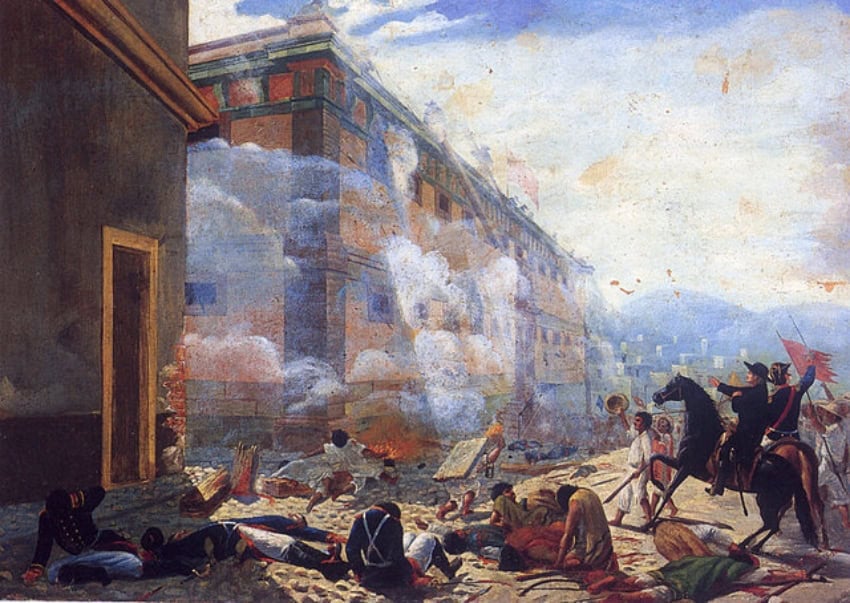
In light of Spain’s refusal to recognize the Treaty of Córdoba and thus Mexican independence, Mexico was wary of Cuba’s potential threat to sovereignty. Still under Spanish control, it offered a launchpad for a Spanish attempt to retake Mexico. The Mexican minister of foreign affairs alleged that “Mexico without Cuba (was) a prisoner of the Gulf of Mexico” and advocated taking Cuba under Mexican control.
Indeed, Spanish forces stationed in Cuba threatened Mexico’s maritime security. After more than a decade of conflict, Spain recognized Mexico’s independence in 1836 with the Santa María–Calatrava Treaty.
Though the Spanish-American War signaled the end of an era of Spanish colonialism, Cuba continued to see its sovereignty constrained by the U.S. under the Platt Amendment following the formal recognition of the Republic. It was only 30 years later, when the two countries signed the 1934 Treaty of Relations, that Washington’s legal right of intervention was abolished.
Interwar and pre-revolutionary connections (1920s–1950s)
Over the course of the oppressive dictatorship of Gerardo Machado (1925–1933), Cuba experienced a significant anti-regime movement that paved the way for the revolution of 1933. Such radicalization of society wasn’t without its links to Mexico.

One such example is the assassination of Julio Antonio Mella in Mexico City in 1929, the Marxist revolutionary and fierce opposer of Machado, whom he called “Tropical Mussolini.” While there is ongoing debate around who orchestrated his murder, it was supposedly under an agreement between the Cuban and Mexican governments.
Cuba’s early intellectual rebels, such as the Grupo Minorista, were already looking to Mexico for inspiration around nationalism and anti-authoritarianism, and Mella’s death further fueled the anti-Machado movement. While a lack of political unification amongst the factions caused hundreds to flee to Mexico, Cuban rebel networks propagated just across the Yucatán Channel.
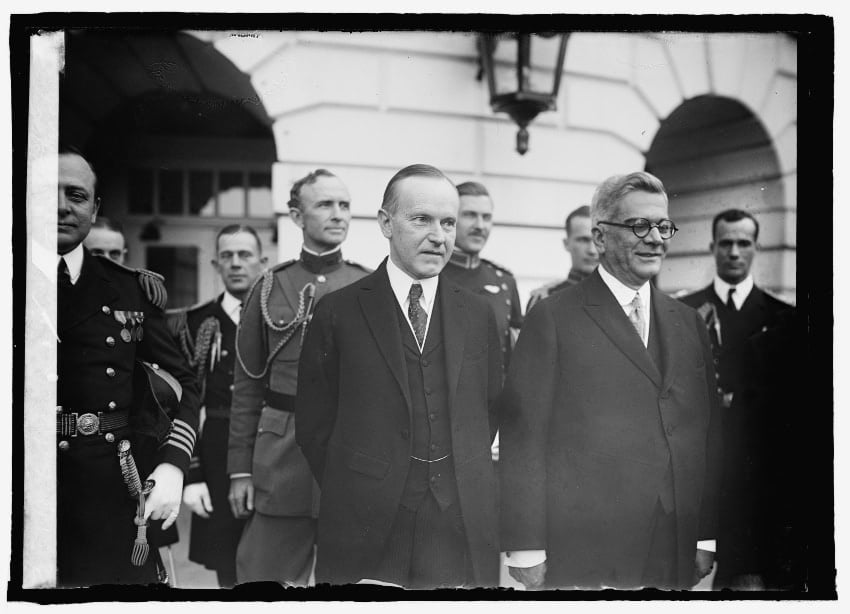
The late 1930s saw the two countries play into each other’s national populist motives through acts of performative diplomacy as a tool of state formation. Mexico’s 1938 Brigada Mexicana, an official delegation of artists, soldiers and cultural performers, and Batista’s 1939 return visit with a Cuban military mission used parades, ceremonies and nationalist speeches to exhibit mutual support for each country’s reform programs and to bolster domestic legitimacy.
Declassified CIA documents allege that the meeting of Castro and López Portillo in May 1979 was strategically timed to “mute expected dissatisfaction from the left” around Mexico’s recent Cabinet reshuffle.
Mexico and the Cuban Revolution
Diplomacy and geography meant that Mexico was logistically bound up in the Cuban Revolution of the 1950s. In 1923, the countries set up embassies in one another’s capitals. Mexico became a primary destination for Cubans fleeing persecution in the years of unrest following independence, which in turn established a long-lasting and binding Mexican diaspora.
Most prominent of these figures were the revolutionaries Che Guevara and brothers Raúl and Fidel Castro. In Mexico City, after their initial defeat in Santiago de Cuba in 1952 and subsequent imprisonment of the Castros, the exiles plotted and trained for the “26th of July Movement” and eventual overthrow of the deeply corrupt Batista regime in 1959.
Mexico offered a uniquely permissive environment, complete with safe houses, sympathetic political figures like Lázaro Cárdenas, and access to weapons and training, that made it far more supportive than other countries where Batista still held influence.
The Cold War and pragmatic solidarity
Mexico and Cuba outwardly maintained a positive bilateral relationship during the Cold War. Mexican diplomacy with Cuba has been characterized by three key stages: isolationist tactics (1946–1970), a more assertive foreign policy (1970s–1980s), and pragmatic diplomacy (1980s–2000s).
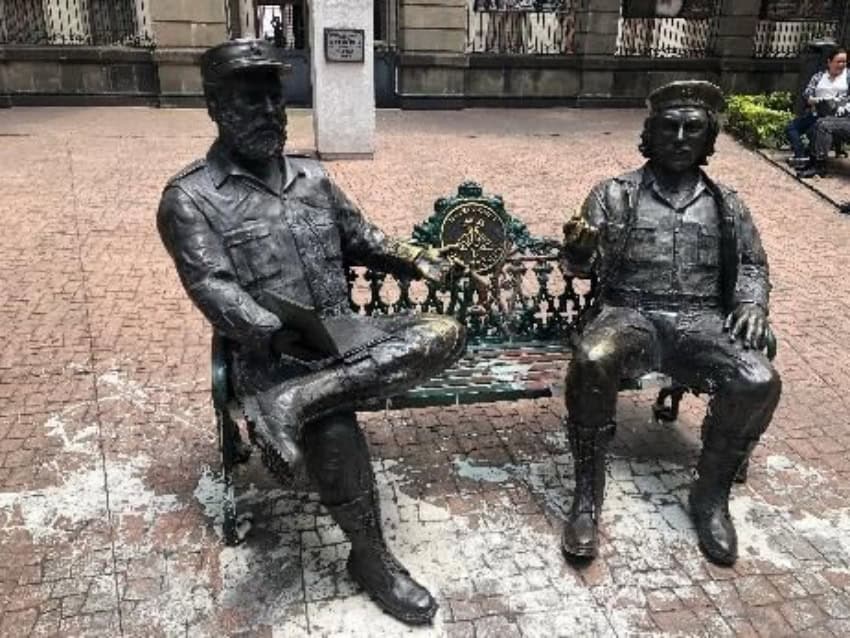
Between 1946 and 1970, Mexico held an inward-looking foreign policy characterised by import-substitution economics and a stable Institutional Revolutionary Party (PRI). A noninterventionist approach during the Cuban Revolution meant Mexico defended the island’s right to choose its system. Castro evidently acknowledged this by not supporting any active leftist revolutionary groups in Mexico, despite doing so in other countries in the 1960s and 1970s. Internally, however, Mexico experienced political polarization regarding communism in Cuba.
Mexican autonomy from the U.S. grew in the early 1970s through economic diversification and increased oil wealth. The U.S. had imposed higher tariffs on inputs, with no exemptions for its southern neighbour, leading Mexico to branch out into the burgeoning international economic arena. Under Presidents Echeverría and López Portillo, Mexico adopted a more decisive foreign policy, celebrating ideological pluralism and Third World leadership as part of a wider diversification strategy. A pro-Cuba position in Mexico appealed to the left and aided the PRI’s internal legitimization, encouraging a strong bilateral relationship with Cuba that endured until the mid-1980s.
The U.S. in the shadows
Soviet support for Cuban independence and the events of the Cuban Missile Crisis meant Mexico’s staunch alliance with Cuba in those primary decades could be seen as laudably defiant of what then-President Adolfo López Mateos termed “American pressure.”
Examples include hosting Osvaldo Dorticós for a state visit in 1960 and the Mexican government’s protest of the U.S. Bay of Pigs invasion the following year. Most notably, Mexico continually opposed the Organization of American States (OAS) sanctions against Cuba.
Of course, Mexico needed to tread carefully regarding its global perception. However, the reality was one of a more under-the-table compliance with the U.S. Mexico’s adherence to the Estrada Doctrine and its OAS vote allowed it to publicly defend its sovereign right to maintain relations with Cuba. But privately, it showed that it would ultimately align with Washington when necessary.
In fact, in a released phone call between President Lyndon Johnson and Secretary of State Dean Rusk, the two agreed that Mexico’s refusal to break relations with Cuba actually served U.S. interests: the stability of the dominant PRI in “independent” Mexico dampened a possible spread of communism. In any case, the U.S. already had measures in place to prevent Cuban influence, including the creation of the Central American Defense Council.
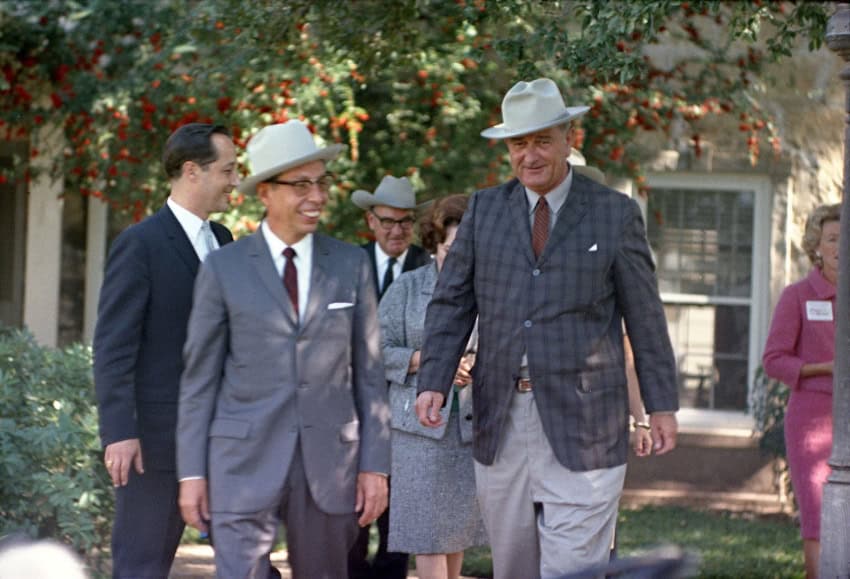
The unity of the authoritative, one-party system was needed to appease leftist factions, which the U.S. was sympathetic to, and allowed them to overlook the corrupt Cuban-Mexican illicit trading. And with a Mexican Embassy in Havana, the U.S. secured a steady flow of intelligence on Castro’s military posture, Soviet activities, internal dissent and even suspicious ship movements.
That same year of the OAS vote, Mexican President Díaz Ordaz promised U.S. President Johnson that “the United States could be absolutely sure that when the chips were really down, Mexico would be unequivocally by its side.”
Whether this is viewed as a carefully negotiated Mexican strategy to preserve national diplomatic leverage or a clear case of U.S. puppeteering doesn’t change the fact that both parties benefited from this clandestine relationship.
After the Cold War (mid-1980s–2000s)
After oil prices collapsed in the 1980s and 1990s, Mexico had to climb out of a series of economic crashes. The establishment of a free-market economy and the ratification of NAFTA, a transition to democracy, and the adoption of a human-rights-focused foreign policy from the late 1980s onwards in Mexico marked a political shift towards the U.S. and the unravelling of relations with Cuba. Moreover, the National Action Party(PAN) candidate Vicente Fox’s election win in 2000 marked the end of the PRI’s 71-year rule.
Critically, the global geopolitical stage saw the solidification of U.S.-dominated unipolarity at the end of the Cold War. Cuban authoritarianism was no longer permissible and foreign policy goals shifted, as did the mutual benefits of the Cuban-Mexican affair. In 2002 and 2004, President Fox briefed Mexican delegates to vote in favor of the U.N. resolution to criticize Cuba’s human rights situation, inciting calls of hypocrisy and distrust from Castro.
Contemporary dynamics and a new American order (2010s–2020s)
Fraternal relations between the countries have been slowly recovering. In 2012 to 2013, President Calderón and his Secretary of Foreign Affairs, José Antonio Meade, visited Havana to reopen cooperation on trade, tourism, migration and cultural affairs after a more hostile spell during the Fox administration. The following year, Cuba and Mexico signed a new agreement on economic cooperation in a bid to strengthen the bilateral relationship.

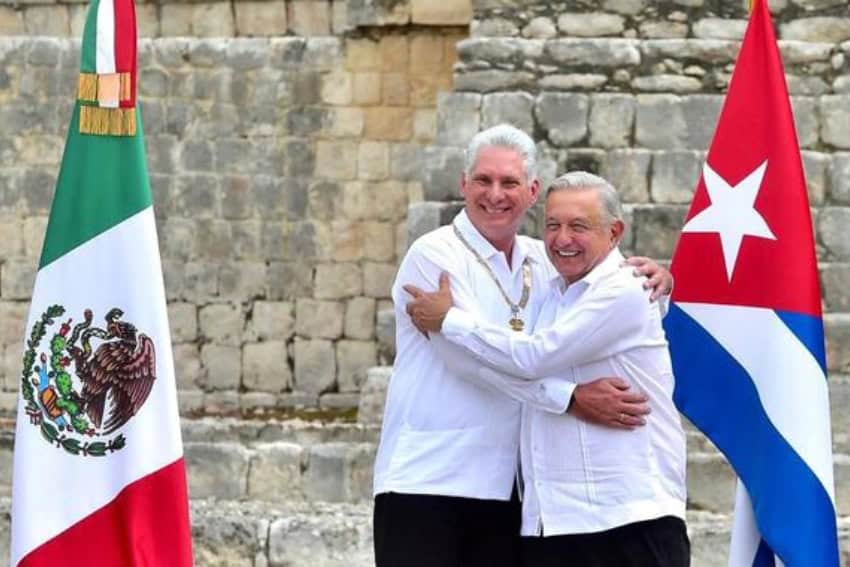
Presidents López Obrador and Díaz-Canel continued state visits and the delivery of humanitarian aid to Cuba in the face of U.S. embargoes in 2021. Díaz-Canel also attended Sheinbaum’s inauguration in 2024.
Most recently, Mexico has overtaken Venezuela as Cuba’s primary oil supplier, owing to a drop in the latter’s exports. Cuba’s reliance on oil imports could potentially see further relations with Mexico established in the face of Trump’s recent and reckless intervention, but every government in Latin America will be keeping a close eye on how things progress.
Far removed from Roosevelt’s Good Neighbour Policy of the 1930s, Trump’s approach to U.S. rule thrives on economic retribution, territorial expansion, diplomatic reversal and military threat. As the statehood and sovereignty of Latin American nations seem to be jeopardized under the “America First” narrative, the evolution of a Cuban-Mexican partnership will reveal how both states navigate a changing regional order marked by new forms of geopolitical and economic neocolonialism.
Millie Deere is a freelance journalist.