
Visa-free travel to Canada for Mexican citizens could soon come to an end, a Canadian cabinet minister indicated on Sunday, although Mexico could stave off the move via diplomatic talks.
Since 2016, Mexicans have been able to enter Canada by obtaining an electronic travel authorization, or eTA.
The lack of a visa requirement has led to an increase in the number of Mexicans seeking asylum in Quebec, according to the premier of that province.
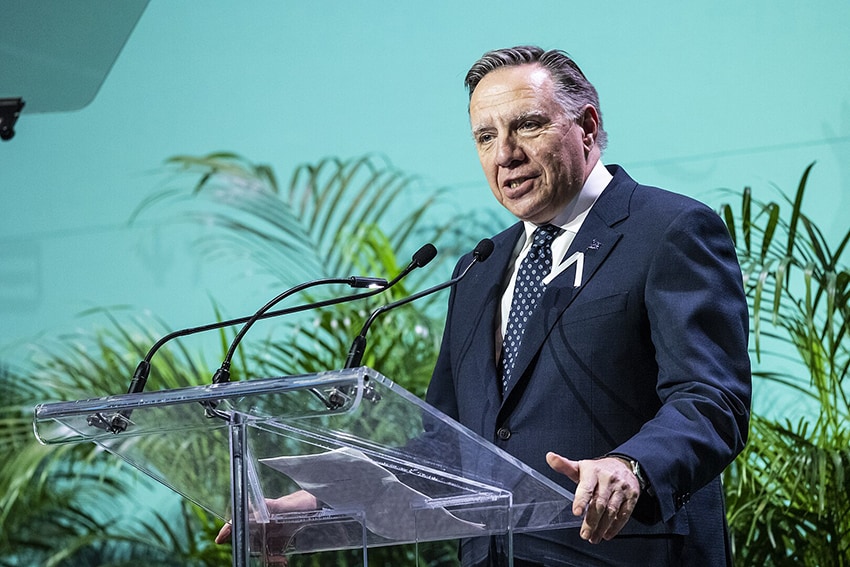
“Mexican nationals represent a growing proportion of the asylum seekers arriving in Quebec, the possibility of entering Canada from Mexico without a visa certainly explains part of the flow of asylum seekers,” Francois Legault said in a letter sent to Canadian Prime Minister Justin Trudeau last week.
Legault urged Trudeau to take action over the flow of asylum seekers into Quebec and provide compensation for costs his government has incurred by taking them in. He said that Quebec’s services were close to “breaking point” due to an increase in the number of asylum seekers from Mexico and other countries.
Canadian Minister of Public Safety Dominic LeBlanc said Sunday that he and Immigration Minister Marc Miller were considering visas and other measures for Mexican nationals seeking to enter Canada.
In an interview with the Canadian Broadcasting Corporation, the minister said that he and Miller were looking for “the appropriate way to ensure that people who arrived from Mexico arrived for the appropriate reasons” and that the current arrangement “doesn’t become sort of a side door to get access to Canada” for residency purposes.

“We’re looking at a number of measures that would, in fact, put us in a position to have done what’s necessary to ensure that these flights directly from Mexico don’t become sort of an indirect way to get access to Canada and to claim asylum,” LeBlanc said.
The United States government last year asked its Canadian counterpart to consider reintroducing visas for Mexicans due to an increase in illegal crossings into the U.S. from Canada.
Miller said Monday that the Canadian government is currently in talks with Mexico aimed at addressing the increase in Mexicans seeking asylum in Canada.
Data from Canada’s Immigration and Refugee Board shows that Mexicans made 17,490 claims for asylum in 2023, up 134% from 7,483 in 2022.
Miller told reporters that Canada’s economy has benefited from looser entry requirements, but acknowledged the lack of a visa requirement for Mexicans as a likely cause of the increase in asylum claims.
“Mexico is one of our principal economic partners. So any measures that we would take [or that] we would contemplate, would require a diplomatic process that is not yet completed,” the immigration minister said.
“We acknowledge the problem; we acknowledge that Canada has to take action. But there’s some work left to do,” he added.
Miller also said that the rate at which Mexicans’ asylum claims succeed is much lower than the rate for nationals of other countries.
Refugee service providers in Montreal, Quebec’s largest city, have previously said that “Mexican families are fleeing violence, insecurity and a lack of jobs in Mexico,” The Canadian Press reported.
However, “Canada only grants asylum to people it believes cannot safely live in any part of their home country because officials are unable or unwilling to provide those conditions,” the news agency said.
With reports from Reuters, Infobae and The Canadian Press