Powerful leaders are fond of corruption investigations as a method for eliminating rivals. Instead of low political score-settling, they suggest an appeal to the moral high ground. Think of Xi Jinping’s sweeping purges. Or Vladimir Putin’s imprisonment of Mikhail Khodorkovsky, once Russia’s top oligarch, on fraud and tax charges.
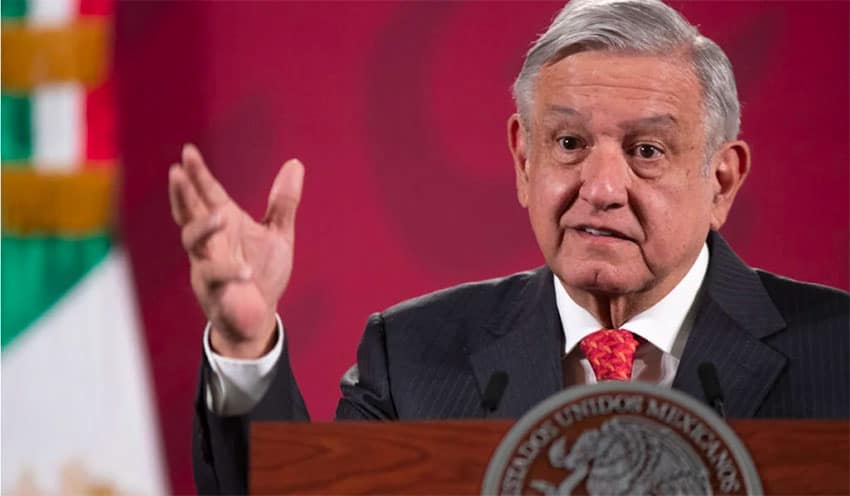
Mexico’s populist president, Andrés Manuel López Obrador, appears to have taken a leaf from their book. Like Messrs Xi and Putin in the early days, he has made the campaign against corruption a signature theme, and the main targets have been political opponents.
In his boldest move to date, López Obrador has called upon two former presidents from opposition parties, Enrique Peña Nieto and Felipe Calderón, to testify in a scandal over alleged bribes paid by the state oil company Pemex. Emilio Lozoya, a former Pemex chief executive facing charges of money laundering, is cooperating with prosecutors. Almost daily, salacious leaks from what is said to be his testimony fill the Mexican press.
Let there be no mistake: a clean-up of Mexico’s political system is long overdue. For decades, corrupt politicians of all stripes have accumulated great wealth by milking a system that is rotten even by the low standards of the region. Transparency International’s annual corruption perceptions index ranks OECD nation Mexico in 130th place, tied with Mali and Myanmar.
But the way in which López Obrador has pursued his anti-corruption crusade has raised multiple red flags. Testimony from a confidential investigation is drip fed to the media almost daily, conveniently offering the president an opportunity to comment on a process that should be sub judice. The most explosive allegations so far compromise opposition politicians, while evidence of corruption within López Obrador’s government has gone mostly unpunished.
Manuel Bartlett, the powerful head of the state electricity company, denied accumulating a string of undeclared properties. He was exonerated in a probe conducted by a minister who was herself accused of accepting a plot of land from the city government and acquiring several properties while on an academic’s salary. (She denies wrongdoing).
The timing of the Pemex case is fortuitous. López Obrador’s opinion poll ratings were slipping, hurt by his disastrous handling of the coronavirus pandemic and by one of the emerging market world’s worst recessions. Voters in next year’s midterm elections threaten to rob him of his congressional majority.

“The priority right now is to distract from what is going on in the country, which is all very negative,” said Andrés Rozental, a former deputy foreign minister and now senior adviser at a non-governmental organization in the U.K. “It’s a circus for the people.”
So far, the strategy seems to be working. López Obrador’s popularity has begun to pick up as the Lozoya allegations knock the world’s third-highest coronavirus death toll off the front pages. The opposition is in disarray: a leading conservative governor has dismissed his private secretary after the man appeared in a video purporting to show him counting bundles of Pemex cash.
Calderón has not commented directly on the allegations but has accused López Obrador of waging a campaign of political persecution against him. Peña Nieto has not spoken publicly.
But improving his ratings and keeping his majority are not enough for López Obrador. His real aim is to remake Mexico, sweeping away the free-market, pro-business policies of the past four decades and replacing them with a vision of state-led development from the 1960s, epitomized by a reinvigorated Pemex.
“López Obrador’s political agenda is clear: he will go after the period of Mexican history he considers an aberration,” said Thomas Shannon, a former top U.S. state department official who is now co-chair of the Inter-American Dialogue, a think tank in Washington.
Key to this agenda is a reversal of the historic reforms passed under Peña Nieto, which opened oil exploration to foreign investment and weakened the hold of the powerful teachers’ union over hiring. If López Obrador can show that bribes greased the passage of the reforms, he can destroy their legitimacy.
“He wants to totally discredit the energy reforms and the education reforms,” said Raymundo Riva Palacio, a leading Mexican political commentator, of the Pemex corruption probe. “This is totally political.”
© 2020 The Financial Times Ltd. All rights reserved. Please do not copy and paste FT articles and redistribute by email or post to the web.