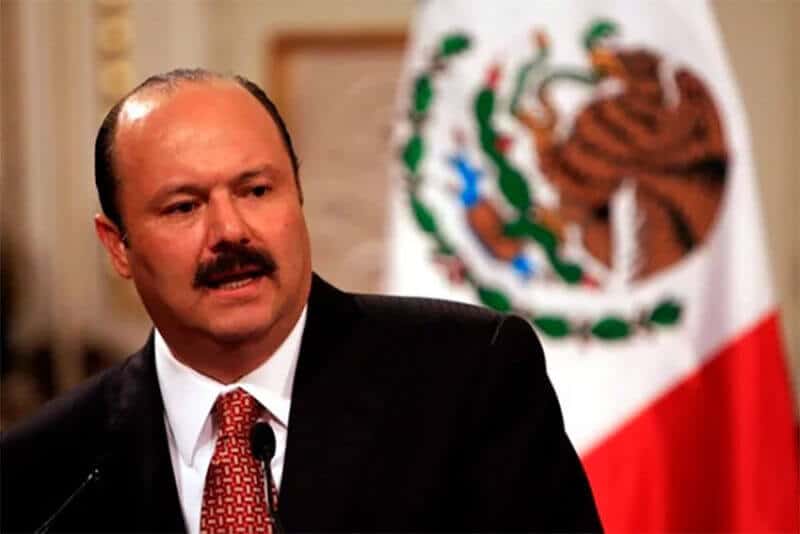
The disgraced former governor of Chihuahua, César Duarte, may soon be on a flight home. A U.S. judge approved his extradition back to Mexico to face charges of conspiracy and embezzling government funds, in a case that has shed light on the use of the country’s cattle industry to launder money.
Federal Judge Lauren Luis ruled there is “probable cause to believe” that Duarte “committed the crimes charged in the extradition complaint,” according to the order filed November 8.
Between 2011 and 2014, Duarte is accused of embezzling more than 96 million pesos (around US $5 million) in government funds through a far-reaching corruption network designed to “deviate public money into companies directly linked to him,” according to the charges Mexican authorities filed against him in 2019.
Among the entities Duarte allegedly used to launder money was the northern Chihuahua branch of a major ranchers’ union, of which he was a shareholder and former chairman of the board.
The judge wrote that the evidence produced by the government, which included witness testimony and government and bank records, was “sufficient … to support the accusations against [him].”
The U.S. Marshals Service arrested the former governor, who served between 2010 and 2016, in July 2020 in Miami. “He fled Mexico after being charged with fraud and corruption and had been on the run for over three years until his arrest,” according to U.S. authorities.
Duarte will not be extradited immediately, as he and his legal team will almost certainly challenge the ruling. In the meantime, he remains jailed in the state of Florida.

InSight Crime analysis
The embezzlement case against Duarte offers rare insight into how Mexico’s local cattle ranching unions — and the cattle industry in general — are exploited to launder illicit funds.
In Duarte’s case, “money transferred from the state treasury to the union … was not used as earmarked. Instead, according to a forensic finance expert, that money ended up in bank or trust accounts, property, and companies that primarily benefited Duarte, his family members, and his associates,” according to court documents.
Duarte is suspected of using the ranchers’ union in a number of ways to launder stolen funds, including through purchasing cattle. In one case, Duarte allegedly acquired 2,600 head of cattle that were in the union’s facilities, of which some 1,500 “inexplicably disappeared,” according to reporting from Milenio.
He also reportedly made an almost $3 million payment to the union to purchase 116 pieces of unspecified livestock equipment, although prosecutors allege there was never any documentation to support that those purchases were ever actually made. The majority of one multi-million-dollar transfer supposedly made to buy oatmeal, beans and corn for livestock producers was even “expended paying Duarte’s taxes for the year 2014,” prosecutors alleged.
These local unions are susceptible to money laundering due to a number of factors. One principal reason is the high amount of informal cash transactions in the buying and selling of cattle, which InSight Crime confirmed during recent field work in southern Mexico.
But the ex-governor isn’t the only one to see money laundering opportunities in Mexico’s cattle industry. The family of José Antonio Yépez, alias “El Marro,” the now-jailed former leader of the Santa Rosa de Lima Cartel, allegedly laundered illicit proceeds made from fuel theft by purchasing cattle.
El Marro’s brother, Rodolfo Juan Yépez Ortíz, allegedly transferred 400,000 Mexican pesos (around US $20,000) to a company reportedly founded with Duarte and owned by one of his nephews, according to reports from Mexico’s Financial Intelligence Unit.
Using cattle as an efficient means to launder money is not exclusive to Mexico, as criminal groups like the Cachiros and the Valle Valle in Honduras, and the Mendoza and Lorenzana clans in Guatemala, have also relied on this mechanism.
InSight Crime investigator Victoria Dittmar contributed reporting to this article. Reprinted from InSight Crime, a foundation dedicated to the study of organized crime.