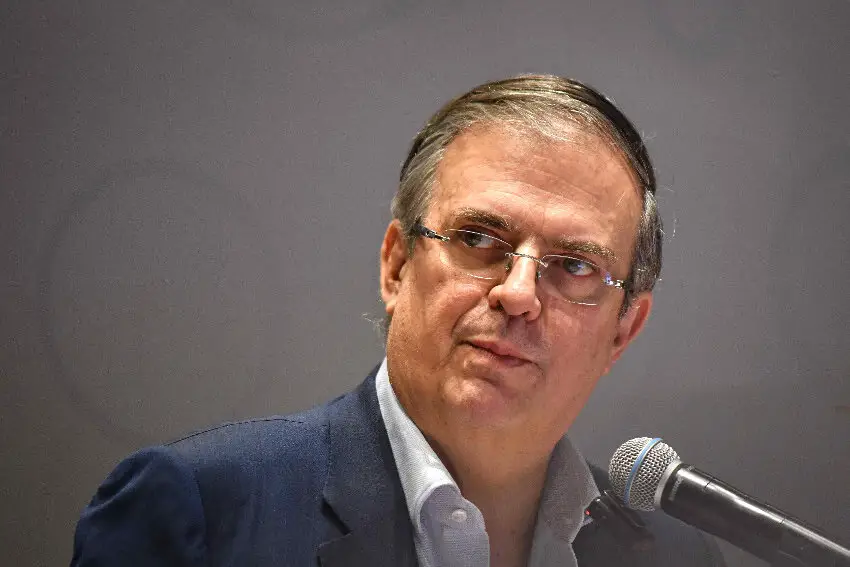
Economy Minister Marcelo Ebrard said Wednesday that the United States would be shooting itself in the foot if it imposes a 25% tariff on Mexican exports, as Donald Trump has pledged to do.
Speaking at President Claudia Sheinbaum’s morning press conference, Ebrard said that 400,000 jobs would be lost in the United States if Trump imposes the tariff he threatened to implement in a post to his social media site Truth Social on Monday.
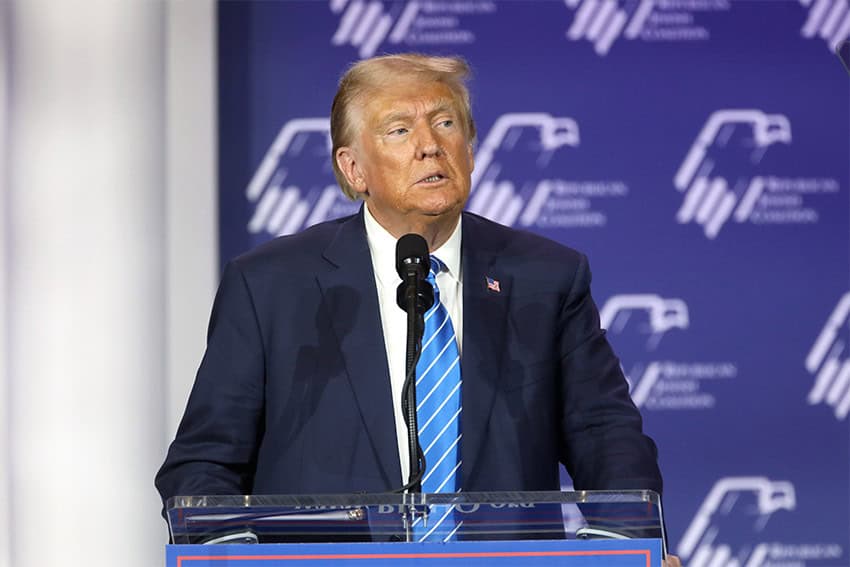
The U.S. president-elect said that his proposed 25% tariff on Mexican and Canadian imports would be imposed on the first day of his second term and remain in effect “until such time as Drugs, in particular Fentanyl, and all Illegal Aliens stop this Invasion of our Country!”
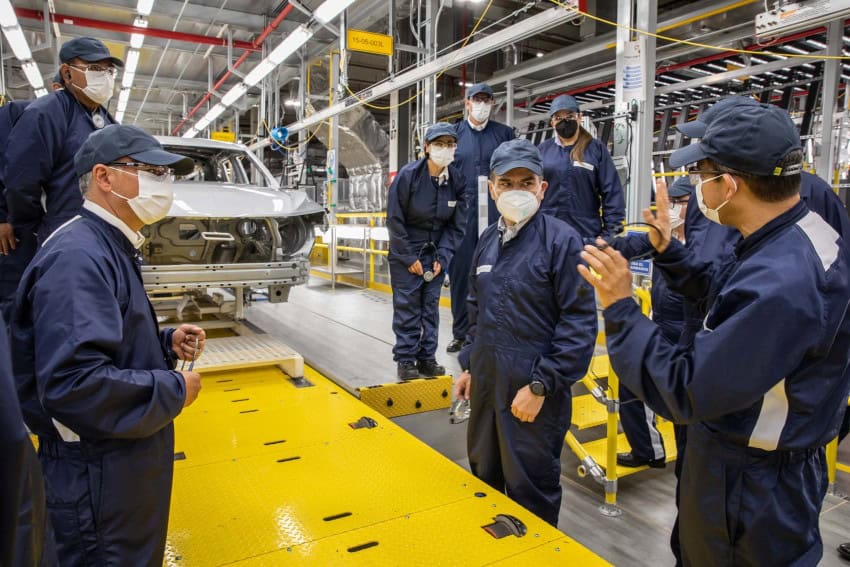
Ebrard highlighted on Wednesday that a 25% tariff on Mexican exports would affect companies in the United States that operate in Mexico, “particularly” automakers that have long had a manufacturing presence here such as General Motors, Stellantis and Ford.
“What [Trump] is saying is, ‘Dear fellows, we are going to impose a tax on the most important North American companies in the world,'” he said.
Ebrard noted that retaliatory tariffs on United States exports – as Sheinbaum said Mexico would impose – would also affect General Motors, Stellantis and Ford because they send auto parts from the U.S. to their plants in Mexico.
“We’re very integrated, we bring some things from the United States, we produce others here, we incorporate them and you see it as a final product,” he said.

Ebrard stressed that a 25% tariff “is a tax” that would have an outsized impact on the auto sector in North America, “whose main exponents are these three large groups from the United States itself.”
“In other words, it’s a shot in the foot,” he said.
“The taxes – I say ‘taxes’ because a tariff is a tax; the 25% proposed tax would have a direct impact on [U.S.] companies because it’s equivalent to doubling the tax on profits,” Ebrard said, referring to the 21% corporate tax rate in the United States.
“In the end,” Ebrard added, a 25% tariff would “affect the consumer in the United States” and “around 400,000 jobs” in the U.S. “would be lost.”
That figure, he explained, is an estimate made by the Economy Ministry after consultation with the auto sector in the United States.
“That is the estimated impact that we’ve been able to calculate between the [tariff] announcement and now,” Ebrard said.
“… The main impact of this measure is on the consumer in the United States and United States companies [including] the three largest of the North American automotive industry. That’s why we say it’s a shot in the foot.”
Analysts at Barclays, Reuters reported, estimate that Trump’s proposed tariff “could wipe out effectively all profits” of General Motors, Stellantis and Ford, known as the “big three” among U.S. automakers.
“While it’s generally understood that a blanket 25% tariff on any vehicles or content from Mexico or Canada could be disruptive, investors underappreciate how disruptive this could be,” the analysts wrote in a note on Tuesday.
Division or the joint construction of a ‘strong, competitive region’?
Ebrard said “there are two options on the table” for Mexico, the United States and Canada, the three signatories to the USMCA free trade pact that is scheduled to be reviewed in 2026.

“We can fragment and divide ourselves with accusations and tariffs – we can do that if we want …or we can together build a strong, competitive region that is prepared to lead the future and compete with other regions,” he said.
Mexico’s objective, “of course,” is to “create a strong region and not conflict and division,” Ebrard said.
The economy minister said that “the proposal that Mexico will prepare to achieve this” will be based on having “regional stability,” ensuring “shared prosperity” and increasing North America’s “global competitiveness.”
“We have to cooperate on security, on migration, on governance, on many issues,” Ebrard said.
Whether the Sheinbaum administration will be prepared to deploy additional monetary and human resources to combat the flow of migrants and drugs to the United States in order to stave off a 25% tariff on its exports remains to be seen, but the government led by former president Andrés Manuel López Obrador agreed to do so when Trump issued a tariff threat in 2019.
In a letter she sent to Trump on Tuesday, Sheinbaum highlighted the efforts Mexico is already making to reduce the number of migrants and the amount of drugs reaching the United States and gave no indication that Mexico was ready and willing to do more.
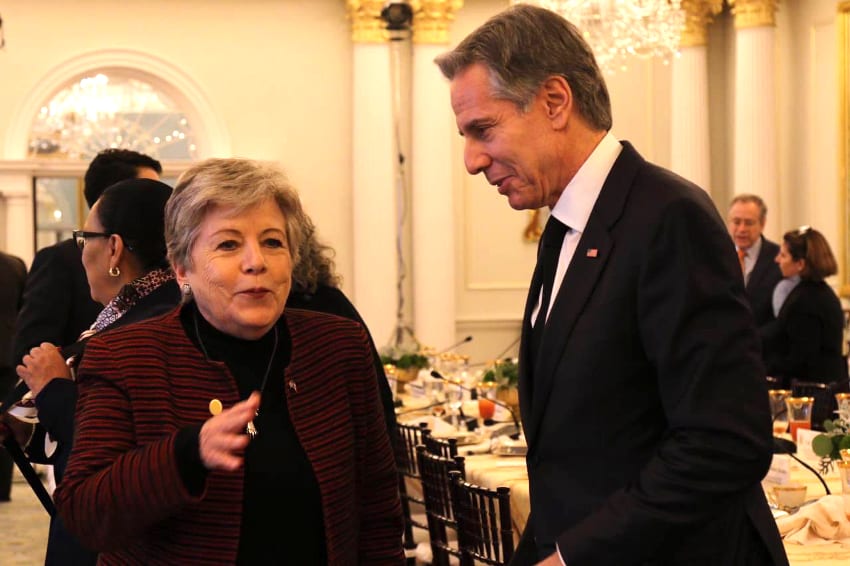
However, Trump is clearly dissatisfied with Mexico’s existing efforts and appears determined to get Mexico to ramp up enforcement against migrants and drug traffickers.
Tonatiuh Guillén, head of Mexico’s National Immigration Institute for the first six months of López Obrador’s six-year term, said earlier this month that the likelihood that Mexico will give in to pressure from Trump, as it did in 2019, is “high.”
With regard to “shared prosperity,” Ebrard said it should be an “objective” of Mexico, the United States and Canada.
Sheinbaum has made “shared prosperity” a priority of her government as it seeks to reduce wealth inequality in Mexico and ensure that foreign investment is spread more equitably across the country.
Ebrard said that “everything that goes against shared prosperity,” including “unnecessary taxes,” is inadvisable.
“… Tariffs fragment us, hinder the work of industry, cause jobs and competitiveness to be lost,” he said.
“The United States is affected first and foremost, but others are affected as well, Mexico and other partners.”
To increase North America’s global competitiveness, Mexico, the United States and Canada need to “optimize regional supply chains, maintain low costs … and work as a team,” Ebrard said.
“This [idea] has a lot of support in Mexico, in the United States and in Canada as well, and we think it is the correct, intelligent route for the circumstances the world is going through,” he said.
“… So, presidenta, we’re already working on this, on the strategy you gave us,” Ebrard told Sheinbaum.
“And we’re also accelerating conversations with the European Union to finish the modernization of the [trade] agreement with the European Union,” he said, adding that the ministry he leads is also “accelerating agreements with countries such as Brazil.”
By Mexico News Daily chief staff writer Peter Davies (peter.davies@mexiconewsdaily.com)