Sheinbaum’s mañanera in 60 seconds
- 🏥 9,000+ hospital beds planned: Deputy Health Minister Eduardo Clark announced the government intends to add 9,139 public hospital beds by 2030, spread across new and expanded facilities, at an estimated cost of 181 billion pesos.
- ⚖️ Zero extraditions from U.S. to Mexico: Foreign Affairs Minister Velasco said that since 2018, Mexico has made 269 extradition requests to the U.S., but none have been fulfilled. He said that 33 requests were denied and 233 still pending — context the government is using to push back on U.S. pressure to extradite Sinaloa Governor Rocha Moya and other officials accused of collusion with the Sinaloa Cartel.
- 🔄 Reciprocity demanded on serious cases: Sheinbaum pressed the U.S. to explain why none of the 269 requests have been honored, saying that those sought include ex-governors, organized crime figures, fake invoice brokers and suspects linked to the 2014 Ayotzinapa case.
Why today’s mañanera matters
At President Claudia Sheinbaum’s Tuesday morning press conference, the federal government once again sought to demonstrate that asking for proof (or additional proof) against a person that the United States wants Mexico to extradite, or vice versa, is not an unusual practice.
Federal officials, including Sheinbaum, have emphasized this point since U.S. authorities requested the provisional arrest for extradition purposes of Sinaloa Governor Rubén Rocha Moya and nine other current and former officials accused of drug trafficking in league with the Sinaloa Cartel. Two of the suspects, both former ministers in the Sinaloa government led by Rocha, turned themselves in to U.S. authorities last week.
Mexican authorities have requested proof against the suspects from their U.S. counterparts, asserting that, as things stand, there is insufficient evidence to warrant the arrest of Rocha and the other defendants who remain in Mexico.
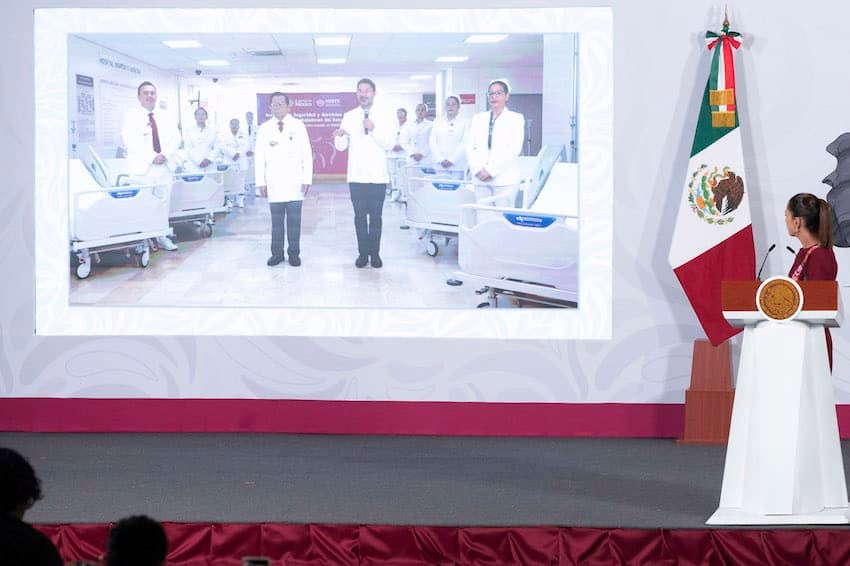
Also of note at today’s mañanera was the announcement of a plan to add more than 9,000 beds to public hospitals in Mexico before Sheinbaum leaves office in 2030.
Government aiming to add over 9,000 hospital beds by 2030
Deputy Health Minister Eduardo Clark announced that the federal government intends to increase the number of public hospital beds in Mexico by 9,139 during its six-year term (October 2024 to September 2030).
According to the government’s plan, 6,364 of the new beds — around 70% of the total — will be in 50 new hospitals that have been built or will be built during Sheinbaum’s presidency.
Clark said that 47 public hospitals will be expanded to allow the installation of 1,001 new beds, while 1,774 extra beds will be installed in 55 other hospitals.

If the government succeeds in adding 9,139 new beds during its six-year term, the total number of beds in public hospitals across Mexico will increase to 106,105 in 2030 from 96,966 in 2024.
Clark said that the plan to add more than 9,000 new hospital beds in new and expanded hospitals will cost an estimated 181 billion pesos (US $10.4 billion) between 2024 and 2030.
He presented data that showed that 5,308 public hospital beds were added during the six-year term of former President Felipe Calderón (2006-12), while 3,906 beds were added during the presidency of Enrique Peña Nieto (2012-18). During Andrés Manuel López Obrador’s presidency (2018-24), the number of public hospital beds increased by 7,404.
If 9,139 beds are added during Sheinbaum’s term, the number of public hospital beds added in the 12 years between 2018 and 2030 will be 80% higher than the number added in the 12 years when Calderón and Peña Nieto were in office.
Velasco: Since 2018, Mexico has asked US to extradite 269 people; None have been sent to Mexico
Foreign Affairs Minister Roberto Velasco told reporters that between Jan. 1, 2018, and May 13, 2026, Mexico asked the United States to extradite 269 people. However, none of those people has been sent to Mexico, Velasco said.
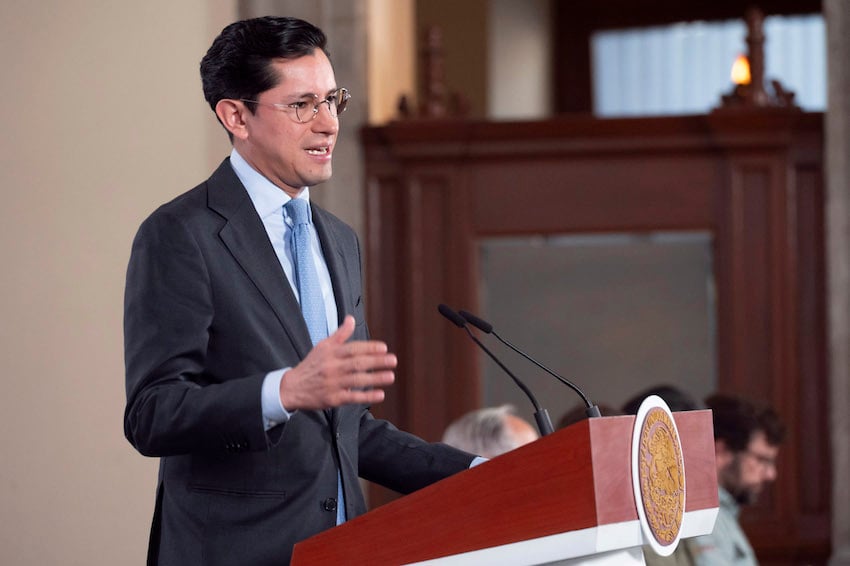
He said that 36 extradition requests were denied, while 233 are “still pending completion.”
Velasco said that in 47 of 50 outstanding cases in which Mexico requested the provisional arrest of people in the United States for the purpose of extradition, U.S. authorities asked for “additional information.”
“In other words, it’s a common practice between the two countries,” he said.
Velasco presented information about some of the people that Mexico has asked the U.S. to arrest for the purpose of extradition. Among them are suspects wanted in connection with the 2014 abduction and presumed murder of 43 students in Guerrero (the Ayotzinapa case). Velasco highlighted that the United States rejected a request for the extradition of a man wanted in connection with an embezzlement case because the crime he allegedly committed was not a violent one.
Sheinbaum: ‘Why haven’t they handed anyone over?’
Sheinbaum emphasized that the United States hasn’t fulfilled any of the 269 extradition requests Mexico has made since 2018.
“They haven’t sent anyone,” she said.
Sheinbaum said that Mexico has requested the extradition of people in connection with “extremely serious cases.”
She said those people include factureros (fake invoice brokers), ex-governors, people accused of organized crime and people linked to the Ayotzinapa case.
“There has been no handover of any of these alleged criminals to Mexico,” Sheinbaum said.
“What does Mexico always ask for? … Reciprocity. Why haven’t they handed anyone over?” asked the president, whose government has sent over 90 organized crime figures to the U.S. in three large transfers that took place in January 2026, August 2025 and February 2025.
Neither Sheinbaum nor Velasco mentioned that former Chihuahua Governor Cesar Duarte was extradited to Mexico from the U.S. in 2022.
By Mexico News Daily chief staff writer Peter Davies (peter.davies@mexiconewsdaily.com)