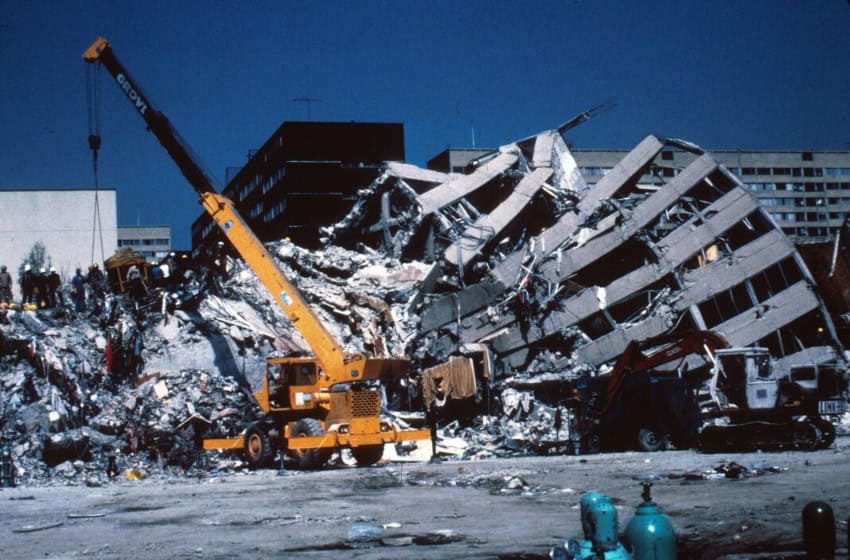
María Gutiérrez returned home around 7:20 am that morning, having just dropped off her teenage daughter at school. She lived on the sixth floor of the Nuevo León, a massive cement building in the Tlatelolco housing complex. María pulled into the parking lot, and after getting out of her car, looked up: “As I got out of the car, I could see my home, everybody’s home, the entire building being ripped apart. Walls, windows, everything crumbled. And I could not get there.” While she drove her oldest to school, María’s mother-in-law and three youngest children remained behind.
In 1968, tragedy struck the Tlatelolco neighborhood when the Mexican army gunned down thousands of peacefully protesting students. On Sept. 19, 1985, tragedy again struck Tlatelolco and all of Mexico City. At 7:19 a.m., an earthquake measuring 8.1 on the Richter scale hit the Mexican capital.
The 1985 earthquake
Mexico City had experienced earthquakes before, but nothing like this. The earthquake was felt all the way in Houston, Texas, over 1,000 miles away. Unlike other tremors when the earth slid side-by-side, this time it buckled up and down as well. The ground literally bounced and buckled. Worse still, it lasted for what seemed like forever: just under three full minutes. Years later, Gloria Amador recalled, “I lived in the ‘Artega’ building of Tlatelolco. I grew up in Tlatelolco, and in 1985, I was very young, 17 years old, and I was very, very frightened by the earthquake because in my house, tiles and vases began to fall. There was a feeling that we might lose our lives at any moment.”
The tragic irony was that throughout the 1970s, most of the Tlatelolco housing complex remained vacant because of the killings that occurred in 1968. No one wanted to live at the site of one of the worst episodes in recent Mexican history, one orchestrated by their own government. The Chihuahua building, used as the staging ground by the soldiers, stood virtually empty for much of the 1970s. It was only when rents dropped to rock-bottom prices in the early 1980s that people started moving back to the area. By 1985, the housing complex was almost completely full.
The devastation
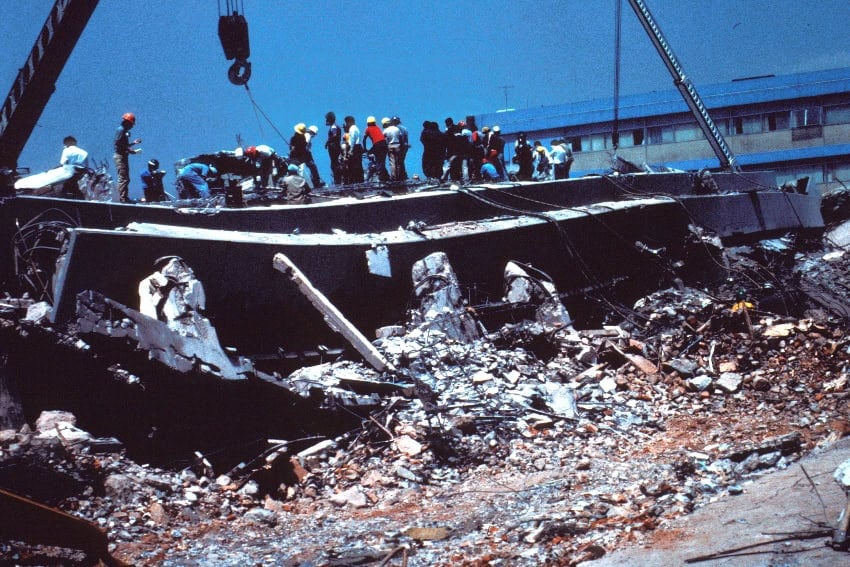
Within minutes that September morning, utter devastation reigned across the entire city. More than 370 buildings collapsed, including the National Medical Center and the Cardiology Hospital (where 70 doctors and nurses were killed), numerous government buildings, tourist hotels, the central telephone switching station and the main studio of Televisa. There was no electricity, no water, no communications and no public transport of any kind. Roads were impassable. It was as if a massive bomb had gone off, with entire neighborhoods flattened.
“On paper, at least, a well-conceived plan existed in the Interior and Defense ministries to rapidly mobilize security forces and other government personnel in the event of a massive earthquake,” according to Jonathan Kandell in “La Capital: The Biography of Mexico City.” Unfortunately for the people of Mexico City, those plans existed only on paper and were never implemented, or even attempted. The government’s immediate response was simply to send military units to the most heavily damaged areas and then cordon them off.
That was it. They did not start digging to extricate survivors or remove rubble, or assess which sites should get priority in rescue operations. Soldiers simply stood there, ostensibly to prevent looting, but in actuality, they merely prohibited local residents from attempting to mount their own rescue efforts.

The disaster
“As another sign — if one were needed — of how the system had frozen down to its very heart, the Ministry of Foreign Affairs proudly announced that ‘under absolutely no conditions’ would they request aid, least of all from the United States,” noted historian Enrique Krauze in “Mexico, Biography of Power: The History of Modern Mexico, 1810-1996.”

“The public was not only willing to accept aid; they were begging for it. The disaster was in every way immense.”
The presidential administration of Miguel de la Madrid was caught completely flatfooted, and it was obvious they did not know how to respond to such a disaster. By the next day the president even went so far as to proclaim: “We are ready to return to normal life. We are prepared to deal with this situation, and we don’t need outside aid.”
But after a second smaller earthquake hit 36 hours after the first one, he went on national television and admitted, “The truth is that in the face of an earthquake of this magnitude, we don’t have enough resources to confront the disaster quickly and easily.”
The aftermath
In the aftermath of the earthquake, with thousands of people trapped beneath the rubble, the authorities seemed utterly ill-prepared to handle any aspect of the relief effort. “Almost as soon as the ground stopped trembling, the political aftershocks began. Throughout the capital, ordinary Mexicans railed against their government for its ineptitude during the emergency,” Kandell wrote.
Although there were endless examples of ineptitude and incompetence throughout the disaster crisis, one episode stood out for the Nuevo León residents. Standing amidst the rubble immediately after the earthquake, the surviving residents began to organize themselves. One group went to get whatever food and water they could find. Another group took off trying to find ambulances and medical aid. And still another group of residents went to speak to the housing complex director, hoping to gain his assistance in finding help.
After an hour, they returned and informed their fellow residents that the director told them that he was quite busy and perhaps he would be able to see them at the end of the week. This was the director of their housing complex, an area whose residents made up 40% of those affected by the damage of the earthquake, and he said he had no time for them. Fully one-quarter of the 103 buildings in the housing complex had collapsed, and he hopefully would see them at the end of the week. The residents could not believe what they were hearing. They were rightfully stunned.
The residents of Tlatelolco
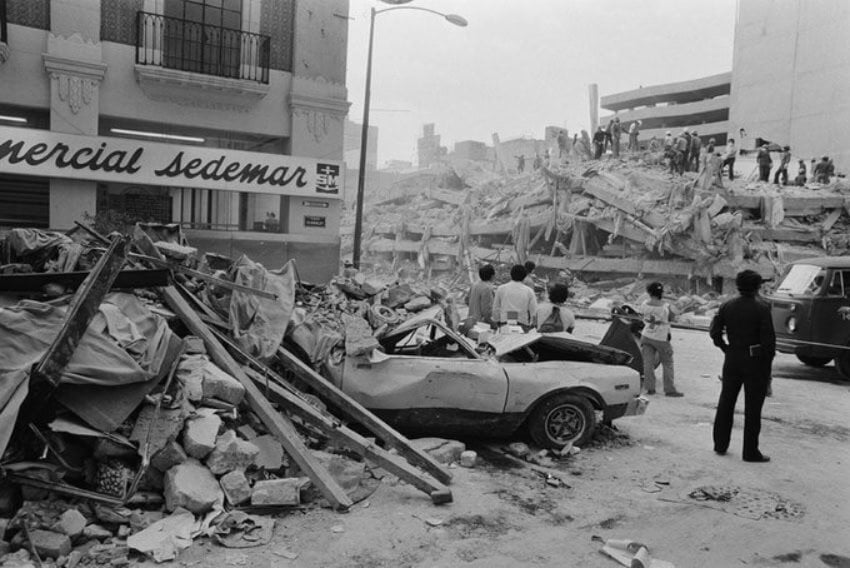
After that meeting, the surviving residents of Tlatelolco, as well as those of Mexico City, realized they would never be able to return to their residences. The damage was too severe and it was too dangerous. They became known as the damnificados, the displaced refugees of the earthquake. On Sept. 22, the Tlatelolco damnificados held an impromptu meeting in the Plaza de Tres Culturas and elected Cuauhtémoc Abarca as their leader. Cuauhtémoc Abarca lived in the Nuevo León building, and on the morning of the earthquake, he had been up early and had gone outside to prepare for his morning jog, a simple act that probably saved his life.
“In a way we had never done before, we had to make our own decisions,” he recalled. “The earthquake hit, and then we found out that the director couldn’t see us, the borough president was not in his office and the mayor wasn’t taking visitors. All of a sudden, we were living in a city without a government.”
The surviving residents of Tlatelolco would have to make decisions on their own. This was not something the Partido Revolucionario Institucional (PRI) system encouraged. The PRI political machine was very much a top-down system, and people were not supposed to take initiative in their community. The earthquake changed that, and in fact, neighborhood associations like this one sprang up all over the city.
The work brigades
So, with the government incapable of helping in recovery efforts, ordinary Mexicans took it upon themselves to form work brigades and try to dig survivors out by hand. The people who came together in those work brigades cut across class lines. Middle-class housewives hauled rubble alongside street punks. Students from the south side bicycled to the city center to help factory workers clear rubble. It didn’t matter.
“There was an instant emergency response from the civilians, who organized themselves into teams to dig for survivors, get the wounded treatment, and get food and shelter to the displaced. Groups of everyone from chavos banda, street punks, to housewives to the tenor Plácido Domíngo cleared rubble by hand; volunteers nicknamed topos, moles, tunneled into the collapsed buildings to bring out survivors,” wrote historian Paul Gillingham in “Mexico: A 500-Year History.”
But it was a daunting task, and while these spontaneous rescue efforts served to unite ordinary Mexicans, the earthquake exposed something more sinister: government corruption.
The textile workers
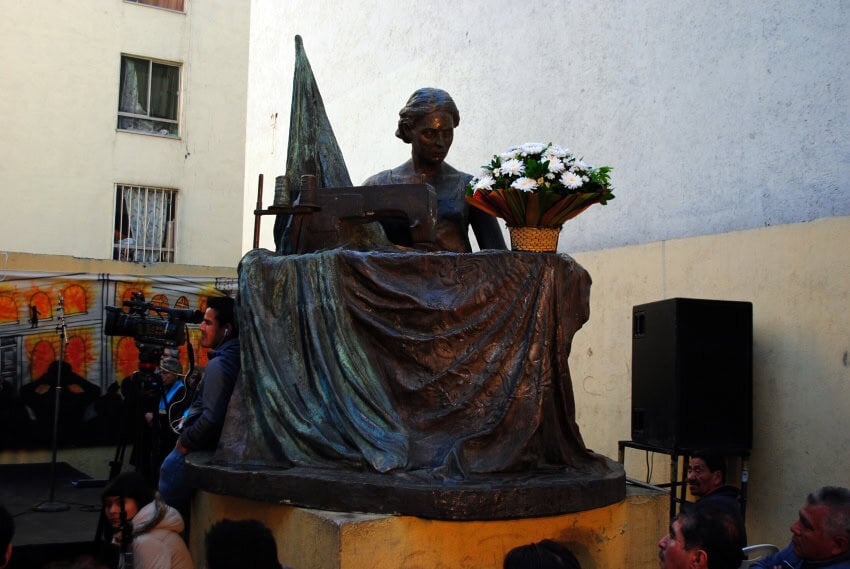
It turned out that public buildings like hospitals and housing complexes were far more likely to have collapsed. Old rumors resurfaced about bureaucratic collusion with shady construction owners. Paul Gillingham pointed out that “Public buildings showed a greater propensity to collapse, their structural pillars turning out to be filled with sand.” Corners obviously had been cut, and kickbacks paid to attain building permit approval. Worse still, per Gillingham, “The earthquake revealed 200 illegal textile factories in the area, buildings unfit for the machinery they contained; the floors collapsed down through the buildings and killed 1,600 working women.”
One of these textile factory workers, Evangelina Corona, remembered: “We women who worked as seamstresses had horrible working conditions. What the earthquake did was to reveal this reality … In many factories, we found that the seamstresses were made to work extra hours without pay at all. Workers told stories of being punished. In some cases, bosses arrived, opened the door for the workers, they entered, the doors were closed and they couldn’t leave. That was another of the reasons why so many seamstresses remained under the rubble after the earthquake, because they couldn’t open the doors.”
“First came the screams from the seamstresses buried under one of the capital’s collapsed textile plants.” Then, said Gloria Juandiego, she began screaming. “The bosses got the equipment out, the raw materials, their safe boxes; they prioritized that.”
Press coverage
The PRI party newspaper, El Nacional, initially refused to even report on the devastating tragedy unfolding in Obrera. For them, thousands of seamstresses killed or trapped in illegal sweatshops weren’t even worth reporting about. But, eventually, even El Nacional couldn’t avoid the unfolding tragedy. However, when El Nacional finally “joined in the coverage,” wrote Gillingham, “it stressed how many of the sweatshop owners were of Jewish and Lebanese descent, not really Mexican at all.”
By Oct. 24, the people of Mexico City had gotten to the point at which they had enough. They needed a way to express their frustration, accentuate their voices, and keep pressure on an unresponsive government. So, in an effort to unify all of the neighborhood associations, they formed the Coordinadora Única de Damnificados, the Unified Coordinating Committee of Earthquake Refugees (CUD). The committee then suggested a protest march should be held in two days, and the final destination point ought to be Los Pinos.
The PRI offensive
Forty thousand people showed up and marched to the presidential palace, demanding that the government find adequate housing for all of those displaced by the earthquake (about 180,000 people by that point). The government responded by stating that their inspectors determined that 23 buildings had been so severely damaged by the earthquake that they had to be demolished, but the residents would be provided with “equivalent housing.” The government then let it be known that this equivalent housing was in Estado de México, up to 70 miles away. The Tlatelolco, in particular, would be redeveloped as office complexes, undoubtedly with lucrative construction contracts available to those shady business magnets with close ties to the PRI. These announcements only prompted more public protests by the CUD.
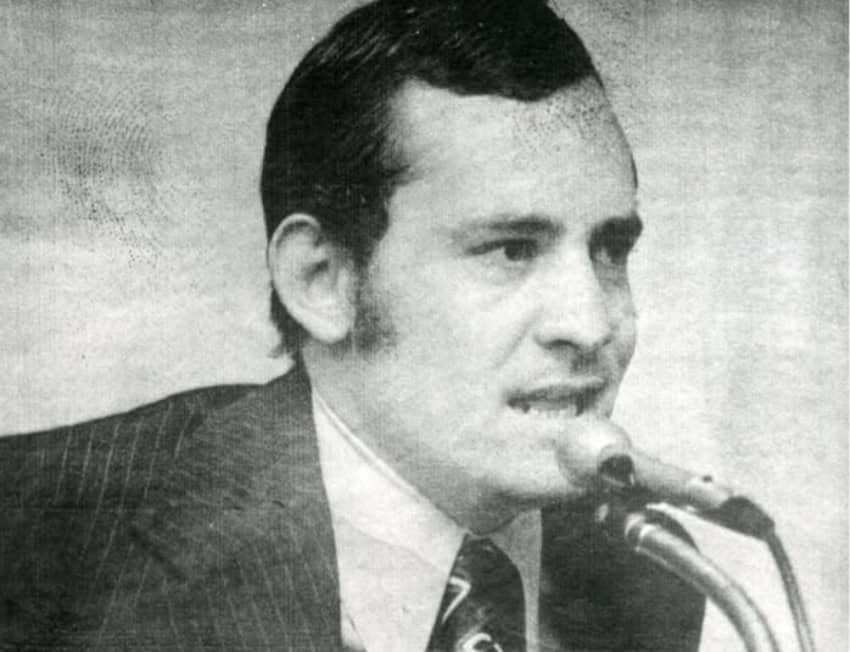
In response, PRI officials went on the offensive. They claimed that the protestors were in fact “bad Mexicans” who were supported by “seditious leaders moved by murky interests.” In particular, the federal minister of the environmental agency, Guillermo Carrillo Arena, an architect who was playing a key role in the earthquake recovery, leveled outrageous remarks at anyone who questioned him. As a top government official, he had approved the plans for the construction of the two government hospitals that had collapsed, which killed hundreds of people. At a press conference, reporters asked him if he felt responsible for those buildings collapsing and ultimately those deaths. Carrillo Arena responded: “The only thing I can say about that question is that whoever is asking it is a prostitute and an imbecile.” After comments like that, the damnificados’ resolve only strengthened.
A master stroke
The CUD was unsure what to do next, but determined to stage a protest that would keep pressure on the government. The damnificados then settled upon a master stroke. In the first week of January 1986, they moved back into their damaged, dilapidated buildings in whatever crevices they could find. The buildings were structurally unsound and in no way inhabitable, but the move made a statement.
Within days, President de la Madrid fired Carrillo Arena. Then de la Madrid assembled a new team of officials that opened negotiations with the CUD to develop a plan. As journalist Julia Preston noted in “Opening Mexico: The Making of a Democracy,” a new plan emerged with “much more emphasis on restoring structures that could be fixed, so that the homeless would not have to suffer the additional trauma of starting life again in a distant location.”
This was a surprising and unlikely reversal for a government that rarely, if ever, considered the wants and needs of ordinary Mexicans when proposing development projects. According to Cuauhtémoc Abarca: “People woke up. They began to see the government not as something superior to them but as an equal with whom they could talk, negotiate, and even win a round or two. No one could remember ever seeing a government project defeated as categorically as we defeated the plan to move us out of Tlatelolco.”
A turning point
This increasing sense of accomplishment permeated Mexican society and allowed Mexicans to view themselves, and their government, in an entirely new light. In fact, when President Miguel de la Madrid opened the 1986 World Cup ceremonies in Mexico City, the Mexican fans booed, whistled and shouted at him. This might never have happened before the earthquake, and the government’s failed response to that disaster.
The 1985 earthquake represented a turning point not only in Mexican society but most especially in Mexican politics. One-party rule does not work if that party is completely incompetent. Instead of looking to the government for answers, neighborhood associations (and ordinary Mexicans in general) began to work together to find solutions to local problems.
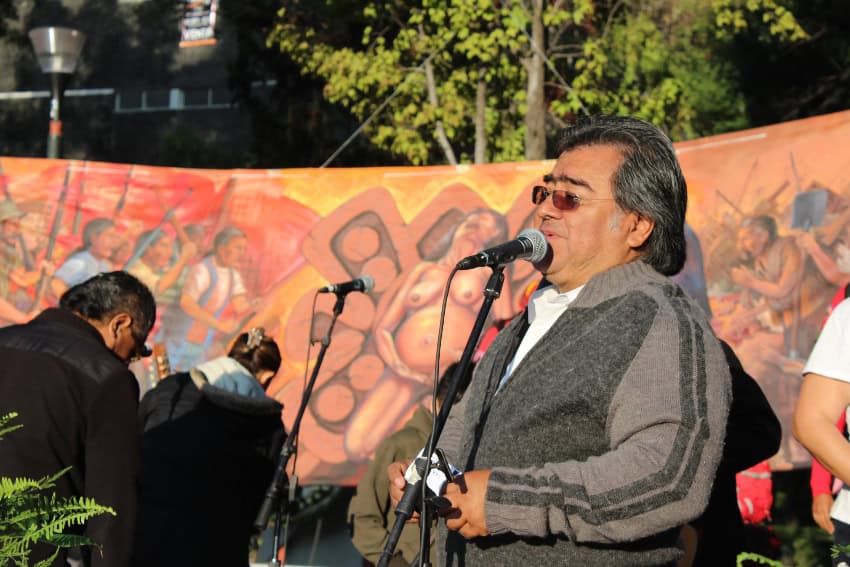
Cuauhtémoc Abarca said, “The earthquake threw down walls, and it also threw down barriers between communities. Instead of lines of communication from the top down, suddenly we had lines of communication that were horizontal, between different organizations and barrios, or, better yet, from the bottom up.”
“The earthquake was also invigorating,” explained Preston. “In its wake, because of the government’s failure to (adequately) respond, there emerged a new form of popular political action, called autogestíon, do-it-yourself politics. … The new force that emerged from the earthquake was civil society. The citizen groups that formed were independent of the PRI, but they had no direct ties to opposition parties either. They mobilized Mexicans across class lines.
“If the 1968 Tlatelolco massacre had revealed the repressive core of the system, the earthquake exposed its depths.”
Robert McLaughlin, Ph.D. is a historian specializing in Cold War Latin American history.