Pandemic, pandemic, pandemic. You could be forgiven for thinking that there was little else on the table this coming year, and what a long, lonely year it already feels like, as we stand atop the winter summit and look down onto the lowlands of the year ahead.
But is there only darkness before us? Or are there surprising chinks of light in the months to come in Mexico’s deep south?
Of course, the impact of the pandemic across the region in 2020 can hardly be overstated; not just in terms of the effect of the Covid virus itself, but how it has highlighted existing systemic issues in state economies, healthcare systems, and the wider society which underpins these. Mérida and Yucatán have perhaps suffered most, regionally, with high-profile clusters and deaths, but the Yucatecos have always had bounce-backability, and the city of Mérida remains an international hub for industry and tourism (even with the reduced numbers we are seeing), medical infrastructure, agriculture, and new industries.
Though it has suffered, and its people have suffered, so has everyone else: look to Mérida to come back strong and likely announce surprising, innovative initiatives to spring forward ahead of the national and regional competition.
Added to which, the current economic downturn is likely to fuel a perhaps unrealistic hope that the construction and implementation of the Maya Train will be a cure-all for the region’s ills. Most politicians would have us believe that this is so, but scratch the surface and there is still widespread general unrest and often downright anger at how the project has been forced on — in particular — indigenous communities and their territories. If we can be sure of anything this coming year it is that regional politicians will be waxing lyrical about the transformative capabilities of the train, over a thin veneer of general unrest.
The open question is not whether the train will get built. Despite flaws in established national and international protocol, the federal government has pinned its coat to this particular mast, so the only real question is how the conflict will play out — because conflict there certainly is; one doesn’t have to look too far to find it. Current strategy seems to be to downplay or even ignore dissenting voices, which — rather than heal the wounds — irritates the wound further.
Talking of open wounds, on October 2020, at the 38th UN session of the Economic Commission for Latin America and the Caribbean, representatives from the 33 countries in the region signed a political declaration aimed at a sustainable and inclusive recovery from Covid-19. The declaration acknowledges the relevance of inequalities, and promises an increase in social protection.

You may be forgiven for thinking that these are promises we have heard before. Consequently, though it remains to be seen whether the political will of a handful of representatives can be translated into meaningful, equitable action, there are nonetheless signs of burgeoning change in the region, in particular among women’s groups and the social impact they are having.
Of course, although no physical legislation has been passed in Mexico’s south, the legalization of abortion in Argentina has been seen by feminist groups as a sign that their activism is on the up, and that they need to push on, because although reproductive rights are an aspect of the topic, at heart the actual topic is gender equality.
The increasing recognition of the rights of women in several parts of the world is coinciding with the emergence of a generational voice in Latin America who are demanding that governments address gender inequality, femicide and domestic violence by enshrining it into their statutes, just as Chile did following the October 2020 referendum. The women of the Yucatán see and hear this, and are a part of it.
Recovery in most Latin American economies after the Covid-19 downturn is expected to be slow, partly due to the systemic economic and political weaknesses across the region which preceded the pandemic, and partly due to the severity of the damage inflicted upon the labour market.
Despite this, the outlook for most of the region is hopeful; most countries are expected to return to their pre-pandemic GDP in the second half of 2022 (though forecasts for Mexico and Argentina stretch into 2023 and beyond) with GDP in the six largest economies in the region expected to grow by 4.1% in 2021 after falling an estimated 7.7% in 2020.
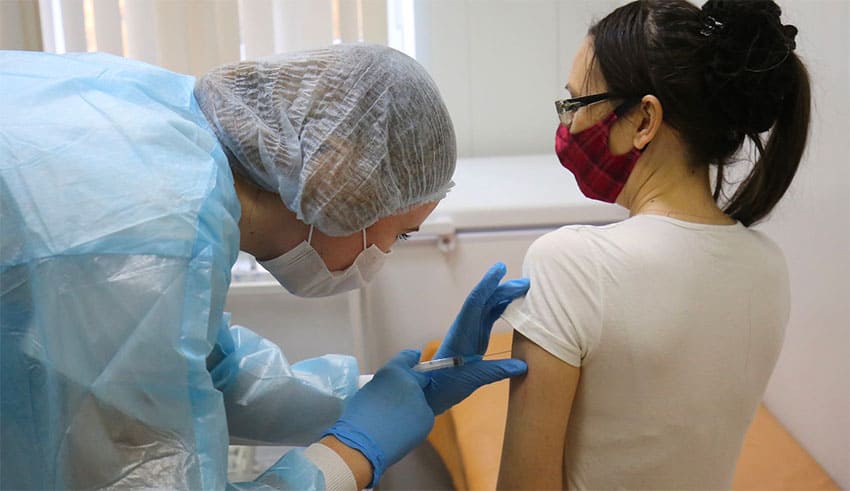
Of course much of this is dependent on the practical emergence of one of a number of vaccines currently being sanctioned, as well as their mass take-up, because without this happening .…
Maybe this colossal roll-out, more than any other, is the real challenge for governments in 2021. They have showed structural promise in dealing with the pandemic to date, but reaching the vast majority of citizens with effective, safe, functional vaccines?
Well, good luck 2021. We wish you all the best, for all our sakes.
Shannon Collins is environment correspondent at Ninth Wave Global, an environmental organization and think tank. She writes from Campeche.