The haunting, fading Doppler effect of a receding train whistle on a hot summer night is romantic, even though it is saying goodbye.
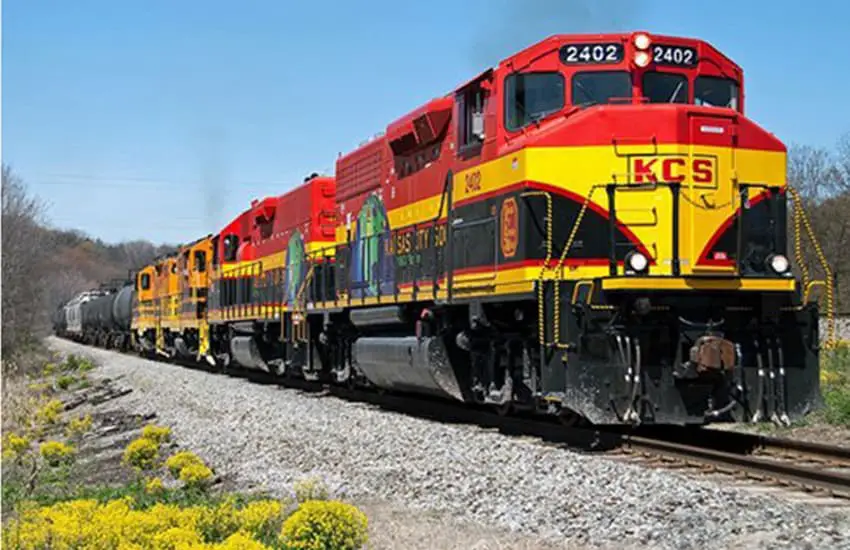
Mexico’s train whistles are tooting hello these days as a good old-fashioned donnybrook is breaking out, now that there are two highly qualified foreign bidders for Kansas City Southern (which holds Mexico’s foreign route concessions).
The first bid, for US $25 billion, came from a Vancouver company, the second US $33.7 billion from a Montreal enterprise. Both bids are tangible support that at some time in the future Canada, Mexico and the United States will be a dominant economic, if not political, entity.
First Coca-Cola and beer — now Dutch, then aviation — now American. And railroads next?
I’m a train buff and have ridden the rails in China and the United Kingdom, as well as Romania, Ecuador, Peru, Czechoslovakia, Canada and, of course, Mexico and Guatemala.
In Mexico, on a trip from California to Mexico City and Guatemala, I even toasted a cheese sandwich on the locomotive’s boiler of the president’s train as I shared the engineer’s cabin with an oilcan-bearing, pinstriped-overalled veteran.
I showed the trackside ragamuffins how to turn Guatemala’s outsized one-Quetzal coin into a mini-Frisbee before we derailed.

Mexico’s President López Obrador is a train buff too, having already pledged that he will retire to his family farm in Palenque, Chiapas, the new loading point for the Refugee Special known unaffectionately as The Beast, which passes north close enough to the United States border to tempt fate.
Enough of nostalgia, except to hope that future train buffs may have the opportunities that I’ve had. On to investment dynamics.
Turning to my eight years as an analyst for investment in Latin America, I’d dismiss the economic risk of investing in railroads in Mexico. Developing nations need railroads.
But this does leave political risk, which is high, not just for Mexico, but for the United States as well. As a recent Reuters article points out, the most recent permitted railroad merger of size in the U.S. was in 1994.
This leaves Mexico, whose distant train history includes a 1930s nationalization of foreign-owned railroads and whose more recent history involves disputing foreign contracts in the petroleum industry.
So, how far does AMLO’S railroad buff-ness go?
Carlisle Johnson writes from his home in Guatemala.