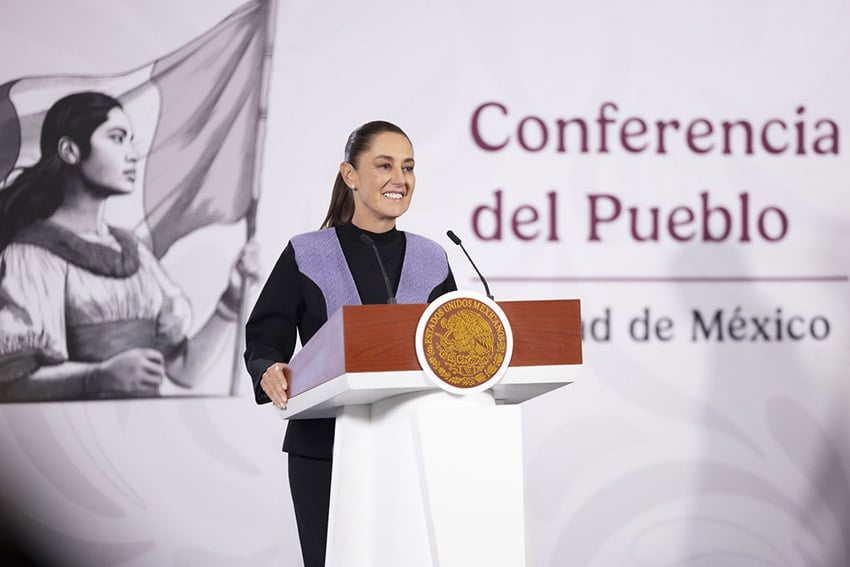
Sheinbaum’s mañanera in 60 seconds
- 🗳️ Electoral Reform “Plan B”: Senate approved cuts to lawmaker and INE official “privileges,” with savings to be redirected to health, education & welfare — but the 2027 presidential recall provision was dropped.
- 💸 Budget trimming: State legislatures capped at 0.7% of state budgets; federal Senate budget will also be cut pending “Plan B” approval by the lower house.
- ❤️ Favorite part of the job: Traveling Mexico and meeting citizens every weekend; calls it “a balm” from the stress of the presidency — all petitions she receives get a formal government response.
- ⚽ World Cup countdown: FIFA chief Infantino to visit the National Palace on Monday to discuss final organizing details; Mexico vs. South Africa kicks off June 11 — and playoff action starts TODAY in Monterrey & Guadalajara
Why today’s mañanera matters
For the first time in her almost 18 months in office, President Claudia Sheinbaum is encountering congressional resistance to a legislative proposal.
Her original electoral reform proposal — which sought to change the Mexican Constitution — was rejected by the Chamber of Deputies earlier this month, and on Wednesday her “plan B” bill was amended before it was approved.
Sheinbaum used her Thursday morning press conference to assert that the most important aspect of her “take two” proposal remains intact.
Thursday’s mañanera was also noteworthy as the president spoke briefly about the pressures of her job — and what helps her destress.
Sheinbaum responds to Senate’s approval of her ‘plan B’ electoral reform
Sheinbaum acknowledged that her ‘Plan B’ electoral reform was approved by the Senate on Wednesday, albeit not exactly as she proposed it.
The part of the proposal related to reducing “privileges” for lawmakers at the different levels of government as well as National Electoral Institute officials was approved, she said.
Sheinbaum dice que es malo para el país que el Plan B haya salido sin cambios al artículo 35 constitucional para que la consulta de revocación de mandato coincidiera con las elecciones de 2027. “¿Qué problema tiene?”. Anoche Adán Augusto no se veía muy frustrado que digamos con… pic.twitter.com/XQYfZGcPFJ
— Sandra Romandía (@Sandra_Romandia) March 26, 2026

“That’s the part that mattered most to us,” Sheinbaum said, adding that the savings generated by measures such as eliminating “special bonuses” for electoral councilors and limiting municipal governments to no more than 15 councilors will be allocated to health care, education and welfare programs.
She also noted that the Senate voted in favor of limiting the budgets of state legislatures to 0.7% of the total budget of the state in which they are located.
In addition, Sheinbaum highlighted that the “plan B” bill — which has not yet been approved by the lower house of Congress — proposes a reduction in the budget of the federal Senate.
“This is extremely important and it has to do with our [political] project — to continue reducing privileges for officials in general,” she said.
Sheinbaum acknowledged that an aspect of her “plan B” proposal that would have allowed a presidential recall election to be held at the same time as municipal, state and federal elections in 2027 “was not approved” — i.e. it is not part of the bill passed by the Senate.
“From my perspective, why wasn’t it approved? Probably the parties were afraid that if the president was on the ballot, some parties were going to get more votes than others,” she said.
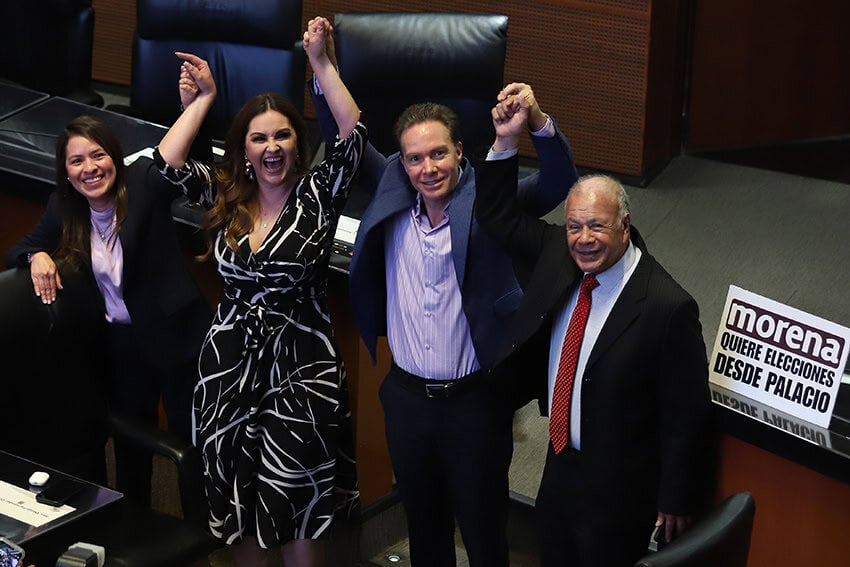
The Labor Party, an ally of the ruling Morena party, was opposed to the recall election coinciding with the federal lower house election in 2027 as it believed that such a scenario would erode its support at the ballot box and benefit Morena.
Sheinbaum dismissed arguments against holding the recall election at the same time as other elections, pointing out that she wouldn’t be campaigning on behalf of any political party.
“One thing is the revocation of mandate [vote] and another is the … vote for deputies,” she said.
Sheinbaum’s original electoral reform proposal was rejected by the lower house of Congress earlier this month. It had a range of objectives included reducing the size of the Senate, changing the way plurinominal (proportional representation) deputies are elected and lowering election costs, including by cutting funding for political parties.
What is Sheinbaum’s favorite part of her job?
During her engagement with reporters, Sheinbaum revealed what she likes most about being president of Mexico.
“What I like most about the presidency is traveling and being with the people [of Mexico],” she said.
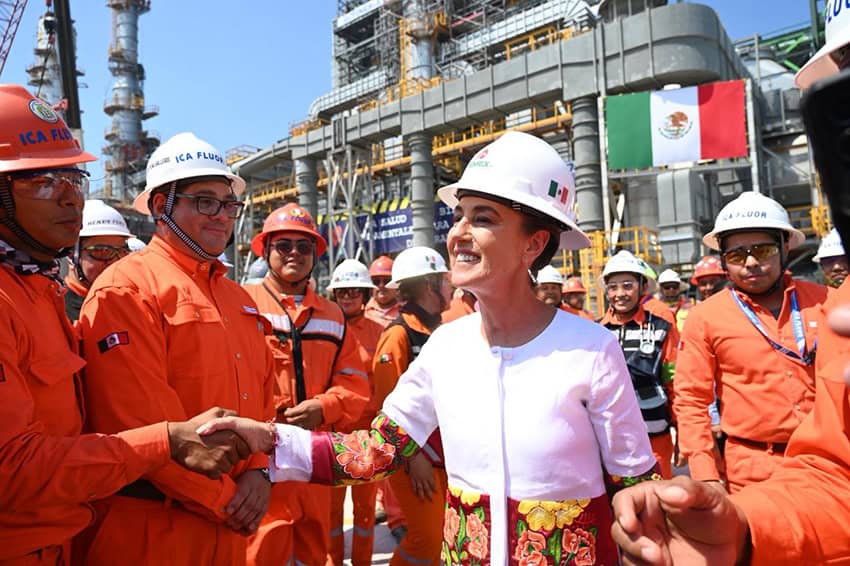
“Here [in Mexico City] you sometimes feel overwhelmed with the problems. Of course I really like doing all the planning with the ministers, working — we meet a lot, we work a lot,” Sheinbaum said.
“But when you go out [of Mexico City to tour the country], it’s like a balm, being with the people is something beautiful,” she said.
Sheinbaum noted that she receives many petitions and letters from citizens while traveling around the country, something she does virtually every weekend.
The petitions and letters are distributed to the relevant government ministries so that they can respond, she said.
“Everyone receives a letter in response saying ‘your petition is being processed’ or they are spoken to by phone,” Sheinbaum said.
Sheinbaum to meet with Infantino on Monday
Sheinbaum told reporters that FIFA president Gianni Infantino will come to the National Palace on Monday to discuss “some outstanding organizational details” for the men’s World Cup, which Mexico is co-hosting with the United States and Canada.
The first match of the World Cup — Mexico versus South Africa in Mexico City — will be played on June 11, exactly 11 weeks from today.
A World Cup playoff tournament involving teams from six countries commences today with matches in Monterrey and Guadalajara.
New Caledonia, Jamaica, Bolivia, Suriname, Iraq and the Democratic Republic of the Congo are vying for two spots in the 48-team tournament.
By Mexico News Daily chief staff writer Peter Davies (peter.davies@mexiconewsdaily.com)