Contravening global trade deals, hurting private investment, damaging consumers and betraying climate change commitments all at once is quite something. Yet Mexico’s populist president is set to pull off this unlikely feat with his proposed law to overhaul the country’s electricity market.
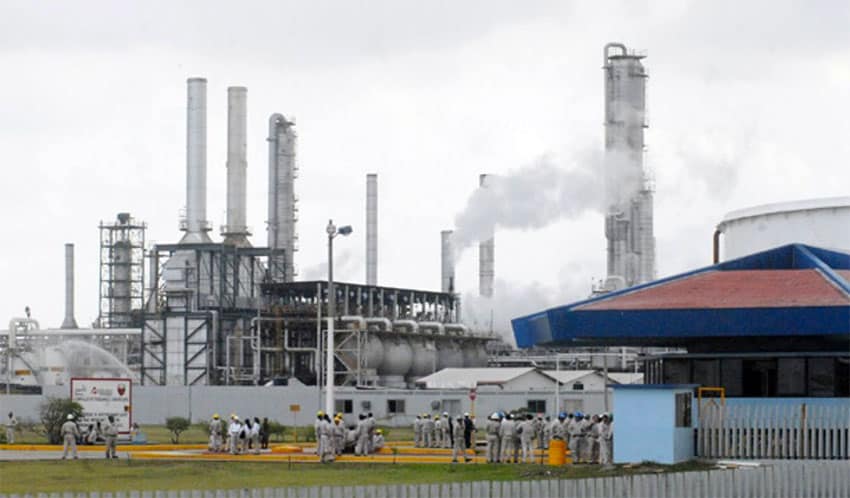
A leftwing nationalist whose economic views are anchored in the 1960s, President López Obrador has a vision for energy which is state-led and fossil fuel-powered. He has ordered the building of a US $8-billion refinery in his home state of Tabasco at a time when oil majors around the world are shedding such assets amid declining demand. He has poured scarce government resources into the ailing state oil company Pemex in a quixotic attempt to boost crude production, while sidelining foreign investors who can do the job more efficiently.
Now the Mexican president is turning his guns on another of his pet hates: private sector participation in the energy market.
His proposed law would give preference to the state electricity utility CFE, sending its power to the national grid ahead of private generators, even if it is more expensive and more polluting. It would reverse parts of a pioneering 2013-2014 energy reform which obliged the Mexican grid to take the cheapest power first, benefiting consumers and lower-cost private generators, many of whom have invested in renewables.
The government argues that a leading role for the CFE would guarantee a stable, secure supply of electricity and stop what it claims are perverse hidden subsidies which benefit private operators at the expense of the state. Its claims do not stand up to scrutiny.
According to Mexico’s business lobby group CCE, the proposed law opens the door to an expropriation of the $17.6 billion of private investment in the power sector and would raise costs for consumers and business. Lawyers who have studied the text say it could violate Mexico’s trade commitments to the U.S. and Canada under the USMCA pact and contravene provisions of the CPTPP trade deal with Asian nations. Greater use of the CFE’s fossil fuel-powered generating capacity would make it even harder for Mexico to keep climate change commitments under the Paris accord.
Ominously for López Obrador, Mexico’s Supreme Court struck down this week a decree from last year which attempted to give priority to the CFE in the power market, ruling it unconstitutional. Yet the government’s response was to insist on the need for its proposed new law.

Whether or not the legislation passes — and López Obrador has a majority in Congress and has fast-tracked the bill — the proposals say a lot about the worrying direction Mexico is taking. Voters gave López Obrador and his Morena alliance an overwhelming mandate in 2018 because they wanted an end to rampant corruption, a reduction in violent crime, and a greater focus on the poor and forgotten.
What they got is a president who sets an example of personal probity with an austere lifestyle, but who has failed to reduce murders, grow the economy, respect institutions or control coronavirus effectively. Mexico now has the world’s third highest Covid-19 death toll, partly because its leader consistently played down the pandemic.
With results like these, López Obrador should be worried about the verdict of Mexican voters at midterm elections in June. In the meantime, the Biden administration should lose no time in reminding Mexico of its international obligations on trade and climate change.
© 2021 The Financial Times Ltd. All rights reserved. Please do not copy and paste FT articles and redistribute by email or post to the web.