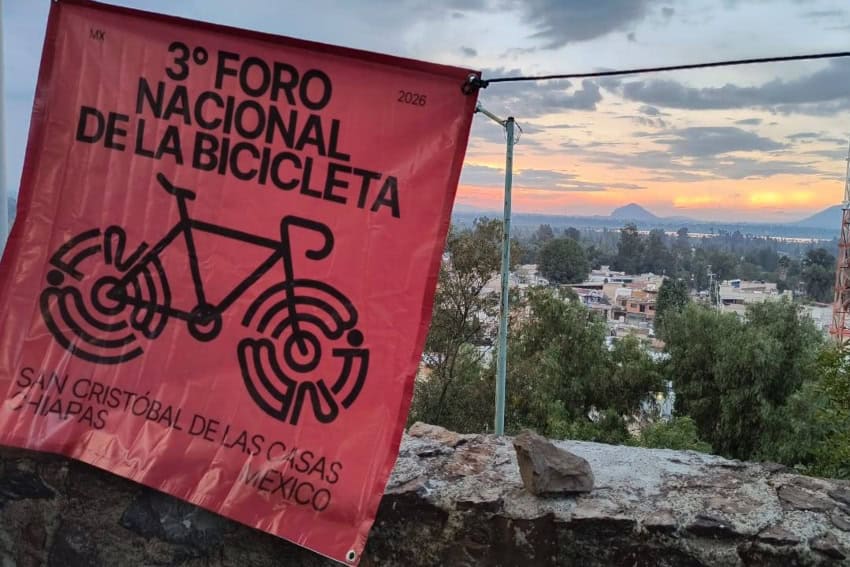
On March 11-16, the southern city of San Cristóbal de las Casas will be the site of the 3rd National Bicycle Forum (3er Foro Nacional de la Bicicleta), an event organized by bike-loving community volunteers from throughout Mexico.
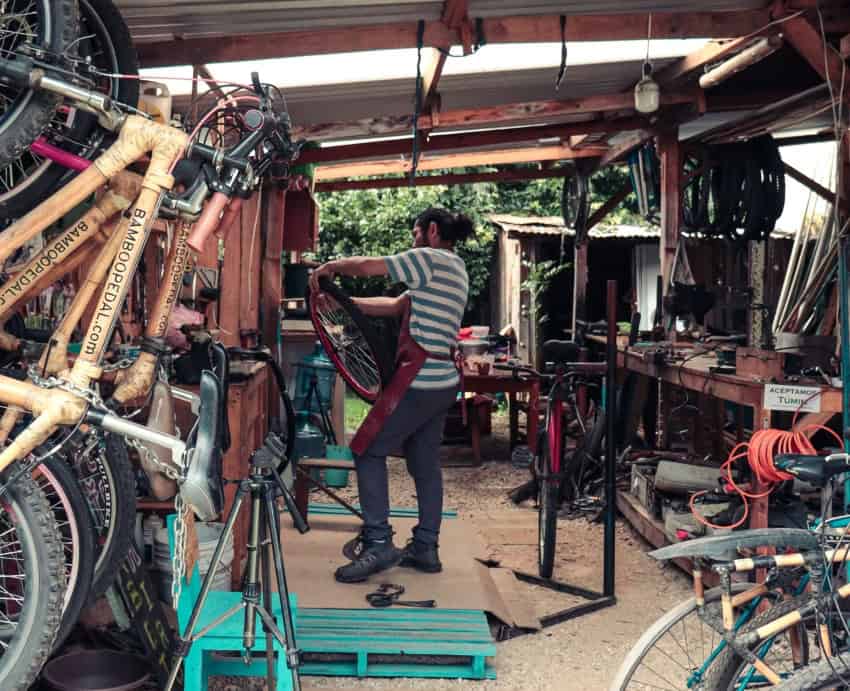
Participants from throughout the country will converge on the Pueblo Mágico for a range of activities, including workshops on bike construction and maintenance, demonstrations of bike-generated community energy projects, a graphic arts exhibition focused on women riders, brainstorming sessions on increasing the “right to the city,” a film festival, a rodada — a mass convergence of bike riders and bike tours of the city and region.
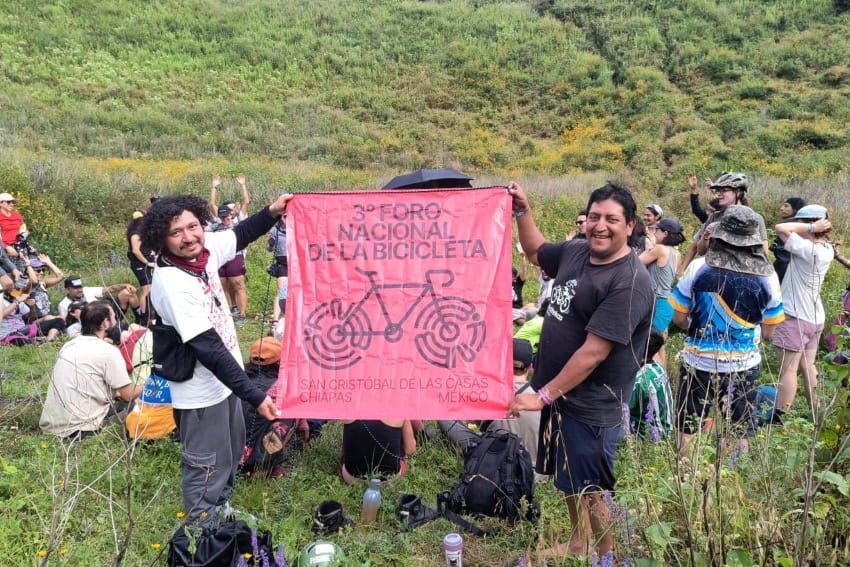
Organizing committee member Miguel Alberto Hidalgo said the forum will host bike riders from across the country, along with international guests from Spain, Holland and Italy. Participants will exchange stories of successful integration of bike infrastructure into urban contexts as cities worldwide face the imperative of reducing carbon emissions from cars and of diversifying transport options.
The right to the city and San Cristóbal’s security crisis
The organizing committee was formed by passionate San Cristóbal locals who have been engaged in various activities to promote “the right to the city” over the last few years — occupying urban spaces for recreation and assembly and promoting mobility of all kinds.
Hidalgo runs the Rueda Libre bike workshop in San Cristóbal and was motivated to campaign for a safer and more inclusive city when Italian cyclist and activist Michele Colosio was assaulted and killed in San Cristóbal in 2021. One of the first projects created and driven by Hidalgo and other comrades of Colosio is the San Cristóbal Vía Recreativa, a mass community bike ride through the city.
“Personally, I am involved in the Foro because Michele was my partner,” says Laura Villa, who is also an organizing committee member. “He was a victim of violence who had done a lot for bike activism. He was there at the beginning of the project to create the Vía Recreativa, but he didn’t get to see the end result.”
Villa works with Circotik, which promotes social circus-based recreation for children in San Cristóbal and surrounding communities.

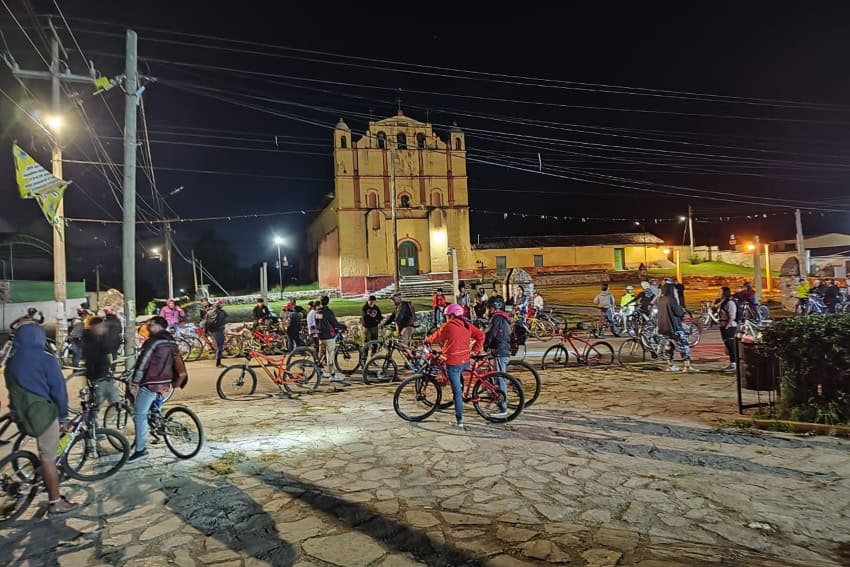
Strengthening the social fabric
“When there started to be a lot of violence in San Cristóbal, a lot of people started talking about the need to strengthen the social fabric,” she said.
“But it was more of a discourse than a concrete practice… Weaving the social fabric has to be more of a practice — where we go out, we see and recognize each other” in public space, continued Villa.
“This way we can help reduce the fear generated by the violence too.”
Miguel Hidalgo said that this national forum is being held for the first time in a non-capital city — not just in the oft-overlooked southern state of Chiapas, but in “a municipality that is not the capital city.”
This is particularly important for showing engagement with a peripheral part of the country, he added.
The first and second forums were held in the cities of Mérida and Querétaro.
San Cristóbal’s host role comes as the city has been battling to regain tourism income lost from the security crisis. T2028 will be the 500th anniversary of the city’s founding.
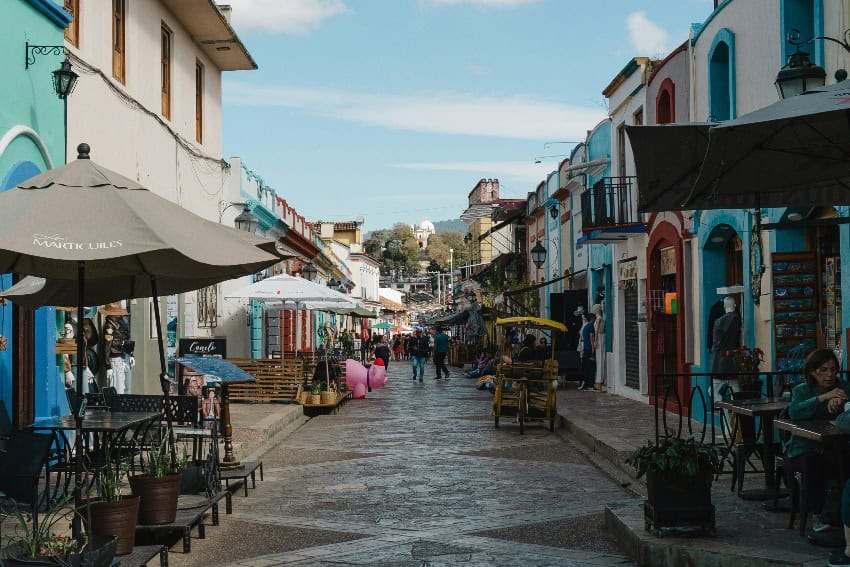
Miguel Hidalgo says the city faces particular challenges in basic infrastructure to guarantee the right to the city.
“There’s a lack of accessibility for people with reduced mobility — there are no access ramps,” for example, he says.
He adds that “the quality of the sidewalks” is also a persistent problem for getting around.
Could biking be the key to revival?
Traffic accidents driven by poor street design are also a concern. Misión Cero, a project of concrete company Cemex, has identified a series of so-called “black spots,” where accidents frequently occur, that could be improved by speed-control measures in road design and “adequate pedestrian infrastructure.”
More than 7,000 bicycles circulate through San Cristóbal every day.
Hidalgo says improved mobility for bicycle users and people with reduced mobility alike could be key to the city’s revival.
Tourism is “decisive” to San Cristóbal’s economy, he observed.
Poor access to “safe mobility” also reduces the number of people who use the city, including tourists, Hidalgo added.
He notes that bicycle tourism in the region has also been increasing in recent years.
Bikeability — local and national challenges
San Cristóbal de las Casas is a good place for cyclists, thanks to the fact that drivers can’t go very fast. (Facebook)The forum committee is hoping the municipal government of San Cristóbal will adopt federal guidelines on the structure and design of urban spaces. The guidelines establish minimum standards for the construction or rehabilitation of streets from a “safe systems” approach and integrate principles of universal design, accessibility, sustainability and road safety.
To be sure, the forum also comes at a moment when urban megaprojects are sweeping the country, many of which prioritize transport by car and have been critiqued by advocacy organizations on environmental and human rights points.
Dedicated cyclist Linda Lönnqvist has lived in San Cristóbal for the past 12 years and will be attending the forum. Before San Cristóbal, she got around by bike in Manchester and Oxford in the U.K., Dar-e-Salam in Tanzania and in her hometown of Vanda in Finland.
“San Cristóbal has many benefits for cyclists,” she said. “Most streets are one-way, so you have to stop at every corner, and there are lots of blind corners. So anyone on any kind of vehicle has to stop and look around and decide who has the right of way to cross — so you don’t get people coming at you at 80 kilometers per hour.”
Ann Louise Deslandes is an independent journalist and consultant in San Cristóbal de las Casas.