It’s hard to imagine now, but before football conquered Mexican Sundays, baseball held a central place in the country’s sporting imagination. Sunday afternoons meant radios crackling with play-by-play from ballparks in Mexico City and Monterrey, but also from diamonds in the United States and Cuba — a soundscape in two languages, tied together by nine innings and a bat.
As you might guess, baseball in Mexico has no pre-Hispanic roots. It is, instead, a living reminder of the long, entangled history between Mexico and the United States.
How did baseball arrive in Mexico?
The truth is, historians have never been able to pinpoint the exact moment the game crossed the border. What we do know, in broad strokes, is that by the late nineteenth century, railroad workers, soldiers, sailors, miners, and, of course, U.S. businessmen who sponsored local games were already bringing baseball to Northern Mexico and to the major ports of the era. In a study by researchers at Harvard, one influential theory is that baseball arrived through the commercial and maritime circuits linking the United States, Cuba and Mexico — a triangle of trade that also moved ideas, customs and games.
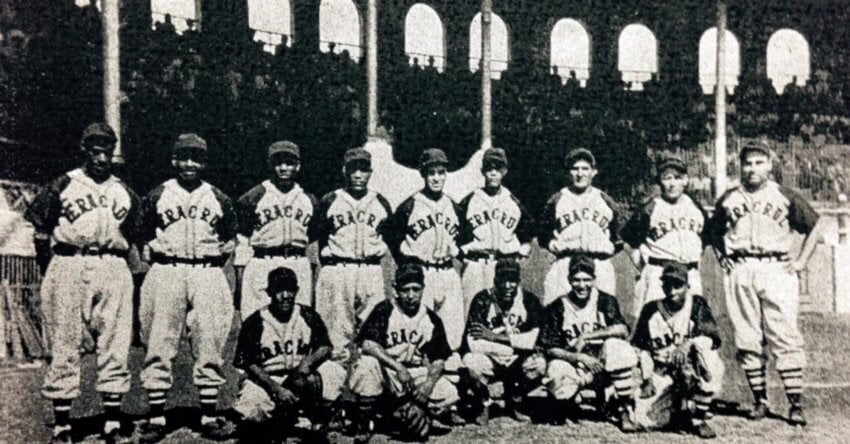
By the end of that century, baseball was familiar in Mexico City, Mazatlán, Guaymas, Veracruz, Nuevo León and Tamaulipas. Sunday newspapers are full of early box scores and game stories describing matches between Mexican clubs and foreign
teams, written in a tone that makes clear this was no longer an exotic novelty but part of the weekly rhythm of urban life.
Mexican baseball
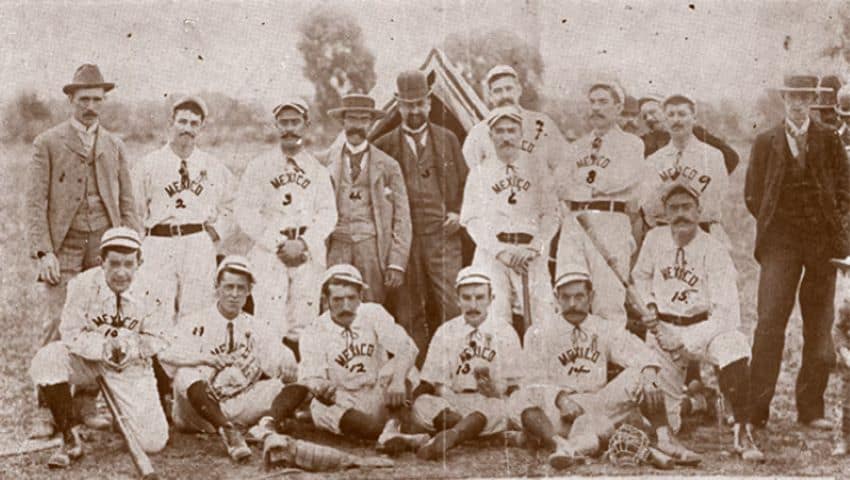
The first officially documented Mexican club was Club México, founded in 1887. And the first truly emblematic game was played on March 5, 1899, when the American team“Masters” faced the Mexican “Señores.” The Mexicans won by the improbable score of 51–49. From that moment on, baseball in Mexico began to consolidate as a sport followed religiously, Sunday after Sunday, by a growing local fan base. In those early decades, baseball was still a binational activity, with Mexican and American communities alike tracking their teams and heroes on both sides of the border.
The Mexican Revolution, however, changed the tone of the game. Starting in 1910, many foreign residents — fearing for their safety — shut down their businesses and left the country. In the few surviving baseball chronicles from those years, American surnames begin to disappear from lineups and box scores, just as Mexican teams, players and announcers proliferate. The game remains the same, but its center of gravity shifts decisively into Mexican hands.
The Mexican League
The history of the Liga Mexicana de Béisbol (LMB) is, at its core, the story of how Mexican baseball stopped being an archipelago of amateur leagues and became a professional circuit — modeled on the U.S. system, but with its own logic.

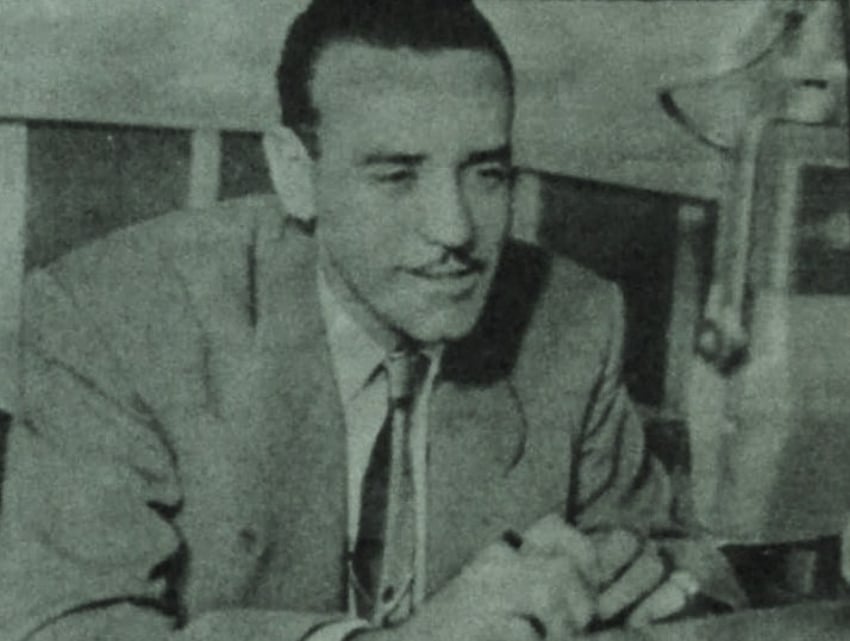
After the revolution, baseball in Mexico City was wildly popular yet fractured: rival associations fought over players, ballparks and legitimacy, in what historian Miguel Ángel Esparza calls a “struggle for the diamond.” Businessman Ernesto Carmona
grasped that whoever controlled the parks controlled the sport and secured the concession to Parque Franco Inglés, while sportswriter Alejandro Aguilar Reyes — “Fray Nano” — used his column to argue for a single, unified league with clear schedules and rules, in line with the great leagues to the north.
The turning point came on Feb. 24, 1925, when the main associations merged and founded the Liga Mexicana de Béisbol. The new league launched with six clubs — México, Agraria, 74 Regimiento, Águila, Guanajuato and Nacional — backed by businessmen and military officers who saw baseball as a tool for business, prestige and social cohesion in a postrevolutionary capital.
Its first official game, on June 28, 1925, at Parque Franco Inglés, ended with Club México defeating Agraria 7–5 in 14 innings, a marathon now remembered as the formal birth of professional baseball in the country. Those early seasons were fragile — riddled with financial crises and internal feuds — but over time, the LMB stabilized, expanded beyond the capital and learned to coexist with football and with the gravitational pull of Major League Baseball.
Nearly a century later, with 18 franchises and one of the longest uninterrupted histories in professional baseball, the LMB stands as the platform from which Mexico speaks back to U.S. baseball, not just as a source of players, but as a mature system in its own right.
Baseball in Mexican culture
There are myths, legends, and fully documented anecdotes that testify to the depth of Baseball’s place in Mexican life.
One of the most beloved involves perhaps the most important baseball broadcaster in Mexican history, Pedro “El Mago” Septién. In 1951, during a New York Yankees game, the live feed from the stadium suddenly failed. Septién had to call the remaining innings using only short telegraph dispatches from wire services. A single telegram was enough for him to spin an entire inning’s worth of drama, reconstructing pitches and swings in the imagination of his listeners.
His “magic” was not just in his encyclopedic memory, but in what he could do with language. He left behind phrases that have become part of Mexican baseball lore, like his description of the sport as “a ballet without music, a drama without words, a carnival without showgirls.”
100 years later
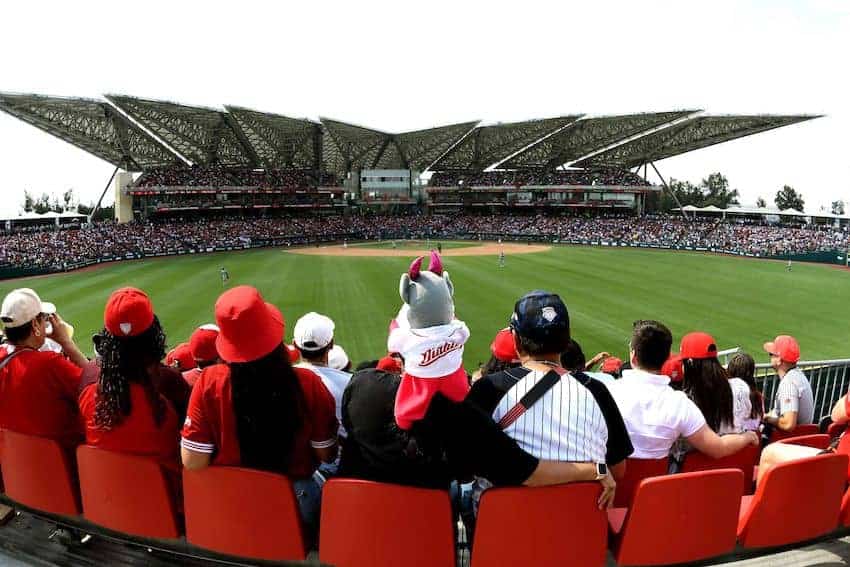
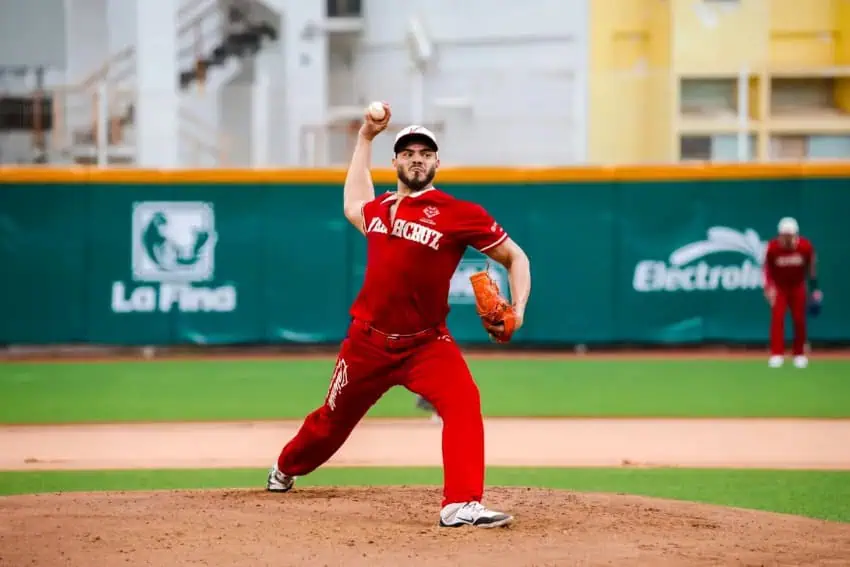
In a few days, when the Kane County Cougars run onto the field at Estadio Alfredo Harp Helú to face Diablos Rojos del México in the opening game of the Baseball Champions League Americas, the scene will tell a story far larger than the final score.
In the capital of a country where baseball first arrived as a U.S. import more than a century ago, the champion of an American independent league will square off against the reigning LMB champion on Mexican soil, under the umbrella of a continental tournament that puts clubs from Mexico, the United States, Cuba, Nicaragua and Chinese Taipei on the same footing.
This is not a Major League showcase tour. It is something more horizontal: five champions (or near champions) sharing the same diamond in a round-robin format, as if baseball were reminding itself that it is, before anything else, a common language rather than a pecking order of flags.
Almost 100 years after Fray Nano and Ernesto Carmona stitched together that
first professional season in a Mexico City ballpark, professional baseball is once again
placing the city at the center of the map — this time as host of a Champions League of the Americas, in which the LMB acts not as a peripheral guest, but as the home
institution.
From March 24 to 29, the Alfredo Harp Helú Stadium — home of the Diablos, a
regular LMB venue, and a recurring stage for official MLB games — will become, for one week, a small laboratory of the very history this article has traced: a game that crossed the border in the hands of U.S. soldiers, railroad workers and sailors, then returned northward laden with new accents, styles and domestic leagues now solid enough to welcome a U.S. representative as just another contender for a continental title.
Closing thoughts
Baseball runs through Mexican cinema, family anecdotes and collective memory as
that sound in the background of long Sunday meals. It ceded ground, over time, to the tidal force of football. And yet, as recently as 2019, 54% of Mexicans still identified as baseball fans; it ranks as the country’s fourth-most-watched sport, and since the opening of Alfredo Harp Helú in Mexico City, interest in Mexican baseball has only grown.
Do you have a baseball memory of your own — on either side of the border? Mine is a
bittersweet mix of sadness and joy, remembering how my grandfather would forbid us from changing the TV channel because he was watching his “beis”, and telling us about his own experience as a player on the TELMEX Team.
For more info, check out the American Association site for more information on the 2026 Baseball Champions League Americas.
Maria Meléndez writes for Mexico News Daily in Mexico City.