With the 2026 FIFA World Cup — part of which will take place in Mexico — finalizing the last qualifiers, events in the Middle East have raised serious questions about the tournament, particularly concerning Iranian participation.
But this is perhaps not surprising, if only because every other time Mexico has hosted the World Cup, there has been some political upheaval going on in the background.
The first Mexico-hosted World Cup: 1970
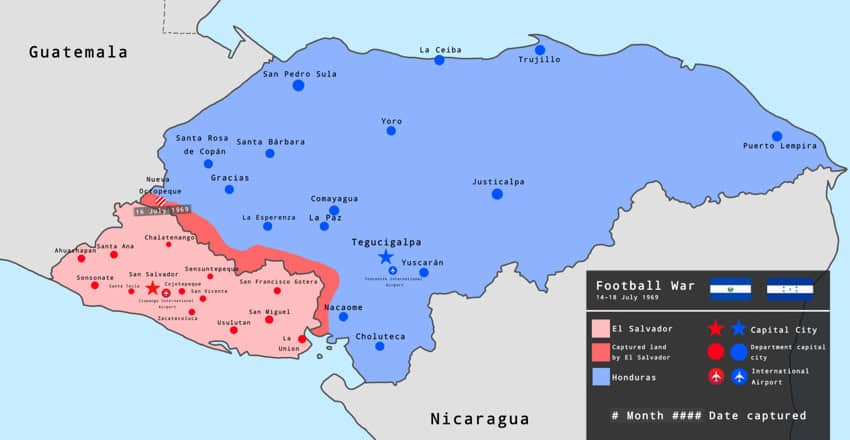
For our first instance, we have to go back to 1969, when Mexico was preparing for the 1970 FIFA World Cup.
Mexico was such a dominant regional soccer power in Latin America at the time that no Central American team had ever reached the World Cup finals before. This time around, however, with Mexico as host getting an automatic slot in the tournament, a Central American nation had the chance to qualify.
But when El Salvador was drawn in to play neighboring Honduras in the summer of 1969, the matchup was such an emotionally and politically charged one that it indirectly led to a military conflict between the two countries, often referred to today as “The Football War.”
Also dubbed The 100-Hour War, the conflict was reported in the press outside Latin America as a brief, quirky event in which hot-blooded Central Americans were so passionate about football that they went to war with each other over it. Yet it was not a joke. Nor was the conflict over just a football match.
Although the fighting “only” lasted 100 hours, it was an intense conflict, and fatality estimates range from 3,000 to 6,000, the vast majority of whom were civilians.

While the World Cup qualifiers in Mexico may have sparked this war off, the conflict’s true roots were in long-standing boundary disputes and tension in Honduras over the thousands of El Salvadorans who had migrated there over the years to find work.
From rocks to riots to broken diplomatic ties
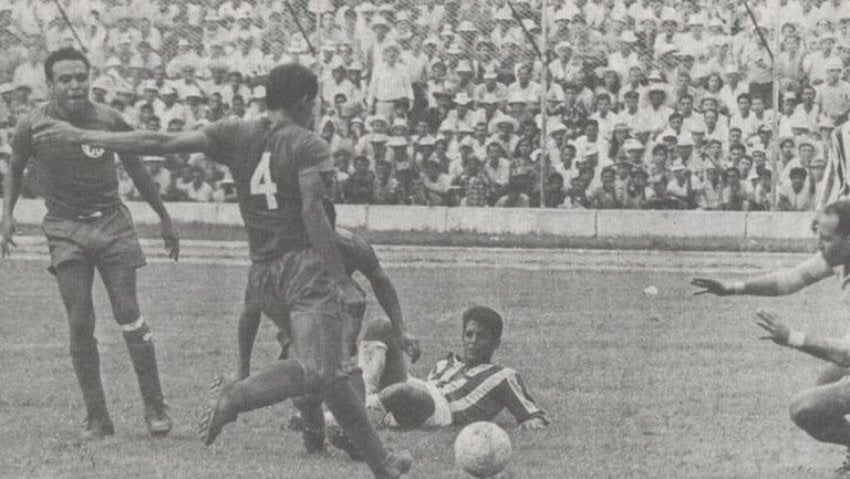
The teams played their first qualifier match of what would become a three-game series on June 8, 1969, in Honduras. The home side won 1-0, but this first matchup was not without conflict: The night before the game, Honduran fans threw rocks at the visitors’ hotel and banged on drums to keep the Salvadoran team awake. There were also riots at the match.
This set the scene for an even more tense second qualifier in San Salvador a week later, on June 15. Salvadoran fans rioted outside the Honduran team’s hotel — some even reportedly threw dead rats into the team’s hotel room windows — and the Honduran team had to be driven to the stadium in armored vehicles.
El Salvador won that match 3-0, with the Honduras coach famously saying that had his team won, he wasn’t sure that his players would have gotten out of the stadium safely. His statement was apparently not an exaggeration: During the post-match celebrations in the streets of El Salvador, violence broke out between the opposing teams’ fans.
The hostile treatment of their team in San Salvador, combined with resentment over old economic grudges, helped to provoke anti-Salvadoran riots all across Honduras, with Hondurans burning Salvadoran immigrants’ homes and thousands of Salvadorans fleeing the country.
Then, the day before the two teams arrived in Mexico City for a third and final game on June 27, El Salvador broke diplomatic ties with Honduras in protest against what it said had been the Honduran government’s failure to protect Salvadoran citizens.
At this point, the potential for fan violence was clear to everyone: The small crowd in Mexico City’s Estadio Azteca was separated and closely monitored by a force of baton-wielding Mexican police that almost outnumbered the fans. Although the situation was well controlled, tensions remained high, with El Salvador fans shouting “murderers” at Honduras fans on the opposite side of the pitch.
El Salvador won the match 3-2, thus qualifying for the World Cup finals the following year. Not long afterward, on July 14, El Salvador’s military crossed the border into Honduras and the 100-Hour War began.
When El Salvador came to Mexico again in the summer of 1970 to make their World Cup debut, they lost all three games, including going down 0-4 to Mexico.
1986: Another Mexico World Cup, another war
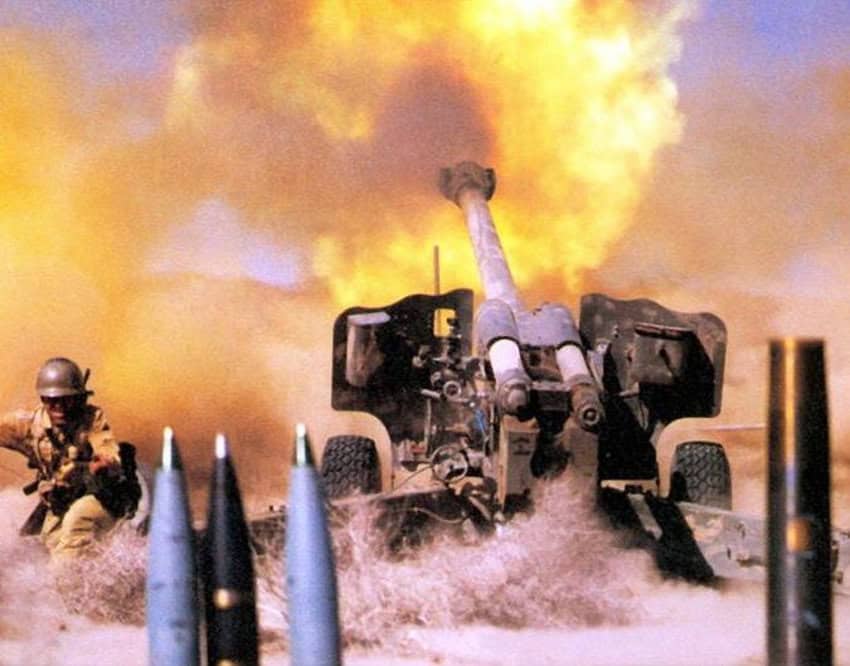
When the World Cup returned to Mexico 16 years later in 1986, the run-up was once again affected by a war, this time in the Persian Gulf.
By this time, Iraq and Iran had been fighting for nearly five years. We tend to forget that at the time, the Western powers were largely pro-Iraqi, with Saddam Hussein being portrayed as a brave soldier defending the region from the religious fanatics in Tehran, which had this reputation in the West ever since the Iranian Revolution had deposed the pro-Western Pahlavi dynasty in 1979 and established the current theocracy.
FIFA had no trouble allowing the warring countries to enter the competition, but, for the players’ safety, it insisted that both teams play their home games on neutral ground. Iran objected and was disqualified, but Iraq — which played its “home” matches in the King Fahd Stadium in Saudi Arabia — qualified for the tournament.
History repeats in 2026
Incredibly, 30 years later, with the World Cup returning to Mexico, the tournament will once again take place in the shadow of a Middle Eastern war.
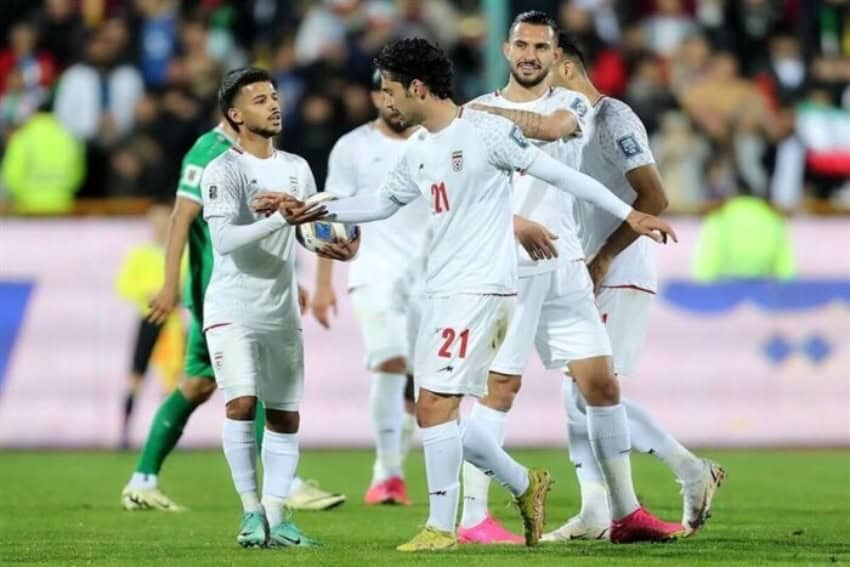
This fact has already had an impact: Iraq, although not directly involved in the conflict between Israel, the United States and Iran, requested that its final qualifying game — due to take place in Monterrey, Mexico, on March 31 — be delayed, pointing out the difficulties right now of traveling out of the Middle East, where thousands of flights have been disrupted as routes are closed for safety reasons and some airlines have canceled all flights in and out of the region until at least the summer.
FIFA has, however, insisted that Iraq meet its commitment, which is perhaps not surprising, given that the date is so close. To date, the Iraqi team is expected to arrive on time in Mexico by private jet. With regional sides Jordan, Qatar and Saudi Arabia already qualified, there might be further logistical problems down the line, but nothing that shouldn’t be solvable.
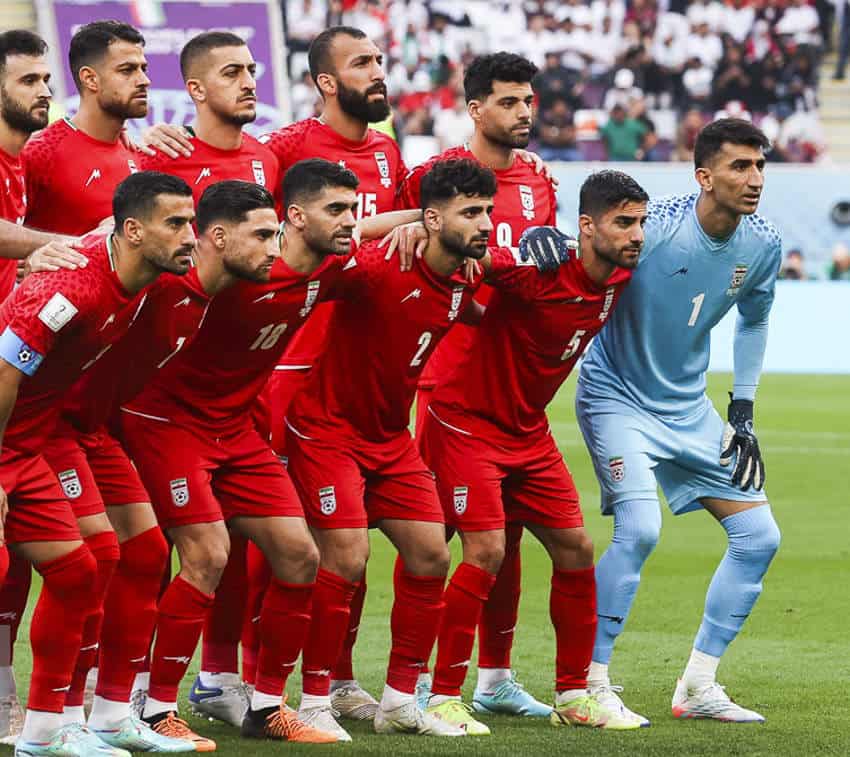
In the case of Iran, the situation becomes far more complex. While Iran has qualified for its sixth World Cup tournament (and third consecutive appearance), it is at war with one of the hosts. At the moment, the Iranian team is based in Turkey and should have no trouble getting to the United States, where all three of its group matches are currently scheduled. However, will they want to come? Will the U.S. let them in?
The president of Iran’s football federation, Mehdi Taj, suggested last week that the Iranian team would boycott playing games in the U.S., but that is not yet the official policy. And there is some hope in Iran that the team’s games can be switched to Mexico, but FIFA seems against the idea, and time is running out.
The Iranian government might actually be relieved if the national team ends up not participating. Several members of Iran’s women’s national team — in Australia for the AFC Women’s Asian Cup in March — originally accepted an asylum deal from the Australian government after their refusal to sing Iran’s national anthem at a match resulted in threats of prosecution as “wartime traitors” back in Iran. Although only two players ended up taking the asylum deal, it was still an embarrassment for the government in Tehran.
Even before the World Cup begins, the Middle Eastern conflict has already had an impact on Iran’s men’s squad: Striker Sardar Azmoun, considered one of the national team’s biggest stars, plays in the United Arab Emirates. He apparently upset Iranian authorities when he posted a photo of himself standing with Dubai’s ruler, Mohammed bin Rashid Al Maktoum, and was summarily dropped from Iran’s World Cup squad, a decision likely to unnerve many of his teammates.
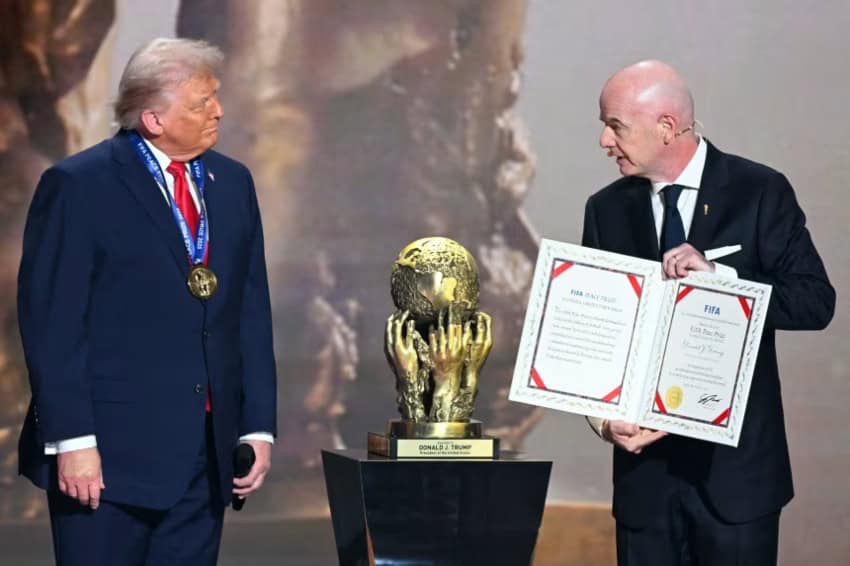
And so there are various possible outcomes due to the Iran conflict right now — including a late-in-the-game Iran boycott to President Trump suddenly canceling the team’s visas. Adding to the uncertainty is FIFA President Gianni Infantino’s very special relationship with President Trump — made clear when Infantino famously invented The FIFA Peace Prize, apparently to stroke Trump’s ego.
FIFA is, hopefully, a little embarrassed that their Peace Prize winner has bombed Venezuela, kidnapped the nation’s president, threatened Cuba and Greenland and launched a sudden attack on Iran that has so far cost nearly 1,500 lives. However, the organization is unlikely to make any decisions that might upset the American hosts.
In all this fuss, meanwhile, people have forgotten the absence of Russia, which has been given an indefinite suspension by both FIFA and the Union of European Football Associations (UEFA) after Russia invaded Ukraine in 2022.
Ukraine, scheduled to open its World Cup campaign in Monterrey on June 14, could still qualify, and it would be interesting to see how the crowd responds to the team. Is the stadium going to be decked in blue and yellow to support Ukraine, or is a war that is dragging into its fifth year going to be marked by crowd apathy? Similarly, if the unpopular war in Iran goes on much longer, will Trump and his inner circle turn up at matches where they are booed by the crowd?
Whatever happens, the 2026 World Cup, like those of 1970 and 1986 that took place in Mexico, will be affected by world politics, and will almost assuredly at no point be boring.
Bob Pateman lived in Mexico for six years. He is a librarian and teacher with a Master’s Degree in History.