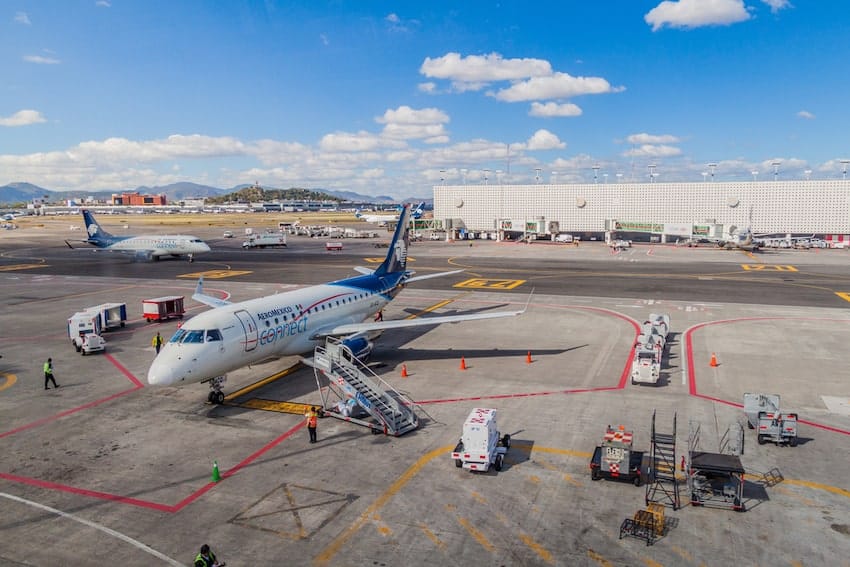
United States authorities have decided to reinstate Mexico’s Category 1 aviation safety rating, President López Obrador said Friday.
The U.S. Federal Aviation Administration (FAA) downgraded Mexico from Category 1 to Category 2 in May 2021 after finding that it wasn’t meeting standards set by the International Civil Aviation Organization, a specialized agency of the United Nations.
“A Category 2 rating means that the country’s laws or regulations lack the necessary requirements to oversee the country’s air carriers in accordance with minimum international safety standards, or the civil aviation authority is lacking in one or more areas such as technical expertise, trained personnel, recordkeeping, inspection procedures, or resolution of safety concerns,” the FAA said at the time.
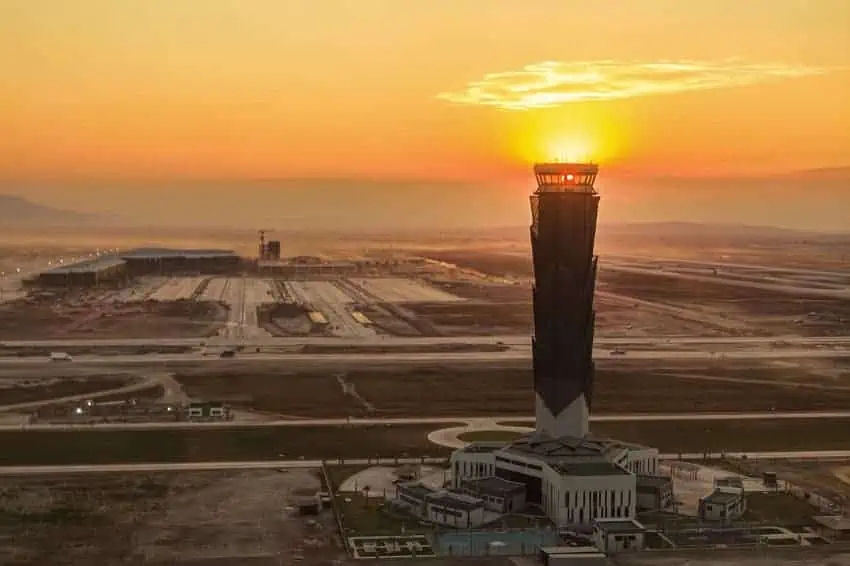
The lower rating has prevented Mexican airlines from adding new routes to the United States and has been seen as a barrier to growth at the Felipe Ángeles International Airport (AIFA), which opened just north of Mexico City in March 2022.
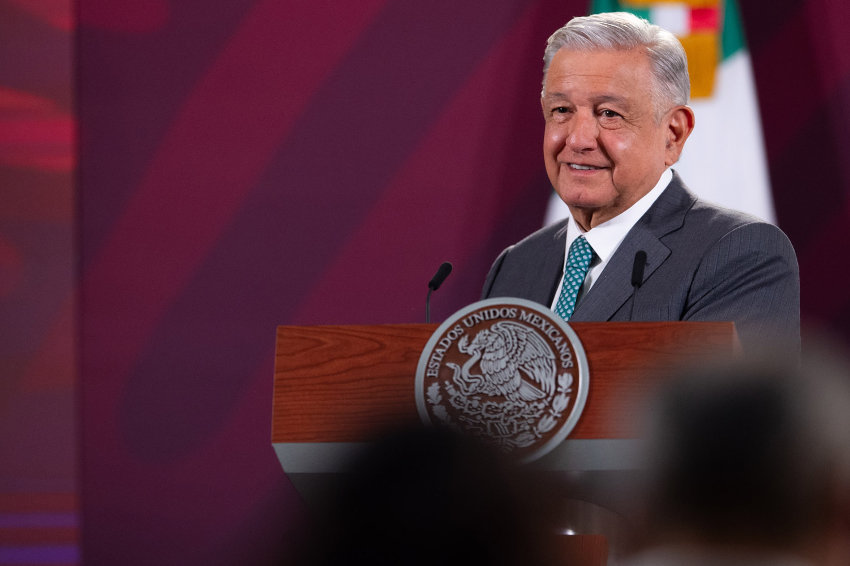
López Obrador told reporters at his morning news conference that United States Secretary of Transportation Pete Buttigieg had informed Foreign Affairs Minister Alicia Bárcena that the U.S. had decided to restore Mexico’s Category 1 rating.
“It’s good news, they’re going to formalize [the decision] next week. We’re very grateful to the United States Secretary of Transportation and we thank President Biden,” he said.

López Obrador said that Mexico had met all the relevant safety requirements and the U.S. consequently took the decision to reinstate the top-tier rating. He also said that the decision is “a sign that relations are very good” between Mexico and the U.S.

The news that Mexico is set to recover the Category 1 rating comes after officials with the Federal Civil Aviation Agency (AFAC) held discussions with FAA representatives on the audit process that was carried out to assess aviation safety standards at Mexican airports.
The Ministry of Infrastructure, Communications and Transportation, of which AFAC is part, initially pledged to recover the Category 1 rating within four months of the downgrade.
However, a year after the downgrade, a former executive with AFAC’s predecessor said that Mexico’s aviation authority hadn’t taken any decisive action that would help Mexico regain its Category 1 rating.
No additional resources have been allocated to address the FAA’s concerns, Rogelio Rodríguez said in May 2022, adding that there had been a “chain of systematic failures in the [aviation] sector due to the lack of training of key personnel, such as [air traffic] controllers.”
The International Federation of Air Line Pilots’ Associations said the same month that it appeared that air traffic controllers at the Mexico City International Airport (AICM) had received “little training and support” as to how to direct flights operating in the new airspace configuration precipitated by the opening of AIFA north of the capital.
Shortly after that warning, there were two close calls at the AICM, one involving a Volaris plane and another another involving an Aeroméxico aircraft.
López Obrador said last week that the main consideration in the government’s decision to mandate a reduction in flight numbers at AICM was safety.
“The airport is saturated, … there are a lot of operations, there are risks and we want to prevent [mishaps],” he said.
The reduction in hourly flight numbers from 52 to 43 was scheduled to commence in October, but was subsequently postponed to Jan. 8 to prevent a negative impact on travelers using Mexico’s busiest airport during the winter travel season.
With reports from Reforma and El Universal