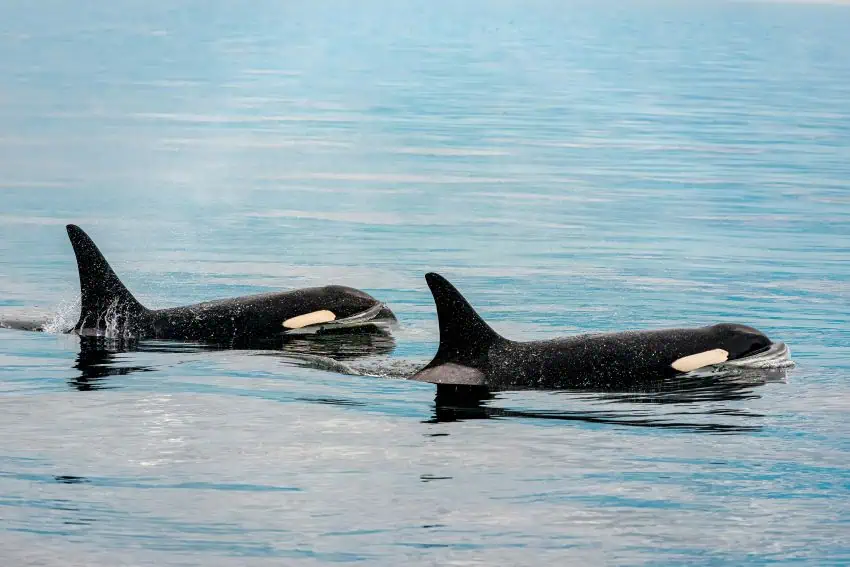
In an unprecedented species management plan, the state of Baja California Sur has issued a decree legalizing and regulating the increasingly popular activity of swimming with orcas.
The regulations specifically target the community of La Ventana on the southeastern, or Gulf of California, side of the peninsula where the overwhelming majority of the boats offering orca-tracking services operate.
Swimming alongside orcas at La Ventana Beach, Mexico pic.twitter.com/PS4x2XJgv2
— ViralRush ⚡ (@tweetciiiim) June 24, 2025
The protocol — published by the state Environment Ministry (SMADS) — requires that tourism boats interacting with the animals acquire permits and limits the number of boats that can surround an individual or family of orcas on any given day.
The Model Management Plan for the Conservation and Non-Extractive Use of Orcinus orca aims to ensure that tourists are allowed to swim with orcas only in La Ventana.

Georgina Saad, a marine biologist who studied at the Autonomous University of Baja California Sur, called the site limit the most important part of the pilot program.
“We can send the message that this is the only place to do it, and this is how it is going to be done, and the rest is illegal,” she told the newspaper The Guardian.
Saad and Erick Higuera, a marine biologist and documentary filmmaker based in Baja California Sur, were among the scientists advising the SMADS as it sought to address the legal gray area being exploited by tourism providers.
The activity, which reportedly took off after several Instagram posts went viral in 2019, fell between strict whale-watching regulations — which apply specifically to baleen whales and the sperm whale — and the orcas’ status as a species “Subject to Special Protection.”
So while the “Special Protection” norm provides guidelines for conservation and management, it does not regulate swimming or other direct interactions with orcas, which are actually not whales but members of the oceanic dolphin family (Delphinidae).
The plan goes beyond establishing a quota on the number of people and boats that can interact with the orcas. It also requires boat captains to respect the animals’ behavior — if they exhibit distress, the boats must retreat.
The revenues from the boat permits will fund training for captains and local residents as well as pay for patrol boats to enforce the decree.
“The goal is to teach captains and guides how to read the whales’ behavior so they know when to interact with the animals, how to do so safely, and when to give the orcas space,” Saad told The Guardian.
Not everyone is happy with the SMADS decision. Local boat captains have expressed concern that the permits will go to established tour companies in Cabo San Lucas and La Paz.
Some tour company operators complained that they were not involved in crafting the plan. Others wondered why the program is limited to La Ventana when orcas roam around the entire peninsula.
With reports from The Guardian and El Sudcaliforniano