The Felipe Ángeles International Airport (AIFA) outside of Mexico City will no longer receive government subsidies to cover operational costs, President Andrés Manuel López Obrador said Tuesday.
“It already has a lot of air traffic — both passengers and cargo. It is already the airport with the most cargo movement in the country,” López Obrador said at his morning press conference. “All this has allowed it to have income to finance its operation with a little profit in a very short time.”
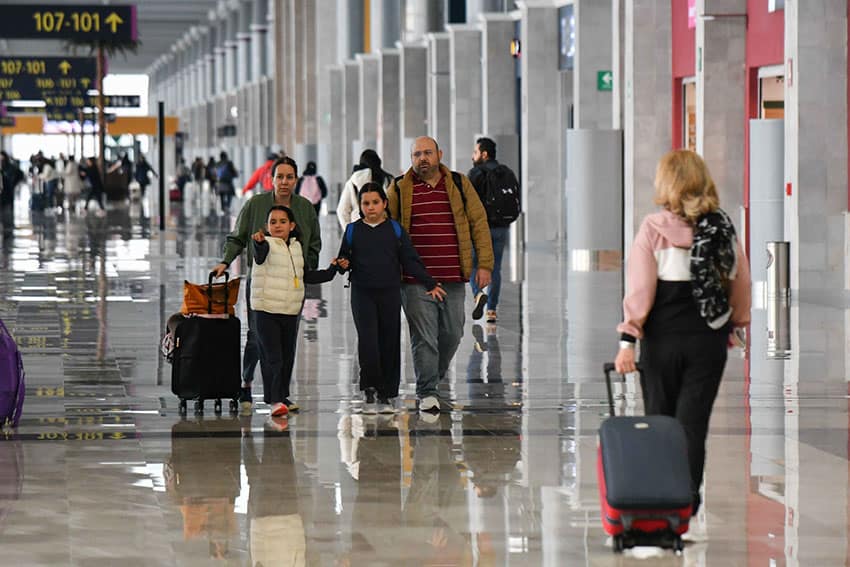
Located 35 kilometers north of Mexico City in México state, AIFA opened in March 2022 and experienced heavy losses in year one before its recent climb in usage. An emblematic work of López Obrador’s presidency, the airport has been run and managed by the Defense Ministry (Sedena).
In its first year of operation, AIFA had losses in the millions — expenses that were nine times higher than revenue — and transported over 1 million fewer passengers than the 2.4 million the National Transparency Platform had projected. As a result, AIFA’s government subsidies had to be tripled in 2022, the newspaper El Financiero reported.
Last week, however, it was reported that AIFA saw a 78 million pesos (US $4.6 million) profit in 2024’s first quarter, thanks to revenues of 490 million pesos and operating expenses of only 412 million pesos.
Slightly more than 1 million people used the airport during 2024’s first three months, an 82% increase over the same period in 2023, according to the report from the Federal Civil Aviation Agency (AFAC). That works out to approximately 11,000 AIFA users per day.
The reason for the increase, according to AFAC, is simple: more airlines, a greater frequency of flights and a larger list of destinations.

For example, low-cost Dominican airline Arajet offers direct flights between AIFA and Santo Domingo.
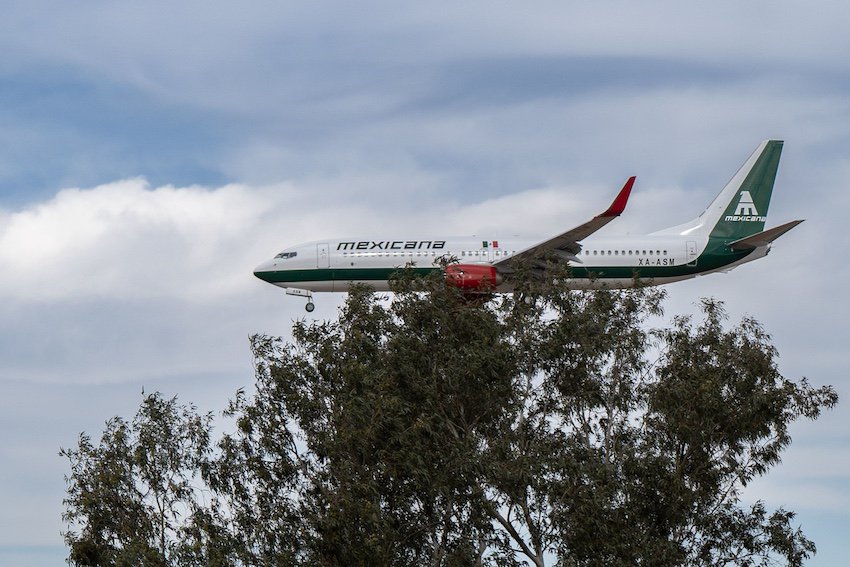
Also, the previously defunct private airline Mexicana, whose brand name was purchased by Lopez Obrador’s government and brought back into operation by the Defense Ministry in December 2023, offers flights to 18 destinations in Mexico from AIFA. According to the newspaper Milenio, it is looking to buy new planes.
In March, Mexicana transported 24,140 passengers to and from AIFA, an increase of 39.6% over the previous month, AFAC noted.
López Obrador also pointed out that airlines that move cargo are “very happy” because the Mexico City International Airport (AICM) was oversaturated and had full schedules. What he did not say, however, was that a February 2023 presidential decree pressured cargo carriers to move their operations from AICM to AIFA by dictating that cargo companies could no longer operate at AICM.
At his press conference, AMLO was asked if government subsidies for AIFA would still be given. “Not for [its] operation,” he replied.
Though critics say the two-year-old airport is too remote from Mexico City and requires a journey from the capital that can exceed one hour, López Obrador said the facility is located “strategically” and offers flights “to any point in the country without the need to enter Mexico City.”
He also noted that AIFA traffic is likely to increase even more because the Interurban Train will be inaugurated in July. It can take travelers from the Buenavista commuter railway station in central Mexico City to AIFA, reportedly in 45 minutes, although some sources remain skeptical about that time estimate.
With reports from Milenio, La Jornada and Politico MX