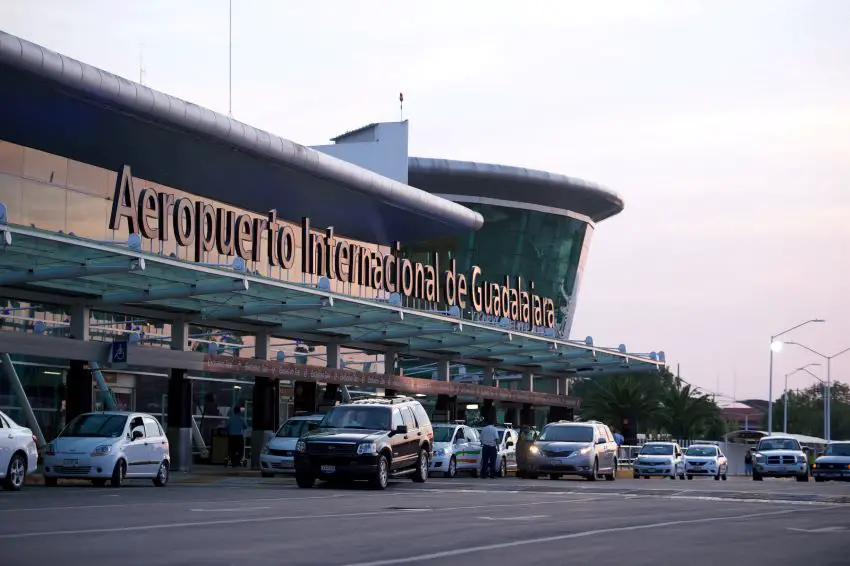
Pacific Airport Group (GAP) will invest 52 billion pesos (US $2.6 billion) over the next five years to expand and renovate the 12 airports it operates along Mexico’s Pacific Coast. More than 40% of the funds will go to expanding and modernizing the Guadalajara International Airport.
This would mark GAP’s largest investment in its Mexican airports to date.
“These investments are carefully analyzed and designed to add additional capacity at GAP airports”, the group said in a statement to investors at the Mexican Stock Exchange, “for the future growth of the regions where we operate.”
The airports GAP operates in Mexico are:
- Guadalajara (GDL)
- Tijuana (TIJ)
- Los Cabos (SJD)
- Puerto Vallarta (PVR)
- Guanajuato (BJX)
- Mexicali (MXL)
- La Paz (LAP)Morelia (MLM)
- Hermosillo (HMO)
- Aguascalientes (AGU),
- Los Mochis (LMM)
- Manzanillo (ZLO)
All 12 locations have seen improvements in infrastructure, operation and passenger service over the last five years, GAP said.
Bueno, pues oficialmente Guadalajara tiene ya dos pistas en el monstruo de aeropuerto que está ampliando Grupo Aeroportuario del Pacífico, GAP.
Será una magnífica opción para que no tengan que venir al AICM / AIFA. pic.twitter.com/vJUV42J3G7
— Más Grinch que nunca. (@GuillermoBGR) July 12, 2024

“Our goal is to provide passenger service, while contributing to Mexico’s economic development with airports operating at optimal conditions for passengers and the exchange of goods,” GAP CEO Raúl Revuelta Musalem said in a statement.
According to GAP, 60% of the new investment will be allocated to increase terminal capacity, 45% to expand passenger inspection points, 25% to renovate aircraft platforms and 20% to enhance the flight field.
Of all the airports, Guadalajara will receive the largest share of the funds — 22 billion pesos, or US $1.1 billion — driven by nearshoring and the upcoming World Cup 2026, Revuelta told newspaper El Economista.
In Guadalajara, GAP will build a new 69,000-square meter terminal to increase passenger capacity by approximately 70%. The group will also increase cargo capacity, invest in land acquisition for the territorial reserve and build a third runway and third terminal.

Revuelta added that the increase in passenger and air cargo capacity at the Guadalajara airport also requires growth in road infrastructure, so part of the investment will go to building a second access road to the airport. Currently, the only access is through the Chapala highway.
Renovation and expansion work at the Guadalajara airport between 2020 and 2024, which included a new commercial area, a hotel and an office building, cost 20 billion pesos (US $975 million), Guadalajara airport director Martín Pablo Zazueta said.
After Guadalajara, the Tijuana International Airport will receive the second largest funding package to expand the air terminal by 34,000 square meters, while Los Cabos International Airport will be expanded by 18,700 square meters.
With reports from A21 and El Economista