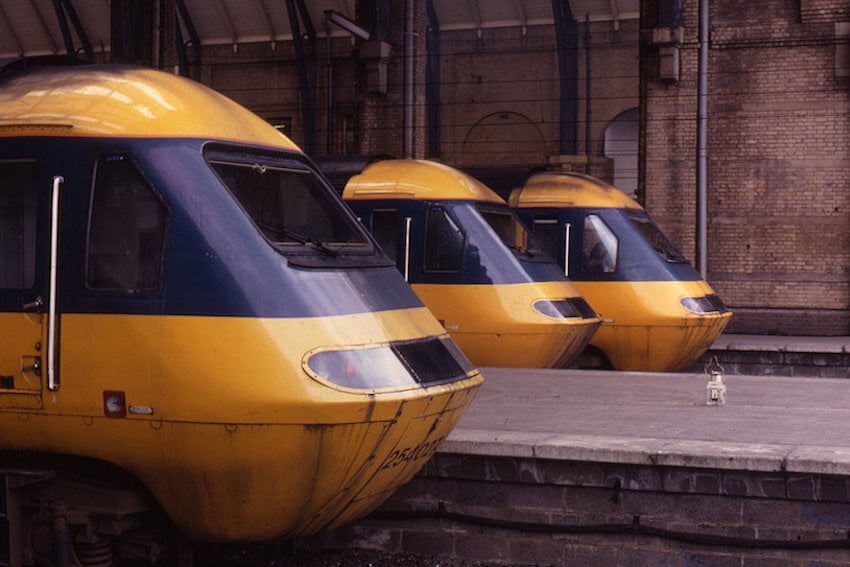
Long before it rumbled through the jungles and ports of southern Mexico, the British Class 43 High Speed Train was the sleek steel face of a confident, modernizing Britain, one that was hurtling out of the 1970s at 125 mph. Its journey from London to the Isthmus of Tehuantepec is a story of reinvention and of a record‑breaking icon that refused to fade quietly into a scrapyard.
With its new home, the massive Interoceanic Train project (CIIT) coming into the headlines this week after a devastating crash, we take a look at the locomotive spearheading the Mexican government’s push for an alternative to the Panama Canal.
Birth of a speed icon
In the late 1960s, British Rail faced a problem: aging diesel fleets, rising competition from cars and planes, and no spare billions for brand‑new high‑speed lines. The answer was audacious but practical — they needed to build a very fast train for the Victorian track network that Britain already had.
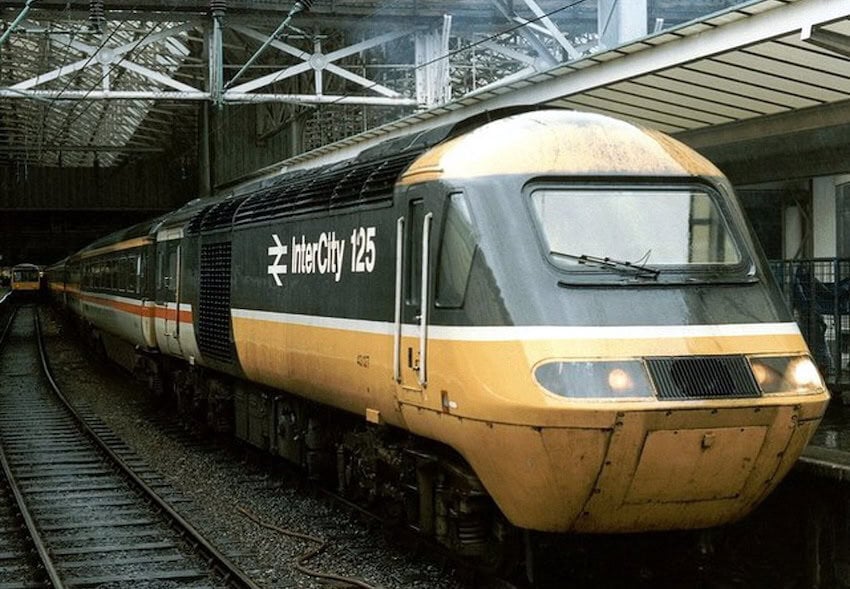
The result was the InterCity 125, officially the British Rail Class 43 High Speed Train (HST), a formation with a power car at each end and a train of BR Mark 3 coaches in between. Designed and built between 1975 and 1982, the Class 43 power cars packed a 2,250‑horsepower Paxman Valenta engine and quickly earned the distinction of being the fastest diesel locomotives in the world, with a record run reaching 148.5 mph.
When HSTs entered service in 1976, first on the Western Region out of London Paddington, they transformed long‑distance rail travel almost overnight. Journeys that had taken hours longer suddenly felt sharp, punctual and distinctly modern, accompanied by bold “Inter‑City 125” branding that became a visual shorthand for speed.
The HST spread from the Great Western and South Wales main lines to the East Coast Main Line and beyond, anchoring many of Britain’s flagship routes for decades. Through new liveries, refurbishments and engine replacements, the Class 43s outlived multiple corporate identities and government policies, becoming an everyday backdrop to British life and a favorite among railfans.
A classic in search of a second life
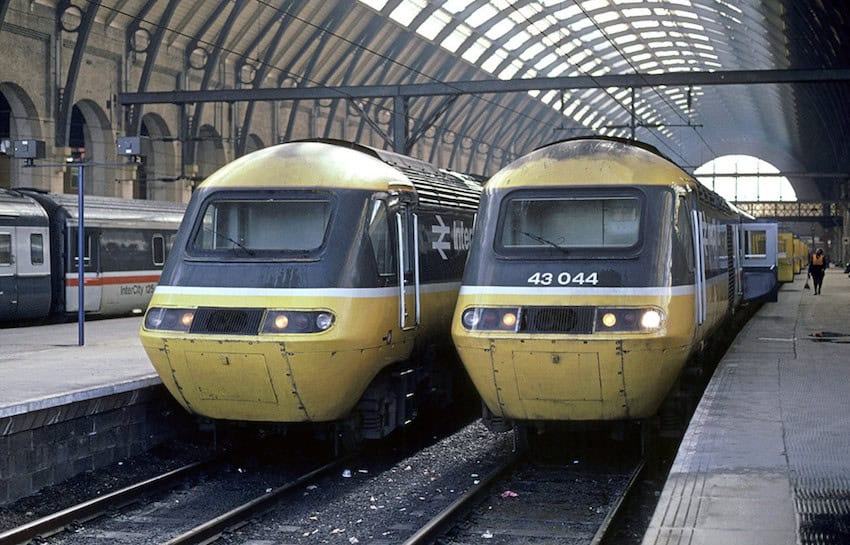
By the 2010s, the same qualities that had once made the HST cutting edge started to count against it. New electric and bi‑mode trains began to replace Class 43 sets on core routes, and passenger operators thinned their fleets. For the power cars, the future forked three ways: preservation, scrap or export.

Fortunately, not all of them were destined for the torch. Preserved examples entered museums and heritage railways, while others found extended careers on secondary routes in Britain. But a growing number were sold abroad, their robust engineering and relatively low purchase price making them attractive for countries seeking proven, mid‑speed intercity trains without investing in new high‑speed rolling stock.
Among those new horizons were two particularly ambitious export programs: one to Nigeria and one to Mexico. For a handful of Class 43s, the story would now be written in Spanish.
Crossing the ocean: the Mexico deal
The stage for the Mexican chapter was the CIIT, the railway crossing the narrowest part of Mexico between the Gulf of Mexico port of Coatzacoalcos and the Pacific port of Salina Cruz.
Strategically, the corridor is designed as a rival and complement to canal‑based shipping, offering shippers a land bridge that can shorten routes and diversify options for interoceanic trade. It is also framed domestically as a development engine for southern Mexico, aiming to attract industry, logistics parks and related services along the line and nearby highways.

Politically, the project sits alongside other flagship rail schemes (like the much more modern and high-speed Maya Train), as part of a broader pivot back toward rail after decades of road‑centric policy. Inaugurated in 2023 by former president Andrés Manuel López Obrador, the final bill clocked in at US $2.8 billion.
To provide fast passenger services over the rebuilt route, Mexico acquired several HST power cars and Mark 3 coaches, working with leasing and logistics specialists to purchase, overhaul and ship the vehicles across the Atlantic. The first batch — three Class 43 power cars and 11 Mk 3 trailers — was dispatched in 2023 for trials, with further batches following in 2024 and 2025.
In Britain, the exported power cars were recorded with new Mexican numbers: 43022 and 43207 became FIT 3008 and FIT 3009, while 43170 became FIT 3007. Preparation work before shipping included mechanical overhauls and adaptation for new operating conditions on the Isthmus line.
Reinvented on the Isthmus
In Mexico, the once‑familiar British silhouettes began to look subtly different. The trains received new liveries to match FIT branding, trading InterCity stripes and later British operators’ colors for bright schemes suited to their new national role. They were also fitted with standard North American‑style couplers, allowing Mexican locomotives to rescue or haul the sets if needed, and adapted to local safety and operational requirements.
Trials on the Isthmus route began by late 2023, with videos showing HST sets running through tropical landscapes a world away from Yorkshire moors or the Severn estuary. After the infrastructure rebuild, the line was formally inaugurated, with HST‑based passenger services forming part of the renewed offering across the corridor between Coatzacoalcos and Salina Cruz.
It wasn’t all smooth sailing, though. In July 2025, FIT 3009 had the leading cab ripped off after colliding with a cement truck at a crossing in Oaxaca. Footage emerged online of the train, with pieces of carbon fiber wedged back down, carrying steadfastly on with its duty, a minor delay after damage that would have removed many other trains from service — possibly permanently.
That crashed Mexican HST is back underway with only a minor delay
byu/David-HMFC inuktrains
FIT3008 was most recently spotted rescuing passengers after the tragic derailment at Asunción Ixtaltepec. The loco involved in the derailment was an ex-Union Pacific SD70M, pulling a train of U.S.-built Budd SPV-2000, itself an import from New York’s Hudson Line, which once ran between Croton and Harmon.
An unlikely but fitting epilogue
For the engineers who drew the first lines of the Class 43 in the early 1970s, it would have been hard to imagine their creation decades later carrying passengers across the mountains of Mexico, its Paxman‑engined heritage blending with tropical heat and port traffic. Yet the arc of the HST’s life — designed for austerity‑era tracks, crowned as the world’s fastest diesel, then repurposed for another continent — fits the locomotive’s character: pragmatic, tough and endlessly reusable.
The British Class 43 did not simply “end up” in Mexico by accident; it was chosen, exported and rebuilt because it still had something valuable to offer: reliable, relatively fast, intercity service on existing rails. On the Isthmus of Tehuantepec, as the old InterCity 125s thunder past palm trees instead of signal gantries, they carry with them half a century of British railway history — proof that some legends keep rolling as long as there is track ahead.
Chris Havler-Barrett is the Features Editor at Mexico News Daily.