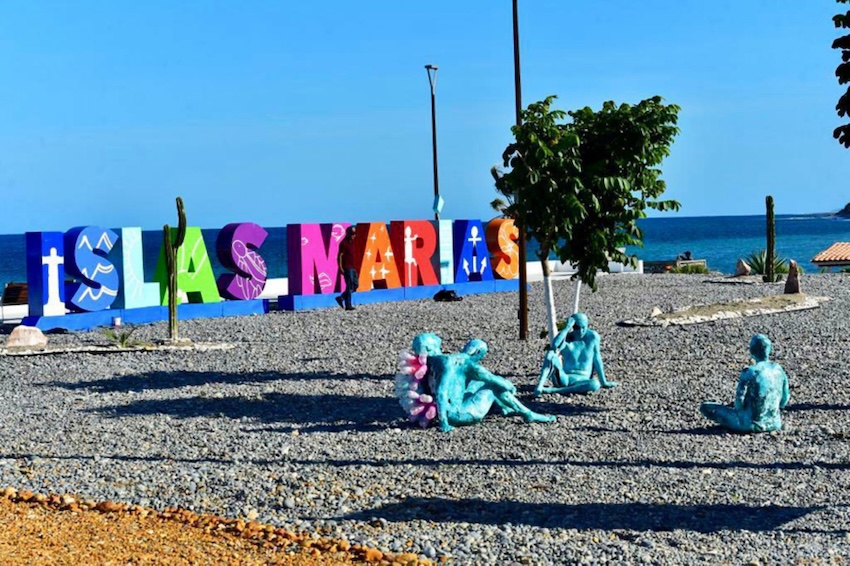
The tourist center on the UNESCO-designated Biosphere Reserve of Islas Marías will soon be sharing space with an agroecological farm and a park ranger training center.
The federal government has authorized the National Commission of Protected Natural Areas (Conanp) to use an area of more than 70,000 square meters located on Isla María Madre, according to the Official Gazette of the Federation (DOF) published on Oct. 8.
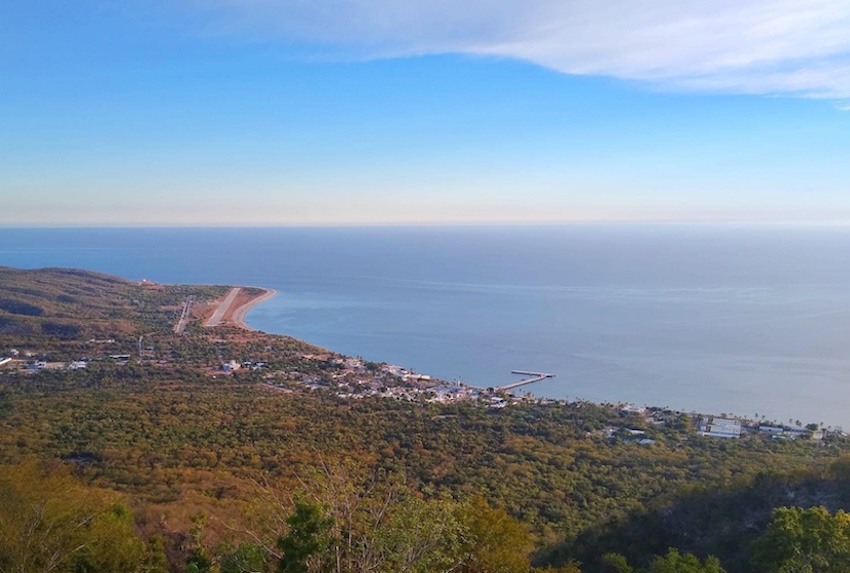
The Conanp project is part of the government’s National Environmental Restoration Program, whose goal for this year is to restore 5% of the total degraded surface area of coastal and marine ecosystems, 800 hectares of urban parks and forests, and 26,000 hectares of forest ecosystems.
Approximately 26,000 square meters of the Islas Marías project will be designated for “El Rehilete” (The Retreat), a self-sufficient and sustainable food production system.
The stated aim of El Rehilete is to support the local economy and promote the conservation of natural resources, while teaching a new generation of young people about food sovereignty.
The remaining 44,000 square meters will be dedicated to the construction of a training center to teach volunteer park rangers about conservation, preservation and management methods for Protected Natural Areas (ANPs).
Islas Marías is a Pacific Ocean archipelago comprising four main islets — María Madre, María Magdalena, María Cleofas and San Juanito — about 94 kilometers (58 miles) off the coast of the state of Nayarit.

Visitors can tour Islas Marías by purchasing government-regulated tourism packages with departures from Mazatlán, Sinaloa, or San Blas, Nayarit.
Originally named the Magdalenas Islands after they were discovered by Spanish explorers in the 1520s, the islands were used as a Mexican penal colony from 1905 until 2019.
Islas Marías earned its Biosphere Reserve status in 2010. Nine years later, President Andrés Manuel López Obrador closed the prison and announced it would be converted into an environmental education center named after the prison’s most famous inmate, José Revueltas, the Durango-born 20th-century author and dissident.
The islands are home to the Tres Marías raccoon (Procyon insularis), the endemic Tres Marías cottontail rabbit (Sylvilagus graysoni), 21 species of sharks, 10 different rays, three species of sea turtles and healthy coral reefs.
The landscape consists of grasslands, shrublands and tropical deciduous and subdeciduous forest.
With reports from Milenio, Reforma and Vallarta Adventures